Category Archives: Frontiers

Decolonizing the ‘Colonial-Brahmanical’ – Thinking outside Modernity: Sunandan K N

[This post is the sixth essay of the series in Kafila titled Decolonial Imaginations. Links to the previous essays are given at the end.

The terms ‘decolonization’ or ‘decolonial’ have become quite critical now, given that the impulse of justice lies at the core of these concepts. Neither postcolonial nor decolonial perspectives are compatible with right-wing ideologies but the fact that Hindutva ideologues in India and the rightwing globally are now trying to appropriate that language makes it seem to some that the very idea of the postcolonial or decolonial is suspect. We believe that this demonizing of decolonial theory from a position defensive of the European Enlightenment needs to be unpacked in the interests of a mutually productive debate. Kafila will be publishing a series of interventions on what the idea of the decolonial imagination involves, locating decolonial theory as speaking from the margins, drawing attention to identities which the orthodox Left subsumed under ‘class’ and which the rightwing in India seeks to assimilate into Brahminism. Additionally the orthodox left’s rejection of spiritual beliefs and inability to engage with them is also a factor that may have produced the space for right wing appropriations of a field marked “religion”. 

We hope that these interventions will clear the ground for productive conversations on the left rather than polarised and accusatory claims.]

This short essay builds on the articles published in this series and has already explored the various ways in which the concept of de-colonization is articulated, appropriated and adapted in various historical contexts in India and elsewhere. This note aims to map, in a preliminary fashion, the divergent engagements with questions concerning caste across three key groups – colonialists, nationalists (including the Hindutva nationalists), and postcolonial and decolonial practitioners in the last two centuries. This note does not purport to break new empirical ground but instead assembles and juxtaposes existing academic and public arguments to construct a focused framework for comparison.

It is important to begin with the now established argument that concepts are not static but dynamic entities, formed, transformed and deployed along historical processes. In larger Humanities and Social Science disciplines, historians, philosophers, anthropologists and linguists have increasingly shifted the question from ‘what does a concept or a category or just a noun mean’ to ‘what does it do’.  This shift posits that meaning is not a stable core but a secondary effect created from practice through a process of ‘densification’. We can observe this in Foucault’s inquiries into the concept of madness or Wittgenstein’s exploration of the performative nature of language. While the dominant forces have the power to deploy a category more widely and to limit its interpretations or in other words have the power to solidify and concretize the uses and effects of the category, they cannot guarantee to reduce this category to a singular use/meaning or limit its interpretation.  Hence the importance of the analysis of the travel and transformation of categories in various routes, its adaptations and mutations across various historical contexts and times.

Colonialism held divergent meanings and ‘affected’ differently for different groups of colonised, who in turn responded differently in varied temporal and spatial contexts. In what follows, I will briefly describe how colonialism affected the discourse and practice of caste and how different sections of the colonised reciprocated and acted on these colonial interventions. By doing so, I will demonstrate that, while colonialists, upper caste and Hindutva nationalists, and Leftists at some or other point have taken ostensibly anti-caste positions, their intentions or outcomes were not similar and all of them varied drastically from the radical project of annihilation of caste proposed by Ambedkar.

A parallel divergence exists within academic scholarship, where the analysis of caste from nationalist, postcolonial and decolonial perspective have criticized caste system but from different standpoints and with different objectives. It will therefore be both analytically trivial and politically dangerous to equate Ambedkar’s radical anti-caste position with Hindutva rhetoric against caste. Similarly equating a genuine decolonial position on caste with Hindutva’s strategic engagement with caste or about any other issues, can only stem from either a misreading or a cynical anxiety of losing one’s own relevance.

Colonial practice was never governed by a single monolithic principle; instead it was characterised by contradictions, ironies and exceptions that became the very norm of colonial rule. A pivotal moment in this history was the orientalist introduction of ‘Hindu’ as a unified religious category which fundamentally reshaped the colonial discourse on caste in India. Earlier, the category jathi dominated in the organisation of social practices and in the reflection of these practices. This does not mean jathi remained static in the precolonial period. As a dynamic system jathi underwent many transformations but remained hierarchical all through this period. The orientalists understood jathi as the essential principle of Hindu religion but also created a historical myth in which there existed a Hindu golden past which was destroyed by the Islamic invasions. This enabled many problematic concepts such as the idea that Hindu religion existed from the Vedic period onwards, and that all precolonial kingdoms were religious or something articulated as Sanathana Dharmam was part of this Hindu religion.

These notions are dominant even in contemporary debates and in common sense. The Hindutva history is completely premised on this colonial historical myth (not on the postcolonial or decolonial critique of these concepts) which the Hindutva propagandist will never admit. While they wholeheartedly embrace this part of colonial history, they vehemently oppose the theory of ‘Brahmanical despotism’ which was also an integral part of the colonial understanding of the Hindu religion.  In the so called ‘decolonisation project’ of the Hindutva only the latter part is to be decolonised. To be exact, even the other versions of nationalist history in the first half of the twentieth century – Gandhian, Ambedkarite, Nehruvian, Marxist – incorporated some or other elements of this colonialist orientalist interpretation. Decolonisation project attempts to point out not only the overlaps of the nationalist project with colonial one, but also focuses on how this enables the current forms of domination and subordination.

Postcolonial and decolonial histories challenged both colonial interpretation of caste and its nationalist adaptations as well. Nicholas Dirks explained how caste identities were re-constructed and even rigidified through various colonial governing practices. This was often misinterpreted as though he was arguing that caste was a pure colonial construction, which is clearly a Hindutva argument which, unlike Dirks, completely overlooks the inhuman caste domination and violence in the precolonial period. G Aloysius in his book Nationalism without a Nation analysed how caste was central to the nationalist political position of anti-colonialism. Lata Mani’s work on Sati (Contentious Traditions: The Debate on Sati in Colonial India) shows how colonialist and the upper castes together reconstructed ‘traditions’ which also became the basis for the reform narrative which attempted to separate good traditional practices from superstitions.

The idea that jathi was an exception that accidently emerged in the long history of Hindu religion was central to Hindu reform attempts and this was the exact point that Ambedkar rejected in his essay ‘Annihilation of Caste’.  While this essay premises existence of Hindu religion based on Shasthras (Orthodoxy), which one can now see as an orientalist construction, his arguments were anchored against the colonial and nationalist narratives of a Hindu golden past and against the possibility of an egalitarian reformed Hinduism as depicted by Hindu reformers of the period. The fact that the Hindutva propagandists attempt to make him one of the many Hindu reformers does not make him a ‘strange bedfellow’ or ‘enabler’ of Hindutva politics. On the contrary, his political philosophy has become the inspiration for anti-Hindutva politics in the twenty-first century.

Ambedkar’s critique focused on the social practices and political ideology of casteism embedded in Hindutva politics. Decolonial historians have extended this critique by analysing the role of caste not just in traditions but also in what is described as modern as well. This scholarship is inspired by feminist standpoint theories and black and queer feminist (many among them are scientists) critique of Science (Sandra Harding, Karen Barad, Chanda Prescod-Weinstein etc.), critique of modern forms of knowledge production from indigenous perspective (Linda Tuhiwai Smith, Dian Million, Candis Callison) and Indigenous critique of modernity and its genocidal developmental practices in India (Abhay Xaxa, Hansda Sowvendra Shekhar, Jacinta Kerketta) and so on. In a close reading of these works one could easily recognize that they are all part of a politics that challenges racist, casteist, patriarchal dominations and other right wing ideologies.

Ajantha Subramanian in her book Caste of Merit: Engineering Education in India shows how brahmanical notions of merit were embedded from the very beginning of IITs in India. Her analysis shows that the upper caste dominance in the so-called Nehruvian temples of modernity is not an exception but by design. The history of IIT Roorkee will also tell a similar story.   Started as Thomason College of Civil Engineering in 1847 to train Indians as engineers for the Ganga Canal Project, the engineering education here was based on the workshop model as it was in Europe and other places. However as most of the students in the first three batches were upper caste Bengalis, the learning based on doing was not successful. After an inquiry committee report it was decided that there should be a three tier system in which the top tier will be a fully theoretical (mental labour based) education in the classroom, the middle level will be half classroom and half workshop based and the lowest level will be fully in the workshop. This is the model that was replicated in technical education as the three tier system of Engineering College, Polytechnic, and ITIs. Here caste hierarchy was clearly mapped into the hierarchy of knowledge in which mental labour is separate from the manual labour and superior to the latter. This separation of theory from practice (mental labour from manual labour) is central to all forms of modern knowledge practices not only in India but everywhere in the world. Hence wherever these institutions emerged in the eighteenth and nineteenth centuries, they incorporated the local power hierarchies into their notion of knowledge. Considering this history, it is not an accident that the Science and Technology institutions and science and technology departments in Universities are the worst domains of caste discrimination and exclusion.  This is not to say that Social Science as a discipline or the departments are egalitarian. It is the same modernist and casteist notion that established the divide between theoretical Brahmins and empirical Shudras, a Gopal Guru has already pointed out.

In my book Caste, Knowledge and Power: Ways of Knowing in the Twentieth Century Malabar, I have demonstrated that caste discrimination in the domain of knowledge production in India is not just institutional but epistemological as well. Hence, I have argued that the dominant form of modernity in India in general and its forms of knowledge production in particular need to be understood not as Western, Scientific, Eurocentric or Universal but as Colonial-Brahmanical. Brahmanical understanding of jathi and gender are part of the epistemology and practices of all modern institutions. In other words, any attempt of decolonisation will be anti-colonial as well as anti-Brahmanical and will inherently be an anti-Hindutva project as well.

In conclusion, It is critical to recognise that the Hindutva appropriation of icons like Gandhi or Ambedkar, their attack on Nehru or their revivalist understanding of Science and Technology, should not circumscribe one’s own critique of Gandhi or Nehru or Science or be apologetic in fear of appropriation. An appropriate response would not be that ‘we are not abandoning rationality’ or ‘we are not relativists’ or ‘we believe in different kinds of Science’. Rather, we must reject the foundational role of the very binaries of – Rational/ irrational, absolute / relative, modernity / tradition – to advance a politics of equality and fraternity. The more productive analytical framework would be to ask what these concepts do: Do they enable and intertwine with other actions for a more democratic and equal world or do they reinforce social hierarchy?

Sunandan KN is Associate Professor, Azim Premji University, Bangalore. The opinions are personal.

Sleeping with the enemy? Postcolonialism, misread and misjudged: Shamayita Sen

Beyond philosophical gaslighting – seven theses on decolonization/ decoloniality: Aditya Nigam

Anti-colonial thought and the global right – an untenable alliance: Ishan Fouzdar

The Hopeless Quest for a Pure Incorruptible Knowledge – Decoloniality and its Discontents: Nivedita Menon

The Struggle for a ‘Coloured Modernity’: Meghna Chandra and Archishman Raju

 

The Struggle for a ‘Coloured Modernity’: Meghna Chandra and Archishman Raju
[This post is the fifth essay of the series in Kafila titled Decolonial Imaginations. Links to the previous essays are given at the end.

The terms ‘decolonization’ or ‘decolonial’ have become quite critical now, given that the impulse of justice lies at the core of these concepts. Neither postcolonial nor decolonial perspectives are compatible with right-wing ideologies but the fact that Hindutva ideologues in India and the rightwing globally are now trying to appropriate that language makes it seem to some that the very idea of the postcolonial or decolonial is suspect. We believe that this demonizing of decolonial theory from a position defensive of the European Enlightenment needs to be unpacked in the interests of a mutually productive debate. Kafila will be publishing a series of interventions on what the idea of the decolonial imagination involves, locating decolonial theory as speaking from the margins, drawing attention to identities which the orthodox Left subsumed under ‘class’ and which the rightwing in India seeks to assimilate into Brahminism. Additionally the orthodox left’s rejection of spiritual beliefs and inability to engage with them is also a factor that may have produced the space for right wing appropriations of a field marked “religion”. 

We hope that these interventions will clear the ground for productive conversations on the left rather than polarised and accusatory claims.]

The excerpt published in The Wire of Meera Nanda’s “Decolonising Ourselves into a Hindu Rashtra” argues that postcolonial and decolonial theorists bear the blame, at least in part, for the rise of Hindu nationalism in India. In eschewing “Enlightenment Secular Humanism”, Nanda argues, these theorists have opened epistemic space for right wing ideologues to justify reactionary politics. Furthermore, she argues that the ideas of postcolonial theory have their roots in the “neo-Hindu revivalist strains of anti-colonial nationalism.”, who she identifies with “Gandhi, Vivekananda, Aurobindo, and even Tagore”. These thinkers were apparently seeking an escape from the idea of modernity present in the “legacy of the British Raj”. This, apparently against the “enlightenment thinkers” of India in which she presents a bizarre counter grouping of “Ambedkar, Periyar, Nehru, M.N. Roy, and Narendra Dabholkar”. This opposition that Nanda sets up is so ludicrous to someone who has even spent a minimal amount of time studying our freedom struggle or any of these thinkers that it requires little comment.

Continue reading The Struggle for a ‘Coloured Modernity’: Meghna Chandra and Archishman Raju
The hopeless quest for a pure incorruptible knowledge – decoloniality and its discontents

[This post by Nivedita Menon is the fourth essay of the series in Kafila titled Decolonial Imaginations. Links to the previous essays are given at the end.

The terms ‘decolonization’ or ‘decolonial’ have become quite critical now, given that the impulse of justice lies at the core of these concepts. Neither postcolonial nor decolonial perspectives are compatible with right-wing ideologies but the fact that Hindutva ideologues in India and the rightwing globally are now trying to appropriate that language makes it seem to some that the very idea of the postcolonial or decolonial is suspect. We believe that this demonizing of decolonial theory from a position defensive of the European Enlightenment needs to be unpacked in the interests of a mutually productive debate. Kafila will be publishing a series of interventions on what the idea of the decolonial imagination involves, locating decolonial theory as speaking from the margins, drawing attention to identities which the orthodox Left subsumed under ‘class’ and which the rightwing in India seeks to assimilate into Brahminism. Additionally the orthodox left’s rejection of spiritual beliefs and inability to engage with them is also a factor that may have produced the space for right wing appropriations of a field marked “religion”. 

We hope that these interventions will clear the ground for productive conversations on the left rather than polarised and accusatory claims.]

Introduction

As Hindutva ideologues and the rightwing globally, appropriate the idea of “decolonising”, it seems to many opposed to these trends, that scholarship around decoloniality is itself the problem. Such arguments tie in with earlier ongoing attacks on postcolonial scholarship since the 1990s that virtually accuse it of directly contributing to the rise of the right. Decolonial scholarship is relatively a new arrival in the Anglophone world (since the 2000s), and ever since the rightwing started using that language, the same charges are laid at its door as well. Indeed, the implication (and sometimes outright allegation) is that decolonial/postcolonial scholars were secretly rightwing all along.

This charge I will address in a somewhat different way in the first section, by way of analogies with other bodies of knowledge.

The second section will address another related critique of decolonial thought, that it is “merely epistemic” and does not consider the materiality of structures of power

Finally we will ask the question – when Hindutva claims to be “decolonising”, what is it doing exactly? Continue reading The hopeless quest for a pure incorruptible knowledge – decoloniality and its discontents

Anti-colonial Thought and the Global Right – An untenable alliance: Ishan Fouzdar

Guest Post by ISHAN FOUZDAR

[This post is the third essay of the series in Kafila titled Decolonial Imaginations. Links to the previous essays are given at the end.

The terms ‘decolonization’ or ‘decolonial’ have become quite critical now, given that the impulse of justice lies at the core of these concepts. Neither postcolonial nor decolonial perspectives are compatible with right-wing ideologies but the fact that Hindutva ideologues in India and the rightwing globally are now trying to appropriate that language makes it seem to some that the very idea of the postcolonial or decolonial is suspect. We believe that this demonizing of decolonial theory from a position defensive of the European Enlightenment needs to be unpacked in the interests of a mutually productive debate. Kafila will be publishing a series of interventions on what the idea of the decolonial imagination involves, locating decolonial theory as speaking from the margins, drawing attention to identities which the orthodox Left subsumed under ‘class’ and which the rightwing in India seeks to assimilate into Brahminism. Additionally the orthodox left’s rejection of spiritual beliefs and inability to engage with them is also a factor that may have produced the space for right wing appropriations of a field marked “religion”. 

We hope that these interventions will clear the ground for productive conversations on the left rather than polarised and accusatory claims.]

Introduction

Anti-colonial thought is under attack. Some scholars have accused decolonial and postcolonial theories of nativism. Interestingly, the phenomenon that provoked this accusation is stranger than the accusation itself. The global North and the global South have witnessed an unlikely alliance of anti-colonial rhetoric and right-wing discourse. While the Hindu Right in India deems Muslims to be colonial invaders, the Right Wing in Europe constructs the influx of refugees as a colonial invasion, which will lead to a ‘great replacement’ of White Europeans by West Asian and African refugees. The solution – ‘decolonise’ by expelling the colonisers and reviving the ‘glorious’ ‘indigenous’ past. This invokes several questions: How do European right-wing groups lay claims on decolonisation? Are there common links between these right-wing ‘decolonisation’ projects? More importantly, does the presence of anti-colonial language in right-wing discourse automatically translate to the conclusion that postcolonial and decolonial theories are inherently nativist?

I undertake two broad tasks. First, I lay forth the ‘anti-colonial’ rhetoric of these right-wing projects. Secondly, I condense their similarities and use them to show why anti-colonial thought should not be seen to be irredeemably polluted by this misappropriation.

Before I trace the right-wing appropriation of anti-colonial language, a caveat about the usage of the terms anti-colonial, postcolonial and decolonial is in order. I use anti-colonial thought to broadly bundle postcolonial and decolonial theories. The reason being that both theoretical schools present varying critiques of the socio-cultural and intellectual legacies of colonialism. The difference in the kind of critique separates postcolonialism from decolonial theory. Continue reading Anti-colonial Thought and the Global Right – An untenable alliance: Ishan Fouzdar

Beyond Philosophical Gaslighting – Seven theses on Decolonization/ Decoloniality

[This post by Aditya Nigam is the second essay of the series in Kafila, titled Decolonial Imaginations. The first essay can be read here.

The terms ‘decolonization’ or ‘decolonial’ have become quite critical now, given that the impulse of justice lies at the core of these concepts. Neither postcolonial nor decolonial perspectives are compatible with right-wing ideologies but the fact that Hindutva ideologues in India and the rightwing globally are now trying to appropriate that language makes it seem to some that the very idea of the postcolonial or decolonial is suspect. We believe that this demonizing of decolonial theory from a position defensive of the European Enlightenment needs to be unpacked in the interests of a mutually productive debate. Kafila will be publishing a series of interventions on what the idea of the decolonial imagination involves, locating decolonial theory as speaking from the margins, drawing attention to identities which the orthodox Left subsumed under ‘class’ and which the rightwing in India seeks to assimilate into Brahminism. Additionally the orthodox left’s rejection of spiritual beliefs and inability to engage with them is also a factor that may have produced the space for right wing appropriations of a field marked “religion”. 

We hope that these interventions will clear the ground for productive conversations on the left rather than polarised and accusatory claims.]

The question of decolonization/ decoloniality keeps surfacing periodically in ill-informed writings and tracts. The target may be postcolonial studies or more recently, decolonial theory, but the attack is always launched in the name of “the Enlightenment” (notice the definite article). The idea behind making what was the European Enlightenment into “the Enlightenment” for the whole world is to claim – as has been done for a couple of centuries since – that the world was lying in “darkness” and “superstition” before the dazzling light of the Enlightenment rescued the inhabitants of the different continents. What were Latin Christendom’s (Europe) “dark middle ages” became the convenient and imagined dark ages of all societies in the world.

Continue reading Beyond Philosophical Gaslighting – Seven theses on Decolonization/ Decoloniality

Gramsci, the “Puranic” and Shekhar Gupta


Re-reading Antonio Gramsci lately, in preparation for a webinar organized by the Dean, School of Social Sciences, University of Hyderabad on “Gandhi, Ambedkar, Gramsci”, I was struck by an aspect of his thought that I had not really understood in all its dimensions earlier. This aspect is directly related to the relationship between subalternity and the political party, a  lifelong preoccupation for him, linked in turn to the problem of “philosophy” and “thought”.  Some of the reflections here on this question were also sparked off also by some questions that were raised during the discussion.

Skhekhar Gupta on Taali-Thaali and Diya

It was while searching for something related to the Indian government’s handling of the Covid-19 situation, that I hit upon this astonishing article by Mr Shekhar Gupta, which is my peg for the discussion that  follows. It is an older article (4 April 2020), for I must confess I had stopped reading him long ago given the  sheer predictability of what he had to say. But here he seems to have surpassed himself. The title itself first caught my attention: “Poke fun at taali, thaali, diya and mombatti all you want. Modi couldn’t care less“. Shekhar Gupta was one of those who had, in the run up to the 2014 elections, come out with brass band to clear the way for Narendra Modi’s accession to power. But hadn’t he lately – so I had heard – started expressing some criticisms of the regime? Tavleen Sigh certainly had. So what is Gupta saying? Well for one thing, I realized that his deep fascination with the Modi persona continues unabated but that is something I can’t blame him for. We can’t determine what our taste-buds like, can we? I am also not surprised that Gupta’s tone regarding his imagined secular-liberal adversaries is one of derision. What struck me was that all that he is basically saying in the article is that Modi knows who he should speak to and he is able to read the popular mind, but this banality is presented as one great insight of all times!

Continue reading Gramsci, the “Puranic” and Shekhar Gupta

An Appeal for an Artist: Buy Brushes for Rehana Fathima’s Son

I am making appeal here to all people who really care for children’s rights beyond the hypocrisies of the global child rights discourse.

A controversy is raging in Kerala over a video of body art posted by the body-activist Rehana Fathima in which her two children paint an image of a phoenix on the exposed torso of their mother. The children are not nude, they don’t look outside the frame. Rehana herself does not look out, nor is her body being displayed in any explicit sense. There is nothing pornographic; the video was not made for commercial purposes. However, the video has unleashed a storm of outrage and the bitter conservatism of both Right and Left-wing politics in Kerala now engulfs the family like a toxic fog.

Rehana has been subject to unimaginable violence online. She is no stranger to it; her insistent efforts to keep radical body politics alive in a society in which bodies are strictly subject to caste and religions communities and bound firmly within heternormative sexuality, patrilineal family-forms and marriages that insist of huge dowry payment to the groom have stirred all sort of insecurities, unconscious and otherwise, of the Malayali masculinist elite. During the conservative backlash against the Supreme Court’s verdict approving the entry of female devotees to the Sabarimala temple in 2018, Rehana Fathima (who claims that she had converted long back and is also known by the name Surya Gayatri) made an attempt to make the pilgrimage, resulting in her arrest and jailing. She was accused of obscenity for uploading a picture of herself in the pilgrim’s costume, but showing a little skin off her thigh.

In the present case, she is accused of corrupting her children by exposing them to her naked body and then making the video public. The first complaint was filed by a BJP functionary and then the Kerala State Commission for the Protection of Child Rights directed the police to file cases against her charging the provisions of the POCSO Act. Other cases against her have used the provisions of the IT Act and the Juvenile Justice Act.

The police raided her home — and seized the laptop and, appalling, her son’s cherished set of brushes and paints. This violence remains unnoticed. There has been much hand-wringing by hypocrites who claim that they are not offended by the art but because children have been involved. These people do not seem to notice the violence against this young boy.

Rehana’s 13 year old is serious about his art. He is not like the kids who parents force into art classes so that they can brag about it in their circle. He is not traumatised by the sight of his mother’s body, but by the loss of his brushes, taken away by the Kerala Police as ‘evidence’ of the ‘crime’! The investigation of alleged violation of child rights gets an auspicious start, I suppose, with the police committing precisely such violation.

I appeal to all of you who think this is injustice — irrespective of whether it is technically proper or not — to speak up. If you can, please contribute brushes. Or pay Rs 10.  The child’s father, Manoj K Sreedhar, is on Facebook.  The address is : Rujul manav (appu) c/o Rehana fathima Ernakulam 682036 Mob: manoj 9446767666.


J Devika.

Exclusion of 19 Lakh People Shows the Irrationality of #NRC Exercise: Joint Forum Against NRC

The Final NRC published today has excluded a whopping 19.06 lakh persons in Assam. The NRC process had shifted the burden of proof of citizenship on to the entire population of Assam, with people undergoing deep travails over the past four years to get their names included. In a poor country like ours and in a state which witnesses frequent floods, it is not unnatural that lakhs of people were unable to produce documents to prove that they or their ancestors were inhabitants of Assam before 24th March 1971. To rob people of their citizenship and rendering them stateless on the basis of this flawed process would be a gross violation of the fundamental rights guaranteed by the Indian Constitution.

Continue reading Exclusion of 19 Lakh People Shows the Irrationality of #NRC Exercise: Joint Forum Against NRC

Kashmir Caged – A Report from the Ground

Economist Jean Dreze, Kavita Krishnan of the CPI(ML) and the All India Progressive Women’s Association, Maimoona Mollah of the All India Democratic Women’s Association and Vimal Bhai of the National Alliance of People’s Movements released the following report to the press today, 14 August 2019, after spending five days in Kashmir, meeting and talking to people.

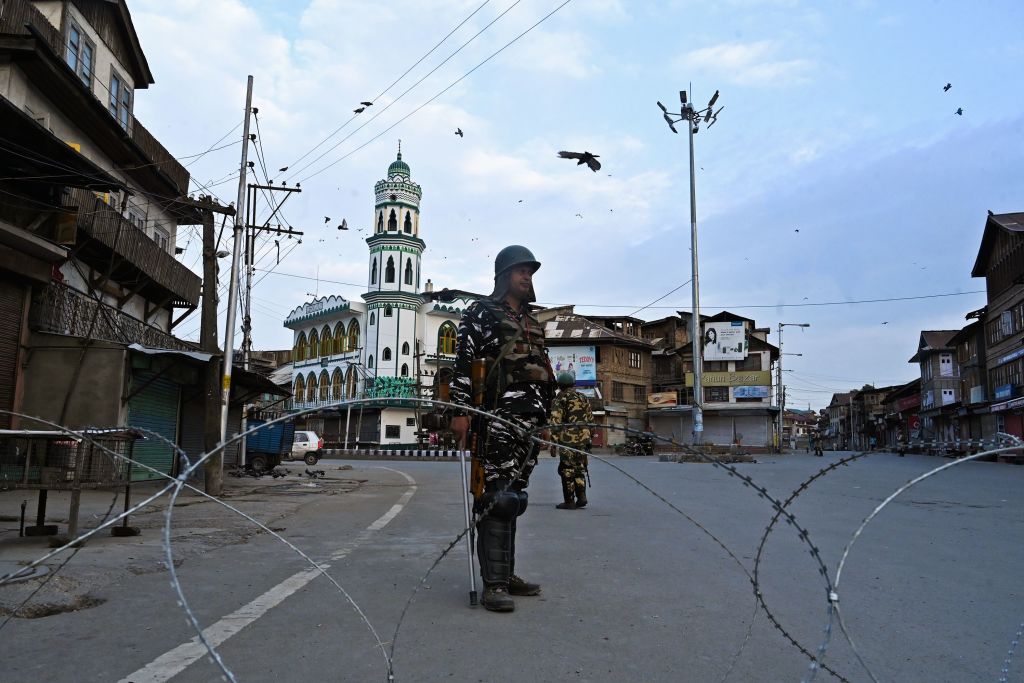
Security personnel stand guard on a street during a lockdown in Srinagar on August 12, 2019. (Photo credit: TAUSEEF MUSTAFA /AFP/Getty Images)

We spent five days (9-13 August 2019) traveling extensively in Kashmir. Our visit began on 9 August 2019 – four days after the Indian government abrogated Articles 370 and 35A, dissolved the state of Jammu and Kashmir, and bifurcated it into two Union Territories.

When we arrived in Srinagar on 9 August, we found the city silenced and desolated by curfew, and bristling with Indian military and paramilitary presence. The curfew was total, as it had been since 5th August. The streets of Srinagar were empty and all institutions and establishments were closed (shops, schools, libraries, petrol pumps, government offices, banks). Only some ATMs and chemists’ shops – and all police stations – were open. People were moving about in ones and twos here and there, but not in groups.

Continue reading Kashmir Caged – A Report from the Ground

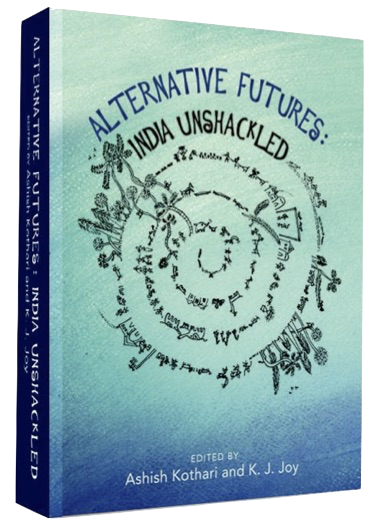
Alternative Futures – India Unshackled

Alternative Futures
Alternative Futures – India Unshackled

After the Berlin wall fell in 1989 and the Soviet Union collapsed in 1991, many consigned ideologies and alternatives to the rubble of history. The end of the cold war was explained as the victory, not just of liberal ethos and individual freedom, but of dynamic, market-driven capitalism championed by likes of Ronald Reagan, Margaret Thatcher and Manmohan Singh. India’s left also embraced this belief in practice, promoting foreign and national capitals and capitalist-led industrialization. They hoped market miracles would generate employment and wealth. Women such as MedhaPatkar, a social activist and a fierce opponent of the globalized developmental model and Sudha Bhardwaj, a trade union activist in Chhattisgarh seemed as thoroughly on the wrong side of the history as it was possible to be. Continue reading Alternative Futures – India Unshackled

Adam, Eve, Art – Neither Belief Nor Unbelief: Prasanta Chakravarty

Guest post by PRASANTA CHAKRAVARTY

Stephen Greenblatt has struck upon a sheer and stupendous idea: to retell the tale of the first couple of the Christian world, Adam and Eve. The Rise and Fall of Adam and Eve is a sweeping work with a remarkably ranging scholarship, galloping through centuries in minutes. The tone and the expanse of the book successfully hide the vertical depth of laborious research that has gone into bringing such an ambitious endeavour into culmination.  This is also a book of reliving an ancient art: the bare act of telling a story, holding up the full panoply of its rich narrative contours. The book jauntily speculates as much as it reveals. The very subject matter allows Greenblatt to do so. But there is yet another dimension to this project— a life-long, intense personal engagement with the idea of how conscious human intervention may have altered man’s relationship with whatever is cosmic, mythical and animistic. To that end it is also an ideological book that tells the story of Adam and Eve as it tries to grapple with our modern condition.

Continue reading Adam, Eve, Art – Neither Belief Nor Unbelief: Prasanta Chakravarty

Malayali Feminism 2018: In the Light of Vadayambady and Hadiya’s Struggle

The almost insoluble task is to let neither the power of others, not our own powerlessness, stupefy us.

Adorno.

As frightening spectres of untouchability and unseeability hover around the festering sore of the ‘caste-wall’ at Vadayambady in Kerala, as the so-called mainstream left-led government here continues to pour its energy and resources into aiding and abetting caste devils there, as most mainstream media turns a blind eye, as the Kerala police continues its mad-dog-left-loose act, many friends ask me: why have you not yet written about the struggle there of dalit people fighting of the demon of caste now completely, shamelessly ,in the public once more? Continue reading Malayali Feminism 2018: In the Light of Vadayambady and Hadiya’s Struggle

The Meaning of Jignesh Mevani

[A shorter version  of this article was published in The Wire on 18 December. I thank K. Satyanarayana, P. Sanal Mohan and Jangam Chinnaiah for their very helpful comments on it, which have helped me to clarify and elaborate on certain points.]

Jignesh Mevani, image courtesy New Indian Express

The rise of Jignesh Mevani constitutes a significant landmark in the political configuration in which the Congress has risen, despite itself, from a state of utter disarray to become the point of articulation for a possible political realignment in the near future. The process of political reconfiguration had already begun as a very significant section of the powerful patidar community, long understood to be the bedrock of the BJP’s social base in the state, had broken away from it. But alongside this, the rise of the young leaders Hardik Patel, Alpesh Thakore and Jignesh Mevani together produced the new young face of emergent Gujarat.

There is no doubt that the vacuum that characterized the space where the opposition should have been, no longer exists. The masthead of a new opposition formation is evident on the horizon. This turnaround in the fortunes of the Congress would not have been possible without the re-alignments in the non-electoral arena, facilitated in no small measure by the rise of this young leadership.

Continue reading The Meaning of Jignesh Mevani

Objects in the Mirror are Closer than you Think – Beyond the Rhetoric of Otherness: Lata Mani

Guest post by LATA MANI

Political discourse in the contemporary period is by marked an affective intensity. Regardless of the issue an acute depth of feeling is in evidence. Righteousness, betrayal, entitlement, anguish and aggression suffuse arguments across the political spectrum. What seems at stake is not merely the desire to speak but to have the terms of one’s discourse deemed legitimate, to be understood as one understands oneself. The sizzle, crack and snap of rhetoric expresses the heightened temperature. One could credibly interpret it as the sound of an existing order breaking down under multiple pressures. This would however be a partial explanation. The surcharged atmosphere is equally evidence of the ties that bind those passionately disagreeing with each other. And therein lies a clue. Continue reading Objects in the Mirror are Closer than you Think – Beyond the Rhetoric of Otherness: Lata Mani

Sad at Killing of My Ambedkarite Elder Sister Gauri Lankesh, says Chandrashekhar of Bhim Army, as Govt Moves to Slap NSA on BA Activists

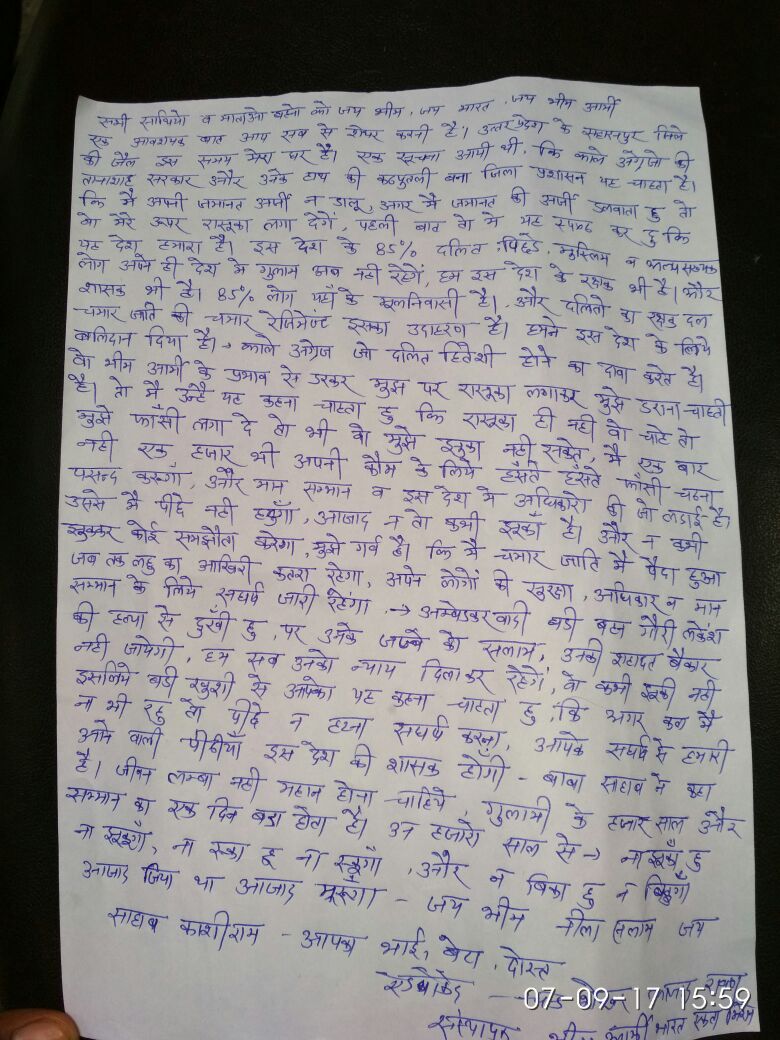
This is an amazing moment. From what we at the Committee for the Defense of Bhim Army have gathered, and from Chandrashekhar’s own letter from Saharanpur District Jail (see below), the administration is moving to slap charges under the National Security Act on Chandrashekhar and other activists. However, while expressing his resolve to fight on, Chandrashekhar also makes it clear in this letter (the facsimile and the text below) that he is equally concerned and saddened at the killing of Gauri Lankesh. He refers to her as his ‘Ambedkarite elder sister’ and pledges to carry forward the struggle to get her justice as well. This is how different dots in the struggle get connected. This is how new nodes of thinking and doing politics emerge. Right now, for us however, the struggle, for the legal defense of Chandrashekhar and other Bhim Army activists is paramount. They want to crush the movement in its infancy and we must ensure it can grow and carry on its struggle for liberation from the yoke of Hinduism and Hindutva.
It is worth placing on record here that when the formation of the Committtee for the Defense of Bhim Army was announced, Gauri had got it touch and expressed her wish to be on the Committee. Unfortunately, that was not to be. But we are sure that this is perhaps the best tribute we can offer to Gauri – carry on the fight for the defense of Bhim Army!

Chandrashekhar’s letter from jail

सभी साथियों व माताओं बहनों को जय भीम जय भारत, जय भीम आर्मी,
 एक आवश्यक बात आप सब से शेयर करनी है उत्तर प्रदेश के सहारनपुर जिले की जेल इस समय मेरा घर है. एक सूचना आई थी की काले अंग्रेजों की तानाशाह सरकार और उनके हाथ की कठपुतली बना जिला प्रशासन यह चाहता है कि मैं अपनी जमानत अर्जी ना डालू अगर मैं जमानत की अर्जी डलवाता हूं तो वो मेरे ऊपर रासुका लगा देंगे.
पहली बात तो मैं यह स्पष्ट कर दूं कि यह देश हमारा है इस देश के 85 % दलित पिछड़े मुस्लिम वह अल्पसंख्या लोग अपने ही देश में गुलाम अब नहीं रहेंगे हम इस देश के Rakshak भी है और शासक भी है 85 % लोग यहां के मूल निवासी है और दलितों का रक्षक दल चमार जाति की चमार रेजिमेंट इनका उदाहरण है हमने इस देश के लिए बलिदान दिया है काले अंग्रेज जो दलित विदेशी होने का दावा करते हैं वह भीम आर्मी के प्रभाव से डरकर मुझ पर रासुका लगाकर मुझे डराना चाहते हैं तो मैं उन्हें यह कहना चाहता हूं कि रासुका ही नहीं वह चाहे तो मुझे फांसी लगा दे तो भी वह मुझे झुका नहीं सकते.
मैं एक बार नहीं एक हजार बार भी अपनी कौम के लिए हंसते हंसते फांसी चढ़ना पसन्द करुगा और मान-सम्मान वे इस देश में अधिकारों की जो लड़ाई है उसे पीछे नहीं हटूंगा. आजाद न तो कभी झुका है और ना कभी झुक  कर कोई समझौता करेगा मुझे गर्व है कि मैं चमार जाति में पैदा हुआ जब तक लहू का आखरी करता रहेगा अपने लोगों की सुरक्षा अधिकार वह मान सम्मान के लिए संघर्ष जारी रहेगा ।।
अंबेडकरवादी बड़ी  बहन गौरी लंकेश की हत्या से दुखी हूं पर इनके जज्बे को सलाम उनकी शहादत बेकार नहीं जाएगी हम सब उनको न्याय दिलाकर रहेंगे वो कभी झुकी नहीं इसलिए बड़ी खुशी से आपको यह कहना चाहता हूं कि अगर कल मैं ना भी रहूं तो पीछे न हटना संघर्ष करना आपके संघर्ष से हमारे आने वाली पीढ़ियां इस देश की शासक होगी बाबा साहब ने कहा जीवन लंबा नहीं महान होना चाहिए गुलामी और सम्मान का एक दिन बड़ा होता है उन हजारों साल से ना झुका हु  ना झुका गा ना रुका हु ना रुकू गा और ना बिका हु ना बिकुगा आजाद जिया था आजाद मरूँगा  जय भीम नीला सलाम जय साहब कांशीराम ।
       आपका भाई बेटा दोस्त
*(एडवोकेट चंद्रशेखर आजाद रावण संस्थापक भीम आर्मी भारत मिशन)*

Armed Forces Veterans Speak Out – ‘Act Now to Uphold the Constitution’

In the midst of all the cacophony and shrill pseudo-nationalist rhetoric that is destroying the fabric of a plural India, often in the name of the Armed Forces, 114 veterans of the Indian Armed Forces have spoken out. They have spoken out in no uncertain terms against targeted attacks on Muslims and Dalits and against the attempts to destroy the Constitution –  upon which arose the new, independent India.

An Open Letter from Veterans of the Armed Forces

To: the Prime Minister of India, Chief Ministers of the States, and Lieutenant-Governors of the Union Territories.

30 July, 2017

We are a group of Veterans of the Indian Armed Forces who have spent our careers working for the security of our country. Collectively, our group holds no affiliation with any single political party, our only common commitment being to the Constitution of India.

It saddens us to write this letter, but current events in India have compelled us to register our dismay at the divisiveness that is gripping our country. We stand with the ‘Not in My Name’ campaign that mobilised thousands of citizens across the country to protest against the current climate of fear, intimidation, hate and suspicion.

The Armed Forces stand for “Unity in Diversity”. Differences in religion, language, caste, culture or any other marker of belonging have not mattered to the cohesion of the Armed Forces, and servicemen of different backgrounds have fought shoulder to shoulder in the defence of our nation, as they continue to do today. Throughout our service, a sense of openness, justice and fair play guided our actions. We are one family. Our heritage is like the multi-coloured quilt that is India, and we cherish this vibrant diversity. Continue reading Armed Forces Veterans Speak Out – ‘Act Now to Uphold the Constitution’

Under the sign of security – Why the bogey of ‘the illegal Bangladeshi immigrant’ is so powerful across urban Indian homes: Sahana Ghosh & Rimple Mehta

Guest Post by SAHANA GHOSH & RIMPLE MEHTA

From the night of July 11 when Zohra Bibi did not return home to the evening of July 16 when union minister Mahesh Sharma, member of parliament for Gautam Budh Nagar, UP met with residents of Mahagun Moderne, much has transpired. Promptly after the minister’s assurances of ‘justice’ and even retribution to the flat-owners, the settlement of tin walled shacks in which Zohra Bibi and other workers like her lived with their families was demolished the next day. Many of the ‘facts’ of the matter remain disputed – while Zohra Bibi maintains that she neither admitted to the theft of cash nor hid in the basement of the building, the allegation that her employers Harshu and Mitul Sethi harassed and detained her, confiscating her mobile phone is denied by them. Meanwhile, thirteen men, a majority of them Bengali Muslims from West Bengal, arrested from the workers’ settlement are denied bail on the charge of attempted murder on the might of three FIRs filed by residents of Mahagun Moderne and languish in judicial custody. The Noida police are yet to commence any investigation of the Sethis as required by the FIR filed by Zohra Bibi and her husband Abdul Sattar. What does this language of the riot, of murderous mobs with which residents of the swanky apartment complex took to social media with #MaldainNoida accomplish? As security cards, required by domestic and other workers to enter the gated community, were revoked for 80-odd workers under the cry of ‘ban the Bangladeshi maid’, the bogey of the illegal Bangladeshi immigrant reared its ugly head. Continue reading Under the sign of security – Why the bogey of ‘the illegal Bangladeshi immigrant’ is so powerful across urban Indian homes: Sahana Ghosh & Rimple Mehta

No Flag Large Enough – Jubilation in India and Collateral Damage in Kashmir

The recent incident of violence that led to the death of a police officer, DSP Ayub Pandith, was condemned by all kinds of people in Kashmir, as well as elsewhere. It prompted introspection, sadness and regret – like any tragedy of this nature should.

Yesterday two unarmed civilians, Tahira Begum, a forty three year old woman and a young man called Shahdab Ahmed Chopan of Brenty Batapora Village in Anantnag district in South Kashmir were killed along with two Kashmiri combatants (Bashir Ahmed Lashkari and another person who may or may not be called Abu Maz) in the course of a joint operation by the 19th Rasthriya Rifles of the Indian Army, CRPF and the Special Operations Group of Jammu & Kashmir police.

Continue reading No Flag Large Enough – Jubilation in India and Collateral Damage in Kashmir

Mathematics, Decolonization and Censorship: C. K. Raju

Guest post by C.K.RAJU
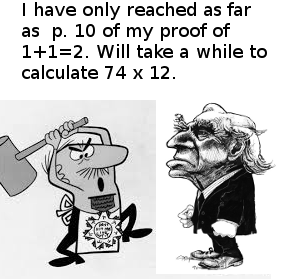
Did you find math difficult in school? Does your child? If so, what is the solution: change the teacher or change the child? Blaming the teacher or the child for math difficulties is a common but unsound explanation. Thus, problems with teachers or students should equally affect all subjects, not only math.The right solution is to change math. That seems impossible. People naively believe that math is universal. In fact, the math taught today, from middle school onward, is called formal math; it began only in the 20th c. with David Hilbert and Bertrand Russell. It differs from the normal math which people earlier did for thousands of years, across the world, and still do in kindergarten.Formal math adds enormously to the difficulty of math but nothing to its practical value. The practical value of math comes from efficient techniques of calculation, used in normal math, not prolix formal proofs. For example, the proof of 1+1=2 took Whitehead and Russell 368 pages of dense symbolism in their Principia. That proof is a liability in a grocer’s shop. In contrast, normal math is easy. One apple and one apple make two apples as most people learn in kindergarten. So should we switch back to normal math at all levels?

Russell

Continue reading Mathematics, Decolonization and Censorship: C. K. Raju

A Day Against Kalluri at IIMC, Delhi: Bastar Solidarity Network Delhi Chapter

Guest Post by Bastar Solidarity Network Delhi Chapter

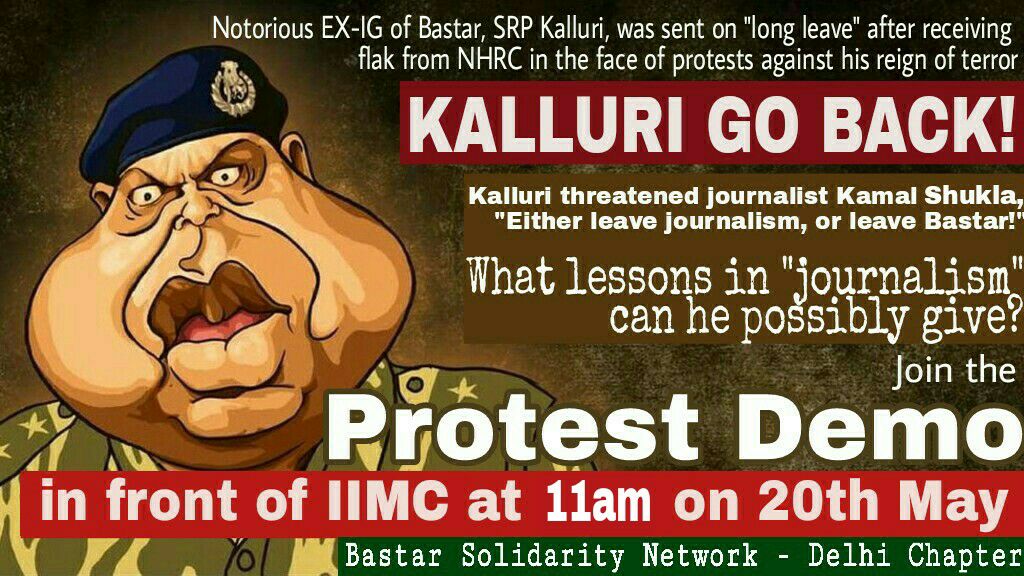
The democratic forces, organizations and the thinking minds of IIMC took part in a spirited protest today against the invitation extended to notorious ex-IG Kalluri by the IIMC administration to take part in a seminar. To start with, since last two days, there were several attempts on the part of the organizers to confuse/conceal Kalluri’s invitation. Immediately after the declaration of the protest, Kalluri’s name was dropped from the poster. There were also threats of counter-mobilisation by the BJP goons. But undeterred, as we reached the gates of IIMC at 11am, the site echoed with slogans of “Killer Kalluri Go Back”!

Continue reading A Day Against Kalluri at IIMC, Delhi: Bastar Solidarity Network Delhi Chapter

LBJ, Kashmir, and Indian Liberals: Rajive Kumar

Guest Post by RAJIVE KUMAR

Towards the end of his presidency, Lyndon B Johnson, the 36th President of the United States of America, had been reduced to a figure of universal scorn and derision. His escalation of the Vietnam War to a point from which it became impossible to extricate the US ended up  in becoming one of the defining human tragedies of twentieth century. This was war fought on the basis of pretexts that did not actually exist.  The slur “Hey, hey, LBJ, how many kids did you kill today?” which became an anthem of sorts for protestors eventually compelled him to forgo running for a second term in office in 1968.  Those protesting against the war, those who eventually forced Lyndon Johnson to leave the political arena were Americans who were overcome with images of atrocities and the rising count of civilian deaths in a mindless war.

Continue reading LBJ, Kashmir, and Indian Liberals: Rajive Kumar