Statement of Solidarity with Kancha Ilaiah

[The following is a statement in support of scholar-activist Prof  Kancha Ilaiah, who is under attack from a number  of Hindutva organizations and  against whom the Hyderabad police recently registered a case for ‘hurting religious sentiments’. The tendency to  resort to police cases, in order to stifle any criticism of Hindutva and the regime has assumed menacing proportions, against which we stand  firmly with Kancha Ilaiah. Those who wish to add their names to the statement and express solidarity may do so by adding them as comments.]

We, the undersigned, strongly condemn the continued harassment, attacks on and intimidation of Prof Kancha Ilaiah at the hands of various Brahmin / brahminical organizations, police and the state administration of Telengana for his political writings and views.  We also hold responsible for this intimidatory environment, the Telugu media that reportedly published distorted and misleading reports of Prof Ilaiah’s speech.

While speaking at the Centre of Indian Trade Unions, a wing of the Communist Party of India (Marxist) on May 14, 2016, at Vijayawada (Amaravathi), Prof. Ilaiah had  said: “The Brahmins as a community have not contributed anything to the production process of the Indian nation. Even now their role in the basic human survival based productive activity is not there. On the contrary, they constructed a spiritual theory that repeatedly tells people that production is pollution.” Continue reading Statement of Solidarity with Kancha Ilaiah

बीएचयू में लाइब्रेरी को लेकर आंदोलन अभी भी जारी है: अनन्त प्रकाश नारायण

अतिथि पोस्ट: अनन्त प्रकाश नारायण

Guest Post by Anant Prakash Narayan

This is an urgent appeal from Banaras Hindu University (BHU) students to students, youth, intellectuals and journalists everywhere.  Please come to the support of BHU. Speak for BHU students. Students in BHU have been fighting for the right to study 24/7 in the BHU Library. The curtailing of the hours for which the library is open by the university authorities is a direct assault on the right to study. What else are students meant to do in an university? This is what has led students in BHU to agitate. Students even sat on an indefinite hunger strike for nine days in protest. Students have been assaulted and rusticated for their struggle to study in the library.  The hunger strike has been now lifted, because of the intense pressure of the university administration and the failing health of several students, but the struggle continues. BHU students are appealing to everyone to please send post cards in support of their demands to the Vice Chancellor of BHU.

You can also flood the VC with emails to his address  – vc@bhu.ac.in.

Bombard his office and email with messages in support of BHU students, in support of democracy and rights, for right to quality education and freedom of speech.

This slideshow requires JavaScript.

Students on Hunger Strike Were Forcibly Sent to Hospital by the University Authorities

‘बीएचयू में लडाई जारी है’

बीएचयू में लाइब्रेरी समेत 4 मांगो को लेकर 26 दिनों तक चला आंदोलन अभी भी जारी है। 9 दिनों तक चला अनिश्चितकालीन अनशन हमें प्रशासन के दबाव और साथियों की बिगडती तबीयत के कारण तोडना पडा लेकिन अपने सवालों  के साथ हम आज भी संघर्षरत है। इसलिए देश-दुनिया के सभी छात्रों, विश्वविद्यालयों और बुद्धिजीवियों से हम अपील करते हैं कि हमारे निम्न सवालों के समर्थन में आकर हमारे संघर्ष को मजबूत बनाएं और बीएचयू कैम्पस मे अभिव्यक्ति की लडाई में हमारी मदद करें
Continue reading बीएचयू में लाइब्रेरी को लेकर आंदोलन अभी भी जारी है: अनन्त प्रकाश नारायण

Condemn the Attack on Kancha Ilaiah for asking, ‘Is God a democrat?’

[We at Kafila condemn the repeated  attacks on scholar activist Professor Kancha Ilaiah by the Hindu Right and  the recent case registered against him by the Hyderabad police. According to a Times of India report, Ilaiah had on May 14 delivered a lecture in Vijayawada in a programme entitled `Nationalism and Divergent Views’ organised by CITU where he reportedly criticised Hindu gods and scriptures, according to the police. Following this an advocate filed a private petition in the court of the XI Metropolitan Magistrate court, Ranga Reddy , requesting to register an FIR under relevant sections of IPC. The court directed cops to register a case under sections 295 A (deliberate and malicious acts, intended to outrage religious feelings of any class by insulting its religion or religious beliefs),153 A (promoting enmity between different groups on grounds of religion) and 298 (uttering, words, etc. with deliberate intent to wound the religious feelings of any person) of IPC.”

Earlier, last year the  VHP had initiated a campaign against him which was followed by the filing of a case against him by the Hyderabad police. That was in relation to an article Kancha Ilaiah had written, asking ‘Is God a Democrat?’ The story by Ajaz Ashraf from Scroll.in linked below refers to last year’s case but due to an inadvertent mix-up, was initially extracted by us as the one in the eye of the current controversy. The error is seriously regretted and we thank one of our readers for pointing this out. The Times of India report linked to above gives refers to the speech that is currently in the eye of the storm.

Professor Ilaiah has now himself described the current attacks on him in this piece in Scroll.in, where he signs his article as Kancha Ilaiah Shepherd, recalling his caste name (translated into English, in order to mark his distance from the brahmans).

The attacks on  Professor Ilaiah are totally unacceptable. We have all read and long admired his writings. Many of us have hugely benefited and learnt a lot from them. The time has come for us to collectively put our heads together and fight this menace of Hindutva, which after hurting every living being’s dignity and sentiments, has now begun claim to be the perpetual and universal victim. Dalits today cannot speak of the indignities and oppression that they have suffered at the hands of the Hindus – even that has become a matter of ‘hurt sentiments’. The response has to be worked out politically and intellectually so that the law is not repeatedly turned into a surrogate of Hindutva politics.]

The Hyderabad police have registered a case against renowned social scientist Kancha Ilaiah, after Vishwa Hindu Parishad activists complained that an opinion piece he wrote in the Telugu newspaper Andhra Jyothi had hurt their religious sentiments.

They filed their complaint at Hyderabad’s Sultan Bazar Station was filed on May 9, the day Ilaiah’s article titled Devudu Prajasamya Vada Kada? (Is God a democrat?) was published.

VHP activists Pagudakula Balaswamy, Thirupathi Naik and two others accused Ilaiah of comparing Hinduism with Islam and Christianity, insulting Hindu Gods by comparing them to mortals, mocking their worship, and for attempting to trigger clashes between upper and lower classes (by which they presumably meant castes).

On the basis of their complaint, Inspector P. Shiva Shankar Rao wrote a letter to the Senior Assistant Public Prosecutor, who advised the police to register a case under Section 153 (A) and Section 295 (A), which empower the authorities to act against people who commit deliberate and malicious acts aiming at outraging religious sentiment and spreading enmity between groups.

Case under investigation

The public prosecutor’s legal opinion led to a case being filed on May 15 against Ilaiah, the management of the Andhra Jyothi newspaper, its editor and publisher. The case is currently under investigation, at the completion of which a decision will be taken to whether to chargesheet them.

A police officer at the station told Scroll that Ilaiah is in the habit of articulating provocative views in his articles, which can and do hurt the sentiments of people. “Why does he have to make comments against practices which are dear to people?” the officer said, declining to give his name.

Read the full article here

What the UGC Gazette Notification 2016 Portends for the State of Higher Education in India: Rina Ramdev and Debaditya Bhattacharya

This is a guest post by RINA RAMDEV AND DEBADITYA BHATTACHARYA

The much-debated API (Academic Performance Indicator) system, linking promotions of faculty members in Indian universities/colleges to a quantifiable assessment of their performance, was introduced by the University Grants Commission (UGC) in its 2010 Regulations. Since then, there has been mounting resistance and discontent among massive sections of the teaching community – forcing the UGC to withdraw the said assessment framework for a while in 2013, before reintroducing it across institutions of higher education. However, over the years, the ire of protesting teachers has translated into a sustained critique of the API system and its failure to account for the infrastructural inadequacies of public institutions as adversely impacting the promotion prospects of thousands of teachers across the country.

It was rightly argued that a point-based appraisal pattern reduces teaching as an adventure of ideas into a standardised set of visible-verifiable outcomes and deliverables, expending in this, the necessary surplus of every academic encounter. The clock-timed hours of classroom-teaching – convertible into digits and decimals – were not only incommensurate to the disaggregation of thought beyond workdays and work-hours, but also insisted on a corporate-model professionalism limiting the exact interface between the teacher[-as-service-provider] and the student[-as-client].

The perils of quantification notwithstanding, the API system practically sought to make teaching a redundant exercise in terms of ‘necessary qualifications’ for faculty promotions. With a lucrative price-tagging of the ‘value’ of research activities conducted by individual teachers outside of teaching-schedules and the consequent structures of waging intellectual productivity through the numbers of projects and publications, the API contributed to a voiding of the classroom in undergraduate colleges in many parts of the country. Forced to prove her/his levels of productivity as the most essential claim to survival and growth within the field, the teacher needed but little to do by way of engaging students. And yet, on the contrary, the government persisted with its policy of withdrawing research grants and forcing research organisations to look for alternative sources of funding to sustain their work. Consequently, teachers have been infrastructurally forced into producing dubious research in the cause of ‘career advancement’, self-funding their way into business-rackets parading as scholarly platforms.

Continue reading What the UGC Gazette Notification 2016 Portends for the State of Higher Education in India: Rina Ramdev and Debaditya Bhattacharya

Niyamgiri – An Unending Struggle for Livelihoods and Habitat: Kamal Nayan Choubey

Guest post by KAMAL NAYAN CHOUBEY

On the 6th of May, 2016 the Supreme Court rejected Odisha government’s petition for conducting Gram Sabha meetings for a second time in villages near Niyamgiri hills for the extraction of bauxite. Earlier, in August 2013, following Supreme Court directions, the Dongria Kondh tribals of Niyamgiri clearly decided in 12 Gram Sabha meetings that they would not give any permission for mining in their place of worship. The Odisha government filed an interlocutory application in February 2016 and argued that situation had changed in that area because mining was now proposed to be done by Odisha Mining Corporation (OMC) instead of a joint venture project between OMC and Vedanta. The Odisha government filed the petition to help the Anil Agrawal-owned Sterlite (formerly Vedanta Alumina) company, which wants to extract bauxite from Niyamgiri hill in Kalahandi for its Lanjigarh refinery. The Supreme Court, however, rejected the arguments of Odisha government and accepted the validity of August 2013 Gram Sabha meetings. Now, the Odisha government can claim that it wants to ensure the development of all groups of the state and create more alternatives for marginalized groups like Dongria-Kondhs. The question, however, is whether the Odisha government can claim, on moral grounds, that it has not been working as an agent of corporate capital? What can a marginalized group do when it finds that a democratically elected government is relentlessly working against its interest and violating constitutional provisions? Indeed the Niyamgiri experience has raised many questions not just about the violence caused by dominant ‘development’ model against marginalized adivasi groups, but also about the crisis of constitutionalism and the role of democratically elected government in using/misusing state apparatus for the benefit of capitalists.

Continue reading Niyamgiri – An Unending Struggle for Livelihoods and Habitat: Kamal Nayan Choubey

Public Burdens of Religion and the Lightness of Atheism : Sanjay Kumar

Guest Post by Sanjay Kumar

Death evokes strongest of human emotions. However, exploring and finding reasons behind a death is also part of our humanity. Legal codes in all countries demand criminal investigations of deaths due to the so called ‘unnatural’ causes. Medical sciences have advanced largely due to explorations of the other, ‘natural’ causes of death. Deaths due to completely avoidable reasons fall in a category of their own. How a society deals with such deaths is a good indicator of how it treats its living.

One hundred and eight people died in an explosion during a fire cracker festival in a temple in Kollam, Kerala on 10th April. According to reports, the district administration had not given permission for the event, citing hazards of firing crackers close to a densely populated area, and the fact that the fire cracking festivities were actually in the form of a competition. Yet, pressure from the powerful temple trust meant that the programme was held amid full police presence. The accident happened in one of the better governed states of India, which also boasts of a vigilant citizenry. Continue reading Public Burdens of Religion and the Lightness of Atheism : Sanjay Kumar

Sahmat statement on intimidation and threats to scholars and activists

Guest Post : Sahmat statement on intimidation and threats to scholars and activists who investigated human rights abuses in Chhattisgarh

Date 24.5.2016

We strongly condemn the Chhattisgarh government and its police force for using intimidation and threats of a criminal case against academics and political activists investigating human rights abuses in the southern parts of the state, especially Bastar and Dantewada. A fact finding team consisting of Prof. Archana Prasad, Jawaharlal Nehru University (JNU), Prof. Nandini Sundar, Delhi University (DU) and Vineet Tiwari, researcher at CPI’s Joshi-Adhikari Institute recently visited the area for 5 days between 12-16 May 2016. They were accompanied by Sanjay Parate, Chhattisgarh State Secretary CPI-M.

After the visit the team was accused of spreading dissent against security agencies and supporting the ’Maoists’. The statement by the state home minister Ram Sewak Paikra in the Times of India reportedly calling the three reputed Delhi based academicians ‘anti-nationals’ and ‘Maoist’ is part of a recent and explicit trend to stifle the freedom of expression and movement through a state crackdown on political dissent. The threat of an FIR and further harassment looms large. The local contacts, escorts and villagers who hosted the team are being harassed and intimidated by the Police in order to fabricate evidence and ensure that they help no other study team in the future.

The Press Release by the team clearly indicts both the Chhattisgarh state and Maoist violence and reveals how ordinary Adivasis, struggling for a dignified existence and protesting against the violation of basic rights have little space to voice genuine grievances.

This is the latest in a long line of actions to criminalize dissent, free expression and movement, and stifle fair reportage of events which have become hallmarks of the Chhattisgarh government.

We appeal to all democrats to condemn this brazen attempt at intimidation by the State and its Security Agencies.

Bishnupriya Dutt, (JNU)
Ranjani Mazumdar, (JNU)
Surinder Jodhka, JNU)
Neeladri Bhattacharyya, (JNU)
Jaivir Singh, (JNU)
Vivek Kumar, (JNU)
Sachidanand Sinha, (JNU)

Continue reading Sahmat statement on intimidation and threats to scholars and activists

सामाजिक न्याय ही इस दौर की स्टूडेंट पॉलिटिक्स का मुख्य एजेंडा होगा: अनन्त प्रकाश नारायण

अतिथि पोस्ट: अनन्त प्रकाश नारायण

दिल्ली हाईकोर्ट के आदेश के बाद जे.एन.यू. में 16 दिन की एक भूख हड़ताल खत्म हुई. सभी तरह की सजाओ पर, जो जे.एन.यू. की उच्च स्तरीय जाँच कमिटी (HLEC) ने हम छात्र- छात्राओ पर लगा रखी थी, उन पर रोक लगा दी गई. इस आदेश को ले करके तमाम तरह की व्याख्याए/निर्वचन (Interpretation) है. इस भूख हड़ताल के दौरान कुछ ऐसी घटनाये घटी जिसे यह कैंपस हमेशा याद रखेगा जैसे एकेडेमिक कौंसिल को छोड़कर वाईस चांसलर द्वारा भाग जाना. एकेडेमिक कौंसिल में हमारी मांगे एकदम स्पष्ट थी. उच्च स्तरीय जाँच कमिटी को ख़ारिज करना, ओ.बी.सी. रिजर्वेशन को दोनों स्तर पर लागू करवाना, हॉस्टल में ओ.बी.सी. रिजर्वेशन और साक्षात्कार/ वाइवा के नंबर को कम करना इत्यादि. जब हम जे.एन.यू. की बात करते है तो हमे बिलकुल स्पष्ट हो जाना है कि जे.एन.यू. प्रशासन देश के किसी भी प्रशासन की ही तरह है और कई बार तो उससे भी बदतर. वह तो यहाँ का स्टूडेंट पॉलिटिक्स है जो कि इस कैंपस को समावेशी /इंक्लूसिव बनाने के लिए लड़ता है.
यह वही जे.एन.यू. प्रशासन है जिसने लगभग दस साल तक (1984-93) इस कैंपस से deprivation/ quartile पॉइंट्स को यह कहते हुए ख़त्म कर दिया था कि इस कैंपस में गाँवो से आने वाले स्टूडेंट्स के कारण यहाँ का अकादमिक स्तर ख़राब हो रहा है और कैंपस रेडिकलाईज़ हो रहा है. यह जे.एन.यू. का स्टूडेंटस मूवमेंट था जो की इसे जीत कर 1994 में वापस लाता है. हमने देखा इसी तर्ज़ पर किस तरह से प्रशासन ने ओ.बी.सी. रिजर्वेशन के मिनिमम ‘कट-ऑफ’/cut-off की गलत व्याख्या करके सैकड़ो पिछड़े वर्ग के छात्र- छात्राओ को 2008-2010 तीन वर्षो तक कैंपस से बाहर रखा. यह जे.एन.यू. स्टूडेंट्स मूवमेंट था जिसने कि एक लम्बे पोलिटिकल और लीगल बैटल के बाद एक सही व्याख्या को इस कैंपस में ही नही पूरे देश में लागू करवाया. मदरसा सर्टिफिकेट की लड़ाई हो या फिर अभी ओ.बी.सी. मिनिमम एलिजिबिलिटी का मामला हो, सारे मामले में प्रशासन हमारे खिलाफ ही खड़ा रहा है. आज जब हम ओ.बी.सी. रिजर्वेशन के उद्देश्य/स्पिरिट को इंश्योर कराने के लिए दोनों स्तर पर रिलैक्सेशन लागू कारवाने की कोशिश कर रहे है तब हम देखते है कि किस तरह से इस प्रशासन ने अपने सारी नैतिकता/ मर्यादा को एक तरफ रखते हुए पिछले वी.सी. के समय हुए स्टैंडिंग कमिटी के फैसले को बदल दिया और हद तो तब हुई जब जे.एन.यू. स्टूडेंट्स यूनियन के अध्यक्ष और महासचिव ने यह दावा किया कि इनविटेसन लेटर पर उनके हस्ताक्षर फर्जी किये गये है.

Continue reading सामाजिक न्याय ही इस दौर की स्टूडेंट पॉलिटिक्स का मुख्य एजेंडा होगा: अनन्त प्रकाश नारायण

How We Destroy our Future by Proxy – On The Ruination of Ruins: Rahul Sharma

This is a guest post by RAHUL SHARMA

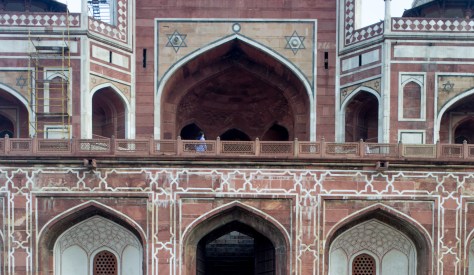
humayun-1-2

Why do we, if at all we do, really care about our material cultural heritage? Is it because it reminds us of what was, and is, good and great in humanity? Or is it the case that we look at a cultural objet and recognise that it is the Ozymandias complex materialized, that even the great and the mighty fail? Or is it that we may never attain the great heights in purity, simplicity, or other qualities we idolize and project on the remnants of the times past?

Or maybe we just want the tourism dollars and euros. Be that as it may, only someone obtuse, or with exaggerated tendency towards the behavior philistine, would say that our cultural heritage, our miniature paintings, our ruins, our tombs, forts, wall paintings, temples, mosques , books, manuscripts, and other things this essay is too short to quantify, are not worth preserving. Also note here that I said we, because we might be a bunch of separate kingdoms and separate principalities earlier, but deep down, we were one people, separated by religion and language, but united (willingly or unwillingly), by the plain and simple fact that you can’t chose your neighbor.

Continue reading How We Destroy our Future by Proxy – On The Ruination of Ruins: Rahul Sharma

कुल्हाडी की छाया में उम्मीद

‘शब्द हिरासत में हैं और हत्यारे खुलेआम घुम रहे हैं’

( Photo Courtesy : freethinker.co.uk, Martyr Rajib Haider who was killed by the Islamists on 15 th February 2013)

आम दिनों में ऐसे बयानों पर कोई गौर नहीं करता, मगर एक ऐसे समय में जबकि आप के कई साथी इस्लामिस्टों के हाथों मारे गए हों और उनके द्वारा जारी हिट लिस्ट में आप का नाम भी शुमार हो और उधर अपने आप को सेक्युलर कहलानेवाली सरकार भी  इन आततायियों के खिलाफ सख्त कदम उठाएगी ऐसी कोई उम्मीद नहीं दिखती तो, उस पृष्ठ भूमि में तीन ब्लागर्स द्वारा अपना नाम लेकर जारी किया गया एक बयान विद्रोह की आवाज़ को नए सिरेसे बुलन्द करना है। (http://sacw.net/article12741.html)

कुल्हाडी की छाया में उम्मीद’ यही शीर्षक है उस पत्र का जो बांगलादेश के युवा ब्लॉगर और लेखक आरिफ जेबतिक ने लिखा है। सरकार की समझौतापरस्ती की आलोचना करते हुए वह लिखते हैं कि ‘जब किसी नागरिक की हत्या होती है और राज्य की प्राथमिकता होती है कि पहले यह पता किया जाए कि उसने लिखा क्या न कि हत्यारों को पकड़ा जाए, तब स्पष्ट होता है कि इन ब्लागर्स के हत्यारों को पकड़ने में सरकार की कितनी दिलचस्पी है।’ ‘मेरे विचार चुपचाप रोते हैं’ शीर्षक से एक अन्य पत्र मारूफ रोसूल ने भी लिखा है जो लेखक हैं और ‘मुक्तो मोना’ (Mukto Mona ) नामक ब्लॉग के लिए नियमित लिखते हैं। वह लिखते हैं कि बुनियादपरस्त लोग पूरी दुनिया में उत्पात मचाए हुए हैं, अभिव्यक्ति की स्वतंत्रता, मुक्त चिंतन सभी खतरे में है और इसलिए यह संघर्ष अनथक जारी रहना चाहिए, इसके पहले कि यह शैतानी ताकतें हमारी स्वतंत्रता में एक और कील न ठोंक दे।’ तीसरा पत्र जानेमाने ब्लागर एवं कार्यकर्ता इमरान सरकार ने लिखा है जो ‘बांगलादेश ब्लागर्स एण्ड आनलाइन एक्टिविस्ट नेटवर्क‘ के अग्रणी हैं तथा, ‘गणजागरण मंच‘ जैसे सेक्युलर आन्दोलन के प्रवक्ता हैं। इमरान सरकार लिखते हैं कि ‘शब्द हिरासत में हैं और हत्यारे खुलेआम घुम रहे हैं।’ ..हत्यारे मुक्त चिन्तन के रास्ते में एक के बाद एक बैरिकेड खड़े कर रहे हैं। एक एक सहयोद्धा की मौत के साथ उनके शोक में निकले जुलसों में लोगों की तादाद बढ़ रही है और सरकार हत्यारों को पकड़ने के बजाय ब्लागर्स के लेखन पर ही सवाल खड़ा कर रही है और सूचना एवं सम्प्रेषण टेक्नोलोजी की धारा 57 का इस्तेमाल करते हुए ब्लागर्स को ही गिरफतार कर रही है।’ Continue reading कुल्हाडी की छाया में उम्मीद

Seven Years After the End of Sri Lanka’s Civil War: Mahendran Thiruvarangan

Guest post by MAHENDRAN THIRUVARANGAN

When the civil war came to an end in May 2009 I was still a final year undergraduate at the University of Peradeniya. Peradeniya was miles away from the war zone. The only venues that supplied us with details about the happenings in the war theatre were the television channels stationed in the South, self-censoring the civilian casualties incurred and feeding to the Sinhala nationalist jubilation of the times. And on the other side were websites like Tamilnet and Puthinam run by parties sympathetic to the LTTE releasing carefully filtered out reports singularly focusing on the deaths of civilians caused by the military leaving no trace about how the top leadership of the LTTE was recruiting children and adults, despite knowing so well they had already lost the battle or how the civilians who were trying to flee the war zone were shot down by the militants.

One had to work around these competing narratives to get at least a partial sense of the nature of the violence that the people ensnared in the No Fire Zone were exposed to. Some of us had friends whose relatives had been in the LTTE-controlled areas. When the guns breathed their last in Mullivaikal, some of them had already moved to hospitals and camps in Trincomalee and Vavuniya with their loved ones injured during the war. It was from these wounded men and women and their families that the harrowing experiences of the thousands of people inside the narrow battlefield trickled down to us in May 2009. The South erupted into celebrations when the re-unification of the island was announced via the media. As the former president in his televised address from Parliament was busy instructing the people of the country to annul the notions of ‘majority’ and ‘minority’ from their political discourses, fire crackers celebrating the military victory started to deafen the ears of those of us who were seated under the senate building of the University of Peradeniya—Tamils, Sinhalese, Muslims and Malays—pondering in groups what was awaiting us and the country in the days and years to come. Continue reading Seven Years After the End of Sri Lanka’s Civil War: Mahendran Thiruvarangan

Staking the Terrain – Political Economy, Environmental History and Nature Conservation: Shashank Kela

Guest post by SHASHANK KELA

The aim of this essay is to make connections between things that are usually studied separately – environmental history, political economy, conservation practice and adivasi politics – and I apologize in advance for the demands it makes upon the reader’s attention. The belief that this potential convergence could do with wider discussion is my sole justification for putting it up here.

Environmental history in India is not a very old discipline – the first mongraphs began appearing in the 1980s, and more and more books and papers have been added to the historiography since 2000. Let us examine certain themes as outlined in a cross-section of recent scholarship.

One key debate centers upon whether the colonial period can be regarded as an ecological watershed. An influential book by Ramchandra Guha and Madhav Gadgil argued that, before the advent of colonialism, there existed a harmonizing tendency between human beings and the environment, a balance between resource use and preservation mediated largely through the caste system: colonialism shattered this equilibrium and the values associated with it.[1] This idealizing view, eliding different time periods and state structures, was bound to come under attack and much subsequent scholarship has been devoted to unpicking its conclusions.

Sumit Guha shows how at least one natural resource, namely wild grass for fodder, had become scarce in the Deccan by the Maratha period thanks to the demands of armies, nobles and zamindars, who engrossed it by enclosing tracts of common land. This fierce arbitrariness fostered a system of free grazing and discouraged sustainable management through collective protection of the commons.[2] Meanwhile the argument that sacred groves are strands of untouched forest – repositories of biodiversity – is refuted by Claude Garcia and J-P Pascal in their study of Kodagu.[3] Far from being untouched, groves there are heavily used and managed, and show clear signs of degradation associated with use. Continue reading Staking the Terrain – Political Economy, Environmental History and Nature Conservation: Shashank Kela

माँ, तुझे सलाम! कविता कृष्णन

अतिथि पोस्ट : कविता कृष्णन

“Scout,” said Atticus, “nigger-lover is just one of those terms that don’t mean anything—like snot-nose. It’s hard to explain—ignorant, trashy people use it when they think somebody’s favoring Negroes over and above themselves. It’s slipped into usage with some people like ourselves, when they want a common, ugly term to label somebody.”

“You aren’t really a nigger-lover, then, are you?”

“I certainly am. I do my best to love everybody… I’m hard put, sometimes—baby, it’s never an insult to be called what somebody thinks is a bad name. It just shows you how poor that person is, it doesn’t hurt you.” (To Kill A Mockingbird, Chapter 11)

‘Now, there is a long and honourable tradition in the gay community and it has stood us in good stead for a very long time. When somebody calls you a name – you take it. And you own it.’ (Pride, 2014)

‘टू किल अ मॉकिंगबर्ड’ उपन्यास 1950 के दशक के अमेरिका के दक्षिणी राज्यों में नस्लवाद की कहानी है. उसमें एक वकील जिनका नाम एटिकस है, एक काले नस्ल के आदमी की पैरवी करते हैं जिस पर बलात्कार का गलत आरोप लगाया गया है. एटिकस की 8 साल की बेटी स्कौट कहती है की गाँव के लोग कह रहे हैं कि मेरे पिताजी ‘हब्शी-प्रेमी’ है. वह पूछती है कि इसका क्या अर्थ है, सुनकर लगता है कोई गाली है, जैसे किसी ने मुझे ‘बन्दर’ कहा हो, पर इसका क्या मतलब है?

Continue reading माँ, तुझे सलाम! कविता कृष्णन

जन आंदोलन-कला – रूप और अंतर्वस्तु की बहस

जवाहरलाल नेहरू विश्वविद्यालय के छात्रों के संघर्ष में एक विराम का बिंदु आया है.अभी उन्हें ज़रा साँस  लेने की,कुछ आराम करने की और कुछ ताकत वापस संजो लेने की ज़रूरत है क्योंकि यह कायदे से अर्धविराम भी नहीं है.हमलावर न तो सभ्य है,न किसी नियम का पाबंद,इसलिए अगला आक्रमण कैसे होगा,कहना मुश्किल है.

इस दौर की सबसे ख़ास बात रही छात्रों को अपने अध्यापकों का अनथक समर्थन.यह इस आन्दोलन का सबसे मार्मिक पक्ष भी था.दूसरा,सामाजिक समूहों का निरंतर साथ.तीसरा,मीडिया के एक बड़े हिस्से की सहानुभूति.

इन छह महीनों में कन्हैया ही नहीं,शेहला,अनिर्बान,उमर,रिचा सिंह और प्रशांत धोंढा को भारत की जनता ने ध्यान से सुनने की कोशिश की.इन नौजवानों की राजनीतिक परिपक्वता से प्रभावित होने वाले सिर्फ वामपंथी न थे.

पहली बार छात्र राजनीति,बल्कि परिसरों की राजनीति राष्ट्रीय चर्चा का विषय बनी थी.परिसर के भीतर क्या होता है,भीतर किस प्रकार का समाज है,वह बाहरी समाज से किस तरह जुड़ता है और किस तरह उसे चुनौती देता है,यह जानने में लोगों की दिलचस्पी थी.

संघर्ष के दौरान ही लेकिन बहस भी होती है. उन तरीकों पर जो इस दौरान अपनाए गए और उन चूकों पर जो इस क्रम में हुई होंगी. Continue reading जन आंदोलन-कला – रूप और अंतर्वस्तु की बहस

Why exoneration of Sadhvi Pragya should worry everyone who stands for justice

Why exoneration of Sadhvi Pragya should worry everyone who stands for justice

There are a few photographs which the bigwigs of the Hindutva Brigade/Sangh Parivar would like to be erased from public memory. One such photograph shows Sadhvi Pragya, an ex-member of the ABVP, sitting with Shivraj Singh Chouhan, Chief Minister of Madhya Pradesh, Rajnath Singh and few others. As it was later revealed they had gathered to console the widow of a BJP leader from MP, who had just died.

Public memory is very short but one can stretch it a bit to recollect the tremendous consternation in BJP/RSS circles when Sadhvi Pragya was arrested by the Anti Terrorist Squad led by the legendary police office Hemant Karkare on 23 October, 2008 for her alleged role in the 2008 Malegaon bomb blast. This photograph had suddenly gone viral when there were denials by many leaders of the saffron brigade that they had never met her.

Now that the NIA, the federal agency established by the government to combat terror in India, has given a ‘clean chit’ to Sadhvi Pragya and few of her accomplices, should one expect that all those photographs showing her proximity to various leaders of the saffron establishment would be prominently exhibited? It must be remembered that leaders of BJP have even claimed that it was an act of “treason” to arrest her.

(Read the remaining article here : http://www.catchnews.com/politics-news/why-exoneration-of-sadhvi-pragya-should-worry-everyone-who-stands-for-justice-1463399413.html)

Choice, Agency and the Naming of Names – The Trap of ‘Immediate Identities’ and the Vision of a Democratic Revolution: Chintu Kumari & Umar Khalid

Paired Guest Posts by CHINTU KUMARI and UMAR KHALID

[ Every struggle goes through highs and lows. The students who are part of the  movements that are spreading out of universities in India – Hyderabad Central University, Jawaharlal Nehru University and Jadavpur University have had their share of internal debates and disagreements, even as they have found moments of significant victory. and solidarity

Students at JNU who have recently concluded their hunger strike to give time to the university authorities to respond reasonably to the High Court directives on the HLEC punishments are now being criticized for having ‘abandoned the struggle’ by some sections who claim to play a role within the broader students movement, when, in fact, nothing of that sort has actually happened.

The majority of the students who were on hunger strike (including several JNUSU office bearers, and others) have said that they have given up the hunger strike against the HLEC recommendations in keeping with the court order.  In doing so, they have never said that they are suspending the agitation against the attempts by the JNU administration to weaken OBC reservation in admissions, hostel seats and deprivation points for women and oppressed sections of society.

In fact it is not as if the HLEC punishments issue has taken precedence over the other issues. It is actually the other way round. The students have decided to give priority to the struggle for ’social justice’ within the campus, while simultaneously giving time to the university authorities to respond adequately to the court directive on the HLEC punishment question.The call for a demonstration against the University Authorities by the JNUSU to continue the struggle on the social justice issues on the 16th of May is indicative of this fact.

13237814_1106943902682435_4288761213192298400_n

The attacks and insinuations against the majority of the students at JNU who were on hunger strike have also featured a deliberate attempt to create divisions within the unified ‘Red-Blue’ / ‘Jai Bhim-Lal Salaam’ dynamics of the movement on the grounds of identity. Activists, such as Umar Khalid, on the left have been singled out for being ‘Savarna-Syed’, if they happen to bear a Muslim name, and for being ‘sold out to the Savarna left’ if they are Dalit, as happened with Chintu Kumari and Rama Naga. This attack has come primarily from individuals representing organizations like BAPSA that claim to speak from a ‘Dalit’ position, and it is given traction by several other individuals eager to flaunt their disdain for the ‘left’ students on Facebook and social media.  Continue reading Choice, Agency and the Naming of Names – The Trap of ‘Immediate Identities’ and the Vision of a Democratic Revolution: Chintu Kumari & Umar Khalid

बांग्ला देश: इस्लामी राष्ट्र, धर्मनिरपेक्ष फाँसी

बांग्लादेश की जमाते इस्लामी के प्रमुख मोतिउर रहमान निजामी को फाँसी के बाद पाबना में दफना दिया गया है.निजामी पर 1971 के युद्ध के दौरान,जो बांग्लादेश के मुक्ति-संग्राम के नाम से प्रसिद्ध है, पाकिस्तानी सेना की मदद करने और बांग्लादेशियों की सामूहिक ह्त्या,औरतों के बलात्कार का आरोप है.निजामी कुख्यात अल-बद्र के नेता थे जिस पर उस वक्त पाकिस्तानी सेना के साथ मिलकर ,खासकर पाबना के लोगों के कत्लेआम का इल्जाम है.

निजामी की फाँसी  के बाद बांग्लादेश में तनाव है.एक तरफ जहाँ फाँसी की खबर सुनते ही शानबाग में खुशी का इजहार करते हुए लोग सडकों पर उतर आए, तो दूसरी ओर जमात से जुड़े छात्र संगठनों की पुलिस से झड़प हुई, बंद का आह्वान किया गया.जाहिर है, बांग्लादेश में निजामी के समर्थक बड़ी तादाद में मौजूद हैं. जमात पर पाबंदी की मांग उठ रही है लेकिन साथ ही निजामी के पक्ष में गुस्से के प्रदर्शन को कम करके आँकना भूल होगी.इसके पहले हसीना वाजेद की सरकार और चार लोगों को इसी तरह के आरोपों के आधार पर फाँसी दे चुकी है. Continue reading बांग्ला देश: इस्लामी राष्ट्र, धर्मनिरपेक्ष फाँसी

Who will Educate the Educators? Reflections on JNU today: Janaki Nair

Guest Post by JANAKI NAIR

 In an interview to the journal Frontline on February 16, 2016, just 11 days before he took over one of India’s most prestigious universities, Prof Jagadesh Kumar had this to say:

I am a defender of free expression of thought in a democratic set-up and students are free to question me or challenge my views. I believe in constructive criticism, and as long as it is done peacefully and within the boundaries of the law, there is no problem.

Declaring his  two top priorities, of which one was the redressal of  infrastructural shortcomings, he desired

to improve the learning environment by making it more student-centric. Some of the faculty are great researchers, but they do not have much understanding of teaching. What I want to do requires cooperation from faculty members.

These words, which Prof Kumar has thus far not refuted or denied, should be recalled today, more than three months after his takeover, the  most tumultous months the University has ever known.  It is too early to judge the VC on his infrastructure  promise, as some of us continue to make  bone rattling journeys on cycles over  the most rutted roads on the campus.  Continue reading Who will Educate the Educators? Reflections on JNU today: Janaki Nair

बेहद पोंगापंथी और जातिवादी हैं प्रवासी भारतीय

आम धारणा है कि एक भारतीय विदेश की सरजमीन पर पैर रखते ही जेंटलमैन बन जाता है। वह सभ्यता के नए मूल्यों से परिचित होता है, अपने देश की तमाम रूढ़ियों से नाता तोड़ लेता है और सही मायने में एक आधुनिक व्यक्ति बन जाता है। यह बात एक हद तक ही सही है। कुछ लोगों में भले ही परिवर्तन आ जाता हो पर एक बड़े हिस्से पर शायद उल्टा ही असर होता है। भारत के बाहर जहां-जहां भारतीय बसे हैं, वहां उन्होंने न केवल जाति आधारित संगठनों, संस्थाओं की स्थापना की है बल्कि वहां भी वे निम्न कही जानेवाली जातियों के साथ खुल्लमखुल्ला भेदभाव करने में संकोच नहीं करते। लेकिन उनके चरित्र के दोहरेपन का आलम यह है कि वे चाहते हैं कि ये बातें ढकी-छुपी रहें। वहां के लोग यह सब न जानें।

आजकल अमेरिका के एक बड़े राज्य कैलिफॉर्निया की पाठ्यपुस्तकों में संशोधन चल रहा है। यह एक रूटीन प्रोसेस है जिसके तहत सिलेबस में नए विषय या तथ्य शामिल किए जाते हैं। इस क्रम में वहां सिलेबस में हिंदुओं के बारे में भी कुछ सूचनाएं शामिल की जा रही हैं। लेकिन इस पर विवाद हो गया है कि जानकारियों को किस रूप में रखा जाए। भारतीयों का एक तबका चाहता है कि प्राचीन तथ्यों को नए सिरे से लिखा जाए और हिंदू समाज में मौजूद वर्ण व्यवस्था या छुआछूत की बात को साफ गोल कर दिया जाए। अमेरिका में रह रही दलित ऐक्टिविस्ट थेनमोझि सुंदरराजन ने पिछले दिनों ‘द हफिंग्टन पोस्ट’ में इस संबंध में एक लेख लिखा है जिसके मुताबिक प्रवासी भारतीयों के एक हिस्से में सक्रिय ‘धर्मा सिविलाइजेशन फाउंडेशन’ की तरफ से दलील दी जा रही है कि हिंदुओं में जाति एवं पुरुष सत्ता का जिक्र किया जाएगा तो इससे हिंदू बच्चे ‘हीन भावना’ से ग्रस्त हो जाएंगे। यह उनकी ‘प्रताड़ना’ का सबब बन सकता है, लिहाजा इस उल्लेख को टाल दिया जाए।

सुंदरराजन बताती हैं कि ऊपरी तौर पर आकर्षक लगने वाली यह दलील सच्चाई पर पर्दा डालने जैसी है क्योंकि वही तर्क नस्लवाद के संदर्भ में भी इस्तेमाल किया जा सकता है और किताबों से उसकी चर्चा भी गायब की जा सकती है। लेकिन इन कोशिशों का विरोध भी हो रहा है। विभिन्न धर्मों व नस्लों से जुड़े संगठनों ने एकजुट होकर पाठ्यपुस्तकों में ऐसे हेरफेर की मुहिम पर आपत्ति जताई है। उनका कहना है कि दक्षिण एशिया के इस हिस्से में जातिगत और धार्मिक असहिष्णुता या संस्थागत भेदभाव के प्रसंग को गायब करना न सिर्फ इतिहास को नकारने जैसा है बल्कि यह गैर लोकतांत्रिक भी है। Continue reading बेहद पोंगापंथी और जातिवादी हैं प्रवासी भारतीय

The HLEC and the Aporias of ‘Committeed’ Enquiries: Rina Ramdev and Debaditya Bhattacharya

This is a guest post by Rina Ramdev and Debaditya Bhattacharya

Students of JNU have been on an indefinite hunger-strike for over 15 days now, and the administration’s only official response so far had been the Vice Chancellor’s May 4 statement invoking the vocabulary of the ‘lawful’ and the ‘constitutional’ — in ambivalences closer to threat than appeal. The subsequent May 10 Academic Council meeting has been historic, both for its 53 members’ overwhelming denunciation of the HLEC report, as also for the indelible image of a fleeing VC now forever etched in campus folklore. Further, the Delhi High Court’s stay on the fine imposed upon one of the students lends hope for similar stays with the remaining beleaguered students’ cases. The VC has consequently been referring to the enquiry mandate as being sub-judice, only to grant it an interim legitimacy that may symbolically defeat the stridency of student resistance. Letters have been sent out to the parents of striking students, in an attempt to re-route intimidation and pressure through other non-official means of paternalism. Given the conditions of duress being thus created, until the HLEC’s report is revoked in entirety, there is every reason to believe that the administration’s vindictive punitive designs will leech into the future of university freedoms and campus democracy irreversibly.

Continue reading The HLEC and the Aporias of ‘Committeed’ Enquiries: Rina Ramdev and Debaditya Bhattacharya

Open Letter to Karate Kid aka JNU VC: Om Prasad

Guest Post by OM PRASAD

Open Letter to Karate Kid aka JNU Vice Chancellor, The Man Who Can Never Stop Smiling, Who Uses Photoshopped Images, Who Loves Running… Who Doesn’t Deserve to be Called Vice Chancellor

Mr. Vice Chancellor,

I have consciously decided to do away with the etiquette of using the word ‘Dear’ while addressing you because I have tried hard and failed to come up with a single reason to show any dearness towards you, for you have amply proved that you deserve none. The Hunger Strike has today enters its 15th Day and I am worried about my friends who are showing great courage and determination against the obduracy and insensitivity of your ‘team’ as you so love to call the coterie around you in the Pink Palace, but I am more worried about you and your team.

img_3079

Continue reading Open Letter to Karate Kid aka JNU VC: Om Prasad

DISSENT, DEBATE, CREATE