Tag Archives: Modi

Why Judiciary’s Independence is a Big Thorn in Designs of Autocrats

It is an interesting coincidence that ‘Best Friends’ Netanyahu and Modi have been put on the defensive by the judiciary, which they so tried to control.

..[t]here is another way to break a democracy. It is less dramatic but equally destructive. Democracies may die at the hands not of generals but of elected leaders—presidents or prime ministers who subvert the very process that brought them to power. Some of these leaders dismantle democracy quickly, as Hitler did in the wake of the 1933 Reichstag fire in Germany. More often, though, democracies erode slowly, in barely visible steps.

How Democracies Die – Steven Levitsky and Daniel Ziblatt

The greatest danger the tyrant can inflict is to limit us to his range of options, not only “for how to live, but also for how to exercise our options.”

– Hisham Matar

(American born British-Libyan writer)

Every hurried and ill-thought attempt to browbeat the judiciary on the basis of legislative majority hides the possibility of a backfire.

Israel’s Prime Minister Benjamin Netanyahu, popularly known as ‘Bibi’, is learning this lesson the hard way, in the midst of a genocidal war he has unleashed against the Palestinians — a war which has already killed more than 30,000 people — mostly women and children.

Gone are the days when he was riding the popularity charts. Today, after the attacks on Gaza, there is increasing discontent among the Israeli people themselves against this ‘unending war’ which has manifested itself in the demand of Bibi’s quitting to ‘Save Israel’. Massive protest demonstrations have been held in different parts of Israel.

The recent judgements of the Supreme Court of Israel have further added to Netanyahu’s discomfort. ( Please read the complete article here)

How India Wants to Whitewash Its Democracy Image

It was the early part of last year when the chorus of India as ‘mother of democracy’ gathered pace.

The summit for Democracy held in March, witnessed PM Modi in his virtual address sharing his pearls of wisdom as India being “indeed the mother of Democracy” citing reference to Vedas and Mahabharata

Delegates who arrived for the G 20 summit in Delhi were similarly greeted with the slogan Welcome to the ‘Mother of Democracy’ ( -do-)

Rightwing think tanks were not behind to project India’s past experience in its very own Indic Democracy despite proofs to the contrary.

Continue reading How India Wants to Whitewash Its Democracy Image

No It Is Not Hegde’s ‘Mann Ki Baat’ It is BJP’s ‘Dil ki Baat ‘:  Goodbye Constitution, Enter ManuCracy !

How BJP dreams to Usher In Hindu Rashtra Democratically ?

Representative image. Credit: iStock Photo( courtesy Deccan Herald)

Anantkumar Hegde, BJP MP from Uttari Karnataka, is again in the news.

Close on the heels of his controversial statement about demolition of a mosque and his invoking of Hindu community who would not rest ‘until more mosques are reclaimed ‘ (1) he has delivered another explosive statement.

This time the whole edifice of Constitution is under his attack, which according to him has ‘distortions introduced by the Congress to suppress Hindu society’. (2) ..

..Critics have rightly said how this suggestion exhibits real intentions of the saffron regime which wants to usher us into Hindu Rashtra, end reservation for scheduled and backward communities, reinforce caste system and also replace Constitution drafted by Dr Ambedkar with a worldview inspired by Manusmriti. The main opposition party Congress has expressed fear that all such statements, steps just go to vindicate how a ‘cloud of dictatorship’ now hovers over India. (3)

It is a different matter that neither BJP top guns nor PM Modi – who had famously declared way back in 2014 that for him ‘Constitution is the most sacred book’ deemed it important to condemn Hegde’s statements or ordered him to seek apology for his claim.

One learns that it has merely distanced itself from Hegde’s controversial statement to convey an impression that what he said was his ‘Mann ki Baat’ and not BJP’s Dil ki Baat’ .

Myth of Invincibility!

Whether Modi will get a third term in 2024 or these elections can spring a surprise?

India at the beginning of the year stands at the cusp of a Momentous Change

The biggest question before everyone is whether the elections for the Parliament – the lower house – which will be over by end of May ( if they are not advanced by the ruling dispensation) would be able to disturb the stranglehold of the BJP-RSS over the levers of power at the Centre, whether it will lead to loosening of sorts of the grip it holds over the various institutions of Democracy ( critics even call that they have been subverted, weaponised) or it will slide the Indian Democracy further into the electoral autocracy mode much to the chagrin of well wishers of democracy everywhere.

How to Draw a Line on the Ground : Ravi Sinha

Comments for the Washington DC Diaspora Program on “Karnataka Election Outcome and the Two Contesting Ideologies”

Guest Post by Dr Ravi Sinha

I must begin with a disclaimer. I am no expert on how elections are won or lost. Nor can I claim any competence in deciphering an electionresultfor what has worked and what has not. I will not be offering, therefore, any fresh insights into the results of recently concluded Assembly elections in Karnataka beyond what is already well-known from the media reports and analyses. I plan to focus primarily on the latter half of the title of the discussion today – the Two Contesting Ideologies.

The question of ideologies too is not easy to pose, let alone answer, especially when it comes to the muddy fields of politics on the ground. It is one thing to draw a clear ideological line on paper; it is quite another to do so on the actual ground of politics. In the normal course of politics – at least in a polity that has managed to settle into a normal course – ideological lines are seldom clearly drawn. Those whoinsist ondrawing a clear ideological line in all circumstances are invariably pushed to the margins of thenormal mode of politics.

There are times, however, when politics must undergo a paradigm shift. Ideological battle lines are,more or less,clearly drawn under such conditions, and sometimes, even if rarely, revolutionary transformations ensue from such shifts. The ideological lines may or may not be clearly visible during the actual political turbulence, but one can decipher them in hindsight after the polity and the society settle into a new normal.

One cannot say that India today sits on the brink of a political paradigm shift that promises a revolution. In fact, a shift of decidedly regressive kind has taken place with the rise of Hindutva. Nearly a decade after 2014, it is clear now, at least to those who would care to see, what a disaster India has brought upon itself. The damage done to the economy, to the social fabric, to theinstitutions of governance, and to the democratic process itself,is being felt in the bones of the country. India has been pushed back by decades in what has been at best a slow advance to a reasonably enlightened democratic republic with a moderately prosperous and not too uncaring economy. It will take many decades to recover what has been lost in just one decade. And yet, there is no guarantee that we will stop hurtling towards an even greater disaster in 2024.

Under these circumstances,one should not be considered naïve or conservative if one were to wish fora restorative kind of paradigm shift. One realises now that merelyturning the political clock back by a decade would bring a huge sigh of relief to the country. In times of disasters like this one, it is not a crime to hope for a kind of restoration, especially when revolutions are nowhere on the horizon. It is for this reason that the success of Rahul Gandhi’s Bharat Jodo Yatra followed by the resounding victory of Congress Party in the Karnataka Assembly elections have come as a big sigh of relief and a desperately needed ray of hope in the aware citizenry and, to a significant extent, even among the suffering masses and oppressed communities across the country.

One must, however, ask the question: has the Karnataka outcome resulted from clearly drawing an ideological line at the ground level? Disappointing as it may sound, the answer is largely in the negative. Actually, it should not be as disappointing as it sounds. As I said,drawing such a line in the muddy fields of electoral politics is not a simple or at times even a desirable thing to do. Insisting on this in all circumstances may in fact be counter-productive. One can however ask the converse question: do these results shed some useful light on how to draw an ideological dividing line on the ground? The answer to this question is clearly affirmative. I will be dwelling mostly on this apparently paradoxical situation.

First thing to be noted in the Karnataka outcome is that Congress, which confronted the BJP and the saffron brigade directly, did score a decisive victory, but it is far from the case that Hindutva has suffered a fatal blow. The BJP maintained its vote percentage of roughly 36 percent it had garnered in 2018. At this aggregate level of electoral analysis, the gains of Congress appear to have come at the cost of Janata Dal Secular (JDS),a regional party whose vote percentage has declined by the same 5 percentage points.Despite its name, this party has clearly moved closer to the BJP in the aftermath of the elections.

But one should not rush to conclusions just on the basis of aggregate numbers. Congress has not won only because of its gains in the Mysore region where JDS has been strong. It has won most of the seats in northern Karnataka adjacent both to the Telugu states and to Maharashtra. It has made gains in the rural areas all over the state. The point to note, however, is that not only has the BJP maintained its aggregate vote percentage, it has also made gains in many areas. It has gained ground wherever communal divide has been pronounced and Hindutva is entrenched. In the coastal region of Udupi-Mangalore it has stood its ground and even improved its vote percentage. Same is the case with the urban conglomerate of Bengaluru where it has won 15 out of 28 seats. Spectacular is the case of Srirangapatna where its vote share skyrocketed from 6.4 percent in 2018 to 22.8 percent in 2023. This is the place where an intense communal campaign has been around claims of yet another mosque being a temple. It will be foolhardy to think that Hindutva has lost its ground in Karnataka.

A tell-tale sign of the hold of Hindutva was in the episode of Bajrang Dal and Bajrang Bali. When none other than the Prime Minister himself equated the hooligans with the monkey god, and sought help from the muscle power of one and the blessings of the other, many across the country laughed at this mockery. And yet, it was not a laughing matter. Many leaders of Congress bent over backwards to put on display their religious credentials – even D K Shivakumar, a key architect of Karnataka victory, made well-publicized visits to temples and Congress campaigners began to count how many Hanuman temples Mallikarjun Kharge, the Congress President, had built in his native Hyderabad region of Karnataka. Those who knew the situation on ground, and those who knew a thing or two about how elections are won and lost in India, did not take this matter lightly.

In the electoral analyses splattered across the media, the victory of Congress has been attributed to multiple factors, but three among them stand out – the so-called anti-incumbency of an exceptionally corrupt government, the economic hardships of the poor who area vast majority of the population, and a relatively strong organizational presence of the Congress Party in Karnataka. Such analyses also factor-in the role ofvote bankssupposedly based on castes and communities – Lingayats, Vokkaligas, Kurubas, Dalits, Muslims and so on. But, managing such vote banks is a necessary detail of any electoral strategy – often expressed in the euphemistic phrase of social engineering. It does not define an ideological dividing line. If one tries hard to extract some such line from the enormous complexity of Indian politics, two large conglomerates of factors stand out – Hindutva, cultural nationalism, religious and other traditional identities form one such conglomerate and the issues of poverty, class, basic security of life and material well-being form the other.

Given the history of the 20th century, class has been the centre-piece of the canonical definition of ideological dividing line. Many who swear by this definition and reject the possibility of any other definition would underline the fact that the Karnataka election was won because the poor, especially in the rural hinterlands, supported Congress. While this underlines the fact that the class factor hasn’t gone away anywhere, it does not explaina far more effective presence of the other factors. As I have already mentioned, the victory of Congress does not mean that Hindutva has been defeated in Karnataka and it is not the case that the poor have voted for Congress because they detest Hindutva.

Fact of the matter is that there seem to exist two different axes along which ideological dividing lines can be drawn in today’s politics. The class axis has been the canonical one, but there seems to be another axis.For want of a well-thought-out nomenclature let us call it the cultural axis.It includes identities based on religion, caste, race, ethnicity, community, languages and even civilisations.This axis has become far more operational in the arena of democratic and electoral politics. Actually, part of the question can be posed even more sharply. Why is it that the ever-present class axis almost never gives rise to a politically operational class identity? (The same question can be posed in relation to the gender axis too, even if in a different way.) As many a leftist trade unionist would testify, the class that comes together on the factory floor seldom remembers the class identity and solidarity in the voting booth. Here I would not even try to get into the high theory of relationship between class and culture. For the purpose at hand, I will take a pragmatic tack and treat these two realms as relatively autonomous even if connected at some deep subterranean layer.

The rise of culture in politics is not confined to the so-called Third World. Samuel Huntington, the Harvard don famous for his Clash of Civilizations, can be easily chastised by other dons of the progressive kinds, especially after he showed his true colours by prodding the Americans to ask the question – Who Are We? – and encouraged them to be wary of the Latino immigrants who pose a threat, in his reckoning, to the American national identity. Chastising him is the easy part. But how does one explain the rise of Donald Trump in American politics which has happened more or less along the same lines Huntington theorised? Trumps do not arise just because the likes of Huntington construct their theories. The sources of Trumpism lie in the deeper layers of American society. Similarly, the political traction of Hindutva arises, at least in parts, from the deeper layers of the Indian social mind.

To add to the puzzle and to the tragedy, democracy itself, especially of the fiercely competitive kind, plays a role in bringing the worst out of the hidden layers of the social mind. Who in the world can claim to have a better alternative to democracy? And yet, there are examples galore of democracy landing itself in very strange places. The example of Hitler coming to power through democracy may sound hackneyed except that the phenomenon is far more ubiquitous in the world today. You in the United States had your Trump and I am told that Trumpism hasn’t gone away anywhere. We in India haveNarendra Modi; Turkey just re-elected Erdogan who has been in power since 2003, first as Prime Minister and subsequently as President; Bolsanaro of Brazil was barely defeated; Putin is too well-known an example to forget. One can go on and on and cite examples where democracy finds curious ways to commit suicide. But one thing would be common in all such examples.The cultural axis playsa crucially important political role.

In saying all this I am aware of the fact that the cultural axis does not become operationalon its ownin the political arena. Popular democracy with competitive elections is not exclusively a cultural phenomenon. After all, this whole exercise is for constituting a State and electing a government for running an economic and a political system. This system constitutes itself in the political arena and ostensibly operates in that arena, but competitive electoral processes force it to dig into the cultural unconscious of the social mind. In analogy with depth psychology, I often describe it as depth politics. The cultural unconscious of the Indian social mind, whose layers have been deposited over centuries and millennia, becomes operational in modern politics through competitive electoral democracy.

In the case of the United States,one often hears about the deep state that pulls the wires of democracy while itself remaining beyond the reach of constitutional and democratic powers and procedures. In India the deep state may not be as deep, but it is definitely there and the existence of a cultural unconscious comes very handy to it. In fact, the Indian deep state does not feel the necessity to remain invisible and confined to the depths. There are examples galore of unconstitutional, undemocratic and unscrupulous acts on the part of the political as well as economic forces and agents. All that is being done to the Indian economy, to the public resources, to the constitutional and democratic institutions, is not very hidden. But the point to note is that the state, whether deep or otherwise, finds it handy to manipulate the cultural unconscious and democracy itself becomes an accomplice in this exercise.

Michael Walzer, the Princeton political philosopher, has drawn attention to another curious phenomenon in which, I suspect, the cultural axis is deeply implicated. In his book, The Paradox of Liberation, he points out examples of national liberation movements that led to independence from foreign rule and to establishment of secular, liberal and enlightened democracies, but within a few decades the secular revolutionsmade way forreligious counter-revolutions. The irony is that the counter-revolutions were brought about through the same democratic process which had been instituted by the founding fathers for the purpose of erecting a secular, democratic and enlightened republic. India figures prominently in Walzer’s Paradox, although being a large and complex country the replacement of “revolution” by “counter-revolution” has taken its time. It took half a century after the departure of Jawaharlal Nehru for someone like Narendra Modi to come to power and replace the Nehruvian hegemony with the hegemony of Hindutva.

In saying all this my purpose is to underline the obvious that is often ignored by those who are accustomed to drawing the ideological dividing line only across the class axis. The dividing line on the actual ground of politics cuts across both the axes of class and of culture. In the rough and tumble of competitive electoral politics one is no wiser if one can prove that the latter is a derivative of the former. If class were to be the only operational axis, the Left would have conquered the world rather easily. On the other hand, if culture were to be the only operational axis,it would become impossible to ward off the ascendance of the right-wing. Fortunately, this is not the case on the ground. Even the Sangh Parivar cannot live by Hindutva alone. Even Narendra Modi has to see beyond the Hindu-Muslim divide and talk – at least talk – of Sabka Saath, SabkaVikaas.

It is in this light that the lessons of Karnataka should be read off. By and large the cultural axis was tilted against Congress while the class axis was tilted in its favour. The art of drawing an ideological line on the actual ground requires navigating the political topography along both these axes. Congress managed to do this in Karnataka this time. The BJP lost primarily because the class axis became steeply tilted against it. Hardships faced by the poor had been greatly exacerbated by corruption and misrule.

One should not, however, read too much into the relative importance of class in the Karnataka example. As I have mentioned already, Hindutva has not disappeared from Karnataka. Congress managed to hit the sweet spot because it could take advantage of the class dimension without hurting itself along the culture axis. This situation can be contrasted with a hypothetical situation if the Left were to be the principal opponent of BJP. An equally strong Left would not have fared as well as Congress mainly because it does not know how to navigate itself along the cultural axis which is tilted too steeply against it in most places on the subcontinent.

At the same time, one should not take the eyes off the absolute necessity of drawing a clear ideological line. In the situation that has arisen in India after nearly a decade of Modi Rule, this has become a must even for electoral battles. Given the importance of two axes and the uneven-ness of the political topography, such a line may not be straight, but it must be clear. One can see its importance in the example of the Janata Dal (Secular) debacle. It failed to take up a clear ideological position and planned for winning enough seats through its traditional influence and regular vote-bank politics to be in the position of a king-maker. This tactic has worked in the past but it backfired in the present situation. People were wary of its lack of ideological commitment.

Beyond uplifting the morale of forces opposed to Hindutva and in addition to appearing as a ray of hope in the distressing political atmosphere in India, Karnataka results also have reasonably clear lessons for the all-important battle of 2024. But there are no strong indications that these lessons are being learnt by the entire opposition. In theloud clamours for opposition unity, parties and leaders areadopting negotiating positions as if they are already on the table for seat-sharing. Everyone seems to be angling for the largest piece of the opposition cake. There are talks of putting up one candidate of united opposition against each BJP candidate. There is much advice to Congress to be large-hearted and make sacrifices for the sake of opposition unity.

The obvious necessity of drawing a clear ideological line is getting lost in this noise of opposition unity. There are only two political forces with a relatively unblemished record of fighting against Hindutva – the Congress and the Left. The record of every other force is tainted in varying degrees. Some have been confused or short-sighted while there are many who have been downright opportunists.

There are problems with the two resolute fighters too. Left, as mentioned already, has been especially inept at fighting along the axis of culture. This adds to its handicaps arising out of other ailments such as dogmatism, sectarianism or unthinking populism. Congress, on the other hand, is a much larger political force, but it also has had much bigger problems. Given its long and complicated history, and its more recent omissions and commissions in the political arena, it cannot entirely be absolved from accusations of paving the way for Hindutva. It has often functioned as a half-way-house between secularism and Hindutva and has had leaders and cadres who can cross over to the other side without batting an eye-lid. Congress has never been a shining example of a clear ideology or a cadre-based party. And yet, things have been changing for the better in recent months and years. There has been much internal churning and Congress has emerged as the central force around which all other anti-Hindutva forces could be mobilised for the battle at hand.

Emergence of Rahul Gandhi as an ideological leader and a resolute fighter has been a turning point in the recent history of Congress. Bharat Jodo Yatra has changed the political atmosphere in the country. And yet, Rahul’s Congress is not in a strong enough position to bring about an ideological unity among the disparate political forces of the opposition. The problem is further complicated by the fact that many of the regional parties stand to lose if Congress gains ground in their part of the country. Nearly everyone wants Congress to be strong elsewhere but weak or non-existent in their own areas.

People like us cannot really chart out the course for the opposition in India. We are neither at the drawing board nor at the negotiating table. All we can do is to have a reasonable wish-list.But we have to be receptive to complexity when it comes to larger strategies. One corner of India is so different from another. In Kerala, for example, where Congress and Left are faced with each other, it will be alright if they continue to be at each other’s neck provided they keep the doors shut for BJP. In West Bengal on the other hand, it is not unthinkable that Congress and Left together fight against Mamta Banerjee’s TMC but in such a way that they snatch the ground from BJP and become the main opposition to TMC. In that part of India, this may be the most effective way to fight BJP at the national level. There are other parts of the country where, for example, opposing BJP by putting up one united opposition candidate in each constituency will be tantamount to ensuring that BJP gets more than 50 percent of the votes. One could go on and on about the complexities of India’s political geography.

Ideological line must be drawn but we cannot expect it to be very straight. We should expect Congress to play the lead role in the battle at hand and yet we should not expect it to bind its hand and feet with ideological ropes in such a way that it becomes as ineffective in fighting the real battle against Hindutvaas, for example, Left has become.

In the end, we should also remember that fascists may come to power through elections but they are not very amenable to being dislodged from power through elections. January 6th in the United States had a happy outcome thanks to the relative robustness of American institutions. The Indian analogue of the January 6thwould more likely be a death knell for Indian democracy which is already under a great deal of stress.

On that depressing note, let me stop here.

June 10, 2023

( Ravi Sinha is an activist-scholar who has been associated with progressive movements for nearly four decades. He is one of the founders and a leading member of New Socialist Initiative.)

Silence of the Powerful

Why the Corporate Czars are Silent over increasing attacks on Social Fabric and rising Communalism 

Celebrity actors and players share an interesting commonality in this part of South Asia.

Their moral compass normally veers towards the ‘righteousness’ of the rich, powerful and the influential.

Lynching of innocent people on the streets for their faith, social and governmental hounding of lovers belonging to different communities, call for genocide of religious minorities from public forums and similar hate filled acts, nothing normally impinges on their conscience.

Corporate elites are qualitatively no different.

Occasionally, there are feeble voices of disagreements also.

What Kiran Mazumdar Shaw – founder of India’s largest biopharmaceutical company Biocon – did was exactly this only. She expressed her indignation about growing religious divide in the country and underlined how it would be detrimental to India’s global leadership in ITBT ( Information Technology and Bio Technology)

Definitely her statement which was couched in ‘economic terms’ was very mild, but it did not stop attacks by right-wing trolls.

( Read the full article here)

Unpacking Religious Nationalism

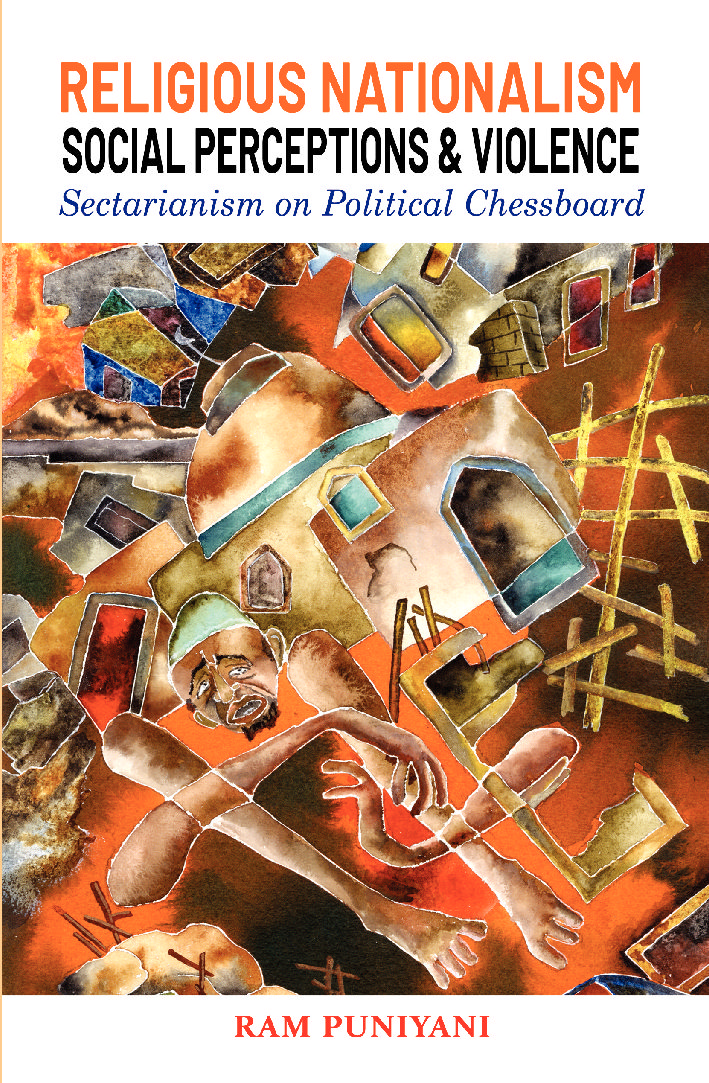
Review of ‘Religious Nationalism – Social Perceptions and Violence : Sectarianism on Political Chessboard‘- Ram Puniyani (Media House 2020)

“Blatant dictatorship – in the form of fascism, communism, or military rule – has disappeared across much of the world. Military coups and other violent seizures of power are rare. Most countries hold regular elections. Democracies still die, but by different means.

Since the end of the Cold War, most democratic breakdowns have been caused not by generals and soldiers but by elected governments themselves.”

(How Democracies Die, Steven Levitsky and Daniel Ziblatt)

The contrast had never been so sharper.

Continue reading Unpacking Religious Nationalism

Jantar Mantar Declaration Against CAA, NRC and NPR

Guest Post : Jantar Mantar Declaration of 1 March 2020 Against CAA, NRC and NPR

Adopted  at the Convention of writers, artists, cultural activists, scientists and various associations such as Indian Cultural Forum, Janwadi Lekhak Sangh, Progressive Writers Association , Jan Sanskriti Manch, Dalit Lekhak Sangh, New Socialist Initiative, Jana Natya Manch, Delhi Science Forum, Janasamskriti (Malayalam), Vikalp, Cinema of Resistance, All India Peoples Science Network

We, at this  Convention of writers, artists, cultural activists, scientists and various associations express our deep concern over recent violence and communal genocide in Delhi.

We understand that this tragic situation is a direct outcome of the communal design and divisive politicsof CAA-NPR-NRC. The silver lining is that the common people of Delhi remained united in their fight against this outrage.  This convention reiterates that only by this unity and  mutual trust and cooperation  that the CAA-NPR-NRC design can be defeated.

We, at this  Convention of writers, artists, scientists, cultural activists and various associations declare our solidarity with the on-going non-violent movement against the draconian CAA  (Citizenship Amendment Act. 2019 ), proposed new format of NPR ( National Population Register) and the proposed NRC (National Register of Citizens) . Continue reading Jantar Mantar Declaration Against CAA, NRC and NPR

Why Modi and Sangh Parivar Want to ‘Disremember’ Golwalkar

PM Modi didn’t mention former RSS chief Golwalkar on his recent 114th birth anniversary. The idea is to implement his ‘essence’ in private while not mentioning him in public.

Why Modi and Sangh Parivar Want

The 114th birth anniversary of Madhav Sadashiv Golwalkar went unnoticed. Barring a stray article by a second-rung leader of the saffron party in a national daily, none from the top hierarchy deemed it even necessary to remember the second chief of the Rashtriya Swayamsevak Sangh (RSS) who followed the organisation’s founder, KB Hedgewar.

Interestingly, while Twitter-savvy Prime Minister Narendra Modi found time to tweet about his litti chokha conquest at Hunar Haat in Delhi, there was not a single line about Golwalkar on his timeline that day. It appeared a bit strange because in his book titled ‘Jyotipunj’ on the “greatest social workers” who “burnt their lives to glow the Motherland”, Modi had devoted forty pages to Golwalkar. “The life of Golwalkar Guruji is a fine example of dedication. Guruji, possessed all those qualities which are expected of an individual who lives for his goal—patience, determination, perseverance,” he wrote.

Was Modi’s or his senior colleagues’ silence inadvertent, or deliberate?

( Read the full article here : https://www.newsclick.in/Modi-Sangh-Parivar-Want-Disremember-Golwalkar)


Hindutva: Get Egg on Your Face and Say ‘I am Loving it’

Hindutva is being embarrassed by the very people it has wooed, by means fair and foul.

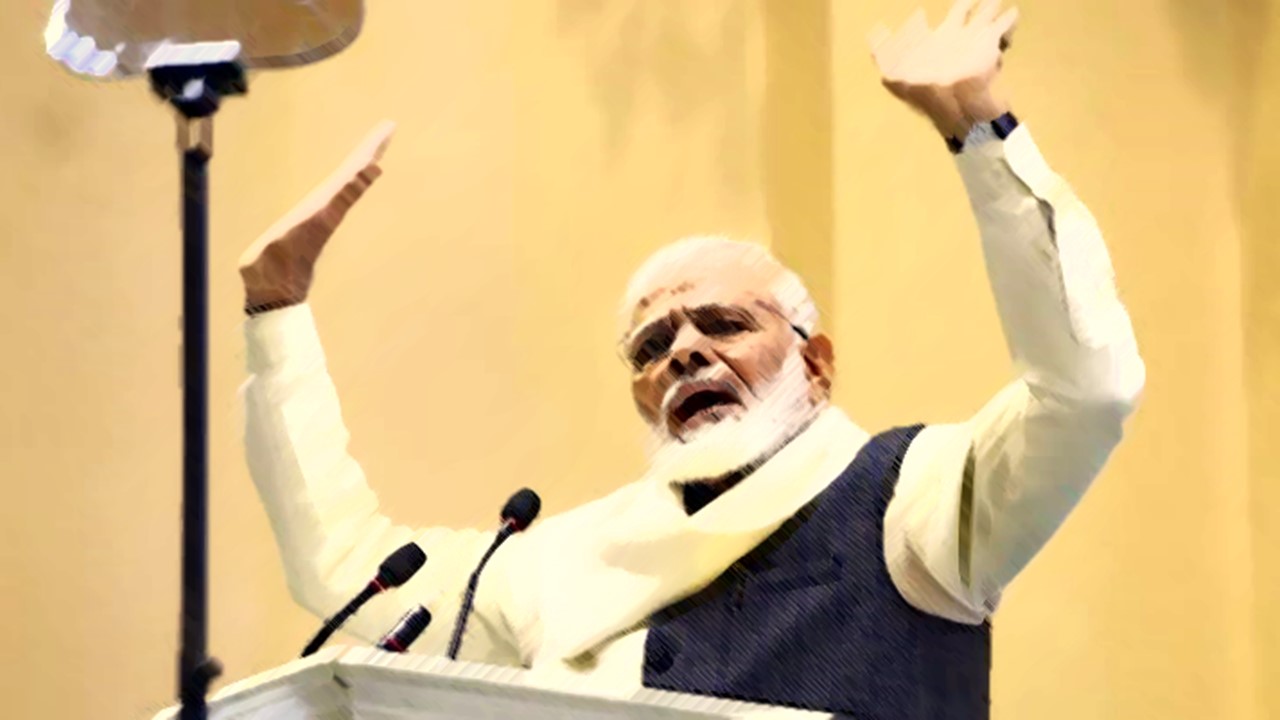
Narendra Modi

Prime Minister Narendra Modi’s attempt to further his deeply-sectarian and divisive agenda at Belur Math, global headquarters of the Ramakrishna Mission founded by Swami Vivekananda, has backfired. His controversial defence of the Citizenship Amendment Act (CAA) 2019 at the historic math in which he invoked Vivekananda himself has enraged a broad spectrum of people and formations. The CAA is, of course, the most contentious piece of legislation independent India has ever had, and it has sparked protests across the country.

What is rather noticeable is that not only the Opposition parties, but monks associated with the mission have also expressed tremendous displeasure over the political content of the PM’s speech. They have said that they found it “deeply hurtful” and they criticised it for tarnishing the “sanctity of the place”.

The very fact that Swami Suvirananda, general secretary of the Ramakrishna Math and Ramakrishna Mission, was constrained to say that “we could not have whispered into the Prime Minister’s ears to stop midway…” or his emphasising the inclusive nature of the “only organisation in the world, only order in the world” which has “monks from Hindu, Islam and Christian communities. We live like brothers of the same parents…” says something.

Nobody put it in as many words, but what perturbed people was how Narendra Modi’s speech complete erased Swami Vivekananda’s legacy. A great rift was evident between what Vivekananda had said in his historic speech at Chicago in 1892 and Modi’s espousal of a law passed by the government he heads, which creates a basis to discriminate on the basis of religion. Here is what Vivekananda had espoused before the world: “I am proud to belong to a nation which has sheltered the persecuted and refugees of all religions and all nations of the earth….”

Well, as far as close watchers of the Hindutva Right are concerned, they would underline that there was nothing unusual in Modi’s rather desperate attempts to appropriate Vivekananda and to recast him in the Hindutva mould.

( Read the full article here : https://www.newsclick.in/Hindutva-BJP-Narendra-Modi-Government-CAA-NRC-Belur-Math-Ramakrishna-Mission)

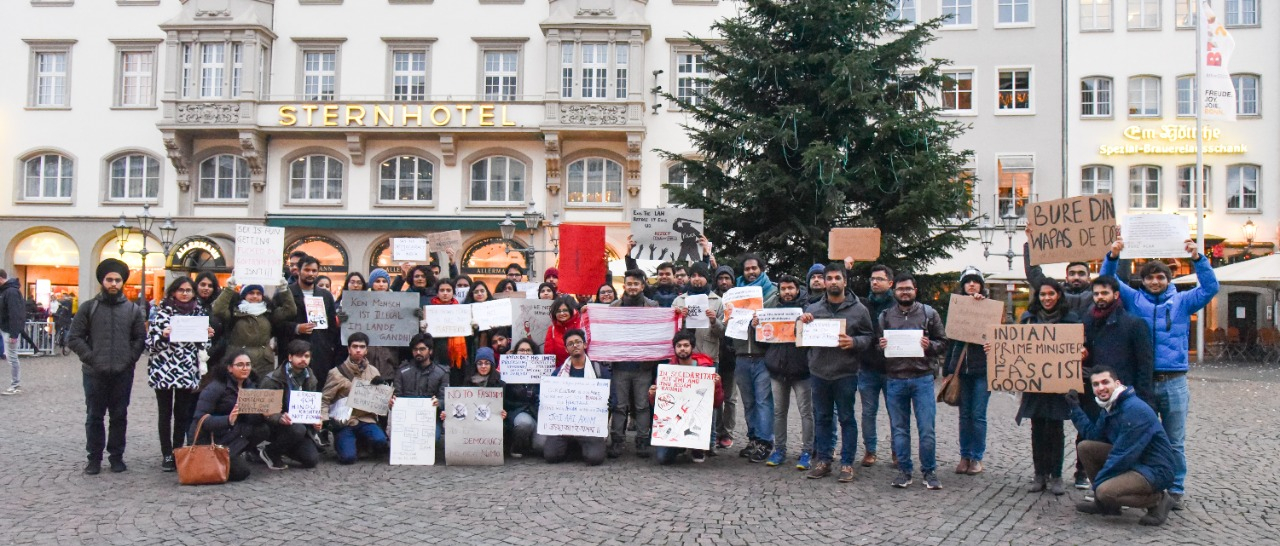
Students Against Fascism in India – Bonn/Köln/Aachen Stand With Protest Against CAA and NRC

Guest Post by Students Against Fascism in India – Bonn/Köln/Aachen

IMG-20191223-WA0107

“We, the students of Bonn, Cologne and Aachen stand with the protests all across India condemning the Citizenship Amendment Act (CAA) and the National Register of Citizens of India (NRC). In particular, we condemn and are deeply disturbed by the police brutality unleashed on the peacefully protesting students of Jamia Millia Islamia and Aligarh Muslim University. The police laid siege to university campuses, vandalising the libraries, tear gassing hostel rooms and firing water canons. Several students sustained serious injuries in this process and some continue to be in police detention. To suppress the protests the Indian government has withheld internet access in at least five states. We admire and stand in unequivocal solidarity with students and protestors across the country who took and continue to take to the streets protesting the unconstitutional and unsecular CAA and NRC.

The CAA, passed by the Bhartiya Janata Party (BJP) dominated upper and lower houses of the government, offers Indian citizenship to Hindus, Buddhists, Sikhs, Jains, Parsis and Christians facing persecution on the grounds of religion in Afghanistan, Bangladesh, and Pakistan. It blatantly discriminates on the basis of religion by specifically excluding Muslims, a first for the otherwise secular Indian Citizenship laws and constitution. This combined with the NRC, which is aimed at the disenfranchisement and detention of undocumented immigrants, equips the Hindu nationalist government of BJP led by Modi to institutionalise the ethnic cleansing of Muslim minorities by rendering them stateless.

We stand together to condemn the inherently communal and divisive nature of various actions undertaken by the Modi-led BJP government. We assert to not let such dangerously fascistic moves of turning a secular India into a Hindu nation go unchecked and call on others to do the same”

Savarkar, India’s ’Ratna’ of a Different Kind!

BJP’s poll promise of Bharat Ratna for Savarkar, who inspired a wide spectrum of fanatic individuals and violent organisations, shows the moral vacuousness of the Hindutva project

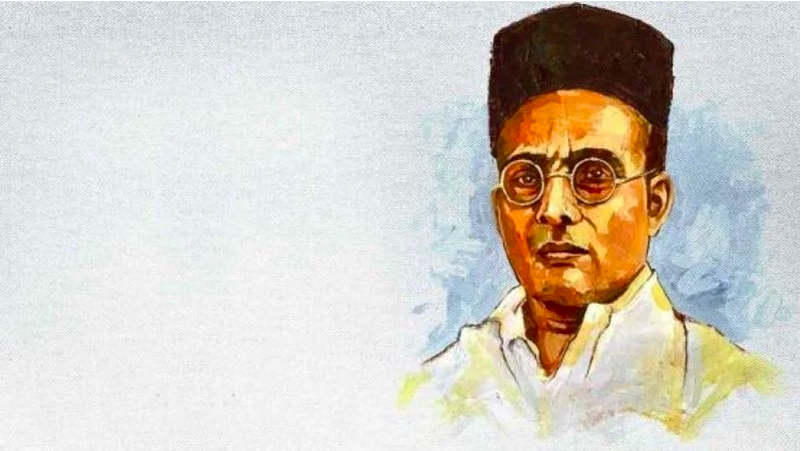
Savarkar

“The curious fact is that as we move into the 21st century, historians have become central to politics. We historians are the monopoly suppliers of the past. The only way to modify the past that does not sooner or later go through historians is by destroying the past….Mythology is taking over from knowledge”.

It was in the wee hours of dawn of the 21st century that renowned scholar and historian, Eric Hobsbawm, had talked about the process of  “destroying the past” to “modify” it or how “mythology is replacing knowledge” in his speech at Columbia University in New York City.

Much water has flown down the Ganges, the Rheins, the Yangtzes of the world and as we stand at the cusp of the third decade of the 21st century, one realises that how this process — both literally and metaphorically — has advanced to different corners of the globe.

With the ascent of Hindutva supremacist forces in polity and society in this part of the world, perhaps this process has reached its extreme, so much so that every other saffronite seems to have gathered enough confidence to claim legitimacy to any weird thing. The news that the Bharatiya Janata Party (BJP), in its election manifesto (for the Maharashtra Assembly) has promised that it would confer Bharat Ratna, the country’ topmost honour, on VD Savarkar if voted to power, should be seen in this light.

( Read the full text here : https://www.newsclick.in/Savarkar-India-Ratna-of-a-Different-Kind)

New India  – New Father of Nation?

Image result for mahatma gandhi

Ms. Amruta Fadanavis – wife of Maharashtra Chief Minister Devendra Fadanavis – found herself at the centre of controversy two weeks back. Her birthday greetings to PM Modi – whom she wished ‘Father of Our Country @narendramodiji a very Happy Birthday -…’ – on her twitter evoked reaction from twitterati. Her ‘height of ignorance’,  was pointed out and her attempt was called ‘sycophancy at its top’ (https://twitter.com/fadnavis_amruta/status/1173877700290678785)

Anyway, as one hoped that this chapter around ‘discovery of a new Father of Nation’ was over and one was attempting to turn a new leaf what one witnessed was rather unusual.

The debate around ‘Father of Nation” came back with a vengeance. Continue reading New India  – New Father of Nation?

Lynchistan

Southern trees bear a strange fruit,

Blood on the leaves and blood at the root,

Black bodies swinging in the southern breeze,

Strange fruit hanging from the poplar trees.

The word lynching conjures up images of a dark period in the history of the United States of America. Between 1877 and 1950, white supremacist gangs murdered 4,000 African Americans, while the government and the police looked the other way. James Baldwin, whose essays Dark Days captures the unfolding violence, wrote, ‘A mob is not autonomous. It executes the real will of the people who rule the State’. In 1888, white supremacists lynched seven African American men for drinking from a well – which they had said was for ‘white’s only’. Baldwin recounts that story and writes, ‘The blood is on the hands of the state of Alabama which sent those mobs into the street to execute the will of the State’.

The lyrics quoted above are from the iconic song – Strange Fruit – written by the communist artist Abel Meeropol and sung by Billie Holiday. Continue reading Lynchistan

Wishful visions, dishonest tales and bitter fruit

Review of ‘Malevolent Republic : A Short History of New India’ by K. S. Komireddi

Image result for malevolent republic

‘The idea of a peace-loving, nonviolent India exists, persists, as part of a selectively constructed and assiduously cultivated national self-image in the midst of a society pervaded by social and political violence…’ argued Prof Upinder Singh, in her well-researched voluminous book ‘ Political Violence in Ancient India’ which had appeared around two years back. She had also added that pioneers of independence struggle were instrumental in creating this ‘[m]yth of non-violence in ancient India which obscures a troubled, complex heritage.’

‘Malevolent Republic’ – A Short Hisotry of New India’ by K. S. Komireddi – a commentator, critic and journalist who has written for leading western publications, reminds one of this debate. The book tries to chronicle the trajectory of post-independence India from Nehru to Modi – and does not shy away from raising uncomfortable questions which demand broader contemplation as well as deep soul searching.

( Read the full story here : https://epaper.telegraphindia.com/calcutta/2019-09-06/71/Page-11.html)

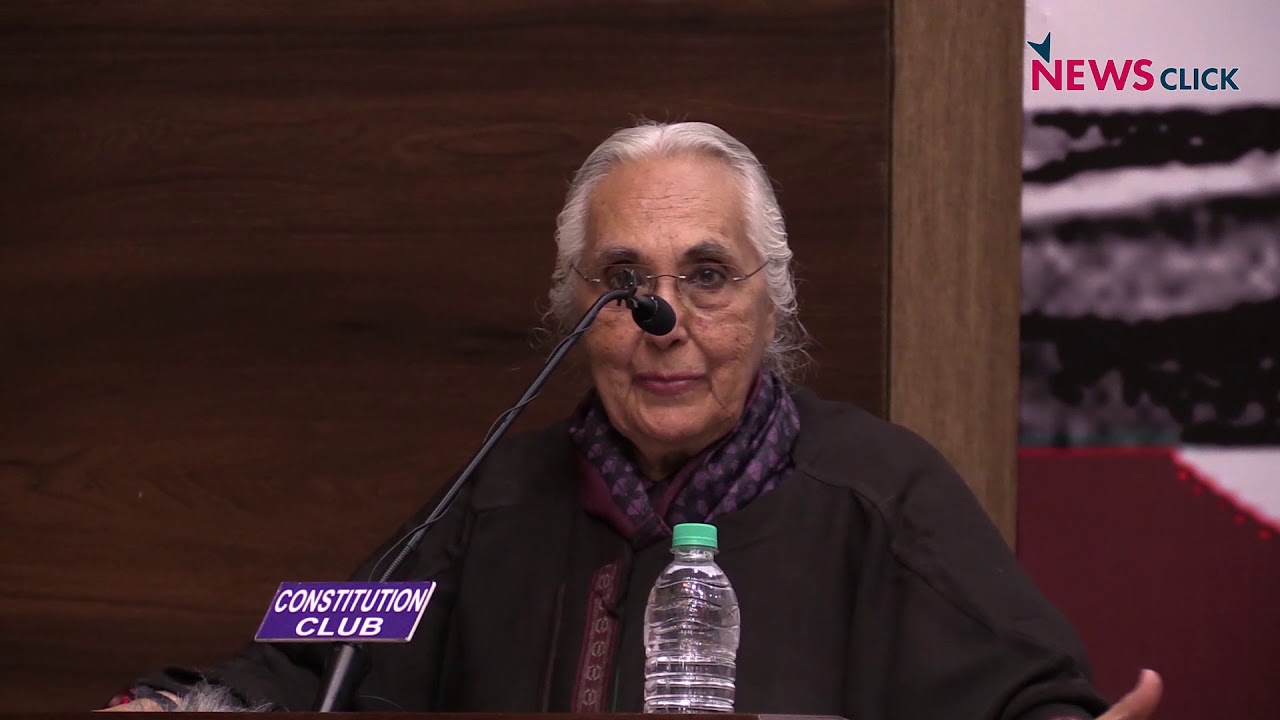
Who Needs Romila Thapar’s CV?

Thapar questioned imperialist versions of Indian history, which the Hindutva Brigade still goes by.

Romila Thapar

..an historian who is indefatigable in the pursuit of knowledge and prolific in its publication, and who is above all a devoted partisan of the truth. … The early history of the country has been illuminated by Professor Thapar, whom I now present, more than by almost any other scholar. An historian of that period who seriously wishes to refute accepted fictions and dispel the general darkness will need several high qualities. (From a citation presented by Oxford University to Romila Thapar while conferring on her an honorary Doctorate of Letters in 2002.)

It was 1960, when Romila Thapar, a young historian at the time, wrote a 400 plus-page monograph on Asoka and the Decline of the Mauryas. According to Oxford University Press, which published it in 2017, it tried to “trace virtually the entire span of Indian history.” The monograph is considered a classic today.

Thapar’s scholarly journey continues unabated at the age of 88. She is among the world’s foremost intellectuals, known for path-breaking work on Indian ancient history, as this interview acknowledges. Undoubtedly, her work has informed and inspired at least three generations of history students.

It hardly needs mention that Thapar has prestigious prizes to her credit for the scores of books and academic papers she has published. Twice, she declined the Padma Bhushan, the third highest civilian award granted by the government.

Now Thapar is in the news because of a strange query from the Jawaharlal Nehru University (JNU) administration, where she has held teaching and administrative positions for roughly three decades.

( Read the full article here : https://www.newsclick.in/Romila-Thapar-CV-JNU-Historian-Hindutva-Brigade-Indian-History)


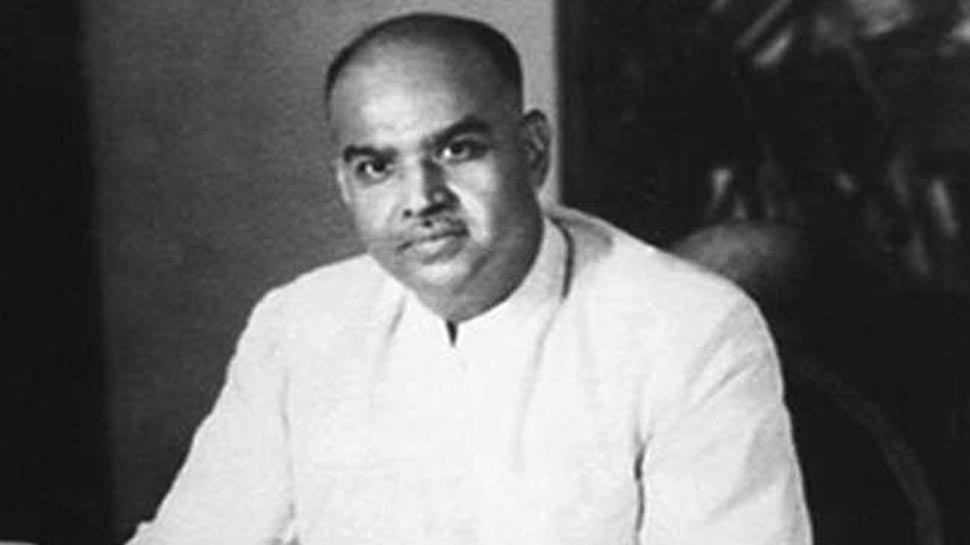
Shyama Prasad Mukherjee’s Role: Official Myths on J&K Busted

Dear Prime Minister, nothing about Jammu & Kashmir is as your party sees it

Syama Prasad

Economist and activist Jean Dreze, who has co-authored books with Nobel laureates, such as Amartya Sen and Angus Deaton, was in the headlines for a placard he carried to a protest rally in Delhi earlier this week. His placard challenged the government’s most critical justification for its controversial move to scrap Article 35A and read down Article 370 in Jammu and Kashmir (J&K). The placard displayed statistics that compare J&K with Gujarat, which is Prime Minister Narendra Modi and Home Minister Amit Shah’s home state. Dreze clearly showed how Gujarat lags behind J&K on a raft of development indices.

Although Dreze’s data beautifully punctures the government’s claim that J&K’s special status was a hindrance to its progress, Modi in his address to the nation on Wednesday night repeated the same argument, based on dubious claims. For instance, his claim that J&K lags behind other Indian states in matters of health services, education and so on, is patently incorrect.

Figures recorded in the National Family Health Survey (NFHS) has extended the debate further and shown that J&K already excels many other Indian states on several human development counts. Once again, this underlines that all talk about how “development” will reach J&K after Article 370 is made redundant is sheer humbug.

The propagation of false information brings home the fact that the government has gone very far to generate legitimacy for its decisions in J&K. In his address to the nation, Modi also said that his government had “fulfilled the dreams of [BR] Ambedkar as well as [the then Home Minister Vallabhbahi] Patel”.

( Read the full article here : https://www.newsclick.in/index.php/shyama-prasad-mukherjees-role-official-myths-jk-busted)

Return of Hindutva: A Challenge for Secularism

Guest Post by Gargi Chakravartty

BOOK REVIEW

Hindutva’s Second Coming by Subhash Gatade; published by Media House, Delhi; 2019; pages: 272; Rs 395 (US $ 18).

The return of Modi to power with a huge margin in this 2019 election is a clear verdict for the Hindutva plank. Why and how it happened leave us, the secular billions, to ponder about the reality and its aftermath. And at that juncture Subhas Gatade’s 272-page analysis titled ‘Hindutva’s Second Coming’ gives us something concrete to think over once again. This in-depth study with rich academic perception is a commendable work, bereft of jargons and convoluted expressions, often found in books written from a high pedestal which goes beyond the mental reach of lay readers. Precisely for this reason the author needs to be specially acclaimed for bringing out facts at one place based on notes and references which are so far scattered in divergent historical materials. It serves as a Reader for millions who are combating communalism and distortion of history at the grassroot level.

( Read the full text here : http://www.mainstreamweekly.net/article8847.html)

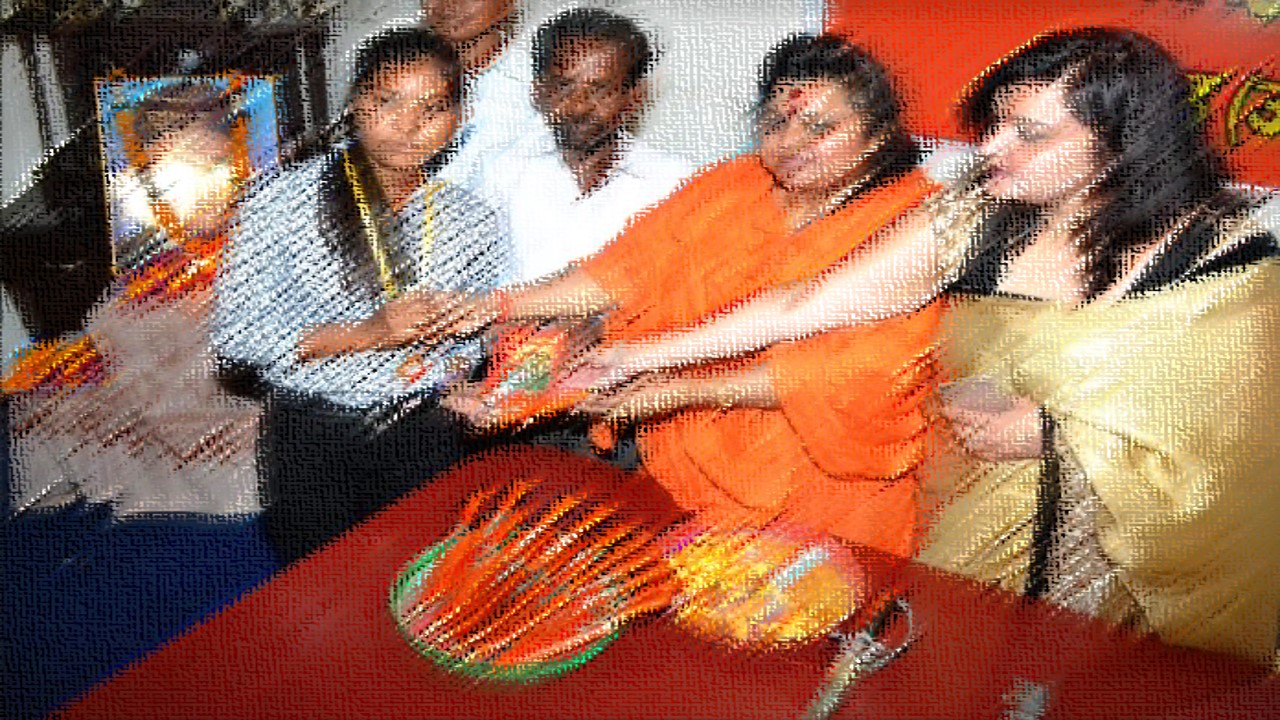
Arming Children, Securing a Future?

By distributing knives to meritorious children, organisations like the Hindu Mahasabha, are trying to give religious legitimacy to what is essentially a political use of faith.

Hindu Mahasabha distributing knives to children

Image courtesy: Twitter

What does an organisation do when it wants to congratulate meritorious students who have excelled in exams?

Reward them with some gifts, say, books, and (if finances allow) give them scholarships or laptops to facilitate their further studies. Definitely not gift them knives.

Well, Pooja Shakuni Pandey, the national secretary of Hindu Mahasabha, who had been making news for controversial reasons for more than a year, exactly did this on Savarkar Jayanti. This mathematics professor made it clear that she was not much interested in how they study further or what they wanted to become. With this knife distribution programme, along with a copy of Bhagwad Gita, she wanted to ‘create Hindu soldiers out of these children’ and it was basically a “[s]tep to motivate Hindus and empower them, especially the younger generation, with knives to protect themselves.”

( Read the complete text here : https://www.newsclick.in/Hindu-Mahasabha-Distributing-Knives-Meritorious-Children-Political-Use-of-Religion)

Modi 2.0: Majoritarianism Normalised?

This election verdict will have vital ramifications for democracy’s onward journey for decades together, and silencing and further invisibilisation of religious minorities would be its logical outcome.

minorities in india

“The crisis consists precisely in the fact that the old is dying and the new cannot be born; in this interregnum a great variety of morbid symptoms appear.”  — – Gramsci

A journalist friends’ prophesy has finally come true.

The day India launched ‘surgical strikes’ across the border supposedly to avenge the Pulwama terror attack, this friend immediately sent a message on a WhatsApp group that Narendra Modi has ensured himself a second term. He stood his ground despite few heated exchanges on the group from Left leaning friends.

In the coming days, this not so expected debacle of the secular camp and the surge of the Hindutva Supremacist camp in newer areas and communities would be further analysed/debated/discussed from various angles. It will be debated why despite the caution expressed by the likes of Amartya Sen, who had concluded how India has taken “a quantum jump in wrong direction since 2014”; how despite being cautioned by leading scholars, intellectuals, scientists of our times that the  very idea of India is at stake in the elections, the people in general did not pay any heed to their appeals and have resolved to continue the journey with a renewed frenzy in the same direction or have fully supposedly embraced this idea of ‘New India’ jettisoning the old one. Remember, not only has the Bharatiya Janata Party (BJP) been able to garner more seats than last time but its vote share has also increased more than 5%.

(Read the full text here : https://www.newsclick.in/Minorities-India-Silenced-Modi-Reelection-BJP-Majoritarianism-RSS)

When ‘Strange’ Visitors Called on Ram Puniyani

Recall Kalburgi and Shahid Azmi? There are several such unconnected looking incidents in recent times that are part of the same mindset that looks for ‘internal enemies’ in every dissenting voice.

When ‘Strange’ Visitors Called on Ram Puniyani

Image for representational use only.Image Courtesy : Siasat

Ram Puniyani, the affable and relentless campaigner for communal harmony and peace, who at the age of 73 displays the enthusiasm of a 25-year-old ever ready to go from place to place with his characteristic bag full of literature, had some unusual visitors in his house a few days ago.

What was rather strange was that the trio that visited his house in plain clothes on March 9, introduced themselves from CID but were reluctant to show their identity cards and supposedly had come to make enquiries regarding a non-existent passport application, as neither Professor Puniyani nor anyone else from his family had applied for the same.

( Read the full text here : https://www.newsclick.in/when-strange-visitors-called-ram-puniyani)