Category Archives: Culture

Treacherous Road to Make Manu History

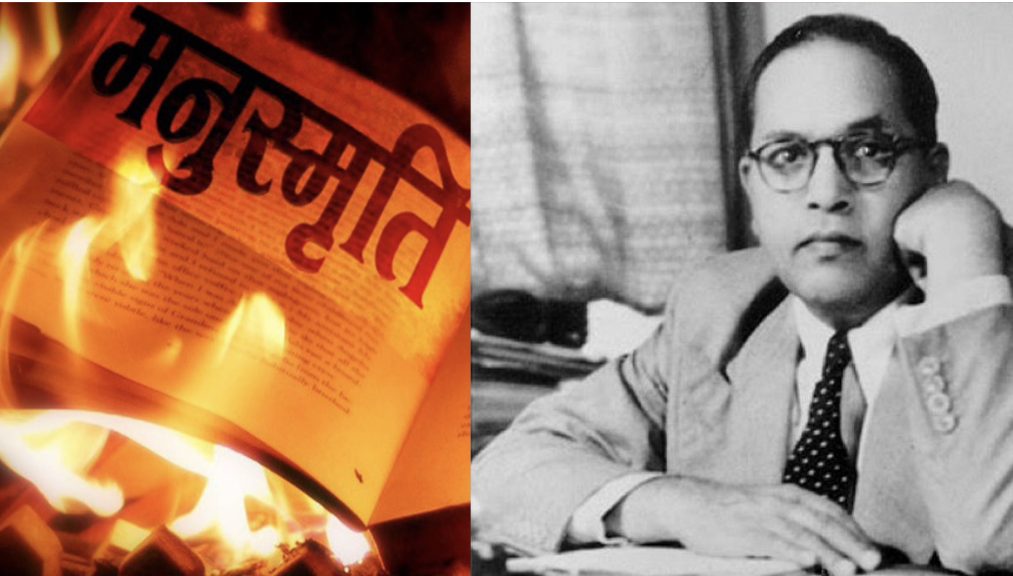
Even today the attempt is to whitewash Manusmriti, not shun it. But all is not lost as the ripples of Black Lives Matter have reached Indian shores.

manusmiriti ambedkar hindutva

It was 1927, the second phase of the historic Mahad Satyagrah was on, and Dr. Bhimrao Ambedkar led thousands of people in burning the Manusmriti, an act he compared with the French Revolution of 1789. Time and again, in speeches and writings, he categorically opposed the world-view of Manu, the legendary figure to whom are attributed the tenets of the Manusmriti, said to be dated to around 100 CE.

In the book written by scholar and activist Anand Teltumbde, Mahad: The Making of the First Dalit Revolt, published by Navayana in 2017, is recorded the resolution which was proposed by the social activist Gangadhar Sahasrabuddhe, and then read out at the Mahad Satyagrah. It states that the firm opinion of this conference is that the Manusmriti, “taking into consideration its verses which undermined the Shudra caste, thwarted their progress, and made their social, political and economic slavery permanent…is not worthy of becoming a religious or a sacred book. And in order to give expression to this opinion, this conference is performing the cremation rites of such a religious book which has been divisive of people and destroyer of humanity.”

Twenty three years later, Dr Ambedkar marked the promulgation of the Constitution of India as the “end of the rule by Manu”. And yet, 70 years thereafter, a significant section of Indians are still fascinated by Manu and have no qualms in venerating him. Even the Black Lives Matter protests in the United States and large parts of Europe, in which statues of slave-owners and colonialists are being knocked down or disfigured, the Indian followers of Manu have no regrets about deifying him.

( Read the full article here)

How Many Times Will India Deny Apartheid?

Darren Sammy has revealed he faced racism in India at a time when the world is battling racism. India needs to join this fight.

Darren Sammy has revealed he faced racism

Darren Sammy, the famous all-rounder from West Indies, is a legend. He has led his country team and is the only captain to have won two T20 World Cups, in 2012 and 2016. His achievements in the arena of cricket are not limited to his country. He played a singular role in reviving Pakistan’s cricket team and preparing it for international matches, which earned him an honorary citizenship.

And thus the revelation that he was subjected to racial taunts by his own teammates, during his tour to India in 2013 and 2014, while he played IPL matches, was a bolt from the blue. His admirers were naturally aghast when Sammy disclosed that his teammates at SunRisers Hyderabad used to address him with a pejorative term and collectively sneer at him.

On some occasions, Sammy said, he too would smile back at his gleeful teammates, for he had innocently believed that it was light-hearted banter, even though directed at him. Sammy was completely oblivious to the fact that they were targeting him with a racist invective and enjoying “jokes” that he could not comprehend at his expense.

No doubt many of those who subjected him to humiliation were big names in Indian cricket. Yet it did not cause any uproar in India when Sammy made the truth known to the world via an Instagram post. The 24/7 news channels, which are forever searching for sensational news, and the cricketing fraternity, were quiet. None came forward to denounce the humiliation of Sammy, nor was there a public apology from the offenders. Only Swara Bhaskar, the actress, who espouses social causes rather fearlessly, demanded an apology from his teammates.

( Read the full text here)

कोविड संक्रमण की चेन तोड़ने के लिए मलप्पुरम ने नई ज़मीन तोड़ी है

आज जब पूरे देश में धार्मिक स्थलों को खोला जा रहा है, तब बीते दिनों ‘सांप्रदायिक’ होने का इल्ज़ाम झेलने वाले केरल के मलप्पुरम ज़िले ने अपनी अलग राह चुनी है. कोरोना के बढ़ते मामलों के मद्देनज़र वहां की पांच हज़ार मस्जिदों को अनिश्चितकाल तक बंद रखने समेत कई धार्मिक स्थलों को न खोलने का फ़ैसला लिया गया है.

Minara masjid wears a deserted look on the first day of the holy fasting month of Ramzan, amid unprecedented circumstances due to the coronavirus pandemic and a nationwide lockdown, in Mumbai. PTI

लॉकडाउन के दौरान बंद एक मस्जिद. (फाइल फोटो: पीटीआई)

मलप्पुरम, केरल के एकमात्र मुस्लिम बहुल जिले, जहां उनकी आबादी 75 फीसदी है, ने एक इतिहास रचा. तय किया गया है कि जिले की 5,000 मस्जिदें अनिश्चितकाल के लिए बंद रहेंगी.

इस निर्णय के पीछे का तर्क समझने लायक है. क्योंकि राज्य में कोरोना वायरस संक्रमण के मामले बढ़ते दिख रहे हैं, इसलिए यह तय करना मुनासिब समझा गया कि उसके दरवाजे श्रद्धालुओं के लिए बंद ही रहें.

जाने-माने इस्लामिक विद्वान पनक्कड सययद सादिक अली शिहाब थंगल, जो इंडियन यूनियन मुस्लिम लीग के जिला अध्यक्ष हैं, उन्होंने इस खबर को मीडिया के एक हिस्से में साझा किया.

इस तरह जबकि बाकी मुल्क में प्रार्थनास्थल, धार्मिक स्थलों को खोला जा रहा है, मलप्पुरम ने अपनी अलग राह चुनी है.

इस बात पर जोर देना जरूरी है कि आठ मुस्लिम संप्रदायों (denomination) की उस बैठक में, जहां 9 जून के बाद प्रार्थनास्थलों को खोलने के सरकारी निर्णय पर विचार करना था, यह फैसला एकमत से लिया गया.

सभी इस बात पर सहमत थे कि उन्हें इस छूट का इस्तेमाल नहीं करना चाहिए. एक ऐसे वक्त में जबकि कोविड-19 के मामले सूबे में बढ़ रहे हों, मस्जिद कमेटियों और धार्मिक नेताओं ने यह जरूरत महसूस की कि उन्हें सतर्कता बरतनी चाहिए.

खबरें यह भी आ रही हैं कि न केवल मस्जिदें बल्कि इलाके के कई मंदिरों और चर्च ने भी उन्हें तत्काल खोलना नहीं तय किया है.

मिसाल के तौर पर, श्री कदमपुजा भगवती मंदिर जो मलप्पुरम में है तथा श्री तिरूनेल्ली मंदिर जो वायनाड में है, वह बंद रहेंगे.

नायर सर्विस सोसायटी से संबंधित मंदिर भी 30 जून तक नहीं खुलेंगे. एर्नाकुलम-अंगमाली आर्चडाओसिस ऑफ सिरो मलबार चर्च ने भी तय किया है कि उसके मातहत चर्च 30 जून तक बंद रहेंगे.

निस्संदेह इस बात को लेकर इलाके के लोगों में गहरा एहसास दिख रहा है कि राज्य ने जिन भी सावधानियों को बरतने की बात की हो, स्पेशल ऑपरेटिंग प्रोसिजर्स का ऐलान किया है, हकीकत में उन पर अमल करना नामुमकिन होगा लिहाजा कोविड-19 के समुदाय आधारित संक्रमण की संभावना बनी रहेगी.

( Read the full article here)

Remembering Ibn-e-Insha, Poet and Satirist: Jamal Kidwai

Guest Post by JAMAL KIDWAI

Ibn-e-Insha (15 June 1927 – 11 January 1978) would have turned 93 today. We celebrate his birthday by curating some of his best poetry, sung by leading vocalists from India and Pakistan.

Born in Jalandhar, Punjab, on 15 June 1927, he was named Sher Mohammad Khan by his parents. Ibn-e-Insha was his pen- name; loosely translated it means Ibn, son of Insha, referring to a famous 18th century classical poet, Inshallah Khan Insha.

Insha also means, simply, writing, or expression.

Continue reading Remembering Ibn-e-Insha, Poet and Satirist: Jamal Kidwai

Paradigms Lost, Past Continuous – Saraswati and some other rivers: Janaki Nair

Guest post by JANAKI NAIR

Maj General GD Bakshi (hereafter MGB) feels enough is enough. Having dealt with the Information Warfare and Psychological Operations in the Indian Army, he has now trained his guns on the internal enemy, abandoning the trenches of Jai Jawan for the far messier archaeologists’ hangout. In his battle dress – impeccable suits and ties– he wages war in the cause of snatching back History from historians, particularly Marxist Historians, Oxford and Harvard Historians, Colonial Historians, Tony Joseph, and above all JNU Historians who pose the Greatest Threat to the Continuity of our National Past. (Fortunately, he has not heard of Subaltern Historians, who have dared to polish up arguments instead of his shoes; or of feminist or Dalit historians, who impertinently ask whatever happened to the Vedic dasi).  While waging this war, he also hopes to win some minor battles on behalf of the Indian Taxpayer by shutting down JNU.

Then MGB had a second think: why waste a chance of planting a flag on a beautiful 1000-acre campus just because it was a Marxist redoubt? And what safer flag in these times of COVID than a Webinar in the JNU ether?  So MGB is ready to announce the Paradigm Shift in the study of the Saraswati Civilisation.  (For those who were reared on that disloyal diet of NCERT books, it refers to the Indus Valley Civilisation, or Harappan Culture).  This Paradigm Shift will fortunately not be as fickle as the Sutlej,  which changed its course mid-holocene. In fact, this Paradigm Shift does not rely much on historians or archaeologists,  but more on scientists – geologists, geneticists, accurate carbon dating physicists – who along with MGB, alone are capable of Total Objectivity, and know that only Good Things happened in the Indian past. Continue reading Paradigms Lost, Past Continuous – Saraswati and some other rivers: Janaki Nair

Can Rest of India ‘Do’ a Mallapuram ?

Ruins of an ancient Jain temple in Arimbra

Ruins of old Jain Style Temple at Arimbra 

Mallapuram, Kerala’s lone Muslim-majority district, made history recently.

The 5,000 mosques in the district would remain closed indefinitely.

Logic behind this decision is simple.

As the state is witnessing spike in Coronavirus infection recently, it was found more prudent to keep the doors closed for devotees. Panakkad Sayyed Sadiq Ali Shihab Thangal, a leading Islamic Scholar and Malappuram district president of the Indian Union Muslim League, shared this news with a section of the media.

Thus while the rest of the country is witnessing opening of places of worship under Unlock 1, Mallapuram has decided otherwise. Continue reading Can Rest of India ‘Do’ a Mallapuram ?

Truth Behind India’s Hierarchies of Pain

Perhaps celebrities know that talking about the plight of an animal—who died in a state not ruled by the ruling dispensation at the Centre—is a safe bet

Migrants

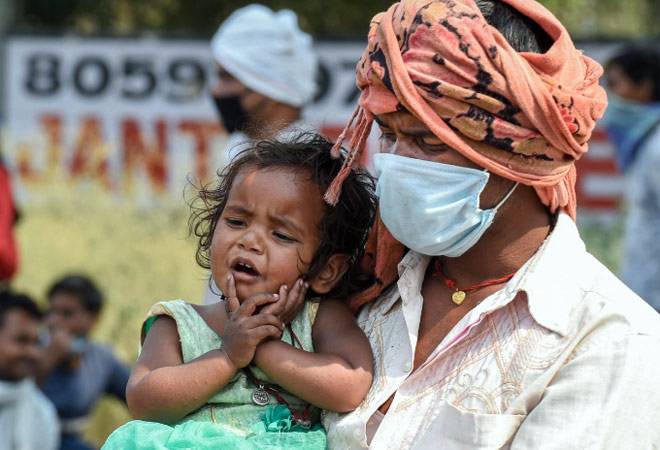
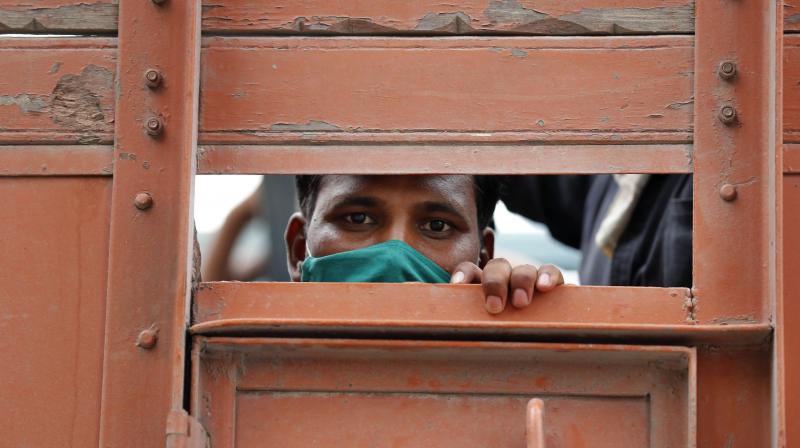
Migrants wait for a means of transport to travel to their native places during the fourth phase of the ongoing COVID-19 nationwide lockdown, at Kundali Industrial Area in Sonipat. (Photo: PTI)

The killing of a pregnant elephant has caused national outrage. The elephant had strayed into a village in Palakkad, Kerala, and is said to have been fed a fruit stuffed with firecrackers, which exploded in its mouth. It is impossible to comprehend the tremendous suffering of the elephant, who died a painful death. It is also learnt that people in the region have in the past used incendiary materials to protect their crop from animals, particularly wild boar.

One person was arrested after the matter came to light and few others have been identified. Kerala Chief Minister Pinarayi Vijayan has promised “justice will prevail”, but one does not know if that includes legal action against the hatemongers—including a former cabinet minister who gave the incident a communal colour by claiming, incorrectly, that the incident occurred in Muslim-majority Malappuram. A sitting cabinet minister also retweeted this fake news, which further vitiated the atmosphere.

In a complaint to the Malappuram Police, a lawyer has urged the police chief to file an FIR against the former minister and others for a “derogatory” campaign against the district.

Now, many Indian celebrities, for example Indian cricket team captain Virat Kohli, have said that they are “appalled” by the incident. The chairman of India’s biggest corporate giant, Ratan Tata, has compared the “criminal act” with “meditated murder”. The celebrities, the anchors of 24/7 news channels and many other prominent figures are undeniably upset by the plight of the elephant. But do they also feel the same kind of outrage and disquiet over the communal overtones being imparted to it?

( Read the full article here)

Lockdown 4.0 – A Tribute to Labourers by Navchintan Kala Manch

नवचिंतन कला मंच द्वारा – बीते दिनों में अपनी ही धरती पे बेगानेपन का अहसास कर हज़ारों किलोमीटर दूर अपने घरों की उम्मीद के निकले लोगों के साथ हुए हादसों की दास्तान ज़रूर देखें।

प्रार्थना स्थलों पर लाउडस्पीकर पर प्रतिबंध

news on judiciary

कांकर पाथर जोरि कै मस्जिद लई बनाय.
ता चढि मुल्ला बांग दे क्या बहरा हुआ खुदाय

क्या अपने ‘खुदा’ को आवाज़ देने के लिए बांग देने की जरूरत पड़ती है ?

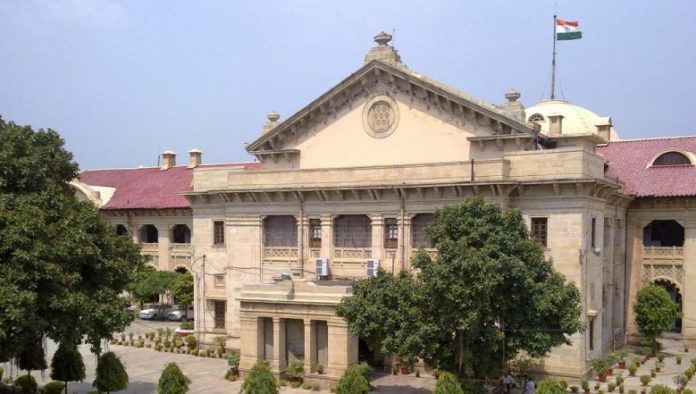
आज से छह सदी पहले ही कबीर ने यह सवाल पूछ कर अपने वक्त़ में धर्म के नाम पर जारी पाखंड को बेपर्दा किया था. पिछले दिनों यह मसला नए सिरे से उछला जब इलाहाबाद उच्च न्यायालय ने इस बारे में एक अहम फैसला सुनाया. अदालत ने कहा कि अज़ान अर्थात प्रार्थना के लिए आवाज़ देने की बात इस्लाम का हिस्सा है लेकिन वही बात लाउडस्पीकर के इस्तेमाल के बारे में नहीं कही जा सकती, लिहाजा रात 10 बजे से सुबह 6 बजे तक किसी भी ध्वनिवर्द्धक यंत्र का इस्तेमाल के इजाजत नहीं दी जा सकती.

अदालत के मुताबिक मुअज्जिन मस्जिद की मीनार से अपनी मानवीय आवाज़ में अज़ान दे सकता है और उसे महामारी रोकने के लिए राज्य द्वारा लगायी गयी पाबंदियों के तहत रोका नहीं जा सकता, अलबत्ता उसके लिए लाउडस्पीकर का इस्तेमाल वर्जित रहेगा.

ध्यान रहे कि अदालत यूपी पुलिस द्वारा जगह-जगह मनमाने ढंग से अज़ान पर लगायी गयी पाबंदी के खिलाफ दायर याचिका पर विचार कर रही थी. हाथरस, अलीगढ़ आदि स्थानों पर महामारी के कानूनों का हवाला देते हुए पुलिस वालों ने अज़ान देने पर ही पाबंदी लगायी थी, जिसके खिलाफ याचिकाकर्ताओं ने अदालत का दरवाज़ा खटखटाया था.

उम्मीद है कि अदालत के फैसले के मद्देनज़र यूपी पुलिस मनमाने तरीके से अज़ान पर नहीं रोक लगाएगी, निश्चित ही यह सुनिश्चित करेगी कि इसके लिए किसी ध्वनिवर्द्धक यंत्र का इस्तेमाल तो नहीं हो रहा है.

गौरतलब है कि अदालत ने संविधान के तहत प्रदत्त बुनियादी अधिकारों में शामिल आर्टिकल 19/1/ए का हवाला देते हुए जो इस बात को सुनिश्चित करता है कि‘किसी को भी यह अधिकार नहीं है कि वह अन्य लोगों को बन्दी श्रोता (captive listeners) बना दें’ यह निर्देश दिया.

निश्चित ही मस्जिदों में जहां बिना अनुमति के लाउडस्पीकरों के इस्तेमाल पर पाबंदी रहेगी, वही बात मंदिरों, गुरुद्धारों या अन्य धार्मिक स्थलों पर भी लागू रहेगी ताकि आरती के बहाने या गुरुबाणी सुनाने के बहाने इसी तरह लोगों को ‘बन्दी श्रोता’ मजबूरन न बनाया जाए. ( Read the full article here :https://hindi.theprint.in/opinion/allahabad-high-court-ban-loudspeakers-at-prayer-places-exposes-hypocrisy-in-the-name-of-faith/140765/)

Hari Vasudevan, the Soviet Archives and the Left Establishment: Sobhanlal Datta Gupta

This tribute to Prof HARI VASUDEVAN by Prof SOBHANLAL DATTA GUPTA, who passed away in Kolkata recently, is being reproduced here, courtesy Mainstream Weekly.

Thereafter, as we proceeded in our work on the publication of the texts of the documents, we began to face insurmountable resistance, quite surprisingly, from a section of the Left establishment in West Bengal. We were threatened, maligned and discouraged not to proceed with this work any further and ridiculed for our research on documents which were described as “fake” and “doctored”.

It was May, 1995, exactly 25 years ago. Hari Vasudevan (Calcutta University), Purabi Roy (Jadavpur University) and I myself (Calcutta University) were in Moscow for two months, working as a team sent by The Asiatic Society, Calcutta in connection with a project of collection of documents from the newly opened Soviet archives on Indo-Russian Relations : 1917-1947. This project was the result of a Protocol signed between The Asiatic Society, Calcutta and Moscow’s Institute of Oriental Studies. With extremely limited funding we were expected to prepare catalogues of as many documents as possible and bring home photocopies/microfilms of those documents which we considered most important, depending, of course, upon their accessibility. It was a Herculean job, since we had no idea of the materials we had to handle. Working on hundreds and hundreds of documents, catalouging and copying them (in many cases because of paucity of funds and since we had no laptop, quite often we had to take down a document by hand) demanded a division of labour. While Purabidi worked in the State Archives of the Russian Federation (GARF), Archives of the Ministry of External Affairs (MID), Russian State Military Historical Archive (RGVIA), Hari and I worked in the former Central Party Archives, Institute of Marxism-Leninism (now known as Russian State Archive for Social and Political History or RGASPI ). Continue reading Hari Vasudevan, the Soviet Archives and the Left Establishment: Sobhanlal Datta Gupta

Community-Based Mapping of Covid: Nothing Official About it

No doubt the clarification that India will not map Covid-19 infections on the basis of religion has many heaving sighs of relief. But will the peace last?

Community-Based Mapping of Covid: Nothing Official About it

Image Courtesy: AP

Move for community-based mapping of coronavirus?” a recent news item in a prestigious daily asked, getting tongues wagging about “closed-door meetings at the highest level”, though no “official” decision had been taken in themThe Ministry of Health declared that any such news is “baseless, incorrect and irresponsible”. Lav Agarwal, the top bureaucrat in the ministry—who interacts with the media on Covid-related developments—called such news reports “…very irresponsible”. “The virus does not see people’s caste, creed or religion,” he said, quoting the Supreme Court’s directions on controlling non-factual or fake news.

No doubt the official clarification has many heaving sighs of relief.

The relief is understandable, because it was only last month—when the Novel Coronavirus pandemic had started taking a toll—that Muslims were being stigmatised as “super-spreaders” of the disease.

Taking a grim view of the situation, in its press conference o6 April, the World Health Organisation had given the Indian government some simple advice. The WHO said, in response to an India-specific question, that countries should not profile Covid-19 infections in religious, racial or ethnic terms. The WHO Emergency Programme Director Mike Ryan also underlined that every positive case should be considered a victim.

( Read the full article here)

Poetry of resistance against the suppression of dissent

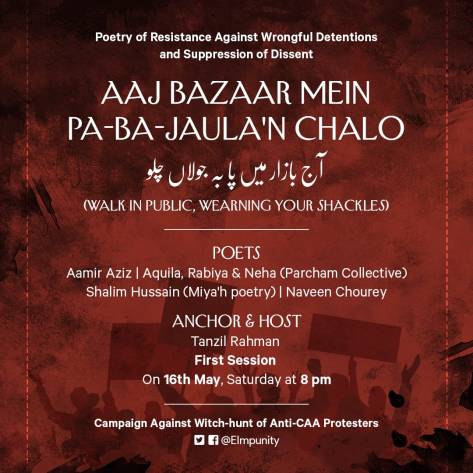
On 16th May 2020, the Campaign against Witch-hunt of Anti-CAA Activists inaugurates its Poetry Week.  

Poetry bears witness. It records, it remembers. Resistance, indeed life itself, has long been sustained and nourished by the words of poets.
So, it is with poetry that we celebrate the inspiring movement against the Citizenship Amendment Act, and with the power of words fight the wrongful arrests and malicious prosecution of anti-CAA activists.
The first session will feature poets Aamir Aziz, Aquila, Neha and Rabiya of the Parcham Collective, Miya’h poet Shalim Hussain & Naveen Chourey
Host and anchor: Tanzil Rahman
FIRST SESSION
On 16th May | Saturday | 8 pm onwards
Register using this link

https://forms.gle/iUwV6FimHsWd6ZLY7

Paean – A Song for Triumphs, For Usha Ganguly and Irrfan Khan: The Mocking Birds

Guest Post by the group THE MOCKING BIRDS

आज की रात न फ़ुट-पाथ पे नींद आएगी
सब उठो, मैं भी उठूँ तुम भी उठो, तुम भी उठो
कोई खिड़की इसी दीवार में खुल जाएगी
ये ज़मीं तब भी निगल लेने पे आमादा थी
पाँव जब टूटती शाख़ों से उतारे हम ने
उन मकानों को ख़बर है न मकीनों को ख़बर
उन दिनों की जो गुफाओं में गुज़ारे हम ने ( कैफ़ी आज़मी )
              सच है इस लॉक डॉउन में हमने लगभग गुफाओं में दिन गुजारे है, कुछ आब ला पा सड़क पर दर ब दर है, कुछ ऐसे है जो इस फानी दुनिया से चले गए, ऐसा लगता है जैसे उनको इस आगत का इलहाम हो गया था आज के ग़म का, और जल्द ही चले गए …. फ़ैज़ से कुछ पंक्तियां लेकर

Continue reading Paean – A Song for Triumphs, For Usha Ganguly and Irrfan Khan: The Mocking Birds

निरंकुशता के स्रोत, प्रतिरोध के संसाधन : रवि सिन्हा

Guest Post by Ravi Sinha

राजनीति का आम सहजबोध यह है कि सत्ता की निरंकुशता लोकतंत्र का निषेध है। लोकतंत्र राजनीतिक सत्ता का गठन तो करता है, लेकिन उसे निरंकुश नहीं होने देता। यदि किसी लोकतांत्रिक व्यवस्था के अंतर्गत निरंकुश सत्ता का उद्भव होता है तो उसे लोकतंत्रा की दुर्बलता, उसके विकार या उसमें किसी बाहरी अलोकतांत्रिक शक्ति के हस्तक्षेप के रूप में देखा जाता है। यदि लोकतंत्र का अर्थ यह है कि सत्ता के स्रोत लोक में स्थित हैं तो यह स्वयंसिद्ध है कि लोकतांत्रिक सत्ता निरंकुश नहीं हो सकती।

इसी तरह राजनीति का सहजबोध यह भी है कि सत्ता की निरंकुशता प्रतिरोध को जन्म देती है और प्रतिरोध की जड़ें लोक में स्थित होती हैं। निरंकुशता यदि लोकतंत्र का निषेध है तो यह भी स्वयंसिद्ध है कि लोक या जन ही प्रतिरोध के मूल आधार और उसके प्रमुख संसाधन हैं। यह दूसरी मान्यता पहली के साथ जुड़ी हुई है। यदि पहली मान्यता टिकती है तो दूसरी की सत्यता भी साबित होती है। यदि पहली संदेह के घेरे में आती है तो दूसरी के स्वयंसिद्ध होने पर भी प्रश्न खड़े होते हैं।

और, प्रश्न तो खड़े होते हैं। वास्तविकता की प्रकृति ही ऐसी होती है कि वह मान्यताओं की परवाह नहीं करती – बहुप्रचलित और स्वयंसिद्ध प्रतीत होने वाली मान्यताओं की भी नहीं। दूसरी तरफ़, मान्यताओं की – ख़ास तौर पर बहुप्रचलित मान्यताओं की – बनावट और उनकी ज़मीन ऐसी होती है कि वास्तविकताओं के उलट होने के बावजूद वे चलन में बनी रहती हैं। ऐसी स्थिति में पहले तो यह देखना होता है कि वास्तविकता क्या है और संबंधित मान्यताओं से उसकी संगति बैठती है या नहीं। फिर यह अलग से देखना होता है कि मान्यताएं जब ग़लत होती हैं, तब भी उनके चलते रहने के कारण कहां पर स्थित हैं। एक तरह से यह सहजबोध की जांच-पड़ताल का समय होता है। और कभी-कभी नये सहजबोध के निर्माण का समय भी होता है।

भारत की आज की हक़ीक़त यह तो है ही कि मौजूदा सरकार के अधीन राज्य और राजनीतिक सत्ता निरंकुश हो चले हैं। संवैधानिक, संस्थागत तथा लोकतांत्रिक नियमों, नियंत्रणों और परंपराओं को रौंदा जा रहा है और व्यवस्था तथा समाज, दोनों क्षेत्रों में मनमानी की जा रही है। कश्मीर से कन्याकुमारी तक, असम से गुजरात तक, संसद से और भीमा कोरेगांव से तीस हज़ारी तक और तिहाड़ तक नंगी निरंकुशता के उदाहरण सभी के सामने हैं। लेकिन क्या सभी को यह सब दिखायी दे रहा है? Continue reading निरंकुशता के स्रोत, प्रतिरोध के संसाधन : रवि सिन्हा

Colours of Trolls and Harassment :Vatya Raina

Guest Post by Vatya Raina

The fight for half the Earth and half the sky is never at rest around the globe. Women of the world are constantly fighting their oppressors in different colours. The debate around #BoisLockerRoom stories on Instagram and the trolls concerned about the marital status of a pregnant woman in jail, for practising her right to protest are of similar nature.

In 2017, The Jawaharlal Nehru University’s administration under the command of Vice-Chancellor M Jagadesh Kumar arbitarily dismantled the GSCASH (Gender Sensitization Committee Against Sexual Harassment). At the same time, women of Banaras Hindu University (BHU) were leading the movement against sexual harassment.

Today, when a pregnant student activist is fighting for her rights inside the jail, some women are continuing to resist and expose a group of young boys, by revealing the screenshots of an Instagram chat screen, where the participants of the group named ‘Bois Locker Room’ shared some non-consensual pictures of women as well as underage girls. After the screenshots went viral, these boys expressed their anger by suggesting gang-rape of all the women who shared it. On the other hand, Safoora Zargar, a research scholar of Jamia Millia Islamia, who was associated with the Jamia Coordination Committee (JCC), and was part of the anti-Citizenship Amendment Act protests organised by university students in December and January has been charged under Unlawful Activities (Prevention) Act (UAPA) and is send behind the bars. She has been arrested for allegedly leading the anti-CAA protest at Jaffrabad metro station in February.  Turning a blind eye to the medical condition of the student, the trolls are busy assassinating her character. Continue reading Colours of Trolls and Harassment :Vatya Raina

Operation Eklavya in Action at Premier Institutes

India is neglecting caste-based discrimination in higher educational institutions at its own peril.

AIIMS Caste Discrimination

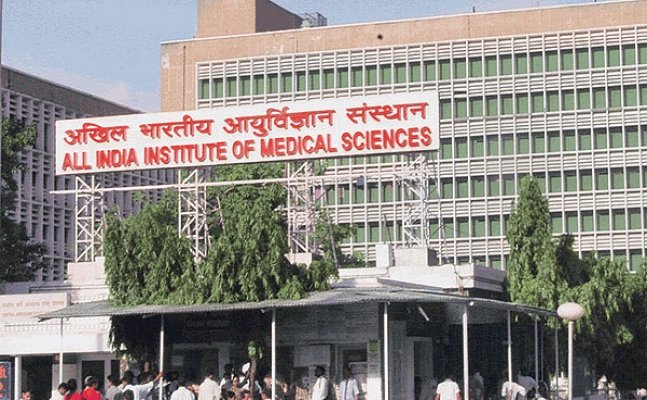
It was exactly 13 years back that the Thorat Committee, constituted in September 2006 to enquire into allegations of differential treatment of Scheduled Caste and Scheduled Tribe students at the premier medical institute, AIIMS—was released.

The first of its kind in independent India, this three-member committee led by then chairman of the University Grants Commission, Sukhdeo Thorat, had looked deeply into the many shades of discrimination faced by students of non-elite castes in the institute.

What it discovered after talking to students and faculty was, to say the least, shocking. Some 72% of SC/ST students mentioned facing some discrimination during the teaching sessions. Second, caste-based discrimination was prevalent in the hostels, for instance around 88% students reported experiencing of social isolation in various forms. The committee’s report also outlined the discrimination faced by SC/ST professors.

This context frames the alleged suicide attempt of a female doctor a fortnight ago in the same institute. The doctor, who worked at the Dental Research Centre of AIIMS, was allegedly facing sexual harassment and caste discrimination. This is another reminder that there has not been a qualitative change in the institute in the long years since the Thorat Committee report.

( )Read the full article here)

Playing the subaltern – Irrfan Khan as the migrant worker in Mumbai Meri Jaan: Umang Kumar

Guest post by UMANG KUMAR
 

Irrfan Khan reads the iconic poem, “Thakur ka Kuan”, by Dalit writer Om Prakash Valmiki, at the 2014 Jaipur Literary Festival.

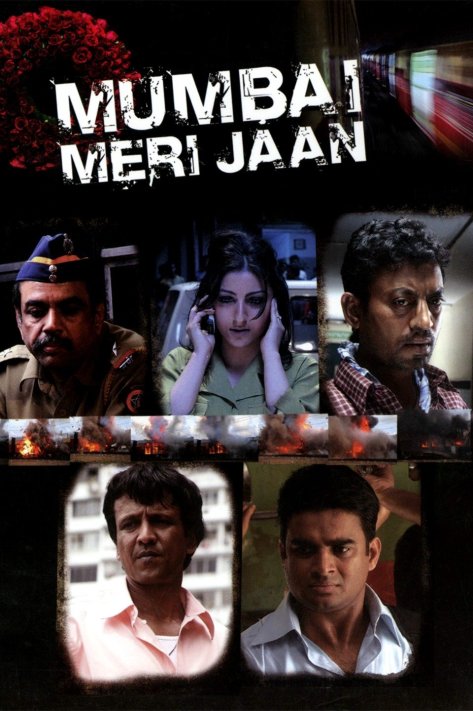
While Irrfan Khan essayed a diverse range of roles, his hauntingly powerful cameo appearance in Mumbai Meri Jaan stands out for its intensity in the portrayal of working-class realities, especially those of migrant workers.

Mumbai Meri Jaan, a 2008 film, revolves around the tragedy of the 2006 Mumbai local-train blasts. Khan plays Thomas, a Tamil coffee-vendor who sells coffee from a roadside cart, and speaks minimum, Tamil-accented Hindi. His wife works as a domestic help.

Asif Kapadia, the British filmmaker, who worked with Irrfan on the movie The Warrior, recently shared what he had initially thought about Irrfan: “He looks like someone who’s killed a lot of people, but feels really bad about it.” While that probably had something to do with Khan’s brooding, prominent eyes, it does point to the deep volcano of emotions that Khan seemed to be harboring with perfect equanimity all the time.

Continue reading Playing the subaltern – Irrfan Khan as the migrant worker in Mumbai Meri Jaan: Umang Kumar

Exploring Possibilities for Critical Alliances Between Animal Rights and Bahujan Politics: Krishnanunni Hari

Guest post by KRISHNANUNNI HARI

This essay emerged as a response to the following question that was raised during a Q&A session that I had run on social media:

“How does one tackle people who amalgamate veganism with upper caste vegetarianism?”

The immediate answer to this is that veganism avoids all animal products and all forms of animal ab/use, and hence cannot be amalgamated with vegetarianism and its caste baggage.

Such an answer, however, ignores crucial cultural issues that determine how Animal Rights (AR) and veganism are perceived, co-opted or taken forward in Indian society.

Vegetarians, contrary to what Right wing Hindutva will have us believe, comprise less than 40% of the country’s population.  Jains, most Sikhs and Brahmins and some rich urban forward castes make up the vegetarians in India1. Vegetarianism in India is connected to social power and caste hegemony, unlike its counterpart in the West, where it is an ethical lifestyle and a social justice movement.

Continue reading Exploring Possibilities for Critical Alliances Between Animal Rights and Bahujan Politics: Krishnanunni Hari

‘The Man Who Knew Infinity’ : Team Umang Library

Guest Post by Team Umang Library

Remembering Great Mathematician Srinivasa Ramanujan
on his hundredth death anniversary                                                                                                                                                                                                                                                                     (Watch the video on Youtube uploaded by Umang Library:
First Part: https://www.youtube.com/watch?v=Rehg3WtiBKc
Second Part: https://www.youtube.com/watch?v=y1I1NaWoajY

Srinivasa Ramanujan Facts: 40 Facts on Self-Taught Mathematical Genius

Photo Courtesy : https://factslegend.org/

It was the year 1913 when Srinivasa Ramanujan, then an ordinary clerk in Madras Port Trust, drafted letters to Prof G H Hardy, then a leading mathematician at Cambridge University, containing his mathematical theorems.

The rest as we know is history.

Continue reading ‘The Man Who Knew Infinity’ : Team Umang Library

Migrant Workers, COVID- 19 and our Collective Indifference: Anindya Sekhar Purakayastha and Mursed Alam

Guest post by ANINDYA SEKHAR PURAKAYASTHA and MURSED ALAM

Critical opinions described India as the ‘Republic of Hunger’or as the ‘Republic of Caste’ and now the post-Corona plight of countless migrant workers makes us want to describe it as the Republic of Indifference. Lakhs of migrant workers along with their family members are stuck at different corners of the country, unfed, mistreated and uncared. Recent images of migrant workers flocking to Bandra station in Maharashtra, with hopes of resumption of train services taking them home and the subsequent police action to disperse them was watched and commented by all of us. Most reactions were emotive and anguish ridden but that have little impact on the ground situation in which these migrants are forced to live during this lockdown. It is true that some NGOs and various philanthropic organizations and governmental aids have to a certain extent catered to their needs but their misery demands more than mere empathy or selective mercy. They need concrete action on the ground. It is astounding to see the Government of India announcing the lockdown on 25 March without having any concrete action plan for these countless migrant workers. This completely betrays the government`s indifference to their sufferings. As if we take them and their sufferings for granted. Earlier some migrants were packed off in over-crowded buses with no money and in Delhi migrant workers were stranded in a bus station in large numbers, rendering them more vulnerable to the infection threat. By all means the COVID 19 crisis has once again proved that they are the Rejects of India. They are mere numbers, and we club them under one official category of “Migrants”, they are not human beings, a mere category of the Reject, who are left out to fend for themselves. We, armchair intellectuals and the moneyed class securely ensconced in our comfort zone, guaranteed of our salaries and jobs, passed off social media comments. The self-appointed radical fringe among us called for the closure of all other activities like educational studies as migrants are suffering but all these predictable reactions boiled down to nothing when it comes to forcing the government to come down to the street and adopt concrete steps to mitigate the traumas of these suffering faces who are away from homes and family.

Continue reading Migrant Workers, COVID- 19 and our Collective Indifference: Anindya Sekhar Purakayastha and Mursed Alam

NLU Jodhpur alumni and students protest homophobic teaching materials

Current VI semester undergraduate students of the University pursuing the ‘Sociology – III Law and Society’ course, at the National Law University Jodhpur were sent outright homophobic content purportedly as essential reading (details of the readings are in the letter below). The material presented outdated notions of homosexuality. When the faculty member was challenged via email by a student, she said she had shared it to encourage debate and present one side of the prevailing views on homosexuality. However, the material was sent without providing any such context. The faculty committed that she would be sending updated material presenting sociological developments on the subject in the coming few days. However, instead of doing so, she delegated her responsibility to the student who had written to her, a move that can only be interpreted as reprisal.

The interim student body wrote to the Vice Chancellor on the issue. 150 alumni members also wrote to the Chancellor, Vice Chancellor and General Council of NLU-J asking for disciplinary action against the faculty member, an external resource person to teach the subject, and review of the course curriculum.

This is the letter

Dear Dr. Saxena and Members of the General Council,

We, the undersigned alumni of National Law University, Jodhpur, much to our consternation, have learnt that current VI semester undergraduate students of the University pursuing the ‘Sociology – III Law and Society’ course were sent outright homophobic content purportedly as essential reading by Dr. Asha Bhandari, Assistant Professor, Faculty of Humanities and Social Sciences, and Member, Academic Council, on April 11, 2020. On a perusal of the content, it is evident that the material sent by Dr. Bhandari is unscientific, uncritical, based on outdated notions of homosexuality, perpetuates dangerous stereotypes, and legitimizes prejudice against the LGBTIQ community. As you would all agree, this is unacceptable in any institute of learning, much less in one that prides itself on being a premier national law school.

Continue reading NLU Jodhpur alumni and students protest homophobic teaching materials