Category Archives: Culture

Community-Based Mapping of Covid: Nothing Official About it

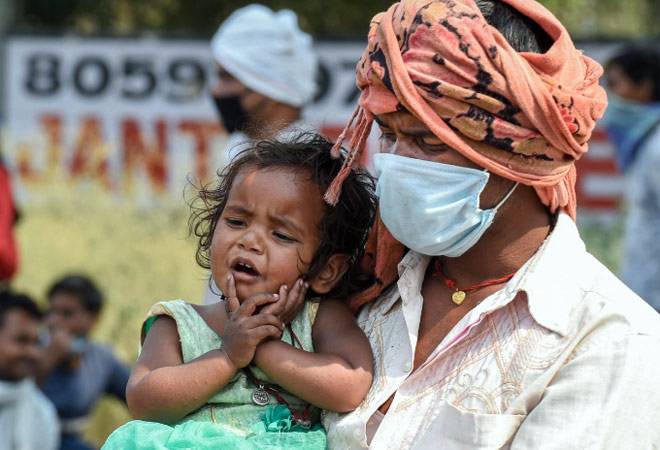
No doubt the clarification that India will not map Covid-19 infections on the basis of religion has many heaving sighs of relief. But will the peace last?

Community-Based Mapping of Covid: Nothing Official About it

Image Courtesy: AP

Move for community-based mapping of coronavirus?” a recent news item in a prestigious daily asked, getting tongues wagging about “closed-door meetings at the highest level”, though no “official” decision had been taken in themThe Ministry of Health declared that any such news is “baseless, incorrect and irresponsible”. Lav Agarwal, the top bureaucrat in the ministry—who interacts with the media on Covid-related developments—called such news reports “…very irresponsible”. “The virus does not see people’s caste, creed or religion,” he said, quoting the Supreme Court’s directions on controlling non-factual or fake news.

No doubt the official clarification has many heaving sighs of relief.

The relief is understandable, because it was only last month—when the Novel Coronavirus pandemic had started taking a toll—that Muslims were being stigmatised as “super-spreaders” of the disease.

Taking a grim view of the situation, in its press conference o6 April, the World Health Organisation had given the Indian government some simple advice. The WHO said, in response to an India-specific question, that countries should not profile Covid-19 infections in religious, racial or ethnic terms. The WHO Emergency Programme Director Mike Ryan also underlined that every positive case should be considered a victim.

( Read the full article here)

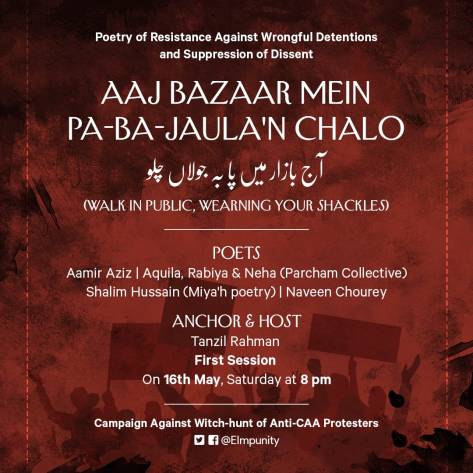
Poetry of resistance against the suppression of dissent

On 16th May 2020, the Campaign against Witch-hunt of Anti-CAA Activists inaugurates its Poetry Week.  

Poetry bears witness. It records, it remembers. Resistance, indeed life itself, has long been sustained and nourished by the words of poets.
So, it is with poetry that we celebrate the inspiring movement against the Citizenship Amendment Act, and with the power of words fight the wrongful arrests and malicious prosecution of anti-CAA activists.
The first session will feature poets Aamir Aziz, Aquila, Neha and Rabiya of the Parcham Collective, Miya’h poet Shalim Hussain & Naveen Chourey
Host and anchor: Tanzil Rahman
FIRST SESSION
On 16th May | Saturday | 8 pm onwards
Register using this link

https://forms.gle/iUwV6FimHsWd6ZLY7

Paean – A Song for Triumphs, For Usha Ganguly and Irrfan Khan: The Mocking Birds

Guest Post by the group THE MOCKING BIRDS

आज की रात न फ़ुट-पाथ पे नींद आएगी
सब उठो, मैं भी उठूँ तुम भी उठो, तुम भी उठो
कोई खिड़की इसी दीवार में खुल जाएगी
ये ज़मीं तब भी निगल लेने पे आमादा थी
पाँव जब टूटती शाख़ों से उतारे हम ने
उन मकानों को ख़बर है न मकीनों को ख़बर
उन दिनों की जो गुफाओं में गुज़ारे हम ने ( कैफ़ी आज़मी )
              सच है इस लॉक डॉउन में हमने लगभग गुफाओं में दिन गुजारे है, कुछ आब ला पा सड़क पर दर ब दर है, कुछ ऐसे है जो इस फानी दुनिया से चले गए, ऐसा लगता है जैसे उनको इस आगत का इलहाम हो गया था आज के ग़म का, और जल्द ही चले गए …. फ़ैज़ से कुछ पंक्तियां लेकर

Continue reading Paean – A Song for Triumphs, For Usha Ganguly and Irrfan Khan: The Mocking Birds

निरंकुशता के स्रोत, प्रतिरोध के संसाधन : रवि सिन्हा

Guest Post by Ravi Sinha

राजनीति का आम सहजबोध यह है कि सत्ता की निरंकुशता लोकतंत्र का निषेध है। लोकतंत्र राजनीतिक सत्ता का गठन तो करता है, लेकिन उसे निरंकुश नहीं होने देता। यदि किसी लोकतांत्रिक व्यवस्था के अंतर्गत निरंकुश सत्ता का उद्भव होता है तो उसे लोकतंत्रा की दुर्बलता, उसके विकार या उसमें किसी बाहरी अलोकतांत्रिक शक्ति के हस्तक्षेप के रूप में देखा जाता है। यदि लोकतंत्र का अर्थ यह है कि सत्ता के स्रोत लोक में स्थित हैं तो यह स्वयंसिद्ध है कि लोकतांत्रिक सत्ता निरंकुश नहीं हो सकती।

इसी तरह राजनीति का सहजबोध यह भी है कि सत्ता की निरंकुशता प्रतिरोध को जन्म देती है और प्रतिरोध की जड़ें लोक में स्थित होती हैं। निरंकुशता यदि लोकतंत्र का निषेध है तो यह भी स्वयंसिद्ध है कि लोक या जन ही प्रतिरोध के मूल आधार और उसके प्रमुख संसाधन हैं। यह दूसरी मान्यता पहली के साथ जुड़ी हुई है। यदि पहली मान्यता टिकती है तो दूसरी की सत्यता भी साबित होती है। यदि पहली संदेह के घेरे में आती है तो दूसरी के स्वयंसिद्ध होने पर भी प्रश्न खड़े होते हैं।

और, प्रश्न तो खड़े होते हैं। वास्तविकता की प्रकृति ही ऐसी होती है कि वह मान्यताओं की परवाह नहीं करती – बहुप्रचलित और स्वयंसिद्ध प्रतीत होने वाली मान्यताओं की भी नहीं। दूसरी तरफ़, मान्यताओं की – ख़ास तौर पर बहुप्रचलित मान्यताओं की – बनावट और उनकी ज़मीन ऐसी होती है कि वास्तविकताओं के उलट होने के बावजूद वे चलन में बनी रहती हैं। ऐसी स्थिति में पहले तो यह देखना होता है कि वास्तविकता क्या है और संबंधित मान्यताओं से उसकी संगति बैठती है या नहीं। फिर यह अलग से देखना होता है कि मान्यताएं जब ग़लत होती हैं, तब भी उनके चलते रहने के कारण कहां पर स्थित हैं। एक तरह से यह सहजबोध की जांच-पड़ताल का समय होता है। और कभी-कभी नये सहजबोध के निर्माण का समय भी होता है।

भारत की आज की हक़ीक़त यह तो है ही कि मौजूदा सरकार के अधीन राज्य और राजनीतिक सत्ता निरंकुश हो चले हैं। संवैधानिक, संस्थागत तथा लोकतांत्रिक नियमों, नियंत्रणों और परंपराओं को रौंदा जा रहा है और व्यवस्था तथा समाज, दोनों क्षेत्रों में मनमानी की जा रही है। कश्मीर से कन्याकुमारी तक, असम से गुजरात तक, संसद से और भीमा कोरेगांव से तीस हज़ारी तक और तिहाड़ तक नंगी निरंकुशता के उदाहरण सभी के सामने हैं। लेकिन क्या सभी को यह सब दिखायी दे रहा है? Continue reading निरंकुशता के स्रोत, प्रतिरोध के संसाधन : रवि सिन्हा

Colours of Trolls and Harassment :Vatya Raina

Guest Post by Vatya Raina

The fight for half the Earth and half the sky is never at rest around the globe. Women of the world are constantly fighting their oppressors in different colours. The debate around #BoisLockerRoom stories on Instagram and the trolls concerned about the marital status of a pregnant woman in jail, for practising her right to protest are of similar nature.

In 2017, The Jawaharlal Nehru University’s administration under the command of Vice-Chancellor M Jagadesh Kumar arbitarily dismantled the GSCASH (Gender Sensitization Committee Against Sexual Harassment). At the same time, women of Banaras Hindu University (BHU) were leading the movement against sexual harassment.

Today, when a pregnant student activist is fighting for her rights inside the jail, some women are continuing to resist and expose a group of young boys, by revealing the screenshots of an Instagram chat screen, where the participants of the group named ‘Bois Locker Room’ shared some non-consensual pictures of women as well as underage girls. After the screenshots went viral, these boys expressed their anger by suggesting gang-rape of all the women who shared it. On the other hand, Safoora Zargar, a research scholar of Jamia Millia Islamia, who was associated with the Jamia Coordination Committee (JCC), and was part of the anti-Citizenship Amendment Act protests organised by university students in December and January has been charged under Unlawful Activities (Prevention) Act (UAPA) and is send behind the bars. She has been arrested for allegedly leading the anti-CAA protest at Jaffrabad metro station in February.  Turning a blind eye to the medical condition of the student, the trolls are busy assassinating her character. Continue reading Colours of Trolls and Harassment :Vatya Raina

Operation Eklavya in Action at Premier Institutes

India is neglecting caste-based discrimination in higher educational institutions at its own peril.

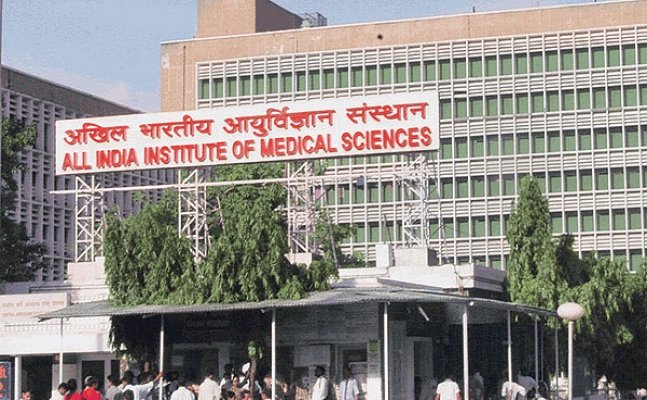
AIIMS Caste Discrimination

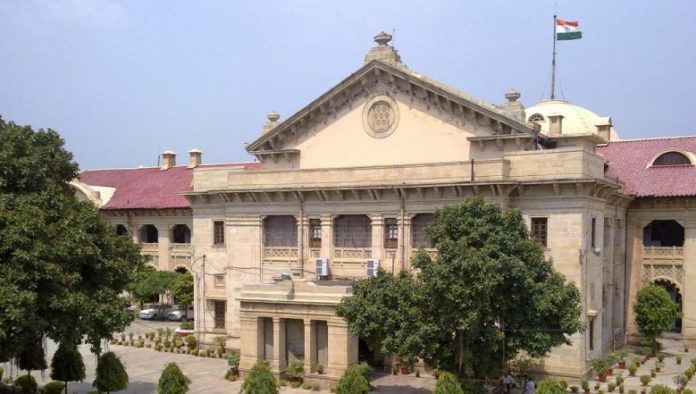
It was exactly 13 years back that the Thorat Committee, constituted in September 2006 to enquire into allegations of differential treatment of Scheduled Caste and Scheduled Tribe students at the premier medical institute, AIIMS—was released.

The first of its kind in independent India, this three-member committee led by then chairman of the University Grants Commission, Sukhdeo Thorat, had looked deeply into the many shades of discrimination faced by students of non-elite castes in the institute.

What it discovered after talking to students and faculty was, to say the least, shocking. Some 72% of SC/ST students mentioned facing some discrimination during the teaching sessions. Second, caste-based discrimination was prevalent in the hostels, for instance around 88% students reported experiencing of social isolation in various forms. The committee’s report also outlined the discrimination faced by SC/ST professors.

This context frames the alleged suicide attempt of a female doctor a fortnight ago in the same institute. The doctor, who worked at the Dental Research Centre of AIIMS, was allegedly facing sexual harassment and caste discrimination. This is another reminder that there has not been a qualitative change in the institute in the long years since the Thorat Committee report.

( )Read the full article here)

Playing the subaltern – Irrfan Khan as the migrant worker in Mumbai Meri Jaan: Umang Kumar

Guest post by UMANG KUMAR
 

Irrfan Khan reads the iconic poem, “Thakur ka Kuan”, by Dalit writer Om Prakash Valmiki, at the 2014 Jaipur Literary Festival.

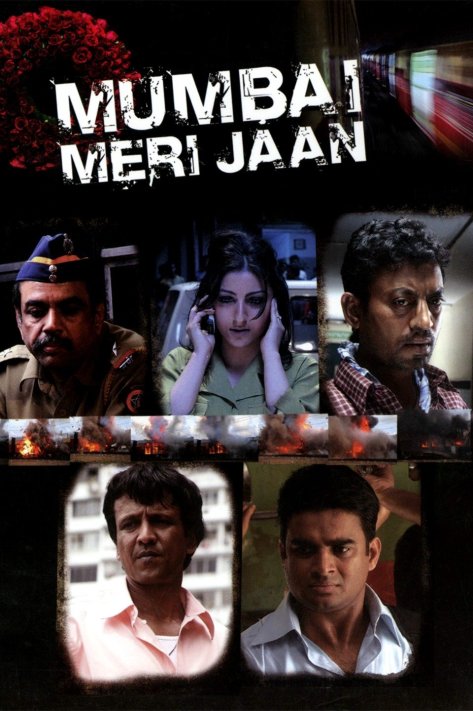
While Irrfan Khan essayed a diverse range of roles, his hauntingly powerful cameo appearance in Mumbai Meri Jaan stands out for its intensity in the portrayal of working-class realities, especially those of migrant workers.

Mumbai Meri Jaan, a 2008 film, revolves around the tragedy of the 2006 Mumbai local-train blasts. Khan plays Thomas, a Tamil coffee-vendor who sells coffee from a roadside cart, and speaks minimum, Tamil-accented Hindi. His wife works as a domestic help.

Asif Kapadia, the British filmmaker, who worked with Irrfan on the movie The Warrior, recently shared what he had initially thought about Irrfan: “He looks like someone who’s killed a lot of people, but feels really bad about it.” While that probably had something to do with Khan’s brooding, prominent eyes, it does point to the deep volcano of emotions that Khan seemed to be harboring with perfect equanimity all the time.

Continue reading Playing the subaltern – Irrfan Khan as the migrant worker in Mumbai Meri Jaan: Umang Kumar

Exploring Possibilities for Critical Alliances Between Animal Rights and Bahujan Politics: Krishnanunni Hari

Guest post by KRISHNANUNNI HARI

This essay emerged as a response to the following question that was raised during a Q&A session that I had run on social media:

“How does one tackle people who amalgamate veganism with upper caste vegetarianism?”

The immediate answer to this is that veganism avoids all animal products and all forms of animal ab/use, and hence cannot be amalgamated with vegetarianism and its caste baggage.

Such an answer, however, ignores crucial cultural issues that determine how Animal Rights (AR) and veganism are perceived, co-opted or taken forward in Indian society.

Vegetarians, contrary to what Right wing Hindutva will have us believe, comprise less than 40% of the country’s population.  Jains, most Sikhs and Brahmins and some rich urban forward castes make up the vegetarians in India1. Vegetarianism in India is connected to social power and caste hegemony, unlike its counterpart in the West, where it is an ethical lifestyle and a social justice movement.

Continue reading Exploring Possibilities for Critical Alliances Between Animal Rights and Bahujan Politics: Krishnanunni Hari

‘The Man Who Knew Infinity’ : Team Umang Library

Guest Post by Team Umang Library

Remembering Great Mathematician Srinivasa Ramanujan
on his hundredth death anniversary                                                                                                                                                                                                                                                                     (Watch the video on Youtube uploaded by Umang Library:
First Part: https://www.youtube.com/watch?v=Rehg3WtiBKc
Second Part: https://www.youtube.com/watch?v=y1I1NaWoajY

Srinivasa Ramanujan Facts: 40 Facts on Self-Taught Mathematical Genius

Photo Courtesy : https://factslegend.org/

It was the year 1913 when Srinivasa Ramanujan, then an ordinary clerk in Madras Port Trust, drafted letters to Prof G H Hardy, then a leading mathematician at Cambridge University, containing his mathematical theorems.

The rest as we know is history.

Continue reading ‘The Man Who Knew Infinity’ : Team Umang Library

Migrant Workers, COVID- 19 and our Collective Indifference: Anindya Sekhar Purakayastha and Mursed Alam

Guest post by ANINDYA SEKHAR PURAKAYASTHA and MURSED ALAM

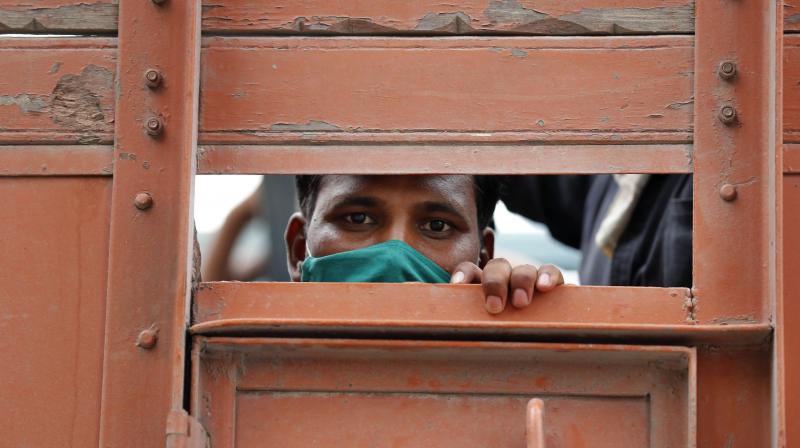
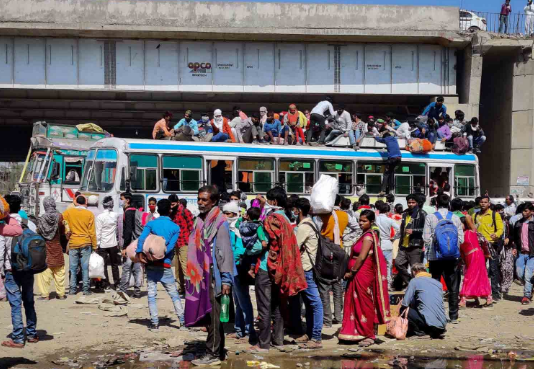
Critical opinions described India as the ‘Republic of Hunger’or as the ‘Republic of Caste’ and now the post-Corona plight of countless migrant workers makes us want to describe it as the Republic of Indifference. Lakhs of migrant workers along with their family members are stuck at different corners of the country, unfed, mistreated and uncared. Recent images of migrant workers flocking to Bandra station in Maharashtra, with hopes of resumption of train services taking them home and the subsequent police action to disperse them was watched and commented by all of us. Most reactions were emotive and anguish ridden but that have little impact on the ground situation in which these migrants are forced to live during this lockdown. It is true that some NGOs and various philanthropic organizations and governmental aids have to a certain extent catered to their needs but their misery demands more than mere empathy or selective mercy. They need concrete action on the ground. It is astounding to see the Government of India announcing the lockdown on 25 March without having any concrete action plan for these countless migrant workers. This completely betrays the government`s indifference to their sufferings. As if we take them and their sufferings for granted. Earlier some migrants were packed off in over-crowded buses with no money and in Delhi migrant workers were stranded in a bus station in large numbers, rendering them more vulnerable to the infection threat. By all means the COVID 19 crisis has once again proved that they are the Rejects of India. They are mere numbers, and we club them under one official category of “Migrants”, they are not human beings, a mere category of the Reject, who are left out to fend for themselves. We, armchair intellectuals and the moneyed class securely ensconced in our comfort zone, guaranteed of our salaries and jobs, passed off social media comments. The self-appointed radical fringe among us called for the closure of all other activities like educational studies as migrants are suffering but all these predictable reactions boiled down to nothing when it comes to forcing the government to come down to the street and adopt concrete steps to mitigate the traumas of these suffering faces who are away from homes and family.

Continue reading Migrant Workers, COVID- 19 and our Collective Indifference: Anindya Sekhar Purakayastha and Mursed Alam

NLU Jodhpur alumni and students protest homophobic teaching materials

Current VI semester undergraduate students of the University pursuing the ‘Sociology – III Law and Society’ course, at the National Law University Jodhpur were sent outright homophobic content purportedly as essential reading (details of the readings are in the letter below). The material presented outdated notions of homosexuality. When the faculty member was challenged via email by a student, she said she had shared it to encourage debate and present one side of the prevailing views on homosexuality. However, the material was sent without providing any such context. The faculty committed that she would be sending updated material presenting sociological developments on the subject in the coming few days. However, instead of doing so, she delegated her responsibility to the student who had written to her, a move that can only be interpreted as reprisal.

The interim student body wrote to the Vice Chancellor on the issue. 150 alumni members also wrote to the Chancellor, Vice Chancellor and General Council of NLU-J asking for disciplinary action against the faculty member, an external resource person to teach the subject, and review of the course curriculum.

This is the letter

Dear Dr. Saxena and Members of the General Council,

We, the undersigned alumni of National Law University, Jodhpur, much to our consternation, have learnt that current VI semester undergraduate students of the University pursuing the ‘Sociology – III Law and Society’ course were sent outright homophobic content purportedly as essential reading by Dr. Asha Bhandari, Assistant Professor, Faculty of Humanities and Social Sciences, and Member, Academic Council, on April 11, 2020. On a perusal of the content, it is evident that the material sent by Dr. Bhandari is unscientific, uncritical, based on outdated notions of homosexuality, perpetuates dangerous stereotypes, and legitimizes prejudice against the LGBTIQ community. As you would all agree, this is unacceptable in any institute of learning, much less in one that prides itself on being a premier national law school.

Continue reading NLU Jodhpur alumni and students protest homophobic teaching materials

Brutalising Labourers, Jailing Dissidents

A medical emergency is no pretext to impose a political emergency.

A medical emergency

How many policemen in civil clothes are required to deliver a mere summons to an editor of a web journal 700-k away in an age of email and WhatsApp? The recent action of the Uttar Pradesh police, where it sent a posse of 7-8 policemen, in civil clothes, in a black SUV with no number plates, to Siddharth Varadarajan’s residence in Delhi to deliver a summons has prompted this question.

Definitely the police did not bother to ponder over how Varadarajan, editor of The Wire, will present himself to the authorities during a lockdown which has brought trains, flights and even private transport to a standstill.

The manner in which the issue has unfolded has caused an international uproar with 3,500 jurists, scholars, actors, artists and writers condemning Uttar Pradesh Police’s actions against The Wire, and saying that a “medical emergency should not serve as the pretext for the imposition of a de facto political emergency.”

How Chief Minister Yogi Adityanath’s government will respond remains to be seen, but the story in The Wire on the Tablighi Jamaat, which also noted that “Indian believers” responded late to the viral epidemic obviously provoked the powers-that-be into action. The episode has brought into sharp focus the priorities of the government during the epidemic, which it is supposedly fighting a “war” against.

( Read the full article here : https://www.newsclick.in/Brutalising-Labourers-Jailing-dissidents)

The Supreme Minister Knows: A Bedtime Story by Bebe Yaga

https://www.youtube.com/watch?v=_DlfcNcAWgw

Mainstream Myths Versus Scientific Collaboration

The rediscovery of scientific collaboration across borders is a welcome development.

Fake News on COVID

Nothing in life is to be feared, it is only to be understood. Now is the time to understand more, so that we may fear less.

– Marie Curie.

Does the 5G network have any link to the novel corona-virus outbreak?”

Well, any sane person on this part of Earth would readily laugh at this outrageous claim. But this claim has “gone mainstream” leading even to bomb attacks on phone masts. So one has to sit up and analyse.

No doubt, when “psychological states peak and people’s anxiety levels are high,” as one expert puts it, one can easily become prey to such conspiracy theories. And as right-wing or conservative ideas have growing legitimacy in society, things can get even worse. Remember how for a long time Iran’s theocracy was in denial about the Corona-virus threat?

India is no exception to such false claims. All sorts of home remedies are being offered as a definite cure to the disease. We saw Gomutra parties where cow urine was drunk, supposedly as protection from this highly-contagious disease which has taken more than 100,000 lives and infected more than 1.7 million. No doubt it is an arduous task for progressives to counter all the rubbish being peddled around the pandemic and prepare people to take proper care while pressurising the powers-that-be to make public health a priority.

Such struggles can be better fought if individual scientists or groups of scientists join hands to sensitise and educate people.

The recent launch of a pan-institutional CovidGyan website (https://covid-gyan.in/) which is a brainchild of the Tata Institute of Fundamental Research (TIFR), the Indian Institute of Science (IISc), and the Tata Memorial Centre (TMC) is a welcome step in this direction. Other key members of this initiative include Vigyan Prasar, IndiaBioscience, and the Bangalore Life Science Cluster (BLiSC, which comprises InStem and C-CAMP, in addition to NCBS-TIFR).

( Read the full article here : https://www.newsclick.in/Mainstream-Myths-Versus-Scientific-Collaboration)

रोगाणु, दाग़ और हमारा ‘विशुद्ध’ समाज : वी. गीता

Guest post by V. GEETHA. Translated by RAJENDER SINGH NEGI

कोरोना के आने से पहले ही हममें रोगाणुओं को लेकर चिंता का भाव विद्यमान था. ज़रा उन फ़र्श, किचन काउंटर, कपड़ों, इत्यादि रोगाणुओं, दाग़, और तमाम क़िस्म के सूक्ष्म घुसपैठी जंतुओं से निजात दिलाने वाले विज्ञापनों को याद करें, जिनमे इन सभी को पर्याप्त और बड़ी चालाकी से दुष्ट क़रार दिया जाता रहा है. कोरोना ने हमें ख़ुद को विशुद्ध और साफ़-सुथरा रखने का पूर्णत: वाजिब कारण दे दिया है. हम चाहे ख़ुद को चारदीवारी के अंदर बंद कर लें, या, अन्यों को उसमें दाख़िल होने से रोकें, अंतत: इसका नतीजा वही निकलता है, कि हम अक्सर पहले से ही समाज में व्याप्त जातिगत, वर्ग-आधारित, नस्ल-भेदी और धार्मिक आधार पर बनाई गई सामाजिक मान्यताओं की दीवारें ही खड़ी कर रहे होते हैं.

तो फिर जिस जोश-खरोश से हमने संभावित संक्रामक माने जाने वाले लोगों पर नज़र रखने, उन्हें चिह्नित और वर्जित करने की क़वायद सर पर उठा रखी है उस पर अचरज नहीं करना चाहिए. इस वर्जना में सरेआम सड़कों पर धर-पकड़, शर्मिंदा किया जाना, घरों में ‘आईसोलेट’ किए गयों के नाम सार्वजनिक किया जाना, और मरीज़ों का ईलाज कर रहे डॉक्टरों और नर्सों का उनकी ही रिहाईशी कॉलोनियों में प्रवेश की निषेधआज्ञा लागू किया जाना भी शामिल है.

Continue reading रोगाणु, दाग़ और हमारा ‘विशुद्ध’ समाज : वी. गीता

Corona, Capitalism and Civilisation : Ravi Sinha

Guest Post by Ravi Sinha

“Who do you blame it on? For a while it was China, until the most favourite target for the Indians appeared on the scene – you know who. When it comes to the business of blaming, Indians (a large percentage of them) would have loved it if the virus had originated somewhere in the Middle East or in Pakistan.

But new viruses have always appeared in human history, some more deadly than others. This one is the newest such calamity. Sure enough, humanity will be found standing on the other side of this crisis. But, how shall we count the losses after this mayhem is over?

Continue reading Corona, Capitalism and Civilisation : Ravi Sinha

An Open Letter to the Kerala Governor Sri Arif Mohammad Khan About Our Fight Against the Virus, But Also About Our Resistance to CAA-NRC

Dear Sir

First of all, thank you for acknowledging, even praising,the efforts of the government of Kerala and the people to protect ourselves and humanity against the threat of the corona virus. It is true that Kerala’s efforts and achievements are being lauded the world over, but those voices are never going to make any impact on the supporters of the Sangh parivar in Kerala. But your views cannot be dismissed so easily as ‘Western’ or ‘leftist’ (though they may still murmur about your Muslim name). What has really riled me in the recent past is their systematic effort at downplaying Kerala’s achievements, heaping abuse on our effort to help migrant workers, and raising baseless allegations against those who are working to mitigate the crisis. So as a historian of modern Kerala, I am writing this to offer some insights into why we have been able to do this, in the hope that you may be able to see what they will never tell you — simply because they are so sadly blinded by hate. Continue reading An Open Letter to the Kerala Governor Sri Arif Mohammad Khan About Our Fight Against the Virus, But Also About Our Resistance to CAA-NRC

Srinarayanadharmam: Raghavan Thirumulpad (Part 2)

The third chapter is about precepts applicable to all human beings;  the aacharyan speaks here on the panchadharmas and the panchashuddhi. The panchadharmas are : nonviolence, truth, non-covetousness, the rejection of intoxicants,  and the avoidance of licentiousness. Dharmoyam Saarvavarnikah, say the earlier aachaaryas, mentioning nonviolence, truth, non-covetousness, celibacy, and frugality as the five crucial dharmas. The Yogasastra mentions these five as the panchayamas. Continue reading Srinarayanadharmam: Raghavan Thirumulpad (Part 2)

Balm in Troubling times – Raghavan Thirumulpad on Srinarayana Dharma

[The lockdown ought to work as a great leveler. For once, all who live in mortal bodies have been reminded of their inevitable mortality, of the absurd fragility of our existence on this planet. Even the living-gods who command a huge following have shut darshan. We have also been reminded that life on earth will not grind to a standstill if we go. Indeed, the signs are that it will thrive. 

But at the ground level, that is not happening. The better-off can see how, starkly, like never before, the privileges they enjoy, and given as they are to an amoral worship of consumption which inhibits their capacity for compassion, are more likely to shield this by resorting to any kind of ideology that justifies their privilege, probably eugenics or some kind of functionalist interpretation of caste oppressive practices. We are seeing how the poor are suffering for no fault of theirs at all. Indeed, the lockdown may help to normalize privilege even more, and render us all the more insensitive to the suffering of the working class poor. One reason why this happens is because we are already, as a society, afflicted by moral viruses — of religious bigotry, caste privilege, and ruthless capitalism. As a society, we are sick, and the pandemic is likely to exacerbate it

It must be this connection that made me turn to the work of Raghavan Thirumulpad, who was one of Kerala’s finest ayurvedic physicians, a multi-lingual scholar whose conception of individual and human wellness was inextricably related to the wellness of society and the natural world. I have long admired the ease with which he moved between theory and practice in ayurveda; but what really connected us as privileged-caste-born people who sought to become human  was that we found in Sreenarayana Guru a common refuge. For Thirumulpad, the Guru is not just a social reformer or preacher but a healer — a healer of society and individual, who drew upon Indian traditions to reinterpret a dharma adequate to the disease that afflicted society in his times.

Continue reading Balm in Troubling times – Raghavan Thirumulpad on Srinarayana Dharma

Weaponising Idiocy: Milk-Drinking Ganesha to Taali Bajao

Then and now, a conservative Hindutva organisation had a role in spreading rumours.

coronavirus and cow urine

Representational image. | Image Courtesy: Deccan Herald


Yad ihasti tad anyatra, yan nehasti na tat kavcit. ‘Whatever is here might be elsewhere, but what is not here could ever be found’.—The Mahabharata, 1.56.33, from Meera Nanda’s The God Market: How Globalisation is Making India More Hindu, Random House 2009.

It was the fag end of the 1st decade of the 21st century when the historian Rink Shenkman wrote his marvellous book, Just how stupid Are We? Facing the Truth about the American Voter. In an interview, he said that Americans are “ill-prepared” to guide the world’s “most powerful” democracy. The book points out the astounding inability of even “two of five voters” to name three branches of the federal government, the fact that half of Americans think that their president can suspend the Constitution, and a large section’s ignorance of the 9/11 attack and the Iraq war that followed.

His concern was the mass of people who could easily, repeatedly and systematically be misled and manipulated by politicians and further “dumb down” American politics.

This “stupidity” was on full display in images of rowdy college crowds hitting California’s beaches during spring break, prompting the governor to close them down. New York governor Andrew Cuomo warned that “young people are not Superman/woman” when it turned out that people, especially the young, are not socially distancing themselves. But only Americans are not to blame. Media tells us that “virus rebels” are displaying their stupidity virtually all over the Western world, prompting crackdowns by authorities.

There’s perhaps no similar study for South Asia, especially India, probing our “stupidity” in this crisis-time, though there’s immense fodder for it.

( Read the full text here : https://www.newsclick.in/Hindutva-Coronavirus-COVID-19-WhatsApp-Fake-News)

Understanding the Rise of the BJP

Guest Post by PARVIN SULTANA

(Review of HINDUTVA: EXPLORING THE IDEA OF HINDU; NATIONALISM, Jyotirmaya Sharma ( Context 2019); M.S. GOLWALKAR, THE RSS AND INDIA, Jyotirmaya Sharma (Context, 2019) ; DECODING THE RSS: ITS TRADITIONS AND POLITICS Raosaheb Kasbe (Leftword Books, 2019) , RAJIV GANDHI TO NARENDRA MODI: BROKEN POLITY, FLICKERING REFORMS Parsa Venkateshwar Rao Jr. (Sage Select, 2019) ; MODINAMA: ISSUES THAT DID NOT MATTER Subhash Gatade (Leftword Books, 2019) 

The 2014 general elections which saw the Bharatiya Janata Party return to power with an absolute majority is believed to have brought an important paradigmatic shift to Indian politics. Scholars commenting have termed it as a majoritarian shift. Post elections, there have been discussions which tried to understand the reasons behind this massive mandate that the Right Wing political party managed to get. This Right Wing shift in India’s electoral politics was further proven by the 2019 Parliament election results which gave the BJP a larger mandate. Scholars have written trying to understand the rise of BJP—is it an isolated event or a continuation of past developments? This becomes important because even at the international level, there is a shift towards conservative politics.
Indian academia has also taken an objective look at this shift. A number of books have been written on various aspects of present-day politics, the ideologies and icons that paved the way for this rise and continue to provide intellectual fodder for this politics, the liberal economic policies which have been taken to their logical conclusion by the present government, etc. And these books have provided us with important insights to make sense of the present-day political situation of the country.

( Read the full text here : https://thebookreviewindia.org/understanding-the-rise-of-the-bjp/)