Category Archives: Debates

Islamic Banking in India – For Financial Inclusion of Muslims or to squeeze them further ?


(Photo Courtesy : http://www.malaysiagazette.com)

Faith based banking in a country which has secularism enshrined in its constitution ! Does not it sound anachronous ?

Well, as far as the present dispensation at the centre led by BJP is concerned – which has an altogether different take on secularism – it does not seem to think so. And that’s why it has gladly accepted the proposal by the Saudi Arabia based Islamic Development Bank (IDB) – an international investment organisation – to start its operations here. In fact this proposal is considered a positive outcome of PM Modi’s visit to Saudi Arabia sometime back.( April 2016) Although a date has not been announced when the Bank would start its operations here, all the formalities regarding its launching have been completed and even the city for its first branch in India has been identified. Ahmedabad would see the first branch of this Bank. Continue reading Islamic Banking in India – For Financial Inclusion of Muslims or to squeeze them further ?

On the Need for Obscene and Offensive Humour: Rohit Revi

This is a guest post by ROHIT REVI

Tanmay Bhat, popular Stand Up Comic, recently released a video on the popular social networking platform SnapChat, imitating Sachin Tendulkar, the popular cricketer, and Lata Mangeshkar, the popular Musician. He called it ‘Sachin vs Lata Civil War’, where the two figures argue over who the better cricketer is, Tendulkar or Kohli. It was almost immediately picked by right-winged political groups, such as the BJP and the MNS, and over the course of the day, the few seconds long video became about ‘Tanmay vs Indian Culture’, ‘Comedians vs The Nation’ and so on. Mumbai Police consulted legal experts, in the meanwhile asking YouTube and Facebook to take the video down. The mainstream media, held hour long debates in relation to the video, and those who tuned in heard about ‘drawing lines’ and ‘crossing boundaries’, amidst drowning shrieks on, again, what ‘our’ culture is and what it is not. As customary, MNS Leader Ameya Kopkar, issued a quick threat to assault him, if he ever appeared in public. Sunil Pal, the comedian, called the young brand of comedians of which Tanmay is a part, a group “filled with lesbians and gays”. An effigy was burnt.

This article is not about whether the video was funny or not. It is about a certain brand of offensive humour and the need for it. Continue reading On the Need for Obscene and Offensive Humour: Rohit Revi

Exit Hindutva Terrorists, Enter Lashkar bombers – Towards Clean Chit to Samjhauta Bombers ?

Whether Indian Investigating Agencies Are Being Turned Into Voices of US Intel Agencies

Whether Indian Intelligence Agencies have decided to function as new ‘post offices’ of US intel agencies ? Put it other ways whether US intel inputs have started overriding the meticulous investigations done by Indian intelligence agencies?

There are enough indications which seem to corroborate this observation.

And perhaps the latest in series seems to be the Samjhauta Express bomb blast case, where NIA seems to be contemplating putting the blame on Lashkar terrorists and absolving the Hindutva terrorists involved in the case basing itself on some vague input from US supposedly involving Lashkar-e-Toiba operative. Continue reading Exit Hindutva Terrorists, Enter Lashkar bombers – Towards Clean Chit to Samjhauta Bombers ?

Ambedkar Cannot be Adopted or Appropriated by Hindutva: K Satyanarayana

Transcript and translation of lecture  by Prof. K.SATYANARAYANA, speaking at the launch of book, Ambedkar Can Neither Be Adopted Nor Appropriated by The Hindutva Elements. The book, authored by Bojja Tharakkam, K. Satyanarayana, K. Laxminarayana and K. Y. Ratnam. It was launched in Hyderabad in July last year and is a reply to RSS’ Organiser special edition on Ambedkar. The text and video of the original Telugu lecture received by us via DALIT CAMERA.

All the friends who gave me this opportunity, to the many Ambedkarites present in this hall and to the very senior members, activists and intellectuals, I thank you all. After Anand Teltumbde has spoken, there isn’t much left to speak because he covered all the information in this book and also described completely about a lot of aspects about Maharashtra, about Ambedkar’s like and his work. Therefore there might not be much new information in my speech, but while writing this book, the distortions they made, or the attempts of RSS in relation to Ambedkar, as there is a need for historical context, I will speak about some of those issues. Firstly what Respected Mr. Tarakam has said is, to read some of the names of essays in the Organiser as the book is not available to everybody. When this book Organiser came out, generally RSS-BJP, when they talk about Ambedkar or about Babri-masjid, what we think is that they speak lies, false words, and mistruths and therefore there isn’t any danger as nobody will believe in their load of rubbish and lies. We think that way and if people understand the lies and if they don’t follow those words, there is no danger, but with this same type of propaganda, they completely changed the normal common-sense of the people and today Modi, as a K.D (drawn from an old colonial police/ legal category, it has become a Telugu expression that suggests a person with undesirable traits), as our brother has sung, is sitting in power.

Continue reading Ambedkar Cannot be Adopted or Appropriated by Hindutva: K Satyanarayana

Response on the Suspension of Registration under the FC(Regulation) Act, 2010 : Lawyers Collective

Guest Post by Lawyers Collective

The Lawyers Collective condemns the blatant attempt  of the government of India to victimize the organization and its office bearers India Jaisng and Anand Grover .This is noting but a gross misuse of the FCRA Act which is being used to suppress any form  of dissent . it is far too well know that both Anand Grover and Indira Jaising have represented several persons in their professional capacity as lawyers is several cases against the government and the functionaries including  the President of the BJP party ,  Amit Shah  protesting his discharge in the Sorabudin murder case . The lawyers collective intends to challenge the order as   unconstitutional and required to be set aside . 

The order/show cause notice is a malafide act and an act of vindictiveness on the part of the Government. This is being done because of the cases that Lawyers Collective (‘LC’) and its Trustees, Ms. Indira Jaising and Mr. Anand Grover, are involved in, including but are not limited to Sanjiv Bhatt, Yakub Memon and Priya Pillai. The aim is to destroy the credibility of LC by leaking it to the media, before even serving it on LC. LC till today has not received the order purportedly issued on 31st May, 2016, though it is available to the press. Continue reading Response on the Suspension of Registration under the FC(Regulation) Act, 2010 : Lawyers Collective

Statement against the Attack on the ‘Velivada’ in Hyderabad Central University: SC/ST Faculty Forum and Concerned Teachers of Hyderabad University

Guest Post by SC/ST Faculty Forum and Concerned Teachers of Hyderabad University

In the early hours 28th May 2016, at around 2 P.M., the authorities at the University of Hyderabad removed the tents erected in North Shopcom around the Velivada and the venue of protest following the death of Rohith Vemula. This happened in the darkness of night, shrouded in secrecy and utterly insensitive towards the turmoil it was bound generate within the student community. Such an act reaffirms the dictatorial stance of the present administration as well as its intolerance to dissent.

The removal of the tent is a clear act of provocation against students since it is well known that they are emotionally attached to the Velivada and consider it as a place of mourning and memorial for Rohith. Especially for the Dalit students, it remains the site of challenge against caste discrimination. Further, bringing down the posters of Dr.Babasaheb Ambedkar’s quotes that surrounded the tent is a grave insult to the Father of the Constitution of this country and an atrocity in itself. It is indeed ironic that the university administration that overtly pronounces its intent  to celebrate Dr.Ambedkar’s 125th birth anniversary for a year has no qualms about removing his posters, or barring his grandson, Prakash Ambedkar, from entering the university. Such actions unmask the true character of the administration; revealing its deeply discriminatory, apathetic and disrespectful attitude towards Dalits and their leaders.

Perhaps the University officials have long forgotten that a University is not to be ruled and subjugated through the military doctrine of “shock and awe” (who can forget George Bush’s now ill famous use of the term during the military invasion of Iraq by the US in 2003!). Instead, patience, maturity and genuine dialogue with the students alone can help us through these difficult times. Unfortunately, the authorities have acted in an extremely unbefitting manner, without the slightest concern for the feelings of their own students. Further, this act of destruction appears doubly mindless and vindictive because the presence of a tent in the Shopcom area does not harm anyone. In fact, through the scorching summer, many people take shelter under it beating the intense heat—be it the students having their food there or other workers who need to be around the Shopcom area. Therefore, we see absolutely no justification for its removal, that too in such a stealthy and unceremonious manner, taking advantage of the the anonymity of the night during vacation. Clearly the authorities are well aware how heartless and unethical such an action is and the serious opposition that it is sure to encounter if carried out during daytime.

The thoughtless desecration of the Velivada compels us to ask a few critical questions. Is it necessary to instigate confrontations in a campus that is already struggling to come to terms with the tragic death of Rohith Vemula, the brutal lathicharge and imposition of false cases against students and faculty and the continuous harassment of students that takes many different forms? Is it not the urgent responsibility of the administration be a little more receptive to the concerns and feelings of the students, keeping in mind the larger interests of the University? It is a cruel irony that while the administration proclaims to the world that it wants “normalcy” to return to the campus, its actions remain blatantly aggressive, anti-student and discriminatory.

More than four months have passed by since that fateful night when a brilliant young man with immense potential and a strong sense of social justice gave up his life, hounded by the administration on the basis of a fictitious charge and non-existent evidence.  We may recall that the cruel and unusual punishment of suspension from hostels and all common spaces was handed out to the five Dalit students during another vacation—the winter of December 2015. Is it  just serendipity? Or, perhaps vacation is time of total impunity, when all natural and moral laws are suspended and humanity is forgotten? While the Rohith and his friends were forced to spend the cold winter nights out in the open, distraught students protesting the removal of the tent spent the day under the unforgiving Hyderabad sun near the main gate of the University on 28th May until they were pushed away by  the security guards.

Prof. Appa Rao Podile resumed office with the knowledge of a hand-picked teaching and non-teaching staff (after abandoning the University in a state of despair following the death of Rohith) on 22nd March, 2016, without so much as giving prior notice to the interim VC, Prof. Periasamy, fully aware how this would affect the protesting students and friends of Rohith. Now, once again, the Velivada has been desecrated when the world was asleep. We quote what a leading jurist Amita Dhanda had said recently with respect to the events at HCU: “A VC must not only be fair but be seen to be fair.” We leave it to our readers to decide whether the VC has ever acted or appeared to act as fair!

Evidently, the loss of Rohith’s life has not meant nor taught anything to the the University of Hyderabad authorities. Those who had closed their eyes to the evidence that screamed out that  Rohith and his friends were “Not Guilty”, have moved on. They now head important committees and speak on behalf of the University to the rest of the world. As ranks are bestowed upon the University, they brim over with pride and claim credit. It is well beyond their comprehension as to why large groups of students and faculty should hang on to a make-shift Velivada—with walls made up of flex-board images of Babasaheb Ambedkar, Jotiba and Savitribai Phule and Kanshi Ram. For them, it is time to “cleanse” and “sanitize” the Shopcom of those disturbing reminders that tell us that “Something is rotten in the state of the University of Hyderabad.”

But the memory of injustice is a powerful tool. The very same structure that has been an eyesore to the administration is our history—poignant, gut-wrenching and yet imbuing our present with direction and the strength to struggle. To recall a stirring line that has emerged through the Rohith Vemula movement: “A spectre is haunting the brahminical academia—the spectre of caste.” We welcome and embrace this history. The Velivada is the place where Rohith spent his final destitute days, anxious that his years of hard work and aspiration to give a better life to his family may come to nought. This is where we come to pay our respects and to remind ourselves that there should be no more Rohiths. Around this very place, a community has gathered—of those who may not have known each other  earlier but who understood how critical it was to work towards a world where “a man is not reduced to his immediate identity”. People thronged to this place from different Universities and from all walks of life to pay homage, and in solidarity. Those who could not come still became part of this imagined community—those from Uttar Pradesh, Bihar, Kerala, the North East, in fact, from every part of this country—threaded together by empathy and experience. Rohith became an icon and a rallying cry because his life struck a chord with the large majority of Dalit  and other minoritized and underprivileged groups in India for whom education is still a humungous struggle. More important, breaking into the bastions of higher education remain acts of transgression and trespassing. Perhaps that is why the august body that passed the fatal judgement on Rohith Vemula did not even bother to maintain a facade of impartiality. Unfortunately for them, the masses of India—the Dalit and the underprivileged, those who are the “wretched of the earth” in the immortal and evocative words of Frantz Fanon, recognized this judgement for what it is, even as it came cloaked in the language of discipline and bureaucracy.

The socially marginalized, struggling parents who dream of a better life for their children instinctively know what happened—they completely and empathetically identify with Radhika Vemula who sent her son to the big University only to lose him forever. Similarly, all those students and teachers who have relentlessly and often silently faced discrimination in the hallowed portals of premier institutions of learning also know. We, the concerned faculty and students at the University of Hyderabad know. We shall not forget. We cannot forget. The administration is bent upon erasing the Velivada. Can they erase our memory? Can they erase the memory of that fateful night of January 17th? Rohith has travelled from the shadows to the stars. We ask Mr. Appa Rao Podile and his believers, “Can you destroy the stars? Because every time, on each dark night, when we look up we will see Rohith Vemula and we will remember what he lived and died for.”

Perhaps the University Administration presumes that a Velivada rightfully and customarily belongs to the margins of the village—far far away from the modern, secular/brahminical, high-ranking spaces of the University. However, through an extraordinary and imaginative act of symbolism, Rohith and his four friends have re-installed the Velivada in the midst of the University, in our hearts and in our consciousness. We need not skirt past it or bemoan the loss of the Shopcom (as the administration has been doing). For us it is a living history of sacrifice and struggle, forcing us to continually work towards a more pluralistic and egalitarian idea of the University.

There is a writing on the wall that that the administration cannot whitewash! The Velivada can no longer be cast out into the margins; it is here to stay. The University must take note and be attentive to this momentous turn of history.

SC/ST Teachers’ Forum and Concerned Teachers, University of Hyderabad


In the Name of Fidel – The Left Reads the Mandate: Vipin Kumar Chirakkara

This is a guest post by VIPIN KUMAR CHIRAKKARA

Party has two faces: V.S. Achuthanandan (centre) with Pinarayi Vijayan (left)
Party has two faces: V.S. Achuthanandan (centre) with Pinarayi Vijayan (left) Photo and Caption Courtesy – Indian Express.

In his address to the media in Thiruvananthapuram after the Left won the mandate in Kerala, Sitaram Yechury announced two positions to be given to two leaders of his own party who had successfully contested the elections from there.  One is that of the leader of the legislative party of the CPI-M, or effectively the chief ministership of Kerala.  That went to Pinarayi Vijayan.  The other one went to V.S. Achuthanandan.  He is made the Fidel Castro of Kerala.  Yechury, the embattled general secretary of the party who is also known to be closer to VS than to Vijayan, elaborated on the function of the second position since, seemingly, he felt that people could develop doubts about the implication of this honour, if not an anxiety whether the left victory in a single assembly election is turning Kerala into Cuba.  He clarified that VS will be an inspirational symbol providing advice and direction to the new government, and added that the veteran leader could not head the government due to his advanced age and poor health.  Yechury was, of course, flanked by the state secretary of the party Kodiyeri Balakrishnan and VS himself.  The suspense thriller of this election thus had the curtain fall, with an anti-climactic scene of unity.

It would deprive us of a unique opportunity to know another meaning of the mandate if we ignore how Yechury has read it.  He interpreted the mandate in the same address to the media that was held in Kerala’s capital.  He had a special reading to offer us, indeed different from what we all would ordinarily imagine.  His reading is distinguished from ours by its methodology itself.  He does not look at the assembly elections with reference to states where elections have taken place now. According to him, elections took place in 820 seats.  He took out his cell phone and provided the statistics of the results.  The BJP could win only in 64 assembly seats, the Congress in 115 whereas the Left has been victorious in 124.  He said that this was “the absolute ground reality”.  He assured us, the anxious beings, further that this reality implied no such threat as the return of the saffron.  When a journalist mentioned to him the victory of the Trinamool Congress that had won above 210 seats in West Bengal, he said he had in mind only the national parties.  So, we are expected to understand if we haven’t yet, that the Left’s is indeed an impressive performance as a national party!

Continue reading In the Name of Fidel – The Left Reads the Mandate: Vipin Kumar Chirakkara

लाइब्रेरी २४ घंटे खोलने की मांग पर बीएचयू छात्रों को मिला निलम्बन और जेल: अमरदीप सिंह

अतिथि पोस्ट: अमरदीप सिंह 

एक ओर जहाँ हमारे प्रधानमंत्री माननीय नरेन्द्र मोदी जी डिजिटल इंडिया की बात करते हुए देश के गाँव गाँव मे WI-FI लगाने की बात कर रहे है और साथ ही वाराणसी के  घाटो  का भी WiFi करण हो रहा है वही उनके  संसदीय क्षेत्र  के इतने बड़े सेंट्रल यूनिवर्सिटी  “काशी  हिन्दू  विश्वविद्यालय” के छात्र  इंटरनेट ,लाइब्रेरी और अन्य पढ़ाई के मूलभूत सुविधाओं  से वंचित है  । वर्तमान समय मे उच्च स्तरीय शिक्षा के लिए  इंटरनेट की उपलब्धता को नकारा नहीं जा सकता।

मामला साइबर लाइब्रेरी का है जो पहले 24 घंटे खुलती थी लेकिन नए वाईस चांसलर गिरीश चन्द्र त्रिपाठी के आने के बाद यह मात्र 15 घंटे के लिए खोला  जाने लगा (सुबह 8 से रात्रि 11बजे तक ) । आपको बता दे की BHU के 60 प्रतिशत  से अधिक छात्र विश्वविद्यालय के बाहर  रहते है जहां बिजली की एक बड़ी समस्या रहती है । बाहरी छात्रों के इस समस्या के समाधान के लिए साइबर लाइब्रेरी खोली गई थी जिसमे छात्र वातानुकूलित स्थान पर  इंटरनेट व कंप्यूटर की सुविधा के साथ अपना पठन पाठन का कार्य कर सकते है । परीक्षा के दिनो में इसकी जरुरत और बढ़ जाती है|

13262321_713126608789808_531771798_o

वाईस चांसलर का सम्बधित मामले में  कहना है की जब वे पढ़ा करते थे तो सब  सुविधाएं नहीं थी ,उनके क्लासरूम में AC  नहीं था न ही कंप्यूटर की सुविधा थी, फिर भी वे पढ़े । उन्होंने जोड़ते हुए यह भी कहा की स्नातक के छात्रों को लाइब्रेरी की क्या जरूरत  और आउट ऑफ सिलेबस पढ़ने  की क्या जरुरत है ।यहाँ जानकारी के लिए बता दे की आउट ऑफ सिलेबस न पढ़ने  की सलाह देने वाले कुलपति महोदय इकोनॉमिक्स के अध्यापक रहते हुए “शिव तेरे कितने रूप ” और ” मृत्यु के बाद क्या ?” के लेखक रह चुके है ।छात्र प्रतिनिधिमंडल 500 से अधिक छात्रों द्वारा हस्ताक्षर किये गए पत्र को लेकर कुलपति महोदय से मिले लेकिन कुलपति महोदय के बातचीत का लहजा एक गुरु-शिष्य की बातचीत से कोसों दूर था, साथ ही उन्होंने स्ट्रीट लाइट में पढ़ने की सलाह दी तथा आंदोलन करने पर विश्वविद्यालय से बाहर  फेंकने की धमकी भी दी ।

विश्वविद्यालय द्वारा लाठी ,डंडे  के  दम  पर लाइब्रेरी  से जबरदस्ती निकाले जाने के कारण  छात्र स्ट्रीट लाइट के नीचे पढ़ अपना विरोध दर्ज़ करा रहे थे।  छात्र रोज रात को लाइब्रेरी के मैदान अथवा स्ट्रीट लाइट पर पढाई कर रहे थे परन्तु रात को प्रॉक्टोरियल बोर्ड द्वारा छात्रों को बेवजह परेशान किया गया और छात्रों के आईकार्ड छीने गए एवं पीटा गया। यहाँ तक की साइबर लाइब्रेरी 24 घंटे कराने  के लिए  गाँधीवादी तरीके से रात कैंपस में पढाई कर अपने हक़ की आवाज़ को उठा रहे छात्रों में से २ छात्रों शांतनु सिंह गौर (सोशल साइंस द्वितीय वर्ष  छात्र) और विकास सिंह ( पोलिटिकल साइंस शोध छात्र  ) को कारण  बताओ नोटिस जारी  कर दिया ।

इसी क्रम में छात्रों ने  प्रधानमंत्री कार्यालय के स्ट्रीट लाइट के नीचे बैठ कर प्रतिनात्मक पढ़ाई की साथ ही  दिनांक 16.05.2016 को प्रधानमंत्री, राष्ट्रपति, एमएचआरडी, इत्यादि मंत्रालयों को इस सम्बन्ध में सूचना दी गयी लेकिन प्रशासन के कान पर ज़ू तक नहीं रेंगी । पिछले 17 दिनों से स्ट्रीट लाइट में पढ़ने  को विवश  BHU छात्र  विश्वविद्यालय प्रशासन के उदासीन तथा तानाशाहीपूर्ण रवैये के कारण निराश और हताश  होकर  दिनांक 18.05. 2016 से छात्र अनिश्चितकालीन भूख हड़ताल में बैठने को मज़बूर हुए ।

विद्यार्थी सत्याग्रह के नाम से शुरू इस आंदोलन के दूसरे दिन चीफ प्रॉक्टर समेत आला अधिकारियो का एक दल अपील समेत मिला जिसमे अनशन जारी  रखने पर अनुशासनात्मक करवाई की धमकी और एक कमेटी गठन की बात थी ।

कमेटी के रिपोर्ट आने  और कौन से प्रोफेसर को कमेटी मेंबर बनाया गया है सम्बंधित कोई भी सुचना छात्रों को नहीं दिया  गया यहाँ तक की कमेटी  में छात्रों को शामिल करना तो दूर उन्होंने छात्रों का सुझाव , सलाह तक नहीं लिया |

BHU प्रशासन ने  क्रूर आमनवीय व्यव्हार प्रदर्शित करते हुए आंदोलन स्थल पर उपलब्ध पानी ,बिजली,और शौचालय की सुविधा बंद कर दी । BHU  प्रशासन आंदोलन को कमज़ोर करने के लिए अनशनरत छात्रों के घर पर फ़ोन कर परिवारजनों को डरा धमकाने का काम भी शुरू कर दिया । छात्रों को निष्काषित करने , करियर बर्बाद करने , जेल भिजवाने , उठा लेने आदि  की  धमकियां दिया जाने लगा ।

“आपका लड़का भूख हड़ताल पर है और मरने वाला है “। “आप हमारे बिरादरी के है इसलिए चेता रहे है नहीं तो अब तक आपका लड़का जेल में होता“  आदि ये प्रॉक्टोरियल बोर्ड के शब्द परिवारजनों के साथ  फ़ोन वार्ता पर थे  |

यहाँ तक की मेरे  परिवार को बुलाया गया और तमाम मानसिक दबाव बना आंदोलन छोड़ने और आगे से किसी आंदोलन में भागी न होने का मुझसे लिखित लेने में वे सफल भी रहे । मुझे मेरे परिवार के सामने जलील किया गया । दाड़ी की तरफ इशारा करते हुए वाईस चांसलर ने कहा की ये लड़कियों के दुप्पटा खींचने और छेड़ने वालो की तरह दिख रहा है । आप का लड़का रात में पोर्न देखता है और इसे आंदोलन करने के लिए पैसे भी मिल रहे है ।  मेरे कहने पर की  आरोप साबित होने पर में खुद निष्कासन लिखने कर देने को तैयार हुँ , वाईस चांसलर ने कुतर्की और बहुत बोलने वाला कह बात दूसरी ओर मोड़ दी । मेरे परिवार ने दबाव में यह कहा की अगर वाईस चांसलर को लगता  है की तुम्हारे हटने से आंदोलन टूट जायेगा तो लिख कर दे दो क्योकिं यह आंदोलन एक छात्र का नहीं है न ही समस्या किसी व्यक्ति विशेष की है ,  इसमें सभी छात्रों की भागीदारी होने चाहिए , सिर्फ एक की नहीं ।

मेरे आन्दोलन छोड़ने की सुचना पर 10 भूख हड़ताली छात्रों की संख्या 22 हो गयी । यहाँ छात्र एकता की अनूठी मिशल दिखी । कमेटी ने अपनी रिपोर्ट में लाइब्रेरी की मांग को मनोरंजन और आराम का हवाला देते हुए प्रतिबंधित साइट देखने की भी बात कही । कमाल  की बात है की जब साइट प्रतिबंधित है तो छात्रों खोल कैसे लेते  है ??? और अगर छात्र खोल भी लेते है तो यह एक प्रशासनिक विफलता है  जिस पर प्रशासन को अपने सुरक्षा कर्मियों पर करवाई करनी चाहिए । मंदिर के बाहर से चप्पल चोरी होने पर चोर को दण्डित किया जाता है न की मंदिर बंद किया जाता है । कमेटी ने रात्रि में  छात्राओं का पढ़ना अव्यवहारिक बताया है । उसी दिन देर रात वाईस चांसलर ने अपने स्पेशल पावर का इस्तेमाल करते हुए 9 छात्रों को निलम्बित कर दिया । इससे ज्यादा दमनात्मक रवैया और क्या हो सकता है की पढ़ाई की मांग और शांति तरीके से खुद को पीड़ा देने वाले अनशनरत छात्रों को आगमी वर्ष समेत वर्तमान परीक्षा, हॉस्टल आदि सभी सुविधाओं से वंचित कर दिया ।

2 दिन बाद अनशन के 10वे दिन रात 12 :30  पर BHU की स्ट्रीट लाइट बंद कर दी गई । BHU  के आसपास के सारे मार्केट बंद करा दिए गए और वाराणसी के16 थानों की पुलिस की मदद से अनशनरत  12 भूखे छात्रों को गिरफ़्तार कर लिया गया वह भी उस समय जब छात्र सो रहे थे । शायद  भारतीय इतिहास में यह पहली बार हुआ होगा की पढाई के लिए लाइब्रेरी की मांग पर छात्रों को 10दिन अनशन करना पड़ा और इतने क्रूर तरीके से गिरफ्तार कर लिया गया हो । गिरफ़्तारी के समय पुलिस की संख्या हज़ारो में थी जैसे किसी आतंकवादी को पकड़ने आये हो । मेने अपने जीवनकाल में पुलिस को इतनी सतर्कता बरतते पहले कभी नहीं देखा ।

पुलिस ने रात भर अलग अलग तरीको से मानसिक दबाव बना कर अनशन तुड़वाने  की भी कोशिश की । अगले दिन दिनाक 26 को दोपहर में छात्रों को 5000रु  के निजी मुचलके पर छोड़ा गया । तबियत ख़राब होने पर छात्रों को BHU अस्पताल में भर्ती कराया गया । आंदोलनरत  छात्रों ने आपसी सहमति से गिरते  स्वास्थ को देखते हुए अनशन 72  घंटे के लिए स्थगित  करने का फैसला किया । छात्रों का कहना है की यह आंदोलन खत्म नहीं हुआ बल्कि यहाँ से शुरू  हुआ है , हम स्वस्थ हो कर फिर आएंगे और देश भर के सभी छात्र नेताओं,प्रोफेसर ,बुद्धजीवियों ,सामाजिक कार्यकर्ताओ से यह अपील करेंगे की वह पढ़ाई के लिए हमारे इस आंदोलन के समर्थन में खड़े हो । आज का छात्र पढ़ना चाहता है , वह किसी भी प्रकार का शोषण तथा दमन बर्दाश्त नहीं करेगा ।

अमरदीप सिंह बी.एच.यू  के छात्र है

Congratulations on the Completion of Two Years of Government: Reaction of JNU student, Bihu Chamadia

Guest Post by BIHU CHAMADIA

Congratulations on the completion of two years of government. But I just want to ask a simple one line question. Completion of two years but at what cost? At the cost of increase in the number of farmer suicides, at the cost of creating war-like situations in educational institutions, at the cost of acting as a catalyst of widening the gap between hindu-muslim, at the cost of increasing imports and decreasing exports. Celebration on such a large scale because of course it is the first ever government in the history of the world to complete 2 years of governance ! With on-going crisis in the country BJP spends 1000 crores on a programme for this celebration. We would have no problem if this money was yours but sadly it’s not its ours. So now to all the tax payers who had problem with JNU raising its voice I ask you have you people become blind and deaf or are suffering from amnesia and forgot how to read and write.

Well, you speak well Mr Modi but the problem is that you only speak. You and your whole cabinet knows that each and every student of these educational institutes can give you people a befitting reply to all your one liners but we choose not to. People laugh at what your ministers says and say what a fool but I have a completely opposite view. You people are not fool you people are smart, very smart indeed.  Your every policy and every one liner can have a nice reply. Continue reading Congratulations on the Completion of Two Years of Government: Reaction of JNU student, Bihu Chamadia

बीएचयू में लाइब्रेरी को लेकर आंदोलन अभी भी जारी है: अनन्त प्रकाश नारायण

अतिथि पोस्ट: अनन्त प्रकाश नारायण

Guest Post by Anant Prakash Narayan

This is an urgent appeal from Banaras Hindu University (BHU) students to students, youth, intellectuals and journalists everywhere.  Please come to the support of BHU. Speak for BHU students. Students in BHU have been fighting for the right to study 24/7 in the BHU Library. The curtailing of the hours for which the library is open by the university authorities is a direct assault on the right to study. What else are students meant to do in an university? This is what has led students in BHU to agitate. Students even sat on an indefinite hunger strike for nine days in protest. Students have been assaulted and rusticated for their struggle to study in the library.  The hunger strike has been now lifted, because of the intense pressure of the university administration and the failing health of several students, but the struggle continues. BHU students are appealing to everyone to please send post cards in support of their demands to the Vice Chancellor of BHU.

You can also flood the VC with emails to his address  – vc@bhu.ac.in.

Bombard his office and email with messages in support of BHU students, in support of democracy and rights, for right to quality education and freedom of speech.

This slideshow requires JavaScript.

Students on Hunger Strike Were Forcibly Sent to Hospital by the University Authorities

‘बीएचयू में लडाई जारी है’

बीएचयू में लाइब्रेरी समेत 4 मांगो को लेकर 26 दिनों तक चला आंदोलन अभी भी जारी है। 9 दिनों तक चला अनिश्चितकालीन अनशन हमें प्रशासन के दबाव और साथियों की बिगडती तबीयत के कारण तोडना पडा लेकिन अपने सवालों  के साथ हम आज भी संघर्षरत है। इसलिए देश-दुनिया के सभी छात्रों, विश्वविद्यालयों और बुद्धिजीवियों से हम अपील करते हैं कि हमारे निम्न सवालों के समर्थन में आकर हमारे संघर्ष को मजबूत बनाएं और बीएचयू कैम्पस मे अभिव्यक्ति की लडाई में हमारी मदद करें
Continue reading बीएचयू में लाइब्रेरी को लेकर आंदोलन अभी भी जारी है: अनन्त प्रकाश नारायण

What the UGC Gazette Notification 2016 Portends for the State of Higher Education in India: Rina Ramdev and Debaditya Bhattacharya

This is a guest post by RINA RAMDEV AND DEBADITYA BHATTACHARYA

The much-debated API (Academic Performance Indicator) system, linking promotions of faculty members in Indian universities/colleges to a quantifiable assessment of their performance, was introduced by the University Grants Commission (UGC) in its 2010 Regulations. Since then, there has been mounting resistance and discontent among massive sections of the teaching community – forcing the UGC to withdraw the said assessment framework for a while in 2013, before reintroducing it across institutions of higher education. However, over the years, the ire of protesting teachers has translated into a sustained critique of the API system and its failure to account for the infrastructural inadequacies of public institutions as adversely impacting the promotion prospects of thousands of teachers across the country.

It was rightly argued that a point-based appraisal pattern reduces teaching as an adventure of ideas into a standardised set of visible-verifiable outcomes and deliverables, expending in this, the necessary surplus of every academic encounter. The clock-timed hours of classroom-teaching – convertible into digits and decimals – were not only incommensurate to the disaggregation of thought beyond workdays and work-hours, but also insisted on a corporate-model professionalism limiting the exact interface between the teacher[-as-service-provider] and the student[-as-client].

The perils of quantification notwithstanding, the API system practically sought to make teaching a redundant exercise in terms of ‘necessary qualifications’ for faculty promotions. With a lucrative price-tagging of the ‘value’ of research activities conducted by individual teachers outside of teaching-schedules and the consequent structures of waging intellectual productivity through the numbers of projects and publications, the API contributed to a voiding of the classroom in undergraduate colleges in many parts of the country. Forced to prove her/his levels of productivity as the most essential claim to survival and growth within the field, the teacher needed but little to do by way of engaging students. And yet, on the contrary, the government persisted with its policy of withdrawing research grants and forcing research organisations to look for alternative sources of funding to sustain their work. Consequently, teachers have been infrastructurally forced into producing dubious research in the cause of ‘career advancement’, self-funding their way into business-rackets parading as scholarly platforms.

Continue reading What the UGC Gazette Notification 2016 Portends for the State of Higher Education in India: Rina Ramdev and Debaditya Bhattacharya

Public Burdens of Religion and the Lightness of Atheism : Sanjay Kumar

Guest Post by Sanjay Kumar

Death evokes strongest of human emotions. However, exploring and finding reasons behind a death is also part of our humanity. Legal codes in all countries demand criminal investigations of deaths due to the so called ‘unnatural’ causes. Medical sciences have advanced largely due to explorations of the other, ‘natural’ causes of death. Deaths due to completely avoidable reasons fall in a category of their own. How a society deals with such deaths is a good indicator of how it treats its living.

One hundred and eight people died in an explosion during a fire cracker festival in a temple in Kollam, Kerala on 10th April. According to reports, the district administration had not given permission for the event, citing hazards of firing crackers close to a densely populated area, and the fact that the fire cracking festivities were actually in the form of a competition. Yet, pressure from the powerful temple trust meant that the programme was held amid full police presence. The accident happened in one of the better governed states of India, which also boasts of a vigilant citizenry. Continue reading Public Burdens of Religion and the Lightness of Atheism : Sanjay Kumar

Sahmat statement on intimidation and threats to scholars and activists

Guest Post : Sahmat statement on intimidation and threats to scholars and activists who investigated human rights abuses in Chhattisgarh

Date 24.5.2016

We strongly condemn the Chhattisgarh government and its police force for using intimidation and threats of a criminal case against academics and political activists investigating human rights abuses in the southern parts of the state, especially Bastar and Dantewada. A fact finding team consisting of Prof. Archana Prasad, Jawaharlal Nehru University (JNU), Prof. Nandini Sundar, Delhi University (DU) and Vineet Tiwari, researcher at CPI’s Joshi-Adhikari Institute recently visited the area for 5 days between 12-16 May 2016. They were accompanied by Sanjay Parate, Chhattisgarh State Secretary CPI-M.

After the visit the team was accused of spreading dissent against security agencies and supporting the ’Maoists’. The statement by the state home minister Ram Sewak Paikra in the Times of India reportedly calling the three reputed Delhi based academicians ‘anti-nationals’ and ‘Maoist’ is part of a recent and explicit trend to stifle the freedom of expression and movement through a state crackdown on political dissent. The threat of an FIR and further harassment looms large. The local contacts, escorts and villagers who hosted the team are being harassed and intimidated by the Police in order to fabricate evidence and ensure that they help no other study team in the future.

The Press Release by the team clearly indicts both the Chhattisgarh state and Maoist violence and reveals how ordinary Adivasis, struggling for a dignified existence and protesting against the violation of basic rights have little space to voice genuine grievances.

This is the latest in a long line of actions to criminalize dissent, free expression and movement, and stifle fair reportage of events which have become hallmarks of the Chhattisgarh government.

We appeal to all democrats to condemn this brazen attempt at intimidation by the State and its Security Agencies.

Bishnupriya Dutt, (JNU)
Ranjani Mazumdar, (JNU)
Surinder Jodhka, JNU)
Neeladri Bhattacharyya, (JNU)
Jaivir Singh, (JNU)
Vivek Kumar, (JNU)
Sachidanand Sinha, (JNU)

Continue reading Sahmat statement on intimidation and threats to scholars and activists

सामाजिक न्याय ही इस दौर की स्टूडेंट पॉलिटिक्स का मुख्य एजेंडा होगा: अनन्त प्रकाश नारायण

अतिथि पोस्ट: अनन्त प्रकाश नारायण

दिल्ली हाईकोर्ट के आदेश के बाद जे.एन.यू. में 16 दिन की एक भूख हड़ताल खत्म हुई. सभी तरह की सजाओ पर, जो जे.एन.यू. की उच्च स्तरीय जाँच कमिटी (HLEC) ने हम छात्र- छात्राओ पर लगा रखी थी, उन पर रोक लगा दी गई. इस आदेश को ले करके तमाम तरह की व्याख्याए/निर्वचन (Interpretation) है. इस भूख हड़ताल के दौरान कुछ ऐसी घटनाये घटी जिसे यह कैंपस हमेशा याद रखेगा जैसे एकेडेमिक कौंसिल को छोड़कर वाईस चांसलर द्वारा भाग जाना. एकेडेमिक कौंसिल में हमारी मांगे एकदम स्पष्ट थी. उच्च स्तरीय जाँच कमिटी को ख़ारिज करना, ओ.बी.सी. रिजर्वेशन को दोनों स्तर पर लागू करवाना, हॉस्टल में ओ.बी.सी. रिजर्वेशन और साक्षात्कार/ वाइवा के नंबर को कम करना इत्यादि. जब हम जे.एन.यू. की बात करते है तो हमे बिलकुल स्पष्ट हो जाना है कि जे.एन.यू. प्रशासन देश के किसी भी प्रशासन की ही तरह है और कई बार तो उससे भी बदतर. वह तो यहाँ का स्टूडेंट पॉलिटिक्स है जो कि इस कैंपस को समावेशी /इंक्लूसिव बनाने के लिए लड़ता है.
यह वही जे.एन.यू. प्रशासन है जिसने लगभग दस साल तक (1984-93) इस कैंपस से deprivation/ quartile पॉइंट्स को यह कहते हुए ख़त्म कर दिया था कि इस कैंपस में गाँवो से आने वाले स्टूडेंट्स के कारण यहाँ का अकादमिक स्तर ख़राब हो रहा है और कैंपस रेडिकलाईज़ हो रहा है. यह जे.एन.यू. का स्टूडेंटस मूवमेंट था जो की इसे जीत कर 1994 में वापस लाता है. हमने देखा इसी तर्ज़ पर किस तरह से प्रशासन ने ओ.बी.सी. रिजर्वेशन के मिनिमम ‘कट-ऑफ’/cut-off की गलत व्याख्या करके सैकड़ो पिछड़े वर्ग के छात्र- छात्राओ को 2008-2010 तीन वर्षो तक कैंपस से बाहर रखा. यह जे.एन.यू. स्टूडेंट्स मूवमेंट था जिसने कि एक लम्बे पोलिटिकल और लीगल बैटल के बाद एक सही व्याख्या को इस कैंपस में ही नही पूरे देश में लागू करवाया. मदरसा सर्टिफिकेट की लड़ाई हो या फिर अभी ओ.बी.सी. मिनिमम एलिजिबिलिटी का मामला हो, सारे मामले में प्रशासन हमारे खिलाफ ही खड़ा रहा है. आज जब हम ओ.बी.सी. रिजर्वेशन के उद्देश्य/स्पिरिट को इंश्योर कराने के लिए दोनों स्तर पर रिलैक्सेशन लागू कारवाने की कोशिश कर रहे है तब हम देखते है कि किस तरह से इस प्रशासन ने अपने सारी नैतिकता/ मर्यादा को एक तरफ रखते हुए पिछले वी.सी. के समय हुए स्टैंडिंग कमिटी के फैसले को बदल दिया और हद तो तब हुई जब जे.एन.यू. स्टूडेंट्स यूनियन के अध्यक्ष और महासचिव ने यह दावा किया कि इनविटेसन लेटर पर उनके हस्ताक्षर फर्जी किये गये है.

Continue reading सामाजिक न्याय ही इस दौर की स्टूडेंट पॉलिटिक्स का मुख्य एजेंडा होगा: अनन्त प्रकाश नारायण

How We Destroy our Future by Proxy – On The Ruination of Ruins: Rahul Sharma

This is a guest post by RAHUL SHARMA

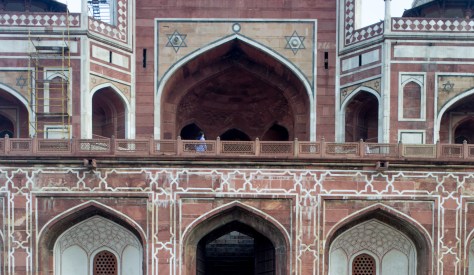
humayun-1-2

Why do we, if at all we do, really care about our material cultural heritage? Is it because it reminds us of what was, and is, good and great in humanity? Or is it the case that we look at a cultural objet and recognise that it is the Ozymandias complex materialized, that even the great and the mighty fail? Or is it that we may never attain the great heights in purity, simplicity, or other qualities we idolize and project on the remnants of the times past?

Or maybe we just want the tourism dollars and euros. Be that as it may, only someone obtuse, or with exaggerated tendency towards the behavior philistine, would say that our cultural heritage, our miniature paintings, our ruins, our tombs, forts, wall paintings, temples, mosques , books, manuscripts, and other things this essay is too short to quantify, are not worth preserving. Also note here that I said we, because we might be a bunch of separate kingdoms and separate principalities earlier, but deep down, we were one people, separated by religion and language, but united (willingly or unwillingly), by the plain and simple fact that you can’t chose your neighbor.

Continue reading How We Destroy our Future by Proxy – On The Ruination of Ruins: Rahul Sharma

Seven Years After the End of Sri Lanka’s Civil War: Mahendran Thiruvarangan

Guest post by MAHENDRAN THIRUVARANGAN

When the civil war came to an end in May 2009 I was still a final year undergraduate at the University of Peradeniya. Peradeniya was miles away from the war zone. The only venues that supplied us with details about the happenings in the war theatre were the television channels stationed in the South, self-censoring the civilian casualties incurred and feeding to the Sinhala nationalist jubilation of the times. And on the other side were websites like Tamilnet and Puthinam run by parties sympathetic to the LTTE releasing carefully filtered out reports singularly focusing on the deaths of civilians caused by the military leaving no trace about how the top leadership of the LTTE was recruiting children and adults, despite knowing so well they had already lost the battle or how the civilians who were trying to flee the war zone were shot down by the militants.

One had to work around these competing narratives to get at least a partial sense of the nature of the violence that the people ensnared in the No Fire Zone were exposed to. Some of us had friends whose relatives had been in the LTTE-controlled areas. When the guns breathed their last in Mullivaikal, some of them had already moved to hospitals and camps in Trincomalee and Vavuniya with their loved ones injured during the war. It was from these wounded men and women and their families that the harrowing experiences of the thousands of people inside the narrow battlefield trickled down to us in May 2009. The South erupted into celebrations when the re-unification of the island was announced via the media. As the former president in his televised address from Parliament was busy instructing the people of the country to annul the notions of ‘majority’ and ‘minority’ from their political discourses, fire crackers celebrating the military victory started to deafen the ears of those of us who were seated under the senate building of the University of Peradeniya—Tamils, Sinhalese, Muslims and Malays—pondering in groups what was awaiting us and the country in the days and years to come. Continue reading Seven Years After the End of Sri Lanka’s Civil War: Mahendran Thiruvarangan

Staking the Terrain – Political Economy, Environmental History and Nature Conservation: Shashank Kela

Guest post by SHASHANK KELA

The aim of this essay is to make connections between things that are usually studied separately – environmental history, political economy, conservation practice and adivasi politics – and I apologize in advance for the demands it makes upon the reader’s attention. The belief that this potential convergence could do with wider discussion is my sole justification for putting it up here.

Environmental history in India is not a very old discipline – the first mongraphs began appearing in the 1980s, and more and more books and papers have been added to the historiography since 2000. Let us examine certain themes as outlined in a cross-section of recent scholarship.

One key debate centers upon whether the colonial period can be regarded as an ecological watershed. An influential book by Ramchandra Guha and Madhav Gadgil argued that, before the advent of colonialism, there existed a harmonizing tendency between human beings and the environment, a balance between resource use and preservation mediated largely through the caste system: colonialism shattered this equilibrium and the values associated with it.[1] This idealizing view, eliding different time periods and state structures, was bound to come under attack and much subsequent scholarship has been devoted to unpicking its conclusions.

Sumit Guha shows how at least one natural resource, namely wild grass for fodder, had become scarce in the Deccan by the Maratha period thanks to the demands of armies, nobles and zamindars, who engrossed it by enclosing tracts of common land. This fierce arbitrariness fostered a system of free grazing and discouraged sustainable management through collective protection of the commons.[2] Meanwhile the argument that sacred groves are strands of untouched forest – repositories of biodiversity – is refuted by Claude Garcia and J-P Pascal in their study of Kodagu.[3] Far from being untouched, groves there are heavily used and managed, and show clear signs of degradation associated with use. Continue reading Staking the Terrain – Political Economy, Environmental History and Nature Conservation: Shashank Kela

माँ, तुझे सलाम! कविता कृष्णन

अतिथि पोस्ट : कविता कृष्णन

“Scout,” said Atticus, “nigger-lover is just one of those terms that don’t mean anything—like snot-nose. It’s hard to explain—ignorant, trashy people use it when they think somebody’s favoring Negroes over and above themselves. It’s slipped into usage with some people like ourselves, when they want a common, ugly term to label somebody.”

“You aren’t really a nigger-lover, then, are you?”

“I certainly am. I do my best to love everybody… I’m hard put, sometimes—baby, it’s never an insult to be called what somebody thinks is a bad name. It just shows you how poor that person is, it doesn’t hurt you.” (To Kill A Mockingbird, Chapter 11)

‘Now, there is a long and honourable tradition in the gay community and it has stood us in good stead for a very long time. When somebody calls you a name – you take it. And you own it.’ (Pride, 2014)

‘टू किल अ मॉकिंगबर्ड’ उपन्यास 1950 के दशक के अमेरिका के दक्षिणी राज्यों में नस्लवाद की कहानी है. उसमें एक वकील जिनका नाम एटिकस है, एक काले नस्ल के आदमी की पैरवी करते हैं जिस पर बलात्कार का गलत आरोप लगाया गया है. एटिकस की 8 साल की बेटी स्कौट कहती है की गाँव के लोग कह रहे हैं कि मेरे पिताजी ‘हब्शी-प्रेमी’ है. वह पूछती है कि इसका क्या अर्थ है, सुनकर लगता है कोई गाली है, जैसे किसी ने मुझे ‘बन्दर’ कहा हो, पर इसका क्या मतलब है?

Continue reading माँ, तुझे सलाम! कविता कृष्णन

Why exoneration of Sadhvi Pragya should worry everyone who stands for justice

Why exoneration of Sadhvi Pragya should worry everyone who stands for justice

There are a few photographs which the bigwigs of the Hindutva Brigade/Sangh Parivar would like to be erased from public memory. One such photograph shows Sadhvi Pragya, an ex-member of the ABVP, sitting with Shivraj Singh Chouhan, Chief Minister of Madhya Pradesh, Rajnath Singh and few others. As it was later revealed they had gathered to console the widow of a BJP leader from MP, who had just died.

Public memory is very short but one can stretch it a bit to recollect the tremendous consternation in BJP/RSS circles when Sadhvi Pragya was arrested by the Anti Terrorist Squad led by the legendary police office Hemant Karkare on 23 October, 2008 for her alleged role in the 2008 Malegaon bomb blast. This photograph had suddenly gone viral when there were denials by many leaders of the saffron brigade that they had never met her.

Now that the NIA, the federal agency established by the government to combat terror in India, has given a ‘clean chit’ to Sadhvi Pragya and few of her accomplices, should one expect that all those photographs showing her proximity to various leaders of the saffron establishment would be prominently exhibited? It must be remembered that leaders of BJP have even claimed that it was an act of “treason” to arrest her.

(Read the remaining article here : http://www.catchnews.com/politics-news/why-exoneration-of-sadhvi-pragya-should-worry-everyone-who-stands-for-justice-1463399413.html)

Choice, Agency and the Naming of Names – The Trap of ‘Immediate Identities’ and the Vision of a Democratic Revolution: Chintu Kumari & Umar Khalid

Paired Guest Posts by CHINTU KUMARI and UMAR KHALID

[ Every struggle goes through highs and lows. The students who are part of the  movements that are spreading out of universities in India – Hyderabad Central University, Jawaharlal Nehru University and Jadavpur University have had their share of internal debates and disagreements, even as they have found moments of significant victory. and solidarity

Students at JNU who have recently concluded their hunger strike to give time to the university authorities to respond reasonably to the High Court directives on the HLEC punishments are now being criticized for having ‘abandoned the struggle’ by some sections who claim to play a role within the broader students movement, when, in fact, nothing of that sort has actually happened.

The majority of the students who were on hunger strike (including several JNUSU office bearers, and others) have said that they have given up the hunger strike against the HLEC recommendations in keeping with the court order.  In doing so, they have never said that they are suspending the agitation against the attempts by the JNU administration to weaken OBC reservation in admissions, hostel seats and deprivation points for women and oppressed sections of society.

In fact it is not as if the HLEC punishments issue has taken precedence over the other issues. It is actually the other way round. The students have decided to give priority to the struggle for ’social justice’ within the campus, while simultaneously giving time to the university authorities to respond adequately to the court directive on the HLEC punishment question.The call for a demonstration against the University Authorities by the JNUSU to continue the struggle on the social justice issues on the 16th of May is indicative of this fact.

13237814_1106943902682435_4288761213192298400_n

The attacks and insinuations against the majority of the students at JNU who were on hunger strike have also featured a deliberate attempt to create divisions within the unified ‘Red-Blue’ / ‘Jai Bhim-Lal Salaam’ dynamics of the movement on the grounds of identity. Activists, such as Umar Khalid, on the left have been singled out for being ‘Savarna-Syed’, if they happen to bear a Muslim name, and for being ‘sold out to the Savarna left’ if they are Dalit, as happened with Chintu Kumari and Rama Naga. This attack has come primarily from individuals representing organizations like BAPSA that claim to speak from a ‘Dalit’ position, and it is given traction by several other individuals eager to flaunt their disdain for the ‘left’ students on Facebook and social media.  Continue reading Choice, Agency and the Naming of Names – The Trap of ‘Immediate Identities’ and the Vision of a Democratic Revolution: Chintu Kumari & Umar Khalid

Who will Educate the Educators? Reflections on JNU today: Janaki Nair

Guest Post by JANAKI NAIR

 In an interview to the journal Frontline on February 16, 2016, just 11 days before he took over one of India’s most prestigious universities, Prof Jagadesh Kumar had this to say:

I am a defender of free expression of thought in a democratic set-up and students are free to question me or challenge my views. I believe in constructive criticism, and as long as it is done peacefully and within the boundaries of the law, there is no problem.

Declaring his  two top priorities, of which one was the redressal of  infrastructural shortcomings, he desired

to improve the learning environment by making it more student-centric. Some of the faculty are great researchers, but they do not have much understanding of teaching. What I want to do requires cooperation from faculty members.

These words, which Prof Kumar has thus far not refuted or denied, should be recalled today, more than three months after his takeover, the  most tumultous months the University has ever known.  It is too early to judge the VC on his infrastructure  promise, as some of us continue to make  bone rattling journeys on cycles over  the most rutted roads on the campus.  Continue reading Who will Educate the Educators? Reflections on JNU today: Janaki Nair