Category Archives: Politics

Treacherous Road to Make Manu History

Even today the attempt is to whitewash Manusmriti, not shun it. But all is not lost as the ripples of Black Lives Matter have reached Indian shores.

manusmiriti ambedkar hindutva

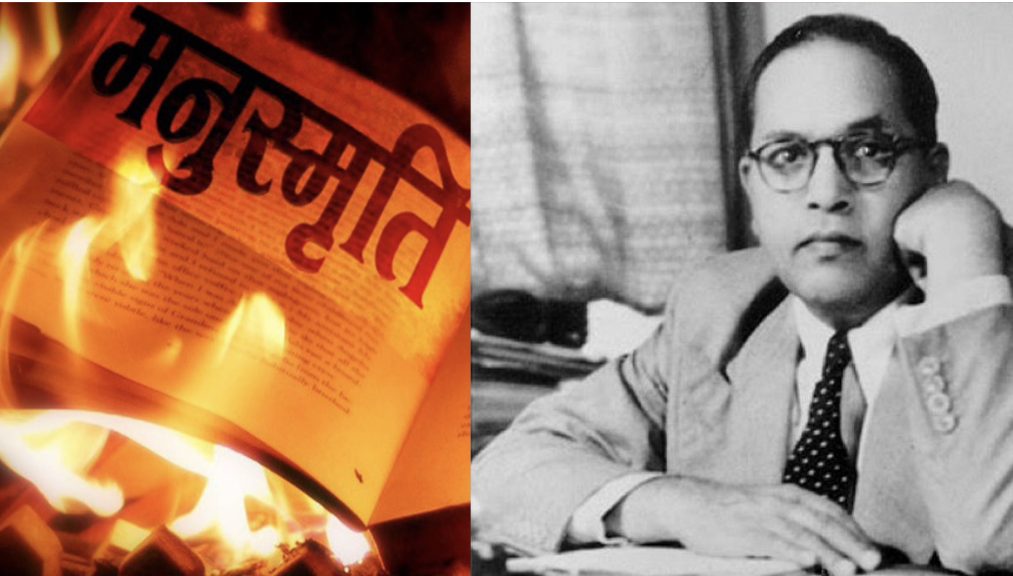
It was 1927, the second phase of the historic Mahad Satyagrah was on, and Dr. Bhimrao Ambedkar led thousands of people in burning the Manusmriti, an act he compared with the French Revolution of 1789. Time and again, in speeches and writings, he categorically opposed the world-view of Manu, the legendary figure to whom are attributed the tenets of the Manusmriti, said to be dated to around 100 CE.

In the book written by scholar and activist Anand Teltumbde, Mahad: The Making of the First Dalit Revolt, published by Navayana in 2017, is recorded the resolution which was proposed by the social activist Gangadhar Sahasrabuddhe, and then read out at the Mahad Satyagrah. It states that the firm opinion of this conference is that the Manusmriti, “taking into consideration its verses which undermined the Shudra caste, thwarted their progress, and made their social, political and economic slavery permanent…is not worthy of becoming a religious or a sacred book. And in order to give expression to this opinion, this conference is performing the cremation rites of such a religious book which has been divisive of people and destroyer of humanity.”

Twenty three years later, Dr Ambedkar marked the promulgation of the Constitution of India as the “end of the rule by Manu”. And yet, 70 years thereafter, a significant section of Indians are still fascinated by Manu and have no qualms in venerating him. Even the Black Lives Matter protests in the United States and large parts of Europe, in which statues of slave-owners and colonialists are being knocked down or disfigured, the Indian followers of Manu have no regrets about deifying him.

( Read the full article here)

Crisis of Working Class Politics – Challenges for Rebuilding the Left


In this year of COVID19, the organized ‘working class’ movement completes a hundred years of its history. It was on October 31 1920, that the All India Trade Union Congress (AITUC), the first central trade union organization, came into being. This might be a good occasion to take stock – to look back into history from what can only be described as a very troubled and difficult present – and peer forward into the future.

Workers, the long trek
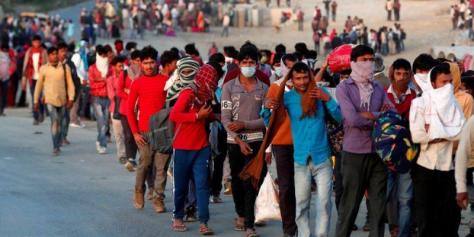
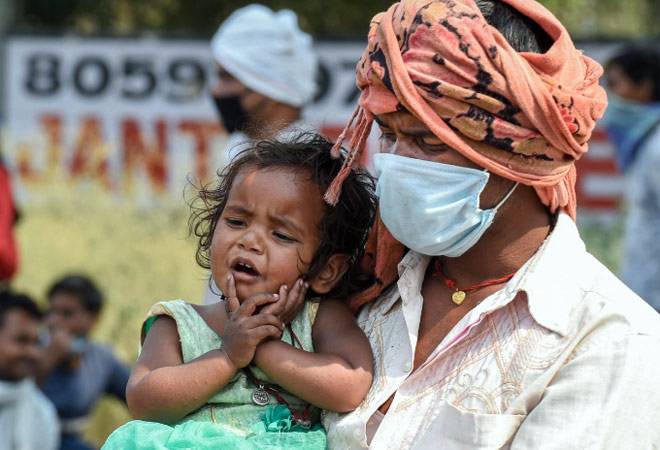
Workers – the long trek, Image courtesy, The Wire

The year of COVID19 reveals, among other things, the very fragile and unstable nature of this entity called ‘the working class’ in countries like India. The monstrous situation arising out of the pandemic only provides us the window to that long and endless process by which the ‘working class’ is constantly made and remade. In a very important sense, unlike the peasantry which has a far more stable existence (till, for the requirements of Capital, it is uprooted and thrown into urban labour markets), the working class is an inherently structurally unstable social group. Given that its fate is tied to the requirements, caprices and maneouvres of Capital, the working class is not given to us readymade, once and for all. For as long-term changes in industry and technology occur or capital takes flight in the face of worker militancy, the working class too undergoes changes.

Continue reading Crisis of Working Class Politics – Challenges for Rebuilding the Left

कोविड संक्रमण की चेन तोड़ने के लिए मलप्पुरम ने नई ज़मीन तोड़ी है

आज जब पूरे देश में धार्मिक स्थलों को खोला जा रहा है, तब बीते दिनों ‘सांप्रदायिक’ होने का इल्ज़ाम झेलने वाले केरल के मलप्पुरम ज़िले ने अपनी अलग राह चुनी है. कोरोना के बढ़ते मामलों के मद्देनज़र वहां की पांच हज़ार मस्जिदों को अनिश्चितकाल तक बंद रखने समेत कई धार्मिक स्थलों को न खोलने का फ़ैसला लिया गया है.

Minara masjid wears a deserted look on the first day of the holy fasting month of Ramzan, amid unprecedented circumstances due to the coronavirus pandemic and a nationwide lockdown, in Mumbai. PTI

लॉकडाउन के दौरान बंद एक मस्जिद. (फाइल फोटो: पीटीआई)

मलप्पुरम, केरल के एकमात्र मुस्लिम बहुल जिले, जहां उनकी आबादी 75 फीसदी है, ने एक इतिहास रचा. तय किया गया है कि जिले की 5,000 मस्जिदें अनिश्चितकाल के लिए बंद रहेंगी.

इस निर्णय के पीछे का तर्क समझने लायक है. क्योंकि राज्य में कोरोना वायरस संक्रमण के मामले बढ़ते दिख रहे हैं, इसलिए यह तय करना मुनासिब समझा गया कि उसके दरवाजे श्रद्धालुओं के लिए बंद ही रहें.

जाने-माने इस्लामिक विद्वान पनक्कड सययद सादिक अली शिहाब थंगल, जो इंडियन यूनियन मुस्लिम लीग के जिला अध्यक्ष हैं, उन्होंने इस खबर को मीडिया के एक हिस्से में साझा किया.

इस तरह जबकि बाकी मुल्क में प्रार्थनास्थल, धार्मिक स्थलों को खोला जा रहा है, मलप्पुरम ने अपनी अलग राह चुनी है.

इस बात पर जोर देना जरूरी है कि आठ मुस्लिम संप्रदायों (denomination) की उस बैठक में, जहां 9 जून के बाद प्रार्थनास्थलों को खोलने के सरकारी निर्णय पर विचार करना था, यह फैसला एकमत से लिया गया.

सभी इस बात पर सहमत थे कि उन्हें इस छूट का इस्तेमाल नहीं करना चाहिए. एक ऐसे वक्त में जबकि कोविड-19 के मामले सूबे में बढ़ रहे हों, मस्जिद कमेटियों और धार्मिक नेताओं ने यह जरूरत महसूस की कि उन्हें सतर्कता बरतनी चाहिए.

खबरें यह भी आ रही हैं कि न केवल मस्जिदें बल्कि इलाके के कई मंदिरों और चर्च ने भी उन्हें तत्काल खोलना नहीं तय किया है.

मिसाल के तौर पर, श्री कदमपुजा भगवती मंदिर जो मलप्पुरम में है तथा श्री तिरूनेल्ली मंदिर जो वायनाड में है, वह बंद रहेंगे.

नायर सर्विस सोसायटी से संबंधित मंदिर भी 30 जून तक नहीं खुलेंगे. एर्नाकुलम-अंगमाली आर्चडाओसिस ऑफ सिरो मलबार चर्च ने भी तय किया है कि उसके मातहत चर्च 30 जून तक बंद रहेंगे.

निस्संदेह इस बात को लेकर इलाके के लोगों में गहरा एहसास दिख रहा है कि राज्य ने जिन भी सावधानियों को बरतने की बात की हो, स्पेशल ऑपरेटिंग प्रोसिजर्स का ऐलान किया है, हकीकत में उन पर अमल करना नामुमकिन होगा लिहाजा कोविड-19 के समुदाय आधारित संक्रमण की संभावना बनी रहेगी.

( Read the full article here)

Can Rest of India ‘Do’ a Mallapuram ?

Ruins of an ancient Jain temple in Arimbra

Ruins of old Jain Style Temple at Arimbra 

Mallapuram, Kerala’s lone Muslim-majority district, made history recently.

The 5,000 mosques in the district would remain closed indefinitely.

Logic behind this decision is simple.

As the state is witnessing spike in Coronavirus infection recently, it was found more prudent to keep the doors closed for devotees. Panakkad Sayyed Sadiq Ali Shihab Thangal, a leading Islamic Scholar and Malappuram district president of the Indian Union Muslim League, shared this news with a section of the media.

Thus while the rest of the country is witnessing opening of places of worship under Unlock 1, Mallapuram has decided otherwise. Continue reading Can Rest of India ‘Do’ a Mallapuram ?

The George Floyd Protests – a view from Philadelphia: Ania Loomba and Suvir Kaul

Guest post by ANIA LOOMBA AND SUVIR KAUL

Protest in Philadelphia, June 7, 2020 (Video by Teren Sevea))

In 2002, when we moved to Philadelphia to join the faculty of the University of Pennsylvania, a friend invited us for breakfast to his home in West Philadelphia, abutting the university. We learned then that in May 1985, rowhouses in this area, then a largely African American residential neighborhood, were bombed by the police (a military-grade explosive was thrown down from a helicopter). The police action followed a confrontation with a group called Move, whose members combined Black liberation and environmentalist ideals. When flames spread, the then Police Commissioner decided to “let the fire burn.”11 of the 13 people in the Move house were incinerated; 5 were children between the ages of 7 and 13.

Four years earlier, in another well-publicized case that scarred Philadelphia, a Move associate and Black Panther, Mumia Abu-Jamal was incarcerated for the murder of a police officer; he, considered by many to be a political prisoner, remains in jail. In 1963, just when Martin Luther King delivered his “I have a dream speech,” a Black family who moved into a white working-class neighbourhood faced a mob of 1500 shouting “Two, four, six, eight—we don’t want to integrate!” In 1967, a man called Frank Rizzo became Police Commissioner, and led a brutal attack on school students who demanded that Black history be included in their curriculum. Dozens were injured. In 1972 Rizzo was elected mayor of the city, a post he held for eight years. His tenure was so notorious for brutality against African Americans that the U.S. Justice Department sued the city’s police department, saying that its use of excessive force “shocks the conscience.” In spite of this terrible history, or more probably because of it, his statue loomed for years near the City Hall, a symbol of racist policing and governance in a city which is 44% African-American and one of the most segregated cities in the country.

Until last week.

Continue reading The George Floyd Protests – a view from Philadelphia: Ania Loomba and Suvir Kaul

Truth Behind India’s Hierarchies of Pain

Perhaps celebrities know that talking about the plight of an animal—who died in a state not ruled by the ruling dispensation at the Centre—is a safe bet

Migrants

Migrants wait for a means of transport to travel to their native places during the fourth phase of the ongoing COVID-19 nationwide lockdown, at Kundali Industrial Area in Sonipat. (Photo: PTI)

The killing of a pregnant elephant has caused national outrage. The elephant had strayed into a village in Palakkad, Kerala, and is said to have been fed a fruit stuffed with firecrackers, which exploded in its mouth. It is impossible to comprehend the tremendous suffering of the elephant, who died a painful death. It is also learnt that people in the region have in the past used incendiary materials to protect their crop from animals, particularly wild boar.

One person was arrested after the matter came to light and few others have been identified. Kerala Chief Minister Pinarayi Vijayan has promised “justice will prevail”, but one does not know if that includes legal action against the hatemongers—including a former cabinet minister who gave the incident a communal colour by claiming, incorrectly, that the incident occurred in Muslim-majority Malappuram. A sitting cabinet minister also retweeted this fake news, which further vitiated the atmosphere.

In a complaint to the Malappuram Police, a lawyer has urged the police chief to file an FIR against the former minister and others for a “derogatory” campaign against the district.

Now, many Indian celebrities, for example Indian cricket team captain Virat Kohli, have said that they are “appalled” by the incident. The chairman of India’s biggest corporate giant, Ratan Tata, has compared the “criminal act” with “meditated murder”. The celebrities, the anchors of 24/7 news channels and many other prominent figures are undeniably upset by the plight of the elephant. But do they also feel the same kind of outrage and disquiet over the communal overtones being imparted to it?

( Read the full article here)

Public Display of Faith Can Wait, Humanity Cannot

It is inevitable that the virus will spread anywhere people gather in numbers.

Faith in India

Representational Image

India went for the world’s toughest lockdown in March, when just about 500 Covid-19 cases had been reported. And it has started withdrawing the lockdown when India has become the seventh-worst pandemic-affected nation, with over 1.91 lakh infections and close to 5,500 deaths. India is registering giant spikes in active cases of Covid-19, but the home ministry has come out with a phased plan to unlock India. The current phase of re-opening will focus on the economy. It has been decided that malls, hotels, restaurants and places of worship will reopen from 8 June onwards.

Concerns over the economic downturn are understandable. The latest GDP data shows the slowest pace of growth in 11 years in the last quarter of 2019-20, and the economy has been hit hard by the Covid-inspired sudden and complete lockdown. But one fails to understand the decision to open religious places at such an early date.

It remains unanswered whether religious places are being thrown open to pre-empt Mamata Banerjee, the Chief Minister of West Bengal, who has announced that her state would open all places of worship from 1 June. It is also not known whether this is being done, as BS Yediyurappa, the Chief Minister of Karnataka, wrote in his letter to the Prime Minister, because devotees are insisting that religious sites be opened.

( Read the full article here )

‘National Populisms’, the Little Man and Big Men


Populismo – ISS Conference poster by Filipino artist Boy Dominguez, image courtesy future-agricultures.org

In an earlier post last month, I had discussed the global rise of the Right as related to the revolt of the ‘little man’ (a term I borrow from Wilhelm Reich) and his search for a ‘father-figure’ of authority. I had also argued in that post that the revolt of the little man in itself could not have led to the rise of the Right, were it not for  the ways in which Capital moved to appropriate and channelize that revolt against the Left and Left-of-Centre politics – and regimes that dominated the scene earlier. It is virtually impossible to understand this huge tectonic shift in the politics of the past few decades without understanding the conjunction of the little man and Capital – the Big Men – as it were. No less important, it is impossible to understand this shift without understanding the revolt of the liittle man in relation to the different structures of privilege that appear before us as culturally encoded power relations – as tradition, as ‘our way of doing things’, so to speak.

Continue reading ‘National Populisms’, the Little Man and Big Men

SAB YAAD RAKHA JAEGA: Nationwide Protest against repression on anti-CAA activists and democratic voices of dissent

WhatsApp Image 2020-06-01 at 15.33.28

Guest Post by PEOPLE UNITED AGAINST REPRESSION ON ANTI CAA PROTESTERS

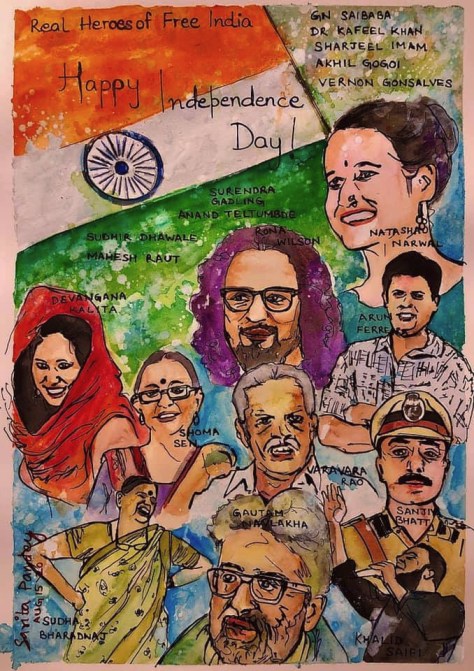
Over the past two months the Delhi Police has arrested Jamia students Safoora Zargar, Meeran Haider, Asif Iqbal Tanha, JNU students Natasha Narwal and Devangana Kalita along with activists Ishrat Jahan, Khalid Saifi, Gulfisha Fatima, Sharjeel Imam and hundreds of other Muslim youth. Some among them have been booked under the amended UAPA as a means of punishing the widespread protests against the CAA-NRC that emerged across the country in December last year. Most recently AMU students Farhan Zuberi and Ravish Ali Khan have been arrested by the UP police for participating in the anti-CAA protests. It is clear that the spate of arrests are far from over and new names of democratic activists are likely to be added to this already long list. Meanwhile those openly advocating violence against peaceful protesters such as Kapil Mishra, Parvesh Verma and Anurag Thakur have gone scot-free. Continue reading SAB YAAD RAKHA JAEGA: Nationwide Protest against repression on anti-CAA activists and democratic voices of dissent

Statement against the arrest of Pinjra Tod Activists, Devangana Kalita and Natasha Narwal: Students Against Fascism, Johns Hopkins University

Statement by Students Against Fascism, Johns Hopkins University, USA. Students Against Fascism is a group of international students at Johns Hopkins University (Baltimore, USA), which aims to build solidarities against fascism across borders.

We have been deeply saddened by the recent arrests of Natasha Narwal and Devangana Kalita, the founding members of the Feminist group, Pinjra Tod. At a time, when the entire country has been dealing with the pandemic of COVID-19 and the economic hardships of the lockdown, it is of extreme concern to see that the Indian state is selectively targeting the human rights activists who have been raising their voices against the pro-Hindutva fascist policies of the Indian state.

It is abundantly clear that these arrests are a part of the series of the crackdown on the activists, who have particularly been vocal against the CAA and anti-Muslim violence in north-east of Delhi, including Umar Khalid, being threatened with sedition charges alongside other protestors like Shifa-ur-Rahman, President of Jamia Alumni Association and Zafarul Khan, Chairman of Delhi Minorities Commission. In connection with this, it is also extremely disturbing to see the arrest of student activists Safoora Zargar, Meeran Haider and Asif Iqbal Tanha of Jamia Milia Islamia University and activists Gulfisha Fatima, Khalid Saifi and Ishrat Jahan, under the Unlawful Activities Prevention Act. This arbitrary branding of students and activists, particularly Muslim and women student activists, as “terrorists”, instead of investigating into the anti-Muslim violence in north-east Delhi and bringing the perpetrators to justice indicates the deepening of authoritarian tendencies in the Indian state. Pinjra Tod’s Natasha and Devangana’s arrests are the latest examples of this dangerous trajectory. Continue reading Statement against the arrest of Pinjra Tod Activists, Devangana Kalita and Natasha Narwal: Students Against Fascism, Johns Hopkins University

In solidarity with #Blacklivesmatter – Tamika Mallory, Langston Hughes

Tamika Mallory addresses a protest in Minneapolis May 2020


Langston Hughes 1902-1967

Let America Be America Again

Let America be America again.
Let it be the dream it used to be.
Let it be the pioneer on the plain
Seeking a home where he himself is free.

(America never was America to me.)

Let America be the dream the dreamers dreamed—
Let it be that great strong land of love
Where never kings connive nor tyrants scheme
That any man be crushed by one above.

(It never was America to me.)

O, let my land be a land where Liberty
Is crowned with no false patriotic wreath,
But opportunity is real, and life is free,
Equality is in the air we breathe.

(There’s never been equality for me,
Nor freedom in this “homeland of the free.”)

Continue reading In solidarity with #Blacklivesmatter – Tamika Mallory, Langston Hughes

Crisis for the People, Opportunity for the Corporate-Government Nexus : NSI

Statement of New Socialist Initiative (NSI) on India’s ‘war against Covid 19’

#
Today, India has emerged as a new epicentre for the novel corona virus in the Asia Pacific region.With 1,58,333 confirmed cases of Covid 19 and deaths of total of 4,531 people after contracting the virus, it has already crossed China’s Covid-19 numbers.

#
New Socialist Initiative (NSI) feels that the grim news of steadily rising infections and fatalities reveal before everyone a worrying pattern but the government either seems to be oblivious of the situation or has decided to shut its eyes. It is becoming increasingly clear that the Union government has used incomplete national-level data to justify arbitrary policy decisions, defend its record and underplay the extent of Covid-19 crisis.

#
Absence of transparency vis-a-vis data collection of Covid infection levels could be said to be the tip of the iceberg of what has gone wrong with India’s ‘war against Covid 19’.
The Prime Minister’s announcement of a 21-day countrywide lock down came with a mere four-hour notice. It was done without engaging in any collective decision-making process with states to honour and enhance the spirit of “cooperative federalism” between the Centre and the States. Continue reading Crisis for the People, Opportunity for the Corporate-Government Nexus : NSI

असहमति के दमन के लिए मानवाधिकार-कर्मियों और लेखकों-पत्रकारों की गिरफ्तारियों का सिलसिला बंद करो! 

राजनीतिक उत्पीड़न और साम्प्रदायिक ध्रुवीकरण के लिए तालाबंदी के इस्तेमाल के ख़िलाफ़ सांस्कृतिक-सामाजिक संगठनों का संयुक्त आह्वान

महामारी से मुक्ति के लिए जनएकजुटता का निर्माण करो!

तालाबंदी के दौरान जेलबंदी

महामारी और तालाबंदी के इस दौर में समूचे देश का ध्यान एकजुट होकर बीमारी का मुक़ाबला करने पर केन्द्रित है.

लेकिन इसी समय देश के जाने माने बुद्धिजीवियों, स्वतंत्र पत्रकारों, हाल ही के सीएए-विरोधी आन्दोलन में सक्रिय रहे राजनीतिक कार्यकर्ताओं और अल्पसंख्यक समुदाय के युवाओं की ताबड़तोड़ गिरफ़्तारियों ने नागरिक समाज की चिंताएं बढ़ा दी हैं.

बुद्धिजीवियों और राजनैतिक कार्यकर्ताओं की गिरफ़्तारियां सरकारी काम में बाधा डालने (धरने पर बैठने) जैसे गोलमोल आरोपों में और  अधिकतर विवादास्पद यूएपीए क़ानून के तहत की जा रही हैं. यूएपीए कानून आतंकवाद से निपटने के लिए लाया गया था. यह विशेष क़ानून ‘विशेष परिस्थिति में’ संविधान  द्वारा नागरिकों को दिए गए मौलिक अधिकारों को परिसीमित करता है. जाहिर है, इस क़ानून का इस्तेमाल केवल उन्हीं मामलों में किया जाना चाहिए जिनका सम्बन्ध आतंकवाद की किसी वास्तविक परिस्थिति से हो. दूसरी तरह के मामलों में इसे लागू करना संविधान के साथ छल करना है. संविधान लोकतंत्र में राज्य की सत्ता के समक्ष नागरिक के जिस अधिकार की गारंटी करता है, उसे समाप्त कर लोकतंत्र को सर्वसत्तावाद में बदल देना है.

गिरफ्तारियों के लगातार जारी सिलसिले में सबसे ताज़ा नाम जेएनयू की दो छात्राओं, देवांगना  कलिता और नताशा नरवाल के हैं. दोनों शोध-छात्राएं प्रतिष्ठित नारीवादी आन्दोलन ‘पिंजरा तोड़’ की संस्थापक सदस्य भी हैं.  इन्हें पहले ज़ाफ़राबाद धरने में अहम भूमिका अदा करने के नाम पर 23 मई को गिरफ्तार किया गया. अगले ही दिन अदालत से जमानत मिल जाने पर तुरंत अपराध शाखा की स्पेशल ब्रांच द्वारा क़त्ल और दंगे जैसे आरोपों के तहत गिरफ़्तार कर लिया गया ताकि अदालत उन्हें पूछ-ताछ के लिए पुलिस कस्टडी में भेज दे. आख़िरकार उन्हें दो दिन की पुलिस कस्टडी में भेज दिया गया है. Continue reading असहमति के दमन के लिए मानवाधिकार-कर्मियों और लेखकों-पत्रकारों की गिरफ्तारियों का सिलसिला बंद करो! 

The Ferocious Face of Class War – Rekindling the Revolutionary Imagination


Pyramid of Capitalist System, 1911 image from Industrial Worker (paperof Industrial Workers of the World)

Face of Class War in Contemporary India

It is time again to state one thing absolutely clearly. ‘Class struggle’ or ‘class warfare’ were not invented by Karl Marx, for he and his predecessors merely identified and named the beast. It is something that the rich and the powerful always did and continue to do as we speak. Look at the way the Indian lumpenbourgeoisie has bared its fangs, even as the country is reeling under the deadly impact of COVID 19; look at the way it is sharpening its knives, waiting for its opportunity to make a kill – and you will know what class war is all about. Look at them and it will be crystal clear that it is not the hapless migrant worker and the poor – or the peasant who silently commits suicide – who  indulge in this thing called class war, but they who prey on the weak and the dispossessed. They are once again preparing to make good their losses by yoking in workers as slaves, not allowing them to travel safely back to their homes, keeping them hostage to lumpencapital and ready with  their plans to make them work for 12 hours a day. There isn’t even a pretense – barring an Azim Premji here or an Asian Paints there – of recognizing workers as partners or stakeholders in business.

In a sense, ‘lumpencapitalism’ and the ‘lumpenbourgeoisie’ are the general form of Indian capital, pioneered by Dhirubhai Ambani and his Reliance Industries (interested readers can  read The Polyester Prince by Hamish McDonald) and its arrival with Gautam Adani whose recent rise to front ranks is generally understood to be linked to his closeness to the present regime. And in between, we have conglomerates like Sahara India, whose ‘primitive accumulation’ is alleged to have come almost entirely through chit fund theft.

Continue reading The Ferocious Face of Class War – Rekindling the Revolutionary Imagination

MIGRANT WORKERS’ RESISTANCE MAP: Migrant Workers Solidarity Network

The Migrant Workers Solidarity Network has documented migrant workers’ resistance across India in an interactive map. Below is a screen-shot of the map.

For the interactive map, visit the MWSN site.

From the MWSN site:

The COVID-19 crisis in India has made the migrant workers visible in public discourse. But the dominant narratives have made them visible as subjects of compassion, as perpetual victims seeking help of others and not as active makers of our society, not as rightful citizens, not as resisting political subjects who can challenge the oppressive conditions surrounding them.

The ‘Migrant Workers’ Resistance Map’ is an attempt to document acts of resistance by migrant workers since the beginning of the lockdown. Within our limited human and technical capacity, we have collated information and designed this map. While we launch the map, we acknowledge that it is far from giving a fully representative picture of the nature and spread of migrant workers protests both geographically and temporally and the possibility of bias in collecting information and understanding what qualifies as ‘resistance’. Let us collaborate.

Add new information of resistance to the map: Fill this form.

Also, for any comments, suggestions, technical or otherwise, send us an email at migrantresistance.mwsn@gmail.com or contact +91 9445419894

Poetry of resistance against the suppression of dissent

On 16th May 2020, the Campaign against Witch-hunt of Anti-CAA Activists inaugurates its Poetry Week.  

Poetry bears witness. It records, it remembers. Resistance, indeed life itself, has long been sustained and nourished by the words of poets.
So, it is with poetry that we celebrate the inspiring movement against the Citizenship Amendment Act, and with the power of words fight the wrongful arrests and malicious prosecution of anti-CAA activists.
The first session will feature poets Aamir Aziz, Aquila, Neha and Rabiya of the Parcham Collective, Miya’h poet Shalim Hussain & Naveen Chourey
Host and anchor: Tanzil Rahman
FIRST SESSION
On 16th May | Saturday | 8 pm onwards
Register using this link

https://forms.gle/iUwV6FimHsWd6ZLY7

निरंकुशता के स्रोत, प्रतिरोध के संसाधन : रवि सिन्हा

Guest Post by Ravi Sinha

राजनीति का आम सहजबोध यह है कि सत्ता की निरंकुशता लोकतंत्र का निषेध है। लोकतंत्र राजनीतिक सत्ता का गठन तो करता है, लेकिन उसे निरंकुश नहीं होने देता। यदि किसी लोकतांत्रिक व्यवस्था के अंतर्गत निरंकुश सत्ता का उद्भव होता है तो उसे लोकतंत्रा की दुर्बलता, उसके विकार या उसमें किसी बाहरी अलोकतांत्रिक शक्ति के हस्तक्षेप के रूप में देखा जाता है। यदि लोकतंत्र का अर्थ यह है कि सत्ता के स्रोत लोक में स्थित हैं तो यह स्वयंसिद्ध है कि लोकतांत्रिक सत्ता निरंकुश नहीं हो सकती।

इसी तरह राजनीति का सहजबोध यह भी है कि सत्ता की निरंकुशता प्रतिरोध को जन्म देती है और प्रतिरोध की जड़ें लोक में स्थित होती हैं। निरंकुशता यदि लोकतंत्र का निषेध है तो यह भी स्वयंसिद्ध है कि लोक या जन ही प्रतिरोध के मूल आधार और उसके प्रमुख संसाधन हैं। यह दूसरी मान्यता पहली के साथ जुड़ी हुई है। यदि पहली मान्यता टिकती है तो दूसरी की सत्यता भी साबित होती है। यदि पहली संदेह के घेरे में आती है तो दूसरी के स्वयंसिद्ध होने पर भी प्रश्न खड़े होते हैं।

और, प्रश्न तो खड़े होते हैं। वास्तविकता की प्रकृति ही ऐसी होती है कि वह मान्यताओं की परवाह नहीं करती – बहुप्रचलित और स्वयंसिद्ध प्रतीत होने वाली मान्यताओं की भी नहीं। दूसरी तरफ़, मान्यताओं की – ख़ास तौर पर बहुप्रचलित मान्यताओं की – बनावट और उनकी ज़मीन ऐसी होती है कि वास्तविकताओं के उलट होने के बावजूद वे चलन में बनी रहती हैं। ऐसी स्थिति में पहले तो यह देखना होता है कि वास्तविकता क्या है और संबंधित मान्यताओं से उसकी संगति बैठती है या नहीं। फिर यह अलग से देखना होता है कि मान्यताएं जब ग़लत होती हैं, तब भी उनके चलते रहने के कारण कहां पर स्थित हैं। एक तरह से यह सहजबोध की जांच-पड़ताल का समय होता है। और कभी-कभी नये सहजबोध के निर्माण का समय भी होता है।

भारत की आज की हक़ीक़त यह तो है ही कि मौजूदा सरकार के अधीन राज्य और राजनीतिक सत्ता निरंकुश हो चले हैं। संवैधानिक, संस्थागत तथा लोकतांत्रिक नियमों, नियंत्रणों और परंपराओं को रौंदा जा रहा है और व्यवस्था तथा समाज, दोनों क्षेत्रों में मनमानी की जा रही है। कश्मीर से कन्याकुमारी तक, असम से गुजरात तक, संसद से और भीमा कोरेगांव से तीस हज़ारी तक और तिहाड़ तक नंगी निरंकुशता के उदाहरण सभी के सामने हैं। लेकिन क्या सभी को यह सब दिखायी दे रहा है? Continue reading निरंकुशता के स्रोत, प्रतिरोध के संसाधन : रवि सिन्हा

Colours of Trolls and Harassment :Vatya Raina

Guest Post by Vatya Raina

The fight for half the Earth and half the sky is never at rest around the globe. Women of the world are constantly fighting their oppressors in different colours. The debate around #BoisLockerRoom stories on Instagram and the trolls concerned about the marital status of a pregnant woman in jail, for practising her right to protest are of similar nature.

In 2017, The Jawaharlal Nehru University’s administration under the command of Vice-Chancellor M Jagadesh Kumar arbitarily dismantled the GSCASH (Gender Sensitization Committee Against Sexual Harassment). At the same time, women of Banaras Hindu University (BHU) were leading the movement against sexual harassment.

Today, when a pregnant student activist is fighting for her rights inside the jail, some women are continuing to resist and expose a group of young boys, by revealing the screenshots of an Instagram chat screen, where the participants of the group named ‘Bois Locker Room’ shared some non-consensual pictures of women as well as underage girls. After the screenshots went viral, these boys expressed their anger by suggesting gang-rape of all the women who shared it. On the other hand, Safoora Zargar, a research scholar of Jamia Millia Islamia, who was associated with the Jamia Coordination Committee (JCC), and was part of the anti-Citizenship Amendment Act protests organised by university students in December and January has been charged under Unlawful Activities (Prevention) Act (UAPA) and is send behind the bars. She has been arrested for allegedly leading the anti-CAA protest at Jaffrabad metro station in February.  Turning a blind eye to the medical condition of the student, the trolls are busy assassinating her character. Continue reading Colours of Trolls and Harassment :Vatya Raina

Operation Eklavya in Action at Premier Institutes

India is neglecting caste-based discrimination in higher educational institutions at its own peril.

AIIMS Caste Discrimination

It was exactly 13 years back that the Thorat Committee, constituted in September 2006 to enquire into allegations of differential treatment of Scheduled Caste and Scheduled Tribe students at the premier medical institute, AIIMS—was released.

The first of its kind in independent India, this three-member committee led by then chairman of the University Grants Commission, Sukhdeo Thorat, had looked deeply into the many shades of discrimination faced by students of non-elite castes in the institute.

What it discovered after talking to students and faculty was, to say the least, shocking. Some 72% of SC/ST students mentioned facing some discrimination during the teaching sessions. Second, caste-based discrimination was prevalent in the hostels, for instance around 88% students reported experiencing of social isolation in various forms. The committee’s report also outlined the discrimination faced by SC/ST professors.

This context frames the alleged suicide attempt of a female doctor a fortnight ago in the same institute. The doctor, who worked at the Dental Research Centre of AIIMS, was allegedly facing sexual harassment and caste discrimination. This is another reminder that there has not been a qualitative change in the institute in the long years since the Thorat Committee report.

( )Read the full article here)

Beyond the ‘Employment’ Paradigm and Life After Capitalism – Manifesto of Hope IV


[This is the final instalment of the series on ‘Life After Capitalism – Manifesto of Hope’. Earlier parts can be accessed Part I here, Part II here and Part III here.]

Democratizing access to resources, Image courtesy AWID, created by Ana Abelenda

The Employment Paradigm

In this final instalment of the series, I want to discuss the vexed question of employment and what can be called the ’employment mindset’.  The mindset has dominated politics and the discipline of economics for the last century and a half for sure.  Before that youthful capitalism simply put people uprooted from their habitats and traditional occupations (the artisans and peasants) into ‘poor houses’ and enacted the most vicious laws to force the dispossessed poor work for it. Marxists give this violent pillage the scientific- sounding name of ‘primitive accumulation’ (or primary accumulation). ‘Scientific’ because it was seen by Marx as the ‘historical process of the separation of producer from “his” means of production’ – as if it was an objective process that was in some sense inevitable. Marx’s chapter on ‘primitive accumulation’ in Capital Vol I, certainly shows that he was revolted by the plunder and robbery that this phenomenon entailed but in a manner of speaking, by giving it an aura of historical inevitability, he could displace the solution to some future. There is also no doubt that the sections of Capital where Marx deals with the enactment of Poor Laws in Britain are full of passion and anger at what capitalism was doing – but then, what can you do with a process that is historically inevitable? Remember too that it was the same logic of ‘objectivity’ of ‘historical inevitability’ that was used to justify colonialism as the ‘unconscious tool of history’. The British Marxist historian, E.P. Thompson wrote of precisely these populations that perished in ‘the storm of industrialization’. He was so moved by their predicament that he wanted to ‘rescue them from the enormous condescension of posterity’. Yet, Thompson believed, like a good Marxist, that the artisan or the handloom weaver that he was writing about were ‘obsolete’ (Thompson’s term). Thus, he wrote, Continue reading Beyond the ‘Employment’ Paradigm and Life After Capitalism – Manifesto of Hope IV

Public Statement on Alternate Cures

Since the beginning of the COVID-19 epidemic, several statements have been propagated about “immunity boosting” substances such as mustard oil, hydroxychloroquine and tea; alternative remedies claiming to provide either immunity or cure; and remedial effects of cow urine or even taweez. Some of these assertions were also supported by a few government functionaries at the centre and in various states. We, the undersigned, wish to put the following scientific facts in the public domain.

–> As of now, no scientific studies show that any substance boosts the immune system specifically against COVID-19, be it modern medicines like hydroxychloroquine or homeopathic solutions like Arsenicum Album D30 or Ayurvedic preparations.

–> Scientific evidence for the efficacy of any of these substances can only be obtained by rigorous testing through randomized clinical trials with COVID-19 patients, and additional laboratory analyses. Anecdotes of cure or temporary relief from symptoms or usefulness against similar diseases are not scientific proof of efficacy against COVID-19.

–> Specific immunity against a bacterium or a virus can only arise in two ways. Either we were infected and recovered from the illness, or we are vaccinated; in either case we develop antibodies that can target the specific virus or bacterium.

Continue reading Public Statement on Alternate Cures