Tag Archives: Hindutva

Stop This Insanity in the Name of Patriotism: Axom Nagarik Samaj

Statement by AXOM NAGARIK SAMAJ on the targeting of minorities today

Are we witnessing a textbook case of fascist tendencies being practised in Assam? How long can a section of religious minorities will be subjected to all kinds of atrocities and humiliation by branding them as Bangladeshi foreigners? They are being harassed and humiliated all the time. We have been told time and again that they are the cause of all our evils and they are a threat to our existence. How can the victims turn into victors? What a classic case of distorted logic.

We had a six-year-long Assam movement to get rid of the Bangladeshi foreigners. Then overnight AASU turned into AGP and ruled Assam for ten long years. Thereafter came  the Congress government which ruled Assam for 15 years when the present chief minister was in charge of the implementation of the Assam Accord. Then there was that famous declaration of Modi that all Bangladeshi foreigners would have to leave Assam with their baggage by 16 May, 2014. Now the BJP has been in power for the last 10 years. Nothing happened. Instead, the CAA was brought in to grant citizenship to a section of linguistic minorities. Come any elections, blame the religious minorities and do all kinds of nasty things to them and use them to win the votes of the majority community. The brandishing a particular religion as a threat and criminalizing the religious minorities has become a well-known tactic of the Hindutva brigade. Now they are going to issue weapons to the indigenous people against the religious minorities. Have we seen any civil war-like situation anywhere in Assam? Then why do you have to do this? Why promote this communal hatred and create tension among the common people? It is heartening that the people in Assam have generally maintained peace, except for a few minor incidents here and there, and have remained calm while maintaining amity among themselves everywhere in the state.

We appeal to all right-thinking people including the Opposition political parties and civil society organizations to condemn and oppose this nefarious design of the ruling combine. 

Ajit Kumar Bhuyan, President Paresh Malakar, General Secretary

Axom Nagarik Samaj

Is an All-India Plan Underway to Foment Communal Conflicts?

President Rajendra Prasad had written to Sardar Patel, flagging cases of Hindutva activists dressing as Muslims to foment communal trouble. That trend continues.

“…I am told Hindutva activists have a plan of creating trouble. They have got a number of them dressed as Muslims and looking like Muslims who are to create trouble with the Hindus by attacking them.. …The result of this kind of trouble amongst the Hindus and Muslims will be to create a conflagration.’’

[Extracts of a letter, written by Dr Rajendra Prasad on March 14, 1948, cited in Nehru-Patel: Agreement within Differences, Select Documents and Correspondence, edited by Neerja Singh, Page 43]

‘How Hindutva activists plan to foment communal trouble?’

It was the year 1948 and Dr Rajendra Prasad, who later became the first President of India, wrote a letter to the first Home Minister of independent India, Sardar Vallabhbhai Patel, about the plan of Hindutva activists to foment trouble in the newly independent country. As per reports that he had received from different sources, Prasad wrote how these Hindutva supremacists get dressed up as Muslims and ‘looking like Muslims’ create trouble with Hindus by attacking them.’

Much time has passed since the time letter was written, but every now and then, this template, created and developed by Hindutva Supremacist formations during the Partition violence and later, is active with the aim to communalise and polarise the society further. [ Read the full article here : https://www.newsclick.in/all-india-plan-underway-foment-communal-conflicts]

Between Axiality and Modernity

Bhakti Era as the Plebeian Plateau in the Civilizational Landscape of India

Guest Post by Ravi Sinha on a possible framework for looking at the millennial trajectory of Indian civilization

We have by now devoted several sessions to mapping the millennial trajectory of the Bhakti Movement across the history and the cultural geography of the subcontinent. Starting with the Tamil lands in the 7th century we followed Bhakti performing the pradakshina of the cultural landmass of the subcontinent, crossing the Vindhyas in its northward journey sometime in the 13-14th century. Our endeavour has been to understand the role of Bhakti in shaping the cultural and the civilizational mind of India. This, in turn, has been motivated by task of making sense of the role this mind plays in contemporary politics and in the rise of fascistic Hindutva in recent decades.

As we stated in the proposal to a previous session, we seek to understand the impact of Bhakti at two different time-scales. On the shorter time-scale of contemporary politics one looks at the phenomenon of communalism. The mainstream of the anti-colonial national movement considered Bhakti Movement as the harbinger of religious tolerance and syncretism that would help evolve the Indian brand of secularism. The subsequent history, however, paints a mixed picture. A social fabric and a cultural mind weaved by the Bhakti ideologies do not offer the kind of resistance to communalism and sectarianism as was expected of them. In our previous sessions we mainly stayed with evaluating the impact of Bhakti at the political-historical time-scale characterized by the problem of communalism and the rise of Hindutva.

On a longer – millennial – time-scale, however, one can evaluate the Bhakti phenomenon in the civilizational context. One can ask something like the Needham Question – why did the Indian civilization, despite its glory and accomplishments in the ancient and the medieval periods, fail to realize its cultural and scientific potentials? Why was it defeated often and why was it eventually colonized? Why did the West forge ahead, why has India lagged behind? Did the cultural mind and social ethos prepared by the Bhakti Movement play a role in the civilizational decline of India? These are very large questions not amenable to easy answers. But one must prepare to wrestle with them as they are of crucial importance for imagining and fashioning a desirable future for India. In this session, we finally arrive at the task of outlining a framework for asking and answering these questions.

For this purpose, we propose to take help of two large concepts – one of Axiality and the other of Modernity. The idea of axial revolutions was proposed for the civilizational breakthroughs that happened in the middle centuries of the first millennium BC in several different and unconnected societies – Judea (land of the Old Testament in the era of prophets), Greece (of pre-Socratic philosophers as well as of Socrates, Plato and Aristotle), China (of Confucius, Mencius and others) and India (of Upanishads, six systems of philosophies, and of Buddha) being the prime examples. We will briefly go through the idea of Axiality and see how we can understand it in the sequence of human cultural and cognitive evolution progressively from the mimetic (pre-linguistic, primarily based on gestures, rituals and body-language) to the mythic (linguistic but largely oral and narrative-based) to the theoretic (rational, abstract, normative and self-reflective). We will try to locate the Indian antiquity in the sequence of cultural evolution.

We will then make a millennial jump and outline the idea of Modernity, which can, in this context, be seen as a new kind of axial transition. The first axial transition did take the civilizations concerned from the mythic era to the theoretic era, but it still depended on the idea of the transcendental to reorder life in the realm of the mundane. The transition to Modernity, for the first time in human history, brings human autonomy to the centre-stage of history and civilization. Elimination of human dependence on the super-natural and on the transcendental is brought explicitly on the agenda and an objective and scientific knowledge of the cosmos is deployed into the service of human emancipation and freedom.

While the Indian civilization was a key example of the axial breakthrough two and a half millennia ago, its transition to Modernity has been faltering and patchy. While this may be true for many civilizations, it is especially disconcerting in the case of India which has had such a glorious antiquity at least in the domains of the mythic and of the theoretic. Of course, entire history of the intervening two millennia culminating in the colonial subjugation at the hands of the modernist imperialists is implicated in the complex and faltering progress of Modernity on the subcontinent and it cannot be explained on the basis of one cause or developments in any single arena. But one can be reasonably certain that the developments in the cultural-religious-civilizational arena play an important role in the civilizational transitions and transformations. The role of the millennial march of Bhakti must be assessed and evaluated in this context.

We will also engage with the theoretical issues that arise in this context of the materialist explanation of historical progress. There is no doubt that the historical breakthroughs and the transitions from one stage of history to the next happen through the push of advancing forces of production and, in this respect, the cultural-civilizational transformations are correlated with the developments in the material conditions of life. But there is a significant difference between the respective dynamics of systems and civilizations. While history progresses through replacement of one system by the next, in case of civilizations the older ones never entirely go out of existence. The older ones merely become the subterranean layers on which new layers arise or get deposited. The mimetic-ritualistic and the mythic, for example, have not disappeared from human civilization even after the axial-theoretic and the modernist-scientific stages have become increasingly entrenched.

Once again, I am not sure whether all this can be covered in one session even at the level of very sketchy outline of the argument. But the idea is to start thinking about these issues which, abstract and theoretical as they may sound, are of critical importance in making sense of contemporary politics and history.

Select Bibliography

  1. Johann P Arnason, “The Labyrinth of Modernity: Horizons, Pathways and Mutations”, Rowman and Littlefield, 2020
  2. Robert N Bellah, “Religion in Human Evolution: From the Paleolithic to the Axial Age”, Harvard University Press, 2011
  3. S N Eisenstadt, “The Great Revolutions and the Civilizations of Modernity”, Brill, 2006
  4. Neville Morley, “Antiquity and Modernity”, Wiley-Blackwell, 2009
  5. Sheldon Pollock, “The Language of the Gods in the World of Men: Sanskrit, Culture, and Power in Pre-modern India”, University of California Press, 2006

Why Hindutva Is Worried About “Woke People” or “Wokeism”?

How Mohan Bhagwat’s exhortation that ‘cultural marxism’ and ‘woke people’ are spoiling India’s ethos betrays Hindutva Supremacism’s real agenda vis-a-vis assertion of the subalterns and independent thinking

A spectre is haunting the Conservative world – the spectre of Wokeism

The brainstorming by conservatives from US, Germany and other Western countries along with academics from India is over. The host was Bharatiya Janata Yuva Morcha (BJYM) the youth front of the ruling dispensation here namely BJP – which loves to call itself ‘the biggest organisation of youth in the world.’

One does not know whether the organisers had put any such banner regarding the ‘spectre’ or not but few of the available details of meeting tell us that the gathering did discuss ‘wokeism’ apart from other issues.

BJYM’s sudden waking up on the challenge of ‘wokeism’ is not difficult to understand.

It could be easily traced to Sangh Supremo Mohan Bhagwat’s exhortation in his Vijayadashmi Speech – few months back – wherein he had castigated ‘cultural marxists’ and ‘woke people’. in no uncertain terms, who according to him were ‘spoiling Indian ethos’. He even accused them of undermining education and culture, promoting conflicts and disrupting social cohesion. ( Read the full article here)

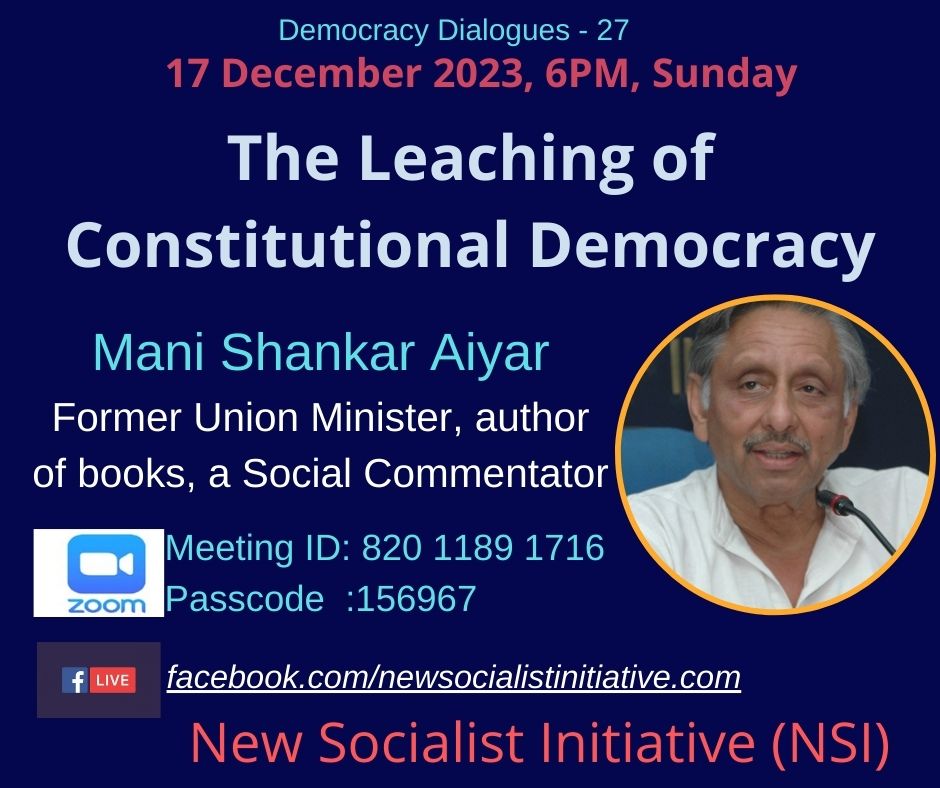
 The Leaching of Constitutional Democracy : Mani Shankar Aiyar

Mr Mani Shankar Aiyar, Ex Union Minister, author and eminent political personality will be delivering the 27th lecture in the 

Democracy Dialogues Series,organised by  New Socialist Initiative (NSI)

Theme : The Leaching of Constitutional Democracy

Speaker : Mani Shankar Aiyar

Former Union Minister, author of books, a Social Commentator, 

Time : 6 PM ( IST)

Sunday, 17 th December 06.00 PM (IST)

Join Zoom Meeting
https://us02web.zoom.us/j/82011891716?pwd=bExFdmY1eHVDdHovR3ZzVWh4VE1LZz09

Meeting ID: 820 1189 1716
Passcode: 156967

facebook.com/newsocialistinitiative.com

NEW SOCIALIST INITIATIVE

Theme:

On the face of it, we are an on-going democracy. We have a Constitution which has been honoured by the present government declaring 26 November as Constitution Day. We have regular elections at national, State and panchayat levels. We have the various institutions of democracy in place: an elected Parliament; an independent judiciary; an accountable executive; and a functioning, non-governmental media. Yet, there is fear all around. a new fear, a fear not seen since the Emergency, that has been spreading over the past decade. Why? Is it perhaps because the “spirit of constitutionalism”, as Fali Nariman has put it in his latest work, missing? Can we continue to be the nation envisaged by Gurudev Rabindranath Tagore: “Where the mind is without fear/And the head is held high”? Are we progressing towards or in retreat from that “Heaven of Freedom” of which Tagore sang?. Are the institutions of democracy functioning? Is the Preamble being venerated or violated? Are our civil servants really free? Is our civil society being muzzled? Is the media glowing in the light of freedom of expression? Is the investigative and judicial process being made the punishment? Is the economy in any meaningful sense “socialist” as enjoined by the Preamble? Is the Constitution being reduced in practice to a non-justiciable set of Directive Principles of State Policy? Above all, are we as a nation still ‘secular” – again as enjoined by the Preamble? Is Hindutva compatible with the basics and parameters of the Constitution? Is our ‘unity in diversity” threatened or is it being revered?What are the challenges ahead that need to be addressed before we cease being the world’s largest democracy? 

Speaker :

Mani Shankar Aiyar

Author of many books and a regular social commentator, Mani Shankar Aiyar, has had a distinguished foreign service career , he was Union Ministers during Congress led government (2004 till 2009) and has handled different ministries. Ministry of Petroleum and Natural Gas, ( 2004-06) Youth Affairs and Sports (2006-08), and Development of North Eastern Region ( 2008-09).

Here is a list of few of his publications :Memoirs of a Maverick Juggernaut, 2023 ; A Time of Transition: Rajiv Gandhi to the 21st CenturyPenguin, 2009 ; Confessions of a Secular FundamentalistPenguin, 2004; Rajiv Gandhi’s India, 4 vols. (General Editor), UBSPD New Delhi, 1997,  Knickerwallahs, Silly-Billies and Other Curious Creatures, UBS Publishers, 1995 . Pakistan Papers, UBSPD, New Delhi, 1994 ; One Year in Parliament, Konark, New Delhi, 1993 ; Remembering RajivRupa & Co., New Delhi, 1992 ; Rajiv Gandhi: The Great Computer Scientist of India, Mughal Publishers, New Delhi, 1991 ;  How To Be A Sycophant, NBS, New Delhi, 1990

Debating Hindutva

Background :
A close friend of decades prodding you to read / listen to something and ask for your views is such a great moral incentive which nobody would refuse.
The following note is an end product of similar undertaking which this pen pusher rather reluctantly took initially when one received a YouTube link of a conversation / debate between Congress M. P Shashi Tharoor and Supreme Court lawyer and commentator J Sai Deepak, held sometime back, where the focus of the programme was on  Congress M.P. Shashi Tharoor’s book ‘Why I am a Hindu ?’

 The book deals with how Mr Tharoor understands Hinduism, looks at its Great Souls, unpacks political Hinduism and dwells also at the violence committed by its followers and differentiates his Hinduism from that Hinduism practised by who can be called as ‘Bhakts’.

J Sai Deepak, a very popular commentator who has written a few books and also shared his views, dealt with Tharoor’s arguments.


As an aside it needs to be added that J Sai Deepak is one among the new crop of commentators , writers whose interventions very much resonate with what can be termed as ‘rightwing’ . There are few other names  like Vikram Sampath, Sanjeev Sanyal, Anand Ranganathan etc of the same stream, whose arrival on the scene has been a moment of celebration among a section of the media  (https://www.firstpost.com/politics/why-is-left-academia-so-rattled-by-vikram-sampath-sai-deepak-or-sanjeev-sanyal-10433791.html) which is critical of the left and its towering intellectuals.


Here follows the communication with the friend 
 ]

How to Draw a Line on the Ground : Ravi Sinha

Comments for the Washington DC Diaspora Program on “Karnataka Election Outcome and the Two Contesting Ideologies”

Guest Post by Dr Ravi Sinha

I must begin with a disclaimer. I am no expert on how elections are won or lost. Nor can I claim any competence in deciphering an electionresultfor what has worked and what has not. I will not be offering, therefore, any fresh insights into the results of recently concluded Assembly elections in Karnataka beyond what is already well-known from the media reports and analyses. I plan to focus primarily on the latter half of the title of the discussion today – the Two Contesting Ideologies.

The question of ideologies too is not easy to pose, let alone answer, especially when it comes to the muddy fields of politics on the ground. It is one thing to draw a clear ideological line on paper; it is quite another to do so on the actual ground of politics. In the normal course of politics – at least in a polity that has managed to settle into a normal course – ideological lines are seldom clearly drawn. Those whoinsist ondrawing a clear ideological line in all circumstances are invariably pushed to the margins of thenormal mode of politics.

There are times, however, when politics must undergo a paradigm shift. Ideological battle lines are,more or less,clearly drawn under such conditions, and sometimes, even if rarely, revolutionary transformations ensue from such shifts. The ideological lines may or may not be clearly visible during the actual political turbulence, but one can decipher them in hindsight after the polity and the society settle into a new normal.

One cannot say that India today sits on the brink of a political paradigm shift that promises a revolution. In fact, a shift of decidedly regressive kind has taken place with the rise of Hindutva. Nearly a decade after 2014, it is clear now, at least to those who would care to see, what a disaster India has brought upon itself. The damage done to the economy, to the social fabric, to theinstitutions of governance, and to the democratic process itself,is being felt in the bones of the country. India has been pushed back by decades in what has been at best a slow advance to a reasonably enlightened democratic republic with a moderately prosperous and not too uncaring economy. It will take many decades to recover what has been lost in just one decade. And yet, there is no guarantee that we will stop hurtling towards an even greater disaster in 2024.

Under these circumstances,one should not be considered naïve or conservative if one were to wish fora restorative kind of paradigm shift. One realises now that merelyturning the political clock back by a decade would bring a huge sigh of relief to the country. In times of disasters like this one, it is not a crime to hope for a kind of restoration, especially when revolutions are nowhere on the horizon. It is for this reason that the success of Rahul Gandhi’s Bharat Jodo Yatra followed by the resounding victory of Congress Party in the Karnataka Assembly elections have come as a big sigh of relief and a desperately needed ray of hope in the aware citizenry and, to a significant extent, even among the suffering masses and oppressed communities across the country.

One must, however, ask the question: has the Karnataka outcome resulted from clearly drawing an ideological line at the ground level? Disappointing as it may sound, the answer is largely in the negative. Actually, it should not be as disappointing as it sounds. As I said,drawing such a line in the muddy fields of electoral politics is not a simple or at times even a desirable thing to do. Insisting on this in all circumstances may in fact be counter-productive. One can however ask the converse question: do these results shed some useful light on how to draw an ideological dividing line on the ground? The answer to this question is clearly affirmative. I will be dwelling mostly on this apparently paradoxical situation.

First thing to be noted in the Karnataka outcome is that Congress, which confronted the BJP and the saffron brigade directly, did score a decisive victory, but it is far from the case that Hindutva has suffered a fatal blow. The BJP maintained its vote percentage of roughly 36 percent it had garnered in 2018. At this aggregate level of electoral analysis, the gains of Congress appear to have come at the cost of Janata Dal Secular (JDS),a regional party whose vote percentage has declined by the same 5 percentage points.Despite its name, this party has clearly moved closer to the BJP in the aftermath of the elections.

But one should not rush to conclusions just on the basis of aggregate numbers. Congress has not won only because of its gains in the Mysore region where JDS has been strong. It has won most of the seats in northern Karnataka adjacent both to the Telugu states and to Maharashtra. It has made gains in the rural areas all over the state. The point to note, however, is that not only has the BJP maintained its aggregate vote percentage, it has also made gains in many areas. It has gained ground wherever communal divide has been pronounced and Hindutva is entrenched. In the coastal region of Udupi-Mangalore it has stood its ground and even improved its vote percentage. Same is the case with the urban conglomerate of Bengaluru where it has won 15 out of 28 seats. Spectacular is the case of Srirangapatna where its vote share skyrocketed from 6.4 percent in 2018 to 22.8 percent in 2023. This is the place where an intense communal campaign has been around claims of yet another mosque being a temple. It will be foolhardy to think that Hindutva has lost its ground in Karnataka.

A tell-tale sign of the hold of Hindutva was in the episode of Bajrang Dal and Bajrang Bali. When none other than the Prime Minister himself equated the hooligans with the monkey god, and sought help from the muscle power of one and the blessings of the other, many across the country laughed at this mockery. And yet, it was not a laughing matter. Many leaders of Congress bent over backwards to put on display their religious credentials – even D K Shivakumar, a key architect of Karnataka victory, made well-publicized visits to temples and Congress campaigners began to count how many Hanuman temples Mallikarjun Kharge, the Congress President, had built in his native Hyderabad region of Karnataka. Those who knew the situation on ground, and those who knew a thing or two about how elections are won and lost in India, did not take this matter lightly.

In the electoral analyses splattered across the media, the victory of Congress has been attributed to multiple factors, but three among them stand out – the so-called anti-incumbency of an exceptionally corrupt government, the economic hardships of the poor who area vast majority of the population, and a relatively strong organizational presence of the Congress Party in Karnataka. Such analyses also factor-in the role ofvote bankssupposedly based on castes and communities – Lingayats, Vokkaligas, Kurubas, Dalits, Muslims and so on. But, managing such vote banks is a necessary detail of any electoral strategy – often expressed in the euphemistic phrase of social engineering. It does not define an ideological dividing line. If one tries hard to extract some such line from the enormous complexity of Indian politics, two large conglomerates of factors stand out – Hindutva, cultural nationalism, religious and other traditional identities form one such conglomerate and the issues of poverty, class, basic security of life and material well-being form the other.

Given the history of the 20th century, class has been the centre-piece of the canonical definition of ideological dividing line. Many who swear by this definition and reject the possibility of any other definition would underline the fact that the Karnataka election was won because the poor, especially in the rural hinterlands, supported Congress. While this underlines the fact that the class factor hasn’t gone away anywhere, it does not explaina far more effective presence of the other factors. As I have already mentioned, the victory of Congress does not mean that Hindutva has been defeated in Karnataka and it is not the case that the poor have voted for Congress because they detest Hindutva.

Fact of the matter is that there seem to exist two different axes along which ideological dividing lines can be drawn in today’s politics. The class axis has been the canonical one, but there seems to be another axis.For want of a well-thought-out nomenclature let us call it the cultural axis.It includes identities based on religion, caste, race, ethnicity, community, languages and even civilisations.This axis has become far more operational in the arena of democratic and electoral politics. Actually, part of the question can be posed even more sharply. Why is it that the ever-present class axis almost never gives rise to a politically operational class identity? (The same question can be posed in relation to the gender axis too, even if in a different way.) As many a leftist trade unionist would testify, the class that comes together on the factory floor seldom remembers the class identity and solidarity in the voting booth. Here I would not even try to get into the high theory of relationship between class and culture. For the purpose at hand, I will take a pragmatic tack and treat these two realms as relatively autonomous even if connected at some deep subterranean layer.

The rise of culture in politics is not confined to the so-called Third World. Samuel Huntington, the Harvard don famous for his Clash of Civilizations, can be easily chastised by other dons of the progressive kinds, especially after he showed his true colours by prodding the Americans to ask the question – Who Are We? – and encouraged them to be wary of the Latino immigrants who pose a threat, in his reckoning, to the American national identity. Chastising him is the easy part. But how does one explain the rise of Donald Trump in American politics which has happened more or less along the same lines Huntington theorised? Trumps do not arise just because the likes of Huntington construct their theories. The sources of Trumpism lie in the deeper layers of American society. Similarly, the political traction of Hindutva arises, at least in parts, from the deeper layers of the Indian social mind.

To add to the puzzle and to the tragedy, democracy itself, especially of the fiercely competitive kind, plays a role in bringing the worst out of the hidden layers of the social mind. Who in the world can claim to have a better alternative to democracy? And yet, there are examples galore of democracy landing itself in very strange places. The example of Hitler coming to power through democracy may sound hackneyed except that the phenomenon is far more ubiquitous in the world today. You in the United States had your Trump and I am told that Trumpism hasn’t gone away anywhere. We in India haveNarendra Modi; Turkey just re-elected Erdogan who has been in power since 2003, first as Prime Minister and subsequently as President; Bolsanaro of Brazil was barely defeated; Putin is too well-known an example to forget. One can go on and on and cite examples where democracy finds curious ways to commit suicide. But one thing would be common in all such examples.The cultural axis playsa crucially important political role.

In saying all this I am aware of the fact that the cultural axis does not become operationalon its ownin the political arena. Popular democracy with competitive elections is not exclusively a cultural phenomenon. After all, this whole exercise is for constituting a State and electing a government for running an economic and a political system. This system constitutes itself in the political arena and ostensibly operates in that arena, but competitive electoral processes force it to dig into the cultural unconscious of the social mind. In analogy with depth psychology, I often describe it as depth politics. The cultural unconscious of the Indian social mind, whose layers have been deposited over centuries and millennia, becomes operational in modern politics through competitive electoral democracy.

In the case of the United States,one often hears about the deep state that pulls the wires of democracy while itself remaining beyond the reach of constitutional and democratic powers and procedures. In India the deep state may not be as deep, but it is definitely there and the existence of a cultural unconscious comes very handy to it. In fact, the Indian deep state does not feel the necessity to remain invisible and confined to the depths. There are examples galore of unconstitutional, undemocratic and unscrupulous acts on the part of the political as well as economic forces and agents. All that is being done to the Indian economy, to the public resources, to the constitutional and democratic institutions, is not very hidden. But the point to note is that the state, whether deep or otherwise, finds it handy to manipulate the cultural unconscious and democracy itself becomes an accomplice in this exercise.

Michael Walzer, the Princeton political philosopher, has drawn attention to another curious phenomenon in which, I suspect, the cultural axis is deeply implicated. In his book, The Paradox of Liberation, he points out examples of national liberation movements that led to independence from foreign rule and to establishment of secular, liberal and enlightened democracies, but within a few decades the secular revolutionsmade way forreligious counter-revolutions. The irony is that the counter-revolutions were brought about through the same democratic process which had been instituted by the founding fathers for the purpose of erecting a secular, democratic and enlightened republic. India figures prominently in Walzer’s Paradox, although being a large and complex country the replacement of “revolution” by “counter-revolution” has taken its time. It took half a century after the departure of Jawaharlal Nehru for someone like Narendra Modi to come to power and replace the Nehruvian hegemony with the hegemony of Hindutva.

In saying all this my purpose is to underline the obvious that is often ignored by those who are accustomed to drawing the ideological dividing line only across the class axis. The dividing line on the actual ground of politics cuts across both the axes of class and of culture. In the rough and tumble of competitive electoral politics one is no wiser if one can prove that the latter is a derivative of the former. If class were to be the only operational axis, the Left would have conquered the world rather easily. On the other hand, if culture were to be the only operational axis,it would become impossible to ward off the ascendance of the right-wing. Fortunately, this is not the case on the ground. Even the Sangh Parivar cannot live by Hindutva alone. Even Narendra Modi has to see beyond the Hindu-Muslim divide and talk – at least talk – of Sabka Saath, SabkaVikaas.

It is in this light that the lessons of Karnataka should be read off. By and large the cultural axis was tilted against Congress while the class axis was tilted in its favour. The art of drawing an ideological line on the actual ground requires navigating the political topography along both these axes. Congress managed to do this in Karnataka this time. The BJP lost primarily because the class axis became steeply tilted against it. Hardships faced by the poor had been greatly exacerbated by corruption and misrule.

One should not, however, read too much into the relative importance of class in the Karnataka example. As I have mentioned already, Hindutva has not disappeared from Karnataka. Congress managed to hit the sweet spot because it could take advantage of the class dimension without hurting itself along the culture axis. This situation can be contrasted with a hypothetical situation if the Left were to be the principal opponent of BJP. An equally strong Left would not have fared as well as Congress mainly because it does not know how to navigate itself along the cultural axis which is tilted too steeply against it in most places on the subcontinent.

At the same time, one should not take the eyes off the absolute necessity of drawing a clear ideological line. In the situation that has arisen in India after nearly a decade of Modi Rule, this has become a must even for electoral battles. Given the importance of two axes and the uneven-ness of the political topography, such a line may not be straight, but it must be clear. One can see its importance in the example of the Janata Dal (Secular) debacle. It failed to take up a clear ideological position and planned for winning enough seats through its traditional influence and regular vote-bank politics to be in the position of a king-maker. This tactic has worked in the past but it backfired in the present situation. People were wary of its lack of ideological commitment.

Beyond uplifting the morale of forces opposed to Hindutva and in addition to appearing as a ray of hope in the distressing political atmosphere in India, Karnataka results also have reasonably clear lessons for the all-important battle of 2024. But there are no strong indications that these lessons are being learnt by the entire opposition. In theloud clamours for opposition unity, parties and leaders areadopting negotiating positions as if they are already on the table for seat-sharing. Everyone seems to be angling for the largest piece of the opposition cake. There are talks of putting up one candidate of united opposition against each BJP candidate. There is much advice to Congress to be large-hearted and make sacrifices for the sake of opposition unity.

The obvious necessity of drawing a clear ideological line is getting lost in this noise of opposition unity. There are only two political forces with a relatively unblemished record of fighting against Hindutva – the Congress and the Left. The record of every other force is tainted in varying degrees. Some have been confused or short-sighted while there are many who have been downright opportunists.

There are problems with the two resolute fighters too. Left, as mentioned already, has been especially inept at fighting along the axis of culture. This adds to its handicaps arising out of other ailments such as dogmatism, sectarianism or unthinking populism. Congress, on the other hand, is a much larger political force, but it also has had much bigger problems. Given its long and complicated history, and its more recent omissions and commissions in the political arena, it cannot entirely be absolved from accusations of paving the way for Hindutva. It has often functioned as a half-way-house between secularism and Hindutva and has had leaders and cadres who can cross over to the other side without batting an eye-lid. Congress has never been a shining example of a clear ideology or a cadre-based party. And yet, things have been changing for the better in recent months and years. There has been much internal churning and Congress has emerged as the central force around which all other anti-Hindutva forces could be mobilised for the battle at hand.

Emergence of Rahul Gandhi as an ideological leader and a resolute fighter has been a turning point in the recent history of Congress. Bharat Jodo Yatra has changed the political atmosphere in the country. And yet, Rahul’s Congress is not in a strong enough position to bring about an ideological unity among the disparate political forces of the opposition. The problem is further complicated by the fact that many of the regional parties stand to lose if Congress gains ground in their part of the country. Nearly everyone wants Congress to be strong elsewhere but weak or non-existent in their own areas.

People like us cannot really chart out the course for the opposition in India. We are neither at the drawing board nor at the negotiating table. All we can do is to have a reasonable wish-list.But we have to be receptive to complexity when it comes to larger strategies. One corner of India is so different from another. In Kerala, for example, where Congress and Left are faced with each other, it will be alright if they continue to be at each other’s neck provided they keep the doors shut for BJP. In West Bengal on the other hand, it is not unthinkable that Congress and Left together fight against Mamta Banerjee’s TMC but in such a way that they snatch the ground from BJP and become the main opposition to TMC. In that part of India, this may be the most effective way to fight BJP at the national level. There are other parts of the country where, for example, opposing BJP by putting up one united opposition candidate in each constituency will be tantamount to ensuring that BJP gets more than 50 percent of the votes. One could go on and on about the complexities of India’s political geography.

Ideological line must be drawn but we cannot expect it to be very straight. We should expect Congress to play the lead role in the battle at hand and yet we should not expect it to bind its hand and feet with ideological ropes in such a way that it becomes as ineffective in fighting the real battle against Hindutvaas, for example, Left has become.

In the end, we should also remember that fascists may come to power through elections but they are not very amenable to being dislodged from power through elections. January 6th in the United States had a happy outcome thanks to the relative robustness of American institutions. The Indian analogue of the January 6thwould more likely be a death knell for Indian democracy which is already under a great deal of stress.

On that depressing note, let me stop here.

June 10, 2023

( Ravi Sinha is an activist-scholar who has been associated with progressive movements for nearly four decades. He is one of the founders and a leading member of New Socialist Initiative.)

No End to ‘Tamas’ ( Darkness) Around ?

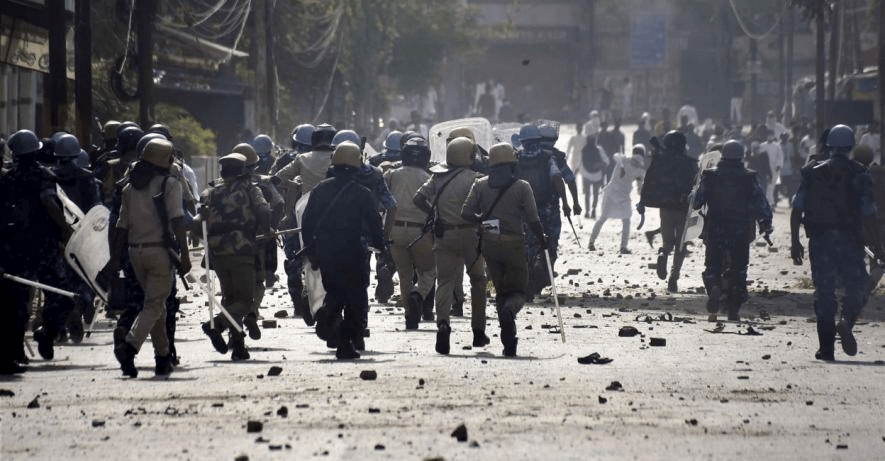
One can imagine that if the plan to provoke riots before Eid in Ayodhya would have been successful, how it could have easily spilled over to the other parts of the country.

Image for representational purpose. Credit: Hindustan Times

It was the early 1970s when Bhisham Sahni, the legendary Hindi writer had penned the novel Tamas. It looks at the Hindu-Muslim riots in India in the backdrop of the Partition. Its central character is Nathu, who is Dalit and does the work of removing hides from dead animals. A local politician persuades Nathu to kill a pig; the act is later used to foment a riot in the city.

It has been more than 40 years since the novel was written, but it still resonates with today’s India as it throws light on the ‘fault lines’ of Indian society and shows the ease with which they can be weaponised.

A fortnight back, a similar attempt to provoke a riot was made in Ayodhya using a similar technique; however, prompt action by the district police averted a riot there.

( Read the full article here)

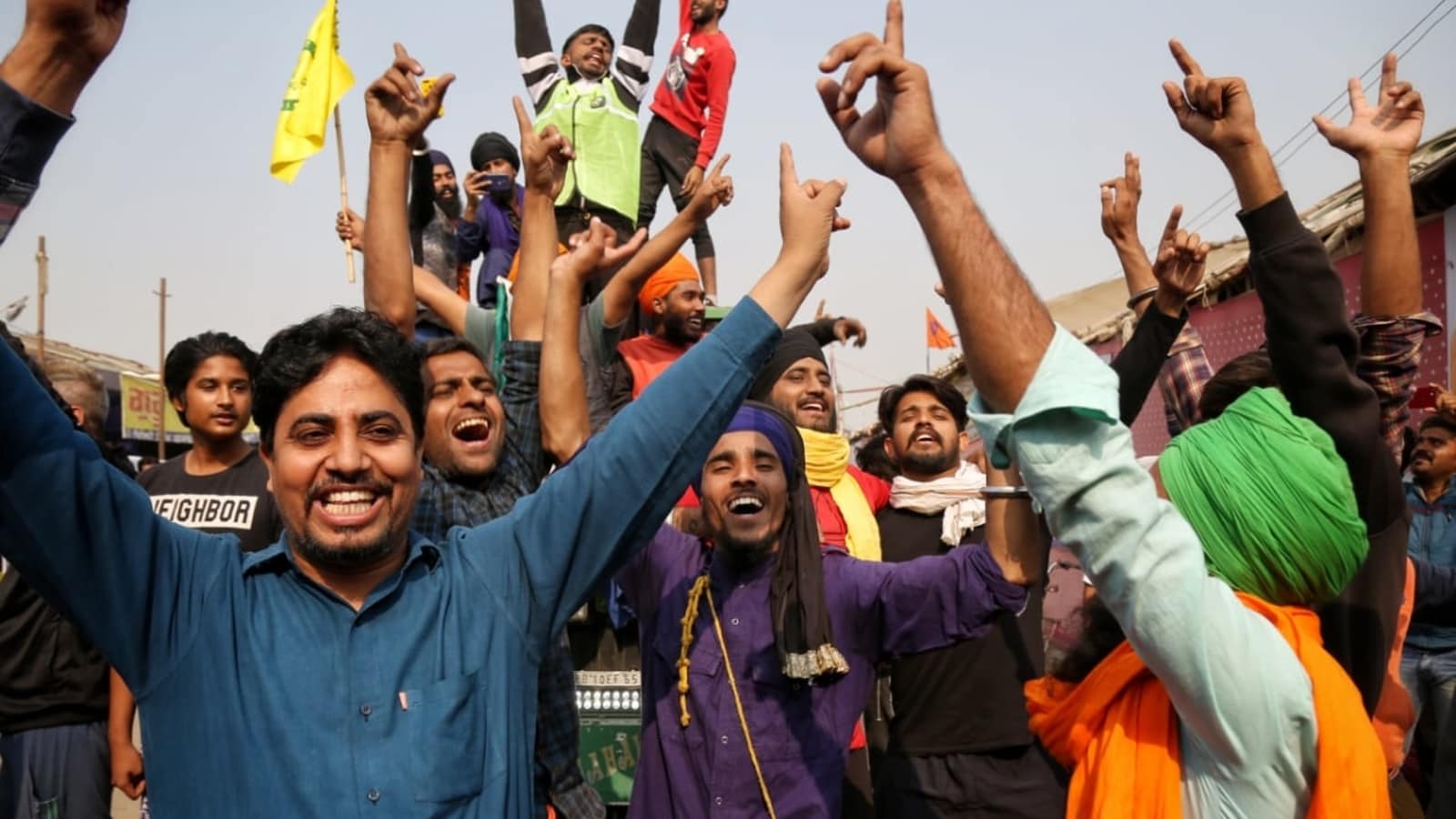
Historic Triumph of the Farmers’ Movement — A celebration tinged with grave apprehensions: C.P. Geevan

Guest post by C.P. GEEVAN

What the farmers’ movement has achieved is nothing short of historic, even if the authoritarian government had not gone back on its intent for uncompromising implementation of the laws meant to reinforce major structural changes for facilitating corporate dominance of the farm sector. The inflexible approach of the government and the massive repression has claimed almost 700 lives since agitation began nearly one and half years back. Be it celebration or analysis, we must pay sincere homage and tributes to all those dead.

Continue reading Historic Triumph of the Farmers’ Movement — A celebration tinged with grave apprehensions: C.P. Geevan

Some Remarks about Movements

Guest Post by Ravi Sinha

Accountability is foundational to democracy and, ultimately, people are supposed to take those in power to account through democratic processes and mechanisms. But, then, we also know what often happens in democracy. Electoral competition gives rise to ‘technologies’ (often religious, cultural and identity-based) which turn citizens into “Bhakts” (devotees) and storm-troopers (remember Hitler’s “Brownshirts”). The dark side of democracy comes on top more often than the other side. India is witnessing that disaster. Trump was a testimony to the same phenomenon in the United States.

But what about movements? Are they also supposed to be accountable to someone or something? One would presume that movements are accountable to their own missions, values, objectives, arguments and strategies. Is anyone taking the movements to account on that score?

One would imagine that the left movement has been taken sufficiently to account all over the world. So much so that, for most people, there is no longer any need to take it to account. In many eyes, it is finished. Why waste time on something that is finished? And yet, the most curious thing is that the left remains the favourite whipping boy of most other movements and their intellectual luminaries. Here in India a favourite pre-occupation of Dalit intellectuals is to expose the Savarna (upper caste) hegemony over the left movement and many feminists focus on the misogyny of leftists. As if in a survey of the Indian society, leftists have come on top as the most likely and most numerous perpetrators of oppression and violence against Dalits and women! There is no denying that left must be taken to task for all its ills and all its failings. But, should a movement that is often pronounced dead be the prime example when it comes to evaluating movements?

The Bahujan Samaj Party (BSP) in Uttar Pradesh has declared that it would be the party that would actually build the Ram temple. This party is openly and loudly appealing to Brahmins as a caste to come into its fold. Babasaheb Ambedkar famously talked about annihilation of caste and declared that there is no scope of Dalit liberation under Hinduism. This irony is not confined to BSP. A Dalit is submissively the President under the current dispensation and an ex-Dalit Panther is a minister. All this can be explained away as pragmatic responses to the demands and rigours of democracy. But what about the movement itself? What about Ambedkar’s mission?

The question goes far deeper. Why is it the case that Hindutva has been able to make such inroads into Dalit communities? In what ways and to what degrees the ‘Hindu civilizational mind’ sits within the ‘Dalit cultural mind’? Why is it the case that in Gujarat carnage and elsewhere Dalits have been as much and as willing a part of the Hindutva “Brownshirts” as any other community? Why is it the case that an occasional Dalit leader who emerges as a fiery meteorite in the aftermath of a gruesome atrocity disappears as fast from the social and political horizon and the masters of the electoral machinations remain as much in control of the actual political arena?

One hopes that the theorists of social movements – from Columbia and Harvard Universities to JNU and Osmania – are earnestly grappling with this puzzle. We all know the simple and common-sense answers, but they do not suffice. The puzzle needs a deeper explanation. How long the intellectual prophets of the social movements remain content with celebrating the history and the survival of these movements? How long will Dalit writers remain content with asking the caste lineage of other (Savarna) writers and denouncing them for the surnames they use? How long will they be content with demanding monopoly over literary depiction and theoretical explanation of Dalit life and experience? Real questions and real challenges remain unattended.

(https://www.facebook.com/newsocialistinitiative.nsi/posts/2635781250063345)

Concerned Historians Respond to Parliamentary Standing Committee on Education On History Textbooks

[We are publishing below the full response of Concerned Historians to the Parliamentary Standing Committee on Education, regarding certain proposed changes.]

RESPONSE OF CONCERNED HISTORIANS On the

CALL FOR REVISIONS IN SCHOOL HISTORY BOOKS IN INDIA

To be shared with the Parliamentary Standing Committee on Education pertaining to school history books.

Date: 15th July 2021

We have recently learnt of representations being collected by the Department-related Parliamentary Standing Committee on Education, Women, Children, Youth and Sports with respect to:

a. Removing references to un-historical facts and distortions about our national heroes from the text books.

b. Ensuring equal or proportionate references to all periods of Indian history.

c. Highlighting the role of great historic women heroes, including Gargi, Maitreyi, or rulers like Rani of Jhansi, Rani Channamma, Chand Bibi, Zhalkari Bai etc. in school history books in India.

We place before the Committee certain observations and points of caution.

Textbook revisions: certain cautionary notes

It appears from the notification of the Parliamentary Standing Committee’s proceedings inviting responses that a consensus presumably exists on the presence of “distortions” in existing history school textbooks such as of the NCERT. On this point itself, we wish to draw the attention of the Hon’ble members to the fact that while scholarship grows and propels the corresponding need for periodic revision of textbooks; the use of the word “distortion”, as in this context, appears to be an unsubstantiated allegation that creates roadblocks for the initiation of a serious scholarly exercise. Opinions are being sought regarding “unhistorical facts and distortions about our national heroes” in the existing history textbooks without substantiation, which is unfortunate and also objectionable. 

Continue reading Concerned Historians Respond to Parliamentary Standing Committee on Education On History Textbooks

Missing footsoldiers seek positivity amid raging pandemic

While Rome never burned, Nero never played the fiddle…

RSS

Pragya Singh Thakur, the Lok Sabha Member of Parliament from Bhopal, would never have imagined that the leading Hindi daily Dainik Bhaskar would mark her return to her constituency after a 70-day gap with a sarcastic article published on its front page. The headline read, “He Digvijayi Sadhvi Pragya! Shukriya, Aap Ko Bhopal ki Yaad to Aayi—O World Conqueror, Many Thanks, You Remembered Bhopal at Last.”

The daily was giving vent to the feelings of the lakhs of citizens of the capital of Madhya Pradesh. Some had even organised a social media campaign revolving around their “missing” MP.

The last time Thakur was in the city was 2 March, to participate in a condolence meeting for a BJP leader. Thereafter, she was away from the city. The intervening period had proved extremely harsh for residents due to the deadly second wave of the Covid-19 pandemic, which has already claimed hundreds of lives

The anger of citizens was palpable. That is why the daily asked her, “When Bhopal was sick and desperate for help, you were not to be seen. When the city needed oxygen and Remdesivir, you were still not here.”

The absence of an elected leader belonging to the ruling dispensation when people need her the most raises a pertinent question. Was this an exception? Forget the fact that the BJP-Sangh Parivar repeatedly claim they are “disciplined soldiers”, a number of those associated with right-wing organisations have gone missing in action. 

( Read the full article here)

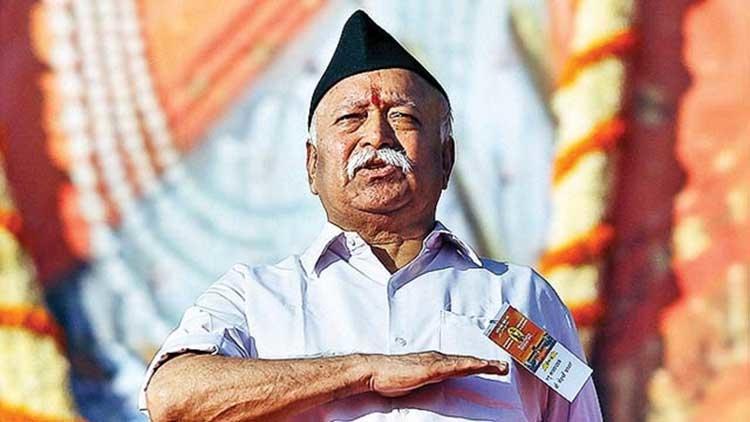
Mohan Bhagwat’s Divisive Mantra on Automatic Patriotism

It is a mischievous denigration of constitutional principles and values which declare every human equal and bar discrimination.

Mohan Bhagwat

“A Hindu is an automatic patriot and can never be an anti-national.” Remember the line? It is of Mohan Bhagwat, the Sangh supremo, who was at his best last week, at the launch of the book, Making of a Hindu Patriot: Background of Gandhiji’s Hind Swaraj. The book on Gandhi’s journey from Porbandar in Gujarat to England and South Africa and back to India, by JK Bajaj and MD Srinivas, was released by the Centre for Policy Studies.

In this book is the controversial claim that during 1893-94, Gandhi was pressurised to change his religion by both his Muslim employer and Christian colleagues in South Africa, which he refused. And by 1905, the book says, he became a devout Hindu.

Sure, everybody has a right to express their views, the authors and Mohan Bhagwat included, but the veracity of their claim still needs to be tested. As for the alleged pressure on Gandhi, the claim seems to come from out of the blue, and I would take it with a pinch of salt.

(Read the full article here )


0

इस्लामिस्ट एवं हिन्दुत्ववादी: कब तक चलेगी यह जुगलबंदी!

आखिर इस्लामिस्ट क्यों खुश हैं नागरिकता संशोधन अधिनियम से

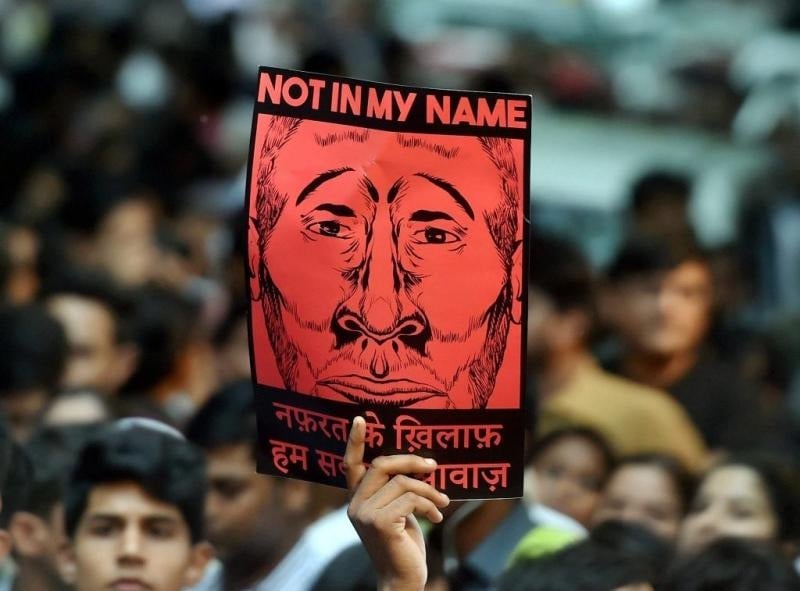
not in my name

प्रतीकात्मक तस्वीर। 

विजयादशमी के दिन सरसंघचालक की तकरीर आम तौर पर आने वाले समय का संकेत प्रदान करती है।

विश्लेषक उस व्याख्यान की पड़ताल करके इस बात का अंदाज़ा लगाते हैं कि दिल्ली में सत्तासीन संघ के आनुषंगिक संगठन भाजपा की आगामी योजना क्या होगी।

विगत माह विजयादशमी के दिन संघ सुप्रीमो के व्याख्यान का फोकस नागरिता संशोधन अधिनियम पर था, जिसमें उन्होंने यह दावा किया कि यह अधिनियम किसी भी ‘धार्मिक समुदाय’ के साथ भेदभाव नहीं करता है और मुसलमानों को एक छद्म प्रचार से गुमराह किया गया है। उनके मुताबिक संसद में यह कानून संवैधानिक प्रक्रिया का पालन करके पारित हुआ है, एक तरह से सरहद पार के उन भाइयों एवं बहनों को सुरक्षा प्रदान करता है, जिन्हें वहां धार्मिक प्रताडना झेलनी पड़ती है।

मालूम हो कि उन दिनों चूंकि बिहार चुनावों की सरगर्मियां बनी हुई थीं, लिहाजा उनके वक्तव्यों से निकले संकेतों पर अधिक बात नहीं हो सकी।

गौरतलब है कि बंगाल के चुनावों के मद्देनज़र भाजपा के कुछ अग्रणी नेताओं ने भी इसी किस्म की बातें शुरू कर दी हैं। मालूम हो कई बार अपनी आम सभाओं में उनके कई अग्रणी, ‘दीमक’ की तरह ऐसे ‘अवांछितों’ को हटाने की बात पहले ही कर चुके हैं।

प्रश्न यह है कि क्या कोविड काल में इस सम्बन्ध में नियम बनाने का जो सिलसिला छोड़ दिया गया था क्या उसी मार्ग पर सरकार चलने वाली है और इसे लागू किया जाने वाला है या यह सिर्फ चुनावी सरगर्मी बनाए रखने का मामला है।

( Read the full article here )

Intimations of a Bahujan Counter-Tradition and the Hindu Right

This post should be read as a sequel to my earlier post of 16 July, which had discussed the discourse of “Hindu Unity” and questions  before the struggle against the Right. That post had ended with the claim that the struggle against the Hindu Right is not so much about what we understand as “secularism” as it is about the reconstruction of a larger  Bahujan counter-tradition, the search for which was  already on.

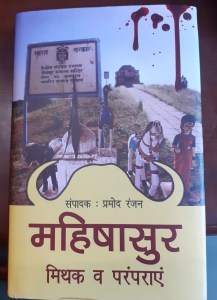
Cover of book Mahishasur – Mithak va Paramaprayen [Myths and Traditions],ed. Pramod Ranjan
I should begin with a caveat, or more correctly, an amendment to a position I adopted in the earlier post. In that piece, I had used the terms “anti-majoritarian” discourse and “anti-majoritarianism” to refer to the the larger discursive formation against the Hindu Right. I used that expression largely because I went along part of the way with Abhay Dubey who uses it in his book, to which that piece was a response. However, that expression assumes that there is only one “majority”  or only one way of imagining majority in this country. More importantly, it concedes a certain “natural pre-givenness” to the project of Hindu unity as though that were a self-evident fact. The only thing that makes the project of Hindu unity appear so “natural”, it needs to be underlined, is that it is backed by “tradition” and “religion” in a way that say a class notion of majority is not. If we assume that the dominant tradition is the sole tradition, then this term could make sense but as the  stirrings of a renewed search for a Bahujan counter-tradition, especially in North India, come into view, it gives us a sense of another possible way of imagining “majority”.  It should be underlined here that this renewed search today does not emerge out of the blue from nowhere but draws on the work of earlier medieval thinkers and social/ religious reformers not just in the North (for instance Kabir, Ravi Das and Nanak) but also from Phule, Ayyankali, Sri Narayana Guru, Periyar, Iyothee Thass and many others in the South in more recent times. There is one difference however: rather than use the negative descriptor “Non-Brahmin”, the present search is more explicitly about the production of a Bahujan identity. Ambedkar of course, remains a continuous reference point in this discourse.

Continue reading Intimations of a Bahujan Counter-Tradition and the Hindu Right

Imagining India for Contemporary Politics- What Should the Left Do? : Ravi Sinha


(Webinar – Sunday, July 19, 5 pm)

Shakespeare said, what is past is prologue. A simple-minded rationalist may be contented to assume that past is fixed as it has already gone into the making of the present. Nothing can be done to change it. The truth however is that past is being ‘remade’ every day. Imaginations of ancient glories or of humiliating defeats in the distant past are being deployed in contemporary politics all across the world. This phenomenon has been a key element behind the resurgence of rightwing in many countries. Contemporary India is a calamitous example where a perverse variant of mass-democratic politics has been fashioned through the political ideology of Hindutva resulting in serious damage to democracy and to people’s welfare.

Contemporary politics is driven more pressingly to such ideological re-imaginings in the conditions of vigorously competitive electoral democracies. The phenomenon is far more pronounced in countries with a significant minority (religious, racial, linguistic-cultural etc.) that can be portrayed as a historical villain. The majority can, then, be mobilized through the political process of polarisation in which some historical-civilizational-social tectonic plate is deployed in the service of electoral-political objectives. India is a pre-eminent example of this tragic phenomenon.

Invariably, left and progressive forces find themselves handicapped in these circumstances. Attempts to prove that such polarising strategies based on re-imagining the past are malignant turn out to be politically ineffective. A typical response from such forces has been to counter the emotive with the economic and to challenge cultural nationalism with anti-colonial, anti-imperialist nationalism. These strategies have failed miserably. Other social and resistance movements too have attempted partial re-imagining of India’s past from the standpoint of traditionally oppressed communities (Dalit, feminist, native-ist, etc.). While offering some resources to the respective movements, these efforts have failed equally miserably in challenging the Hindutva’s cultural nationalism. The efforts of some of the liberal bourgeois forces, on the other hand, to gain ground by partly imitating the Hindutva forces (variants of soft hindutva) have been no more than a laughing stock. Continue reading Imagining India for Contemporary Politics- What Should the Left Do? : Ravi Sinha

Treacherous Road to Make Manu History

Even today the attempt is to whitewash Manusmriti, not shun it. But all is not lost as the ripples of Black Lives Matter have reached Indian shores.

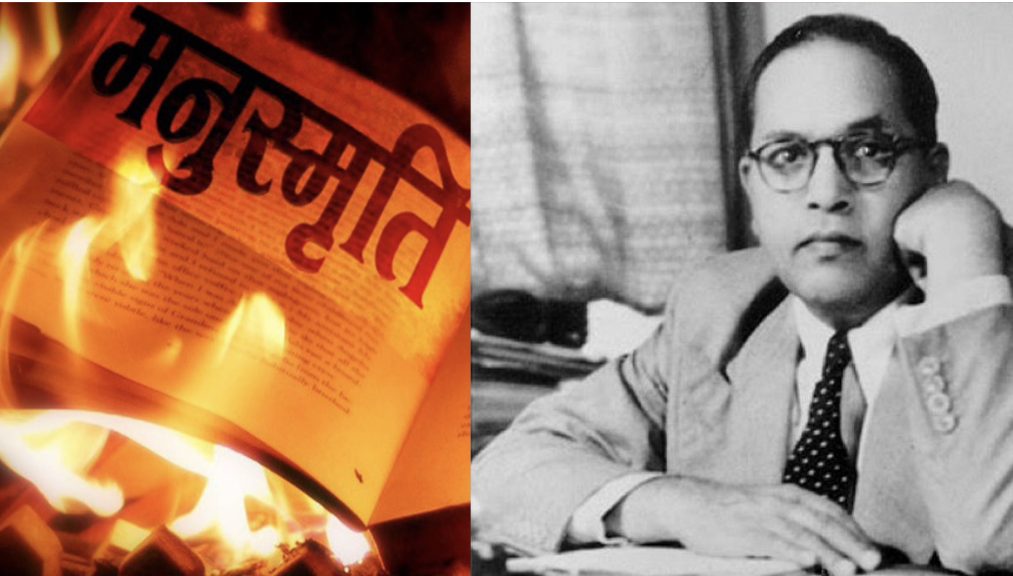
manusmiriti ambedkar hindutva

It was 1927, the second phase of the historic Mahad Satyagrah was on, and Dr. Bhimrao Ambedkar led thousands of people in burning the Manusmriti, an act he compared with the French Revolution of 1789. Time and again, in speeches and writings, he categorically opposed the world-view of Manu, the legendary figure to whom are attributed the tenets of the Manusmriti, said to be dated to around 100 CE.

In the book written by scholar and activist Anand Teltumbde, Mahad: The Making of the First Dalit Revolt, published by Navayana in 2017, is recorded the resolution which was proposed by the social activist Gangadhar Sahasrabuddhe, and then read out at the Mahad Satyagrah. It states that the firm opinion of this conference is that the Manusmriti, “taking into consideration its verses which undermined the Shudra caste, thwarted their progress, and made their social, political and economic slavery permanent…is not worthy of becoming a religious or a sacred book. And in order to give expression to this opinion, this conference is performing the cremation rites of such a religious book which has been divisive of people and destroyer of humanity.”

Twenty three years later, Dr Ambedkar marked the promulgation of the Constitution of India as the “end of the rule by Manu”. And yet, 70 years thereafter, a significant section of Indians are still fascinated by Manu and have no qualms in venerating him. Even the Black Lives Matter protests in the United States and large parts of Europe, in which statues of slave-owners and colonialists are being knocked down or disfigured, the Indian followers of Manu have no regrets about deifying him.

( Read the full article here)

‘National Populisms’, the Little Man and Big Men


Populismo – ISS Conference poster by Filipino artist Boy Dominguez, image courtesy future-agricultures.org

In an earlier post last month, I had discussed the global rise of the Right as related to the revolt of the ‘little man’ (a term I borrow from Wilhelm Reich) and his search for a ‘father-figure’ of authority. I had also argued in that post that the revolt of the little man in itself could not have led to the rise of the Right, were it not for  the ways in which Capital moved to appropriate and channelize that revolt against the Left and Left-of-Centre politics – and regimes that dominated the scene earlier. It is virtually impossible to understand this huge tectonic shift in the politics of the past few decades without understanding the conjunction of the little man and Capital – the Big Men – as it were. No less important, it is impossible to understand this shift without understanding the revolt of the liittle man in relation to the different structures of privilege that appear before us as culturally encoded power relations – as tradition, as ‘our way of doing things’, so to speak.

Continue reading ‘National Populisms’, the Little Man and Big Men

Weaponising Idiocy: Milk-Drinking Ganesha to Taali Bajao

Then and now, a conservative Hindutva organisation had a role in spreading rumours.

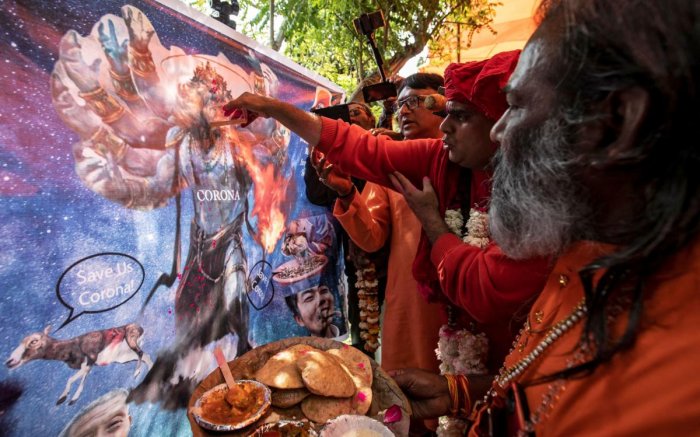
coronavirus and cow urine

Representational image. | Image Courtesy: Deccan Herald


Yad ihasti tad anyatra, yan nehasti na tat kavcit. ‘Whatever is here might be elsewhere, but what is not here could ever be found’.—The Mahabharata, 1.56.33, from Meera Nanda’s The God Market: How Globalisation is Making India More Hindu, Random House 2009.

It was the fag end of the 1st decade of the 21st century when the historian Rink Shenkman wrote his marvellous book, Just how stupid Are We? Facing the Truth about the American Voter. In an interview, he said that Americans are “ill-prepared” to guide the world’s “most powerful” democracy. The book points out the astounding inability of even “two of five voters” to name three branches of the federal government, the fact that half of Americans think that their president can suspend the Constitution, and a large section’s ignorance of the 9/11 attack and the Iraq war that followed.

His concern was the mass of people who could easily, repeatedly and systematically be misled and manipulated by politicians and further “dumb down” American politics.

This “stupidity” was on full display in images of rowdy college crowds hitting California’s beaches during spring break, prompting the governor to close them down. New York governor Andrew Cuomo warned that “young people are not Superman/woman” when it turned out that people, especially the young, are not socially distancing themselves. But only Americans are not to blame. Media tells us that “virus rebels” are displaying their stupidity virtually all over the Western world, prompting crackdowns by authorities.

There’s perhaps no similar study for South Asia, especially India, probing our “stupidity” in this crisis-time, though there’s immense fodder for it.

( Read the full text here : https://www.newsclick.in/Hindutva-Coronavirus-COVID-19-WhatsApp-Fake-News)

Denying Interim Bail To Anand Teltumbde and Gautam Navlakha Is Alarming : MRSD

Guest Post by MRSD ( Mumbai Rises to Save Democracy)

Statement by MRSD on Supreme Court’s rejection of pre-arrest bail plea of Anand Teltumbde and Gautam Navlakha in the Bhima Koregaon violence case

Mumbai Rises to Save Democracy (MRSD) is deeply disappointed with the Supreme Court’s rejection of the plea by Anand Teltumbde and Gautam Navlakha seeking anticipatory bail in the cases registered against them in relation to the violence at Bhima Koregaon on 1st January 2018. Their arrest is imminent in next three weeks. Nine other activists and intellectuals who have been accused in this case and charged with sections of the draconian Unlawful Activities Prevention Act (UAPA) have been imprisoned since 2018.

The top court’s order to deny interim bail is alarming given that the case against the activists is based on very thin evidence. Moreover, the cyber forensic analysis by credible investigative journalists and technical experts discredit the evidence used by Pune police to incriminate the activists. The analysis reveals that the letters which were allegedly recovered from the hard disk of Rona Wilson, one of the nine activists accused in the case, and used by the police to link the accused to a banned political party are most likely to have been planted in the disk through use of malware which allowed remote access to Wilson’s computer (https://caravanmagazine.in/politics/bhima-koregaon-case-rona-wilson-hard-disk-malware-remote-access). This clearly indicates manipulation of evidence and the fabricated nature of the case.

The government is sparing few chances for truth to emerge in this case. In January 2020, more than a year after the chargesheets were filed by the Pune police, the Union Home ministry got the case suddenly transferred to the National Investigation Agency (NIA) and thus brought the case under its control at a time when the Home department in the newly formed Maha Vikas Aghadi government in Maharashtra had announced a review of the case, setting up of a Special Investigating Team (SIT) and dropping of the false cases against the activists.

While full-blown attempts are being made by the government to incriminate the eleven intellectuals in a fabricated case, the investigation into the role of Hindutva brigade led by Milind Ekbote and Manohar Bhide in carrying out planned organised attacks on Dalits at Bhima Koregaon has come to a standstill. The state government’s failure to set up a SIT shows that the real perpetrators of violence are being shielded from prosecution.

These developments in the case and now the rejection of pre-arrest bail to two of the stalwarts of the democratic rights movement in the country on the grounds of what is not just flimsy but manipulated evidence shows the desperation of the government to repress democratic voices and spread a sense of fear amongst those who oppose the anti-people policies and actions of the Hindutva Fascist regime. MRSD extends its solidarity to the eleven activists who have been relentless defenders of human rights and people’s movements in this country and who now stand wrongly accused in this conspiracy case. We also reiterate our resolve to continue to struggle for their release and for the pursuit of truth about the violence unleashed on the peaceful Dalit-Bahujan masses at Bhima Koregaon.

  • MRSD

Participating Organisations: People’s Union of Civil Liberties (PUCL), Committee for Protection of Democratic Rights (CPDR), National Trade Union Initiative (NTUI), Trade Union Centre of India (TUCI), Student Islamic Organisation (SIO), Ambedkar Periyar Phule Study Circle (APPSC) – IIT Mumbai, Co-ordination Of Science And Technology Institute’s Student Association (COSTISA), LEAFLET, Police Reforms Watch, NCHRO, Bebaak Collective, Forum Against Oppression of Women (FAOW), LABIA- A Queer Feminist LBT Collective, Jagrut Kamgar Manch (JKM), Majlis, Indian Muslims for Secular Democracy (IMSD), Women against Sexual Violence and State repression (WSS), Bharat Bachao Andolan (BBA), Indian Social Action Forum (INSAF), People’s Commission for Shrinking Democratic Spaces (PCSDS), Human Rights Law Network (HRLN), Cause Lawyers Alliance, National Alliance of People’s Movements (NAPM), Nivara Hakk Suraksha Samiti, Kashtakari Sanghatna – Palghar, Sarvahara Jan Andolan – Raighad, Jagrut Kashtkari Sanghatana, students from various colleges in Mumbai including Homi Bhabha Research Centre, St.Xaviers and Tata Institute of Social Sciences.

Not Just Doreswamy, India’s Idea of Independence is Being Debased

Trivialisation of the freedom struggle is in the Hindutva gene, which seeks a theocracy, not an independent republic.

Doreswamy

“Though this be madness yet there is method in it.”

Hamlet, William Shakespeare.

The saffron brigade’s ever-readiness to stigmatise people holding differing opinions and dissenting voices reached a new low recently.

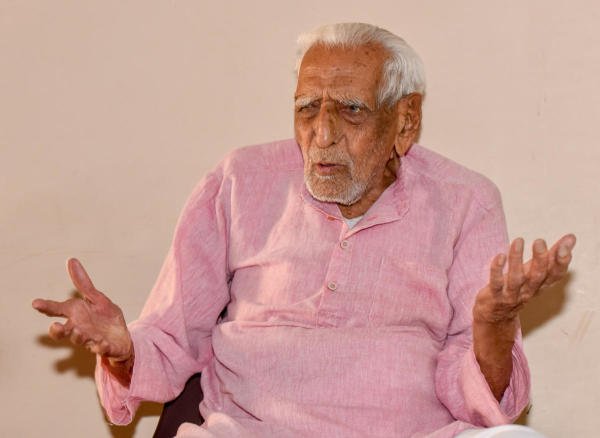
Perhaps it was the saddest day in post-independence India when a Karnataka BJP legislator hurled abuses of being a ‘Pak agent’ and ‘fake freedom-fighter at 102-year-old freedom fighter, H Doreswamy.

Sadly, not many outside the state would know that Harohalli Srinivasaiah Doreswamy, born on 10 April 1918 in the former princely state of Mysore, was first jailed in 1942 during the Quit India movement. He was associated with a group involved in making bombs and spent 14 months behind bars. After his release he continued with his mission and following Independence chose to work with slum-dwellers, the homeless and poor landless farmers, cobblers and porters. He kept himself aloof from holding political power.

In 1975, he challenged then prime minister Indira Gandhi when Emergency was declared, civil liberties were suspended and again faced jail under the draconian Defence of India Regulations Act. Despite old age, his enthusiasm for public causes remains undiminished. One issue closest to his heart remains getting the poor and the landless right to land.

Of late, he has been a prominent figure at protests against the controversial Citizenship Amendment Act (CAA) and has been openly critical of the BJP-led central government’s policies.

The BJP legislator under question is Basangouda Patil Yatnal. When the issue was raised in the Karnataka Assembly, forget issuing an unconditional apology, Yatnal remained adamant. Not just that. He got the support of many of his colleagues. It would be asking too much for the government to take action; a reprimand or case against the legislator for his comments, though they violate the Constitution which considers disrespect to freedom movement a “violation of our fundamental duties”.

( Read the full article here : https://www.newsclick.in/Not-Just-Doreswamy-India-Idea-of-Independence-is-Being-Debased)