Category Archives: Culture

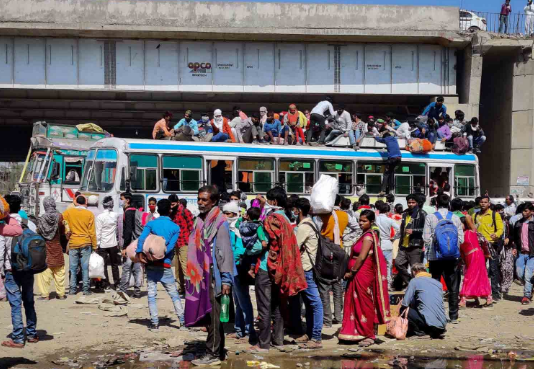
Brutalising Labourers, Jailing Dissidents

A medical emergency is no pretext to impose a political emergency.

A medical emergency

How many policemen in civil clothes are required to deliver a mere summons to an editor of a web journal 700-k away in an age of email and WhatsApp? The recent action of the Uttar Pradesh police, where it sent a posse of 7-8 policemen, in civil clothes, in a black SUV with no number plates, to Siddharth Varadarajan’s residence in Delhi to deliver a summons has prompted this question.

Definitely the police did not bother to ponder over how Varadarajan, editor of The Wire, will present himself to the authorities during a lockdown which has brought trains, flights and even private transport to a standstill.

The manner in which the issue has unfolded has caused an international uproar with 3,500 jurists, scholars, actors, artists and writers condemning Uttar Pradesh Police’s actions against The Wire, and saying that a “medical emergency should not serve as the pretext for the imposition of a de facto political emergency.”

How Chief Minister Yogi Adityanath’s government will respond remains to be seen, but the story in The Wire on the Tablighi Jamaat, which also noted that “Indian believers” responded late to the viral epidemic obviously provoked the powers-that-be into action. The episode has brought into sharp focus the priorities of the government during the epidemic, which it is supposedly fighting a “war” against.

( Read the full article here : https://www.newsclick.in/Brutalising-Labourers-Jailing-dissidents)

The Supreme Minister Knows: A Bedtime Story by Bebe Yaga

https://www.youtube.com/watch?v=_DlfcNcAWgw

Mainstream Myths Versus Scientific Collaboration

The rediscovery of scientific collaboration across borders is a welcome development.

Fake News on COVID

Nothing in life is to be feared, it is only to be understood. Now is the time to understand more, so that we may fear less.

– Marie Curie.

Does the 5G network have any link to the novel corona-virus outbreak?”

Well, any sane person on this part of Earth would readily laugh at this outrageous claim. But this claim has “gone mainstream” leading even to bomb attacks on phone masts. So one has to sit up and analyse.

No doubt, when “psychological states peak and people’s anxiety levels are high,” as one expert puts it, one can easily become prey to such conspiracy theories. And as right-wing or conservative ideas have growing legitimacy in society, things can get even worse. Remember how for a long time Iran’s theocracy was in denial about the Corona-virus threat?

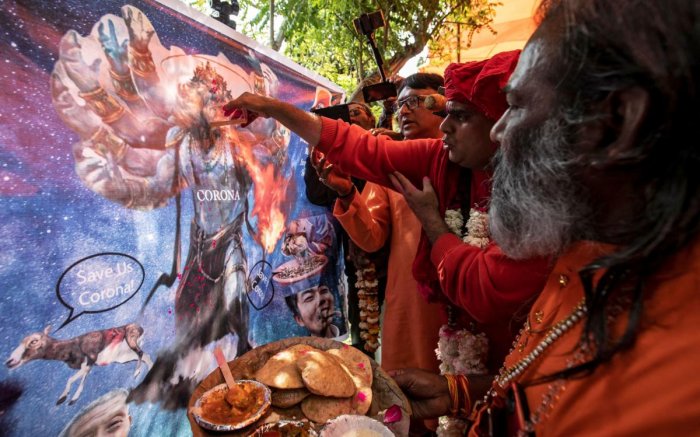
India is no exception to such false claims. All sorts of home remedies are being offered as a definite cure to the disease. We saw Gomutra parties where cow urine was drunk, supposedly as protection from this highly-contagious disease which has taken more than 100,000 lives and infected more than 1.7 million. No doubt it is an arduous task for progressives to counter all the rubbish being peddled around the pandemic and prepare people to take proper care while pressurising the powers-that-be to make public health a priority.

Such struggles can be better fought if individual scientists or groups of scientists join hands to sensitise and educate people.

The recent launch of a pan-institutional CovidGyan website (https://covid-gyan.in/) which is a brainchild of the Tata Institute of Fundamental Research (TIFR), the Indian Institute of Science (IISc), and the Tata Memorial Centre (TMC) is a welcome step in this direction. Other key members of this initiative include Vigyan Prasar, IndiaBioscience, and the Bangalore Life Science Cluster (BLiSC, which comprises InStem and C-CAMP, in addition to NCBS-TIFR).

( Read the full article here : https://www.newsclick.in/Mainstream-Myths-Versus-Scientific-Collaboration)

रोगाणु, दाग़ और हमारा ‘विशुद्ध’ समाज : वी. गीता

Guest post by V. GEETHA. Translated by RAJENDER SINGH NEGI

कोरोना के आने से पहले ही हममें रोगाणुओं को लेकर चिंता का भाव विद्यमान था. ज़रा उन फ़र्श, किचन काउंटर, कपड़ों, इत्यादि रोगाणुओं, दाग़, और तमाम क़िस्म के सूक्ष्म घुसपैठी जंतुओं से निजात दिलाने वाले विज्ञापनों को याद करें, जिनमे इन सभी को पर्याप्त और बड़ी चालाकी से दुष्ट क़रार दिया जाता रहा है. कोरोना ने हमें ख़ुद को विशुद्ध और साफ़-सुथरा रखने का पूर्णत: वाजिब कारण दे दिया है. हम चाहे ख़ुद को चारदीवारी के अंदर बंद कर लें, या, अन्यों को उसमें दाख़िल होने से रोकें, अंतत: इसका नतीजा वही निकलता है, कि हम अक्सर पहले से ही समाज में व्याप्त जातिगत, वर्ग-आधारित, नस्ल-भेदी और धार्मिक आधार पर बनाई गई सामाजिक मान्यताओं की दीवारें ही खड़ी कर रहे होते हैं.

तो फिर जिस जोश-खरोश से हमने संभावित संक्रामक माने जाने वाले लोगों पर नज़र रखने, उन्हें चिह्नित और वर्जित करने की क़वायद सर पर उठा रखी है उस पर अचरज नहीं करना चाहिए. इस वर्जना में सरेआम सड़कों पर धर-पकड़, शर्मिंदा किया जाना, घरों में ‘आईसोलेट’ किए गयों के नाम सार्वजनिक किया जाना, और मरीज़ों का ईलाज कर रहे डॉक्टरों और नर्सों का उनकी ही रिहाईशी कॉलोनियों में प्रवेश की निषेधआज्ञा लागू किया जाना भी शामिल है.

Continue reading रोगाणु, दाग़ और हमारा ‘विशुद्ध’ समाज : वी. गीता

Corona, Capitalism and Civilisation : Ravi Sinha

Guest Post by Ravi Sinha

“Who do you blame it on? For a while it was China, until the most favourite target for the Indians appeared on the scene – you know who. When it comes to the business of blaming, Indians (a large percentage of them) would have loved it if the virus had originated somewhere in the Middle East or in Pakistan.

But new viruses have always appeared in human history, some more deadly than others. This one is the newest such calamity. Sure enough, humanity will be found standing on the other side of this crisis. But, how shall we count the losses after this mayhem is over?

Continue reading Corona, Capitalism and Civilisation : Ravi Sinha

An Open Letter to the Kerala Governor Sri Arif Mohammad Khan About Our Fight Against the Virus, But Also About Our Resistance to CAA-NRC

Dear Sir

First of all, thank you for acknowledging, even praising,the efforts of the government of Kerala and the people to protect ourselves and humanity against the threat of the corona virus. It is true that Kerala’s efforts and achievements are being lauded the world over, but those voices are never going to make any impact on the supporters of the Sangh parivar in Kerala. But your views cannot be dismissed so easily as ‘Western’ or ‘leftist’ (though they may still murmur about your Muslim name). What has really riled me in the recent past is their systematic effort at downplaying Kerala’s achievements, heaping abuse on our effort to help migrant workers, and raising baseless allegations against those who are working to mitigate the crisis. So as a historian of modern Kerala, I am writing this to offer some insights into why we have been able to do this, in the hope that you may be able to see what they will never tell you — simply because they are so sadly blinded by hate. Continue reading An Open Letter to the Kerala Governor Sri Arif Mohammad Khan About Our Fight Against the Virus, But Also About Our Resistance to CAA-NRC

Srinarayanadharmam: Raghavan Thirumulpad (Part 2)

The third chapter is about precepts applicable to all human beings;  the aacharyan speaks here on the panchadharmas and the panchashuddhi. The panchadharmas are : nonviolence, truth, non-covetousness, the rejection of intoxicants,  and the avoidance of licentiousness. Dharmoyam Saarvavarnikah, say the earlier aachaaryas, mentioning nonviolence, truth, non-covetousness, celibacy, and frugality as the five crucial dharmas. The Yogasastra mentions these five as the panchayamas. Continue reading Srinarayanadharmam: Raghavan Thirumulpad (Part 2)

Balm in Troubling times – Raghavan Thirumulpad on Srinarayana Dharma

[The lockdown ought to work as a great leveler. For once, all who live in mortal bodies have been reminded of their inevitable mortality, of the absurd fragility of our existence on this planet. Even the living-gods who command a huge following have shut darshan. We have also been reminded that life on earth will not grind to a standstill if we go. Indeed, the signs are that it will thrive. 

But at the ground level, that is not happening. The better-off can see how, starkly, like never before, the privileges they enjoy, and given as they are to an amoral worship of consumption which inhibits their capacity for compassion, are more likely to shield this by resorting to any kind of ideology that justifies their privilege, probably eugenics or some kind of functionalist interpretation of caste oppressive practices. We are seeing how the poor are suffering for no fault of theirs at all. Indeed, the lockdown may help to normalize privilege even more, and render us all the more insensitive to the suffering of the working class poor. One reason why this happens is because we are already, as a society, afflicted by moral viruses — of religious bigotry, caste privilege, and ruthless capitalism. As a society, we are sick, and the pandemic is likely to exacerbate it

It must be this connection that made me turn to the work of Raghavan Thirumulpad, who was one of Kerala’s finest ayurvedic physicians, a multi-lingual scholar whose conception of individual and human wellness was inextricably related to the wellness of society and the natural world. I have long admired the ease with which he moved between theory and practice in ayurveda; but what really connected us as privileged-caste-born people who sought to become human  was that we found in Sreenarayana Guru a common refuge. For Thirumulpad, the Guru is not just a social reformer or preacher but a healer — a healer of society and individual, who drew upon Indian traditions to reinterpret a dharma adequate to the disease that afflicted society in his times.

Continue reading Balm in Troubling times – Raghavan Thirumulpad on Srinarayana Dharma

Weaponising Idiocy: Milk-Drinking Ganesha to Taali Bajao

Then and now, a conservative Hindutva organisation had a role in spreading rumours.

coronavirus and cow urine

Representational image. | Image Courtesy: Deccan Herald


Yad ihasti tad anyatra, yan nehasti na tat kavcit. ‘Whatever is here might be elsewhere, but what is not here could ever be found’.—The Mahabharata, 1.56.33, from Meera Nanda’s The God Market: How Globalisation is Making India More Hindu, Random House 2009.

It was the fag end of the 1st decade of the 21st century when the historian Rink Shenkman wrote his marvellous book, Just how stupid Are We? Facing the Truth about the American Voter. In an interview, he said that Americans are “ill-prepared” to guide the world’s “most powerful” democracy. The book points out the astounding inability of even “two of five voters” to name three branches of the federal government, the fact that half of Americans think that their president can suspend the Constitution, and a large section’s ignorance of the 9/11 attack and the Iraq war that followed.

His concern was the mass of people who could easily, repeatedly and systematically be misled and manipulated by politicians and further “dumb down” American politics.

This “stupidity” was on full display in images of rowdy college crowds hitting California’s beaches during spring break, prompting the governor to close them down. New York governor Andrew Cuomo warned that “young people are not Superman/woman” when it turned out that people, especially the young, are not socially distancing themselves. But only Americans are not to blame. Media tells us that “virus rebels” are displaying their stupidity virtually all over the Western world, prompting crackdowns by authorities.

There’s perhaps no similar study for South Asia, especially India, probing our “stupidity” in this crisis-time, though there’s immense fodder for it.

( Read the full text here : https://www.newsclick.in/Hindutva-Coronavirus-COVID-19-WhatsApp-Fake-News)

Understanding the Rise of the BJP

Guest Post by PARVIN SULTANA

(Review of HINDUTVA: EXPLORING THE IDEA OF HINDU; NATIONALISM, Jyotirmaya Sharma ( Context 2019); M.S. GOLWALKAR, THE RSS AND INDIA, Jyotirmaya Sharma (Context, 2019) ; DECODING THE RSS: ITS TRADITIONS AND POLITICS Raosaheb Kasbe (Leftword Books, 2019) , RAJIV GANDHI TO NARENDRA MODI: BROKEN POLITY, FLICKERING REFORMS Parsa Venkateshwar Rao Jr. (Sage Select, 2019) ; MODINAMA: ISSUES THAT DID NOT MATTER Subhash Gatade (Leftword Books, 2019) 

The 2014 general elections which saw the Bharatiya Janata Party return to power with an absolute majority is believed to have brought an important paradigmatic shift to Indian politics. Scholars commenting have termed it as a majoritarian shift. Post elections, there have been discussions which tried to understand the reasons behind this massive mandate that the Right Wing political party managed to get. This Right Wing shift in India’s electoral politics was further proven by the 2019 Parliament election results which gave the BJP a larger mandate. Scholars have written trying to understand the rise of BJP—is it an isolated event or a continuation of past developments? This becomes important because even at the international level, there is a shift towards conservative politics.
Indian academia has also taken an objective look at this shift. A number of books have been written on various aspects of present-day politics, the ideologies and icons that paved the way for this rise and continue to provide intellectual fodder for this politics, the liberal economic policies which have been taken to their logical conclusion by the present government, etc. And these books have provided us with important insights to make sense of the present-day political situation of the country.

( Read the full text here : https://thebookreviewindia.org/understanding-the-rise-of-the-bjp/)

Lessons from Ambedkar and Gandhi to take forward

They represented two foundational but antagonistic visions of “what we as a society, what we as a state should embody”

( Review of ‘Radical Equality: Ambedkar, Gandhi, and The Risk of Democracy’ By Aishwary Kumar Navayana, Rs 599)

The book, Radical Equality: Ambedkar, Gandhi, and the Risk of Democracy by Aishwary Kumar, takes forward the conversation around the two “most formidable non-Western thinkers of the twentieth century, whose visions of moral and political life have left the deepest imprints”.

In the early 1990s D.R. Nagaraj published The Flaming Feet, a compilation of his essays in which he admired both Gandhi and Ambedkar. Coming close on the heels of the phenomenon of Dalit assertion, it argued that “there is a compelling necessity to achieve a synthesis of the two”. But that has not been the only attempt to examine how the ideas of these two leaders interacted, challenged each other, and how they extended or revisited the meanings of different concepts.

The book, Radical Equality: Ambedkar, Gandhi, and the Risk of Democracy by Aishwary Kumar, takes forward the conversation around the two “most formidable non-Western thinkers of the twentieth century, whose visions of moral and political life have left the deepest imprints”. For the author they “exemplified two incommensurable ways of forging a relationship between sovereignty and justice, force and disobedience”, or represented two foundational but antagonistic visions of “what we as a society, what we as a state should embody”.

Focusing mainly on Hind Swaraj — a monograph written by Gandhi on a ship to South Africa from London (1909) — and Annihilation of Caste, which happens to be the undelivered speech by Dr Ambedkar when he was invited by the Jat Pat Todak Mandal, Lahore (1936) — the organization rescinded the invite when it came across the ‘radical’ proposals he had put forward in the draft — this around 400-page book discerns “an insurrectionary element at the limit of politics” in the works of these two stalwarts. It is “an insurrection that sought to extract the political itself — and the social question — from the doctrinal prescriptions and certitude of its European past”

( Read the full text here : https://www.telegraphindia.com/culture/books/lessons-from-ambedkar-and-gandhi-to-take-forward/cid/1747042?ref=books_culture-books-page)

Why Pakistan’s Islamists Don’t Want India’s CAA Repealed

Of all reasons to oppose CAA, NPR and NRC, most worrying is the Islamists across the borders feeling enthused.

Anti CAA Protest in India

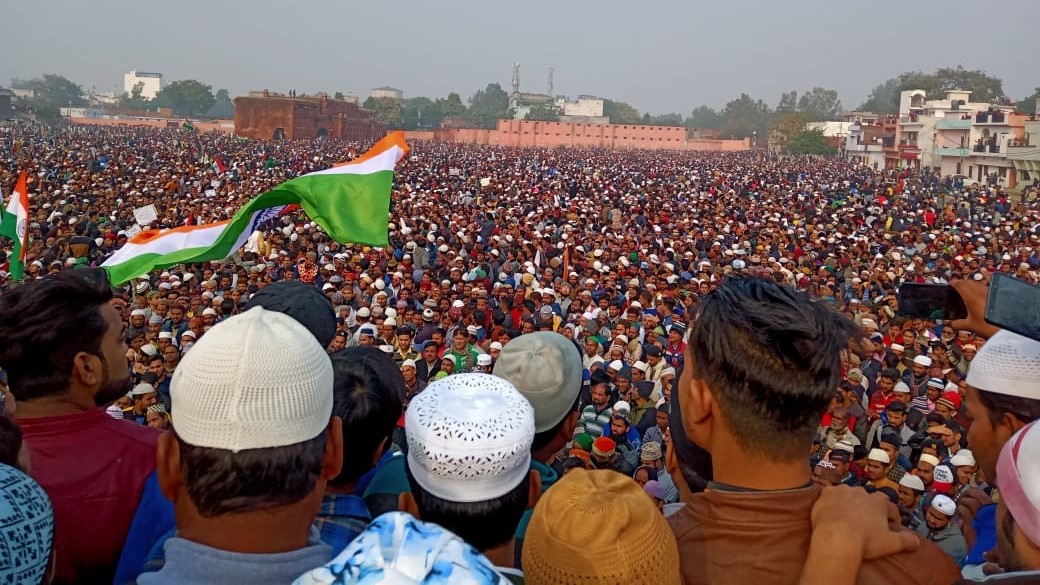
Seattle City Council, one of the most powerful city councils in the United States, recently made history. It became the world’s first elected body to pass a resolution asking the Indian government to repeal the CAA, stop the National Register of Citizens and uphold the Indian Constitution. It also sought ratification of United Nations treaties on refugees. The said resolution is being seen to be “leading the moral consensus in the global outcry against the CAA”.

Seattle is definitely not an exception.

Many concerned voices have spoken against the highly controversial discriminatory Citizenship Amendment Act (CAA) 2019, which excludes Muslims [and Jews] and enforces a selective citizenship criteria based on faith. This new law effectively reduces the status of millions of Muslims in India to illegal migrants. A similar resolution was tabled by members of the European Union Parliament last month. It stands postponed right now, but that will be a short reprieve, for the members have resolved to take it up again shortly.

For the first time in independent India’s history the Indian diaspora—which is normally projected as pro-Prime Minister Narendra Modi and which does participate in rallies in his support—has been protesting against the bill along with Indian students studying in the West. These protests have been going on for close to two months in different cities and towns in different cities in the West.

Couple this development with the resistance within the country spreading to new areas and broadening to include more sections of society, as people gradually wake up to the CAA’s grim portents. Definitely, there is growing discomfort against the Modi-Shah regime. Perhaps it is a sign of desperation that in order to legitimise this law the government has been peddling half-truths even in Parliament. Prime Minister Modi quoted selectively from the Nehru-Liaquat pact to buttress his case. He used the same Nehru-Bordoloi letter to defend the CAA, which his party had earlier used to slam the Congress. Gopinath Bordoloi was the first Chief Minister of Assam after Independence.

( Read the full text here : https://www.newsclick.in/why-pakistans-islamists-dont-want-indias-caa-repealed)

Delhi Elections and the Difficult Terrain of Antifascist Struggle


Three incidents of firing in four days – two in Jamia Millia Islamia and one in Shaheen Bagh – quickly followed open calls to violence (‘goli maro saalon ko‘) by Union minister of State for Finance Anurag Thakur and the demonization of Shaheen Bagh protesters by BJP MP Pravesh Verma (‘the protesters will enter your homes and rape and kill your daughters’ if Modi and Shah aren’t there). In the case of the Shaheen Bagh shooter, Kapil Gujjar, the Delhi Police (which has till date not managed to find out the JNU attacker Komal Sharma’s affiliation) was quick to link him to the Aam Aadmi Party (AAP) – an allegation expressly denied by his father. All these episodes, so obviously set up, basically aimed at provoking the protesters into committing some violence that the lapdog television channels would then play up, in their usual hysterical style (some of them may even have appeared on air in police uniform!), to vitiate the atmosphere.

On the very first shooting, one such channel did indeed keep doing precisely that till long after the identity of the shooter (in the clip above) had been clearly established. The clips were circulating almost instantaneously and you can hear the gunman shouting Delhi Police zindabad, and there was little chance of mistaking him for an anti-CAA protester. The channel knew exactly what it was doing and at whose behest but kept on at it till 9 o’clock at night.

Continue reading Delhi Elections and the Difficult Terrain of Antifascist Struggle

Gandhi and the Hindutva Right

From Nehru to Patel and Ambedkar, the saffron party has appropriated freedom-fighters or tarnished legacies. Gandhi, however, poses a different problem.

Why BJP’s Subjugation of Gandhi

Death ends all enmity’ (Marnanti Vairani) goes a maxim in Hinduism.

The story also goes that when Ravana was on death bed, Ram had even asked Laxman to go to him and learn something which no other person except a great scholar like him could teach him, declaring that though he has been forced to punish him for his terrible crime, ‘you are no more my enemy’.

It is a different matter that Hindutva supremacists — who are keen ‘to transform Hinduism from a variety of religious practices into a consolidated ethnic identity’ — are believers in the exact opposite.

For them, once the enemy is dead, the enmity flares up without any limits. They have no qualms that their adversary is no more to defend himself/ herself.

It has been more than five and half years that they are in power at the Centre and we have been witness to complete vilification, demonisation and obfuscation of many of their adversaries, all great leaders of the anti-colonial struggle. Of course, few were found to be ‘lucky’ enough that were promptly co-opted/appropriated by them, of course, in a sanitised form.

( Read the full article here : https://www.newsclick.in/BJP-Subjugation-Gandhi-Legacy-Roadblock-Shaheen-Bagh

How Hindutva Terror Outfits Hide in Plain Sight

The arrest of yet another alleged bomb-maker with right-wing links should lead to action at last.

The arrest of yet another alleged bomb

When Crimes shoot up, they become invisible.

When pain becomes unbearable, cries are no longer heard.’

—Bertolt Brecht

Can the provocations of a cabinet minister, who openly raises controversial slogans, be considered a “breach of peace” or are they merely attempts to “gauge people’s mood”, as the minister would have us believe? For more than a month, plenty of controversial slogans have been raised on the streets of India. People are being instigated to “kill the traitors to the country” by members of the ruling dispensation, who are issuing open threats in public as the masses are getting angrier against the CAA, NRC and the NPR.

As expected, till date, either no action has been taken by the law and order machinery or there is only an expectation of perfunctory action. This new normal is symptomatic of the rapid erosion of the rule of law in the country. A new normal wherein the chief minister of a state has no qualms in talking of taking “revenge” against protesters while his state’s police unleash unjustified violence on protesters and bystanders alike. Each of their tactics has, for this reason, received widespread condemnation. Even though the strong-arm tactics of the state are failing to pass the test of logic or reasonableness, there is still no change in the ruling dispensation’s attitude.

( Read the full article here : https://www.newsclick.in/Hindutva-Terror-Outfits-Hide-Plain-Sight)

Shaheen Bagh – A New Kind of Satyagraha, A Culture of Dialogic Protest: Pradip Kumar Datta

Guest post by PRADIP KUMAR DATTA

Pictures by author

Street art in Shaheen Bagh

Amidst the bustle of talk and announcements on stage, there is a surprise at Shaheen Bagh. A young, slim girl student in ankle length boots, dark pants and shirt is invited to take the podium. She begins her speech by saying that the Citizenship Amendment Act (CAA) has put her in a dilemma. She studies in Jharkhand where many of her close friends are Rashtriya Swayamsevak Sangh (RSS) and Bharatiya Janata Party (BJP) members. Their opinions matter to her personally. At the same time, when she comes to Shaheen Bagh she is gripped by the dangers and stakes involved in the CAA.

Continue reading Shaheen Bagh – A New Kind of Satyagraha, A Culture of Dialogic Protest: Pradip Kumar Datta

Execution of Gang Rape and Murder Convicts  Will Not Serve Cause of Justice: Statement by Feminists

Joint Statement by Feminists Urging the President of India
to Commute Death Sentence to Life Imprisonment


As individuals and groups who have been engaged in the struggles for women’s rights, safety and justice, it is often presumed that we would support the demand for death penalty for sexual assault. But for decades, even as we have consistently fought to make the world safer for women through changes in policy and law, and social awareness by breaking the silence on these heinous crimes, we have consistently argued against the death penalty for sexual assault, as well as, all other crimes.

In the light of the death warrant being issued on 7 January 2020 against Akshay Kumar, Vinay Sharma, Pawan Gupta, and Mukesh Singh convicted of the brutal assault, gangrape and murder of a 23-year old medical intern in Delhi in December 2012, we reiterate our position against the death penalty. Continue reading Execution of Gang Rape and Murder Convicts  Will Not Serve Cause of Justice: Statement by Feminists

Hope, solidarity and struggle in JNU: Women of Sabarmati

WOMEN OF SABARMATI WRITE:

The outpouring of solidarity and generosity on the JNU campus, since the attack of 5th January 2020 has been overwhelming.

Hostels have organised guerilla dhabas at Sabarmati. They have sung revolutionary songs while making pans of maggi and distributing jhal muri and peanuts.

Men from the hostel that distributed peanuts, worried about the mess of the peanut shells at our hostel entrance, even offered to sweep up the place, brooms at the ready.

Three women in the women’s wing in Sabarmati threw all the women in the hostel a party two nights ago.

During and after the events of the 5th, neighbours have become friends.

Our teachers have been coming to meet us every day. Some have brought bags full of snacks. Some have organised trauma sessions for us. Some have just held us.

And tonight Brahmaputra hostel organised a Sadbhavna mela for the campus. Free snack stalls all around, dholak music to dance to and a large Lohri bonfire.

As some of us women from Sabarmati were walking back towards Ganga dhaba tonight, discussing how this is the first time our hostel has no Lohri celebrations, the men from Kaveri stopped us to offer popcorn from their Lohri celebrations.

JNU was home, is home, and will remain home.

Wall of resistance at Brahmaputra

It’s We the People, not we the Citizens, of India!

Image courtesy News 18

People, Persons, Citizens

When the idea of citizenship is wielded like a deadly weapon to deprive people of basic rights rather than to empower them, it’s time to think about the basis of rights differently.  While in the Preamble to the Constitution, ‘we the people’ resolve to secure to all its ‘citizens’ justice, liberty, equality and fraternity; Article 14 of the Fundamental Rights ensures equality before the law to all “persons”, not only to citizens.

The people of a land precede the creation of “citizens”, and we the people of India must think seriously at this moment in our history, about how justice is to be secured to all persons, and whether citizenship is an emancipatory idea any longer.

Consider the revealing and tragic irony of one of the accused arrested for his alleged role in violence during protests against the Citizenship Amendment Act 2019 (CAA) , in East Delhi’s Seemapuri. Through his counsel, in a Delhi court, he claimed to be a juvenile, and to prove this, produced certificates from the madarsa at which he studies.

Delhi Police, however, claimed that these documents were insufficient to establish his age, and requested permission for a bone ossification test. The counsel of the accused argued that according to central government notifications, madarsa certificates are sufficient to prove age, but the Delhi court permitted police to carry out the ossification test.

Imagine the claim of such a person to  citizenship and to inclusion in the National Register of Citizens (NRC)! Continue reading It’s We the People, not we the Citizens, of India!

Statement Issued by ‘Netherlands against CAA’ (Citizenship Amendment Act)

Guest Post by ‘Netherlands against CAA’

अंतरराष्ट्रीय न्यायालय के सामने विरोध-प्रदर्शन।

(A series of protests have been held in Netherlands against CAA by the Indian diaspora since last few days.  There was a protest at International Court of Justice ( ICJ) based in Hague on 30 th December. It was the fifth protest in last ten days. Pasted below a statement issued on the occasion.)

Statement for Press Release: ICJ Protest

In light of the recent events in India, a group of Indian diaspora residing in the Netherlands, deeply disturbed by the turn of events have decided to protest against the Government of India before the Peace Palace. The protest is directed against the enactment of Citizenship (Amendment) Act, 2019 (“Act”) followed by gross perpetration of human rights violation against its citizens by the Government of India. Continue reading Statement Issued by ‘Netherlands against CAA’ (Citizenship Amendment Act)

Your Government Wants Revenge From You

Uttar Pradesh is dealing with CAA as it dealt with crime : encounters

Uttar Pradesh is dealing with CAA as it dealt with crime

Image Courtesy: PTI

Seventy-six year old advocate Mohammad Shoaib fought to have innocents branded as terrorists under repressive laws released, and risked multiple assaults by right-wing lawyers as he took these cases through various courts in Uttar Pradesh. His contemporary, former police officer SR Darapuri became a human rights activist and writer after he retired. Neither would have imagined one day they would be lodged in jail, charged with rioting and creating disaffection, under similarly draconian laws.

But as everybody knows, in Uttar Pradesh today Shoaib and Darapuri are not exceptions. They are just two notable figures among the hundreds of socio-political activists, writers and cultural workers—not to forget ordinary folks—who have been packed into various state prisons for opposing the Citizenship Amendment Act (CAA) and the National Register of Citizens (NRC). These protests are going on across the country, and started peaking after 19 December, when students spontaneously poured out in the streets against the new law and the proposed policy.

Uttar Pradesh’s administration has come down on those protesting with a heavy hand. The Chief Minister, Yogi Adityanath, tried to project the opposition to the bill as a purely ‘law and order issue: therefore, he sought to justify seeking “revenge” against those who damaged public or private property.

( Read the full article here : https://www.newsclick.in/your-government-wants-revenge-you)