Category Archives: Feminism

Petition to President of India, Visitor of BHU from Alumni of the University

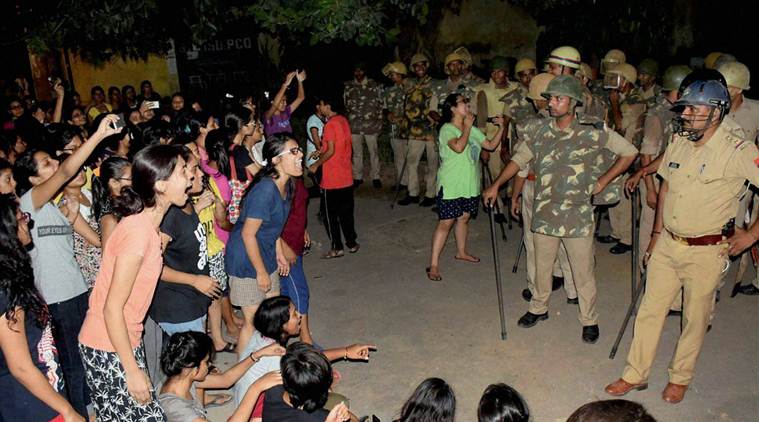
BHU, Banaras Hindu University, BHU violence, BHU lathicharge, bhu female students protest, BHU lathicharge, Benaras Hindu University, yogi adityanath, bhu students beaten, indian express newsTo

The President of India

Visitor

Banaras Hindu University

Sub : On recent agonising developments in Banaras Hindu University

Dear Sir

We alumni of Banaras Hindu University would like to convey to you our sense of concern about the recent developments at our alma mater namely Banaras Hindu University. Developments which have brought forward the issue of safety and security of girl students on the campus and administrations callous attitude towards it. Continue reading Petition to President of India, Visitor of BHU from Alumni of the University →

Cutting the nose to spite the face?

It looks like the CPM’s enmity towards the Muslim organizations is such that they do not mind sacrificing women’s human rights and reinforcing the patriarchal family just to teach them a lesson. So they are happy to stick with the Sanghi understanding of conversion as necessarily forced in some way, ideological or physical. Media One broke news yesterday about a Sanghi torture camp for Hindu women who marry Christians or Muslims concealed as a yoga center. A woman incarcerated there for marrying a Christian managed to escape and complain to the police. Sixty-five women were reportedly incarcerated there when she was an inmate (a later report, after the place was shut down today on the order of the High Court, said 22 women and 23 men were allegedly for reconversion) . The reconversion therapy includes physical assault and threats. This 28-year-old woman married a Christian man without converting and her family seems to have initially accepted it. However, she was taken to this yoga cum counseling center by her own family without her consent and they left her there to the mercy of the criminals who ran the place.  She also confirms that a  young woman, Athira from Kasaragod, who had chosen to convert to Islam on her own who recently ‘returned’ to ‘Sanatana dharma’ with much fanfare, was in this place for twenty-two days and that she had continued to insist on her preference for Islam.

This place is in Tripunithura, in the heart of urban Kerala quite near the High Court at Ernakulam, which damned Hadiya’s right to choose her faith and a partner. Apparently, it is the Sanghi gang from this place who visited Hadiya at her father’s house. Here is the story:

https://youtu.be/ea-rJmuba8I

So it appears that the Sangh is clearly seeking to reverse what is an outcome of long-term social processes shaped by increasing access to higher education for most social groups in Kerala. Women entered higher education here in larger numbers in the 1980s and Muslims, men and women, since the 1990s till now. The expansion of the media and cellphones is such that young people are not influenced solely by their parents or community. In other words, there is a greater livelihood of women and men choosing partners actors communities. Even sensible people here whisper about how zealous Muslims are about conversion away from Islam but the discourse of Hindu tolerance is so pervasive that it lets concentration camp proliferate in secret. The response of the CPM participant is truly revealing — indeed, this is cutting the nose to spite the face. Whatever be their position about welfare and economic development, the CPM in Kerala seems appallingly on the side of the Hindutva security state. And the questions this raises for the fabled autonomy of women here that the CPM ideologues never ceases to claim credit for, are huge.

This is probably the calculation of utility that underlies the chilling indifference/ outright contempt of the CPM leadership towards the plight of the Muslims:  the average CPM and CPI supporter is the middle-caste ex-avarna middle-aged male of the middle or lower middle class. This gentleman’s  preferences are such that his utility is maximised by staying with the organized dominant left in matters related to securing public resources to private ends (because the mobilization for that, given Kerala’s demographics and history needs to be necessarily by a multi-community mix) and by sticking to community/caste organizations for family matters. This choice has always been detrimental to women’s personal rights, particularly personal choices. The community/caste organizations of the 20th century are becoming more of economic institutions than social — and they manage the vast community assets once secured from governments for public ends now securing mainly the interests of the community elite. The social, however, is undergoing rapid transformation, and indeed, sections of the young now even dare to define the social for themselves. Into this gap steps the Sangh, desperate to make an entry, now that their efforts to secure the ex-avarnas have failed (because of their own irremediable casteism). The above-mentioned gentleman finds it prudent to use their services in making sure that the young stay under his patriarchal thumb. Especially young women, for they have nobody to really defend their rights. Thus arise the thriving if silent business of reconversion, well-protected from public view by the pervasive Islamophobia of the Right and Left, believers and rationalists. Also remember that in a post-demographic society, children are few and they are more akin to trophies that future labour for the family. The dominant left sees that as long as they don’t disturb this gentleman’s efforts to secure his patriarchal authority through whatever means, however violent, crude, and abhorrent to democracy they may be, they retain influence. In other words, the tattered influence of the dominant left — no longer hegemonic — endures through, among other things, looking away from the social and the familial as hierarchical institutions and the abuses. This is why a sexual attack on a film actor elicits a huge response from the feminist supporters of the CPM, while the unlawful confinement of a far less privileged young woman is largely ignored or supported ‘personally’.  The dominant left leadership reasons this to be its best strategy, since it loses nothing by letting the Sanghis handle family affairs. The presence of the Sangh works well for it too, since very many Muslims and Christians, who are sizeable in demographic and economic terms, will turn to it for protection from the Sangh!!  This strategy has worked hitherto, and the sole risk lies in the gentleman ceasing to remain a Rational Agent and joining the ranks of the Indo-Gangetic barbarians, essentially irrational in the Kerala context (I keep urging them to leave for Haryana in pursuit of what must be their choices if they choose to become such barbarians). But this has been largely limited to the upper caste Hindus and some sections of elite Christians who regret the loss of traditional power and hope that the Sangh will restore it. They are not the growing power, demographically or economically. Meanwhile, the effete rationalists generate a ‘secularised’ Islamophobia that serves as a neutral-sounding justification for the government’s inactivity.

There are very few moments in which I have felt so lonely. Almost everyone I know seems to be a player, a rational agent, in this game, either participating or creating justifications for the strategy or participating by simply looking away and remaining silent. But this loneliness is so much more dignified — and indeed, more human. I stand with the six young women who braved the Sangh and the police trying to reach Hadiya; I condemn those who serve up her father’s sickening sentimental patriarchal shit in the public in a way that renders them vulnerable. Hadiya’s father who had not the slightest compunction in approaching the High Court and painting his own daughter a potential terrorist such that her entire life promises to be hell (even if she escapes his confinement), is showered with sympathy by our critical intellects for being a poor worried father. Meanwhile, a radical student who claims to be on Hadiya’s side flings abuse on me for wearing a sleeveless blouse, for leaving my hair untied – she does not even notice that her tirade is so like a Brahmanical patriarch’s diatribe against the well-known signs of Kali — immodest women with their hair open — such missiles seem convenient for all, radical Ambedkarites even, to use against those they dislike.  The only silver lining in this mess is that it reveals with unprecedented and astounding clarity,  the enormous risks, dangers, and material losses ahead of anyone who wants to remain human, and not what is substitutable with Artificial Intelligence. And that in order to be popular, you must swim with some tide or the other.  But I’d rather be human than popular, still.

Shame on all of you — AIDWA leaders, Brinda Karat, M S Josephine, C K Asha, Geeta Nazir, Sreemathi teacher, Shylaja teacher — all of you women adherents of the CPM and CPI. If Hadiya dies in that horrible hell, her blood is on your hands. Her rights are already dead and you have done precious little.

 

Judicial Ghar Wapsi : Update on the Hadiya Case

If there is one thing, besides the pervasive Islamophobia in Kerala in both the Left and Right, that the Hadiya case reveals, it is the deeply entrenched commitment to patriarchy everywhere — on the Right, Left, the radical civil society, wherever. Continue reading Judicial Ghar Wapsi : Update on the Hadiya Case →

Against the De-politicization of Mental Health- Harassment is Not a Myth: Simple Rajrah

Guest post by SIMPLE RAJRAH

This article is written in response to the article Activism as a blue whale challenge by Manu Joseph that first appeared in Livemint.

“Our love is constructed. Our beliefs colored. Our originality valid through artificial art. It has become truly difficult to love without getting hurt”

–Dalit Scholar Rohith Vemula, who was institutionally murdered.

Often academic interests die a quiet death due to crassly political reasons but they die yet again, due to non-recognition and to their relentless reduction to the apolitical. Much as there must be emphasis on seeking solutions to the troubles that humanity is facing, it cannot be ignored that reducing the ‘root’ cause of everything to the realm of ‘apolitical’ can be academically simplistic and politically dangerous.  And why must there be an obsession with relegating everything to the ‘apolitical’ domain? Why do journalists who continually work within political systems still consider depression to be something external to the sphere of politics? Why must there be academicians who discount historicity and complexity by equating violence with counter violence? And why, similarly, must there be politicians who condemn violence on ‘both sides’? Because, even a simple reading of the political should reveal its association with power, challenge its centralization, and more importantly the show up the invisibilization that generates hegemony.

Continue reading Against the De-politicization of Mental Health- Harassment is Not a Myth: Simple Rajrah →

Delhi University’s Students Union Elections and the Discreet Charm of Exceptionalism: Rina Ramdev

This is a guest post by RINA RAMDEV


Public discourse on Delhi University’s staging of student union elections typically picks the ubiquitary narratives of money, muscle power and its floutings of Lyngdoh guidelines, year after clamorous year. College campuses, arterial roads and their flooding by posters, both in excess of their expenditure limit (Rs 5000 per candidate) and their prescribed nature (printed, as against handmade), as also the prohibited yet brazen processioneering of SUV armies, are experiences annually played out in tedious familiarity. Mainly configured as a contest between the NSUI and the ABVP (even as the AISA has in its recent resurgence, negotiated a space for Left politics beyond the two party dominance), the Presidential wins and panel sweeps are usually congruent with the dips and surges experienced by their parent political party on the national stage. Continue reading Delhi University’s Students Union Elections and the Discreet Charm of Exceptionalism: Rina Ramdev →

हिंदुत्व और निजता का अधिकार : वैभव सिंह

Guest post by VAIBHAV SINGH

सुप्रीम कोर्ट के द्वारा निजता के अधिकार संबंधी फैसले ने निजी बनाम सार्वजनिक, व्यक्ति बनाम समाज, सरकार बनाम नागरिक के द्वैत को फिर बहस के केंद्र में ला दिया है।ऐसा समाज जहां गली-मोहल्लों व गांव-देहातों में निजी जानकारी छिपाने की कोई धारणा न तो रही है, न उसका सम्मान रहा है, उसी समाज में बड़े कारपोरेशन, सरकारी तंत्र व राज्य ने जब निजी जानकारियों का दुरुपयोग करना आरंभ किया तो गहरी प्रतिक्रिया हुई। इसका मनोवैज्ञानिक कारण यह है कि राज्य व बड़े कारपोरेशन्स समाज के लिए ‘बाहरी शक्ति’ के रूप में रहे हैं। वे पराए, अजनबी और अनजान तत्व हैं जो मनुष्य की निजी सूचना जुटा रहे हैं। उनके बाहरी शक्ति और विशाल संरचना होने के बोध ने निजी जानकारी के मुद्दें पर लोगों को उद्वेलित कर दिया। आधार कार्ड, सोशल साइट्स, सरकारी स्कीम आदि कई चीजें ऐसी रही हैं, जिनका सहारा लेकर नागरिकों की निजी जानकारियों मे बड़े पैमाने पर सेंध लगाई जा रही है और उन जानकारियों को निहित स्वार्थ वाले बेचेहरा व अज्ञात समूहों में शेयर किया जा रहा है। ऐसे माहौल में सुप्रीम कोर्ट का ‘राइट टु प्राइवेसी’ को स्वीकृति देते हुए यह कहना काफी मायने रखता है कि अनुच्छेद 21 के तहत जीने के अधिकार की सार्थकता तभी है जब व्यक्ति की गरिमा और निजता की भी रक्षा की जाए। व्यक्ति को यह पता हो कि उसकी निजी जानकारियां किसे, कब और क्यों दी जा रही हैं। कानून या राज्य के पास निजता को समाप्त करने के मकसद से देश का विकास, प्रशासनिक मजबूरी या डेटा-कलेक्शन की जरूरत का तर्क देने का विकल्प नहीं है।कोर्ट ने अपने फैसले में ‘सेक्सुअल ओरियंटेशन’ के बारे में टिप्पणी करते हुए इसे भी निजता के दायरे में रखा है। Continue reading हिंदुत्व और निजता का अधिकार : वैभव सिंह →

Women’s groups & concerned individuals welcome Supreme Court judgement on triple talaq

Endorsements are still pouring in for this statement, but we are posting it here with just the first names with which it was sent out.

22 august 2017

We wholeheartedly welcome the judgment of the Hon’ble Supreme Court in the matter of Triple Talaq brought before it by a number of Muslim women and Muslim women’s rights groups. In arguing that the practice of Triple Talaq is both, un-Quranic and Un-Constitutional, it is an important departure from earlier judgments on all women’s rights, because it is based on the tenets of equality, dignity and secularism as enshrined in the Constitution.

As women’s groups and individuals we recognise that the current political climate of communalisation and violence, when the entire Muslim community is under attack in India and much of the Islamophobic world today, makes the fight for minority and gender rights an even more uphill task. Hence we extend our solidarity and salute the courage of the Muslim women who have fought everyday patriarchy within, religious institutions and the family, as well as communal forces to seek justice and equality from the courts.

Even as we celebrate this victory as one that strengthens the fight for secular rights, we are aware that this is but one step in our continued battle against all kinds of patriarchal power and the prevailing political order that seeks to convert this into a majority-minority issue.

In our joint struggles for gender justice in all laws relating to marriage and family, beyond the religious framework, we believe that the Supreme Court judgment on Triple Talaq is an important affirmation of Constitutional values of equality, secularism, pluralism and dignity for all citizens. We hope that this will be the framework in all matters of justice for gender and minority rights.

Hasina Khan, Bebaak Collective
Awaz-e-Niswaan, Mumbai
Saba Khan, Parcham, Mumbai
Parwaaz, Amedabad
Sahiyar, Baroda
Janvikas, Ahmedabad
Hameeda, Sadbhavna Trust, UP
Shabina, Vanangana, UP
Muslim Mahila Manch, Nagpur
Sandhya Gokhale, Forum against Oppression of Women, Mumbai
Chayanika Shah, Labia – A Queer Feminist LBT Collective, Mumbai
Vani Subramanian, Saheli Women’s Resource Centre, New Delhi
Renu Mishra, Association For Advocacy and Legal Initiatives, Lucknow
Kavita Srivastav, Peoples’ Union for Civil Liberties, Jaipur
Rahana Adib, Astitva, UP
Razia Patel, Indian Institute of Minority Education, Pune
Meena Seshu, SANGRAM/Nazariya, Sangli
Swati Sanyal, Swayam, Kolkata
Malobika, Sappho for Equality, A queer feminist activist group, Kolkata
Shyamala Natraj, South India Aids Action Programme, Chennai
Arundhati Dhuru, National Alliance of People’s Movements
Mamata, Humsafar Trust, Lucknow

The Heavy Footsteps of Brahmanical Dandaneethi : The Hadiya Case


It appears that for women in India, the modern judiciary is fading and in its place, the terrifying face of Brahmanical Dandaneethi is emerging. A ten year old rape victim is denied abortion, women fleeing dowry harassment are to submit to the rule of local elders and leaders of ‘family welfare committees’, and now, in the Hadiya case, the judges declared that unmarried daughters should be under their parents according to ‘Indian tradition’.

Read more:   https://thewire.in/169543/hadiya-islam-conversion-supreme-court/


No to ‘Geri Route’, Bekhauf Azadi/ Reclaim the Night in Chandigarh: Janaki Srinivasan

Guest post by JANAKI SRINIVASAN

Reclaim the Night

If you are a resident of Chandigarh and came across pictures of the Bekhauf Azaadi Reclaim the Night and the Streets march of August 11 in the newspapers, it is most likely that you assumed it to be just another routine protest.  Protests in ‘the city beautiful’ do tend to follow a standard template. A small number gather in the Sector 17 plaza, banners are held, a few speeches made, photographs taken and a brief news report gets generated for the inner pages of the city supplement. In a small city, finding a mention in the newspapers is no indicator of the importance of one cause or one protest over others. Over the past decade, the administration has ensured this indifference, by physically redirecting political rallies- any event with the potential for large numbers- away from both government offices and public spaces to the outer perimeter of a severely gridlined map. The ‘Rally Ground’ neighbours the crematorium and the garbage landfill. Yet just as Le Corbusier’s monotonous plan and strict guidelines have been subverted by its residents to infuse vitality and uniqueness to the city, the protest template too sees a rare upheaval. Continue reading No to ‘Geri Route’, Bekhauf Azadi/ Reclaim the Night in Chandigarh: Janaki Srinivasan →

Beneath the Veil – Lipstick Under My Burkha and Debates around the Uniform Civil Code (UCC): Debaditya Bhattacharya and Rina Ramdev

Guest post by DEBADITYA BHATTACHARYA and RINA RAMDEV

*Disclaimer: Even as news pours in of Pahlaj Nihalani’s ouster as CBFC chief, consider this essay an earnest tribute to the man who is ‘alleged’ to have beeped sense out of Indian cinema. We repeat, merely ‘alleged’ – since we go on to prove otherwise.*

Let us start out with a basic methodological premise – that forms and effects of ideological mensuration cannot exhaust the life of cinema, or even be adequate to an understanding of the ways in which a film-text lives. To that extent, the ferocious debates around how much or how little of Lipstick Under My Burkha qualifies as feminist material have only generated a fair share of readings. While acknowledging the need and value of these aligned readings, we would also urge a look at cinema’s ‘coming into being’ as something more than an image or a text or a performative medium. Often, in our haste for neat hermeneutic closures, reading a film as cognitive-critical material could tend to a negation of the very relationship between the cinematic object and the everyday. The site of a film’s meaning is necessarily in excess of its narrative unfolding as viewing experience. It lies in the negotiations of its object-world – which includes the plot, the actors, the techniques of representation, the exhibition-settings, the infrastructures of distribution and marketing strategies, discourses around its production and release, celebrity-scandals or pre-release promotions, box-office statistics, publicity routines and review ratings, as well as non-audience expectations – with the other object-worlds of thought, feeling and belief. With that note of ‘methodological caution’, as one might call it, we would argue that a movie like Lipstick is also more than just a story of four women as desiring subjects, grappling with their own bodies to secure the most intimately ‘fundamental’ right to dream.

Continue reading Beneath the Veil – Lipstick Under My Burkha and Debates around the Uniform Civil Code (UCC): Debaditya Bhattacharya and Rina Ramdev →

हरियाणा की औरतें घूंघट को शान नहीं मानती: कशिश बदर

Guest post by KASHISH BADAR

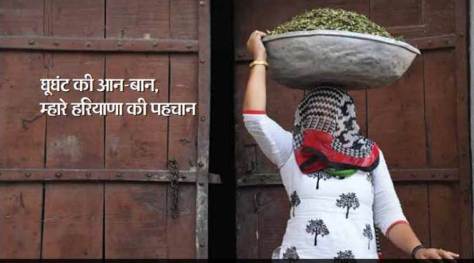
हरियाणा सरकार को घू़ंघट पर कुछ बोलने से पहले इन महिलाओं की बात सुन लेनी चाहिए थी.

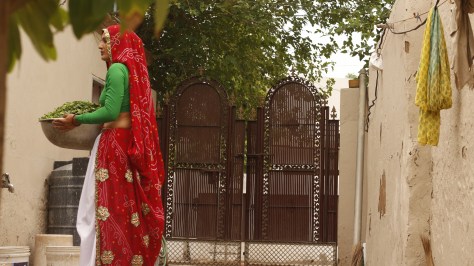
जब हरियाणा सरकार ने अपनी मासिक पत्रिका में एक घूँघट काढ़ी हुई औरत को राज्य की आन, बान और पहचान कहा तो मीडिया में इसका काफ़ी विरोध हुआ. फ़ेस्बुक पर लोगों का यह कहना था कि जब साक्षी मालिक, गीता फोगत, संतोष यादव और कल्पना चावला जैसी औरतें हरियाणा का नाम दुनिया भर में रौशन कर रही हैं, तब भी हरियाणा सरकार क्यूँ घूँघट वाली औरतों को ही अपनी शान समझती है. क्या उन औरतों की मेहनत, लगन और सफलता राज्य की शान नहीं है? क्या सिर्फ़ पुरुष खिलाड़ी ही राज्य को गर्व महसूस करवा सकते हैं?

स्वयं हरियाणा की औरतों के इस विषय पर विचार लेने मैं रेवाड़ी ज़िला गयी. वहाँ कुछ औरतों से घूँघट के और उनकी शान के विषय में बात की.


ममता यादव, सेंतिस साल की शादी शुदा औरत हैं.

Continue reading हरियाणा की औरतें घूंघट को शान नहीं मानती: कशिश बदर →

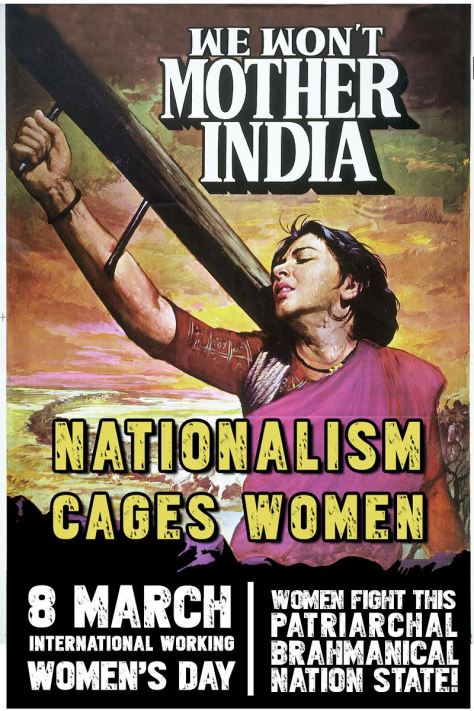
Bharat Mata and her unruly daughters

Bharat Mata’s daughter? But the Hindutvavadi motherland produces only sons – Hindu, savarna sons – to protect their mother’s ever fragile honour.

Let us begin these reflections with a moment from Nisha Pahuja’s disturbing film the World Before Her, which tracks two young women – Ruhi, a beauty pageant contestant and Prachi, a trainer with the Durga Vahini, women’s wing of the Vishwa Hindu Parishad.

While Ruhi and her fellow participants emerge as conventional and pallid, Prachi is fierce and questioning, independent minded. But towards the end of the film, you realize that for both women (and not for Ruhi alone), this period of training was only a small window that gave them a brief glimpse of broader horizons. It was only a brief moment of excitement and hope, and what seemed like freedom, before real life – the real lives of real women – closed in on them.

Throughout the film, Prachi has been telling the film-maker that she will never get married, she will live her life as a Hindutva activist. She emphatically rejects the ordinary life of a wife and mother. But towards the end, her father declares quite explicitly that this is out of the question. She can never be a full time activist. Of course she must get married. She has a womb, do men have wombs? Her responsibility then, is to bring up children. Initially in this sequence, Prachi argues against him vehemently, verges on the insolent, but gradually she falls silent. Her expression, still rebellious, but devastated, resigned, signals to us her recognition that the daughter of the Hindu nation is only in training to be a mother. That is the highest ambition she can have.

Continue reading Bharat Mata and her unruly daughters →

A Non-believing Muslim’s Experience of Islamophobia

Guest post by SARAH ATHER

My life has revolved around the concept of God. I have been a Muslim, a theist, an agnostic and an atheist in all types of phases of my life. I am sure, I am still just growing and my perceptions will mature as I grow. My Muslim identity slowly faded when I picked Dawkins and Ayaan Hirsi Ali in my late teens. To put it simply I was a perpetually angry Muslim. Angry at Islam, angry at Wahabism, angry at imposed patriarchy in Islam. I believed religion was so bad for the world, so unscientific. And so I wrote and I discussed with my fellow Hindu friends. They opened their hearts out. A lot of them told me how Muslims were always cruel and misogynistic. And they told me how I was different to see the truth. I felt a sense of moral superiority, I felt I was so unbiased and rational that I could see faults in my own religion. Continue reading A Non-believing Muslim’s Experience of Islamophobia →

Beyond Defeatism – Political Parties and the Fight Against Hindutva

The following, necessarily brief, reflections have been sparked off by two recent posts on Kafila – one by Biju Mathew published on 16 April, and the other by CP Geevan, published today. These reflections should not be seen as a response to the positions taken by Biju and/ or Geevan; they are, in fact, more in the way of addressing the central question raised by Biju Mathew’s piece – that of despondency and pessimism that has followed the UP elections and more importantly, the stealthy manner in which Adityanath was installed as the chief minister in the state. Stealthy, because after all, it was amply clear even to the decision makers in BJP, from the very beginning that if they had entered the election campaign with Adityanath as the chief ministerial face, it might have yielded very different results. It was too  big a risk to be undertaken.The real stroke of Modi-fascist genius lay precisely in keeping not just the electorate but also the organizational machinery in the dark and turning it into an advantage.

As it happens, despite the sharpness of Geevan’s comments, my sense, on reading the two pieces, is that there isn’t really as great a divergence on most issues as might appear at first sight.

Continue reading Beyond Defeatism – Political Parties and the Fight Against Hindutva →

Scientism, familism and women scientists: V Sujatha

Guest Post by V. SUJATHA

That the first woman to win the Fields Medal for mathematics in 2014 was an Iranian is important to note. Not only because Maryam Mirzakhani is the first woman to make it in the field of mathematics which is considered to be a male bastion[1], but also because her Persian background deserves some attention. There are certain enabling factors in Eastern cultures that facilitate women excel in the hard sciences, in spite of entrenched patriarchy. The point is not that everything is great in the East versus the West, but that cultural stereotypes about women are not homogenous; they vary from culture to culture and produce gender asymmetries with different effects. This is a sociologist’s
delight; let me explain.

During a literature survey in sociology of science, I was pleasantly surprised to see that the figures on women’s entry and achievements in science and technology education (S&T) in the global south were not only not bad, but were better than the countries in the Anglo-Saxon world that offered better civil liberties for women (Sujatha 2015). While there were fewer women in apex positions in the S&T sector and even lesser numbers to receive prestigious awards everywhere in the world, it is a fact that women from erstwhile socialist countries and from Asian and Latin American societies enrolled in larger numbers in science and technology courses and also made it higher in the career ladder in S&T than their counterparts in western Europe and North America.  The literature on women in science however, attributed everything to the ‘glass ceiling effect’ i.e., soft variables like gender bias in the organisational processes. I do not deny it, but it seems to me that this does not explain why the glass ceiling worked differently in some countries. Continue reading Scientism, familism and women scientists: V Sujatha →

Sterilization Death Camps in Bilaspur: An Open Letter to the Chhattisgarh Chief Minister by Concerned Citizens

[ This is a letter addressed to Raman Singh, the Chief Minister of Chhattisgarh by several concerned individuals and organizations regarding the impunity with which medical guidelines are put aside by professionals who enjoy the patronage and protection of the state government.]

We, the 138 undersigned individuals and organizations working across the country on health and women’s rights are shocked and dismayed that the case against surgeon Dr. R. K. Gupta has been dismissed by the Hon’ble High Court on grounds that “the alleged act committed by the petitioner was while acting in discharge of his official duty and admittedly no previous sanction was obtained before initiating prosecution case against him”.

The Anita Jha Judicial Enquiry Commission report has clearly pointed out that “It is evident from the facts that in the camps organized on 8.11.2014 and 10.11.2014 there was a breach in the important necessities hence the standard operating procedure were not followed. As a result of which the symptoms of infections were found in post operative female beneficiaries“. It further states that “On the background of deliberation of investigation point number 1 to 3, investigation committee has found following persons Guilty/responsible, functionary, during 08 and 10 November, 2014:- 4.1 For not following standard procedures and for medical negligence by immediate functionary Block Medical Officer, Takhatpur…………….and surgeon who conducted surgery in tubectomy camp at Sakri and Gaurella ( Surgeries were completed by the same surgeon in the both camps)”.

Continue reading Sterilization Death Camps in Bilaspur: An Open Letter to the Chhattisgarh Chief Minister by Concerned Citizens →

Our “hormonal outbursts” will be your nightmare! Pinjra Tod

Statement and image by Pinjra Tod

On the eve of International Working Women’s Day, Maneka Gandhi has given a deeply patriarchal, casteist and classist statement to a media channel saying that hostel curfews are necessary as “laxman rekha” for controlling women’s “hormonal outbursts”, that the question of “women’s safety in colleges cannot be solved with just two Bihari guards with dandas”, that there should be separate days for men and women to go to the library at night.

Its clear to us that she has said this today in response to the fact that women students across the country from Benaras to Mumbai, Delhi to Patiala, Lucknow to Hyderabad, Chennai to Ludhiana, Roorkie to Cuttack have come out strongly to assert their presence in the university space and claim over public resources.

Continue reading Our “hormonal outbursts” will be your nightmare! Pinjra Tod →

Longing for the Future – Two Days with Penkoottu and AMTU at Kozhikode, Kerala

Kozhikode, Hotel Alakapuri, 4-5 March, 2017.

Kozhikode has always upturned my feelings about the male gaze. It is of course a cheerful, bustling, place, full of fabulously good-looking people of all genders. The cheeriness has a certain effortlessly defiant quality – already evident when you look out of the window as the train from the south pulls into the railway station, and see bright, healthy, merrily-swaying wild flowers raise their heads undefeated by the ferocious summer sun– wild sunflowers in hundreds, magnificent vines of kulamariyan flowers ( literally, ‘over-the-top’ flowers, but known here also, interestingly enough, as Antigone vines), creepers happily, constantly, and untiringly winding over  little piles of rubbish and covering them with short-lived if emphatic trumpets of mauve, lavender, red, yellow, and white.  You pass this eternal artwork-in-progress of the flowers and vines and city trash and enter Kozhikode, but realise that it actually tells you a bit about the men there only when you meet them. Continue reading Longing for the Future – Two Days with Penkoottu and AMTU at Kozhikode, Kerala →

March 10th Chalo Nagpur! Women against Manuvaad and Hindutva: Manjula Pradeep

MANJULA PRADEEP on Dalit Camera

Gender Justice In Naga Society – Naga Feminist Reflections: Dolly Kikon

DOLLY KIKON in raiot.in

Dolly Kikon points out that Article 371 (A) is breached also in the ongoing coal mining operations and the oil exploration negotiations in Nagaland. Naga politicians, landowners, village councils, and business families have all interpreted the provision for their benefit to mine for minerals and not be held accountable for the environmental degradation. But it is only when women may enter the decision-making process (and potentially reverse such policies) that Article 371 suddenly becomes sacrosanct.

What is the meaning of gender? What is the meaning of Justice? Which comes first in Naga society and how do we understand it? Like many nationalist societies around the world, the issue of gender justice and rights have remained marginal for a long time. We were told that issues like women’s rights or gender justice could wait till the Naga people gained their freedom. In that context, what did it mean to bestow any kinds of rights on women in Naga society? When terms like gender ‘rights’ and ‘equality’ remains extremely resentful terms for a larger section of powerful Naga traditional bodies, they become meaningless words. I ask these questions in relation to the opposition against 33% reservation that escalated into a violent protest and brought the entire state of Nagaland to a standstill recently. If Naga customary law is seen as the foundation of justice, the exclusion of women from these powerful decision making-bodies negates the entire notion that these are pillars of justice. The Indian state and the male traditional bodies alike are responsible for excluding the Naga women from all spheres of representative political processes. Article 371 (A) is a prime example of the patriarchal nature of the Indian constitution that bestows the Naga male bodies to have full authority and power to interpret customary affairs covering social, religious, and criminal cases.

An Appeal to the Education Minister of Kerala and the Teachers of the University College, Thiruvananthapuram


We, the undersigned, wish to express our dismay and deep concern about the recent violent events at University College, Thiruvananthapuram, which seem to indicate that the rights of college students, especially women students, are seriously compromised in this venerable institution. As women researchers, academics and teachers of Malayali origin, we are deeply disappointed by the responses of the police, the concerned college authorities, and the teachers there. Continue reading An Appeal to the Education Minister of Kerala and the Teachers of the University College, Thiruvananthapuram →