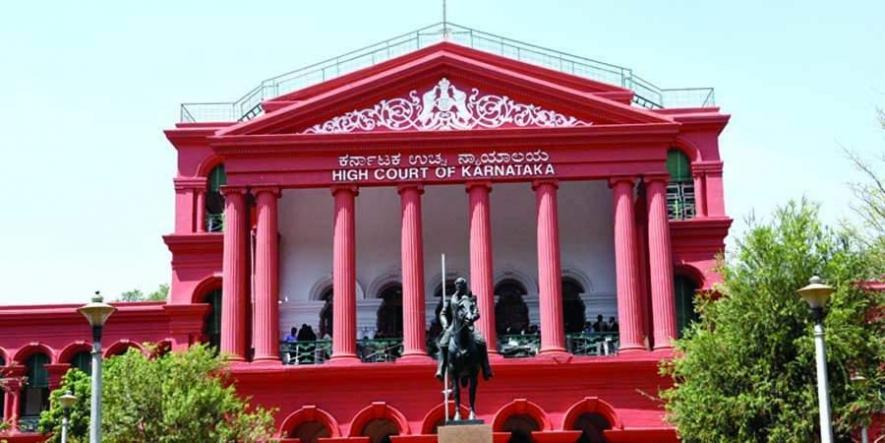
The judiciary in Karnataka is once again the focus of discussion in the national media.
The judiciary in Karnataka is once again in the news.
The latest case in a series of such cases is the Karnataka High Court’s recent judgment saying that shouting ‘Jai Shri Ram’ inside a mosque does not outrage religious feelings.
In an ambience where Right-Wing forces are hell bent upon creating more discord in the society, this judgement can easily be used by those who wish to further vitiate the atmosphere in the country. There are instances galore when such elements have tried to mount atop religious places of ‘other’ communities and deliberately create tension.
There is a feeling of sadness and surprise that despite the incident being caught live on CCTV, where the duo was seen entering a mosque late at night on their motorcycle, the courts did not look into the intention behind their act.
No doubt legal eagles in the country or civil liberty activists would be looking into the Karnataka HC judgement to formulate a suitable response and possibly challenge it at higher levels. For example, at the immediate level, it is being argued by analysts that the single-judge bench’s comparison of this issue with the highest court’s ruling in ‘Mahendra Singh Dhoni vs. Yerraguntla Shyamsundar’ case was notably different. ( Read the full article here : https://www.newsclick.in/who-entitled-hurt-religious-sentiments)
इन दिनों कर्नाटक उच्च न्यायालय के एक न्यायाधीश वी. श्रीशानंद सुर्खियों में हैं। उन्होंने बीते 28 अगस्त को एक अदालती सुनवाई के दौरान बेंगलुरु के एक मुस्लिम-बहुल इलाके को पाकिस्तान कह दिया और एक महिला वकील को लेकर आपत्तिजनक टिप्पणी की। इस बयान के कथित वीडियो पर सोशल मीडिया में जब काफी शोर मचा, तब मुल्क की आला अदालत घटना के को लेकर हरकत में आई। उसके कारण अगले ही दिन श्रीशानंद को खुली अदालत में खेद जताना पड़ा।
सुप्रीम कोर्ट के मुख्य न्यायाधीश चंद्रचूड़ की अध्यक्षता में पांच जजों की पीठ ने 20 सितंबर को श्रीशानंद के बयान पर स्वत: संज्ञान लेते हुए उसे ‘अनावश्यक’ करार दिया और कर्नाटक उच्च न्यायालय के रजिस्ट्रार जनरल को इस संबंध में रिपोर्ट बना कर भेजने का आदेश दिया था। सुप्रीम कोर्ट ने यह भी कहा था कि वह सुनवाई के दौरान जजों के प्रेक्षण को लेकर कोई दिशानिर्देश जारी कर सकती है। अगली सुनवाई की तारीख 25 सितंबर दी गई थी।
इस दूसरी ही तारीख पर मामले को निपटा दिया गया। 25 सितंबर को सुनवाई शुरू होते ही मुख्य न्यायाधीश ने बताया कि 23 सितंबर को ही कर्नाटक उच्च न्यायालय के रजिस्ट्रार जनरल द्वारा उक्त रिपोर्ट जमा कराई जा चुकी है। चूंकि जस्टिस श्रीशानंद ने खेद जता दिया है, तो सर्वोच्च अदालत इस मामले को आगे नहीं ले जाएगी और उन्हें नोटिस नहीं देगी।
दिलचस्प है कि सर्वोच्च न्यायालय ने केस को निपटाते हुए जजों के लिए कथित ‘दिशानिर्देशों’ का कोई जिक्र नहीं किया, जिसका हवाला 20 सितंबर को दिया गया था। इससे भी ज्यादा हैरान करने वाली बात है कि इस मामले में श्रीशानंद के बयान को मुख्य न्यायाधीश ने “बुनियादी रूप से भारत की अखंडता के खिलाफ” करार दिया। पहले उन्होंने इसे “अनावश्यक” कहा था।
Bhakti Era as the Plebeian Plateau in the Civilizational Landscape of India
Guest Post by Ravi Sinha on a possible framework for looking at the millennial trajectory of Indian civilization
We have by now devoted several sessions to mapping the millennial trajectory of the Bhakti Movement across the history and the cultural geography of the subcontinent. Starting with the Tamil lands in the 7th century we followed Bhakti performing the pradakshina of the cultural landmass of the subcontinent, crossing the Vindhyas in its northward journey sometime in the 13-14th century. Our endeavour has been to understand the role of Bhakti in shaping the cultural and the civilizational mind of India. This, in turn, has been motivated by task of making sense of the role this mind plays in contemporary politics and in the rise of fascistic Hindutva in recent decades.
As we stated in the proposal to a previous session, we seek to understand the impact of Bhakti at two different time-scales. On the shorter time-scale of contemporary politics one looks at the phenomenon of communalism. The mainstream of the anti-colonial national movement considered Bhakti Movement as the harbinger of religious tolerance and syncretism that would help evolve the Indian brand of secularism. The subsequent history, however, paints a mixed picture. A social fabric and a cultural mind weaved by the Bhakti ideologies do not offer the kind of resistance to communalism and sectarianism as was expected of them. In our previous sessions we mainly stayed with evaluating the impact of Bhakti at the political-historical time-scale characterized by the problem of communalism and the rise of Hindutva.
On a longer – millennial – time-scale, however, one can evaluate the Bhakti phenomenon in the civilizational context. One can ask something like the Needham Question – why did the Indian civilization, despite its glory and accomplishments in the ancient and the medieval periods, fail to realize its cultural and scientific potentials? Why was it defeated often and why was it eventually colonized? Why did the West forge ahead, why has India lagged behind? Did the cultural mind and social ethos prepared by the Bhakti Movement play a role in the civilizational decline of India? These are very large questions not amenable to easy answers. But one must prepare to wrestle with them as they are of crucial importance for imagining and fashioning a desirable future for India. In this session, we finally arrive at the task of outlining a framework for asking and answering these questions.
For this purpose, we propose to take help of two large concepts – one of Axiality and the other of Modernity. The idea of axial revolutions was proposed for the civilizational breakthroughs that happened in the middle centuries of the first millennium BC in several different and unconnected societies – Judea (land of the Old Testament in the era of prophets), Greece (of pre-Socratic philosophers as well as of Socrates, Plato and Aristotle), China (of Confucius, Mencius and others) and India (of Upanishads, six systems of philosophies, and of Buddha) being the prime examples. We will briefly go through the idea of Axiality and see how we can understand it in the sequence of human cultural and cognitive evolution progressively from the mimetic (pre-linguistic, primarily based on gestures, rituals and body-language) to the mythic (linguistic but largely oral and narrative-based) to the theoretic (rational, abstract, normative and self-reflective). We will try to locate the Indian antiquity in the sequence of cultural evolution.
We will then make a millennial jump and outline the idea of Modernity, which can, in this context, be seen as a new kind of axial transition. The first axial transition did take the civilizations concerned from the mythic era to the theoretic era, but it still depended on the idea of the transcendental to reorder life in the realm of the mundane. The transition to Modernity, for the first time in human history, brings human autonomy to the centre-stage of history and civilization. Elimination of human dependence on the super-natural and on the transcendental is brought explicitly on the agenda and an objective and scientific knowledge of the cosmos is deployed into the service of human emancipation and freedom.
While the Indian civilization was a key example of the axial breakthrough two and a half millennia ago, its transition to Modernity has been faltering and patchy. While this may be true for many civilizations, it is especially disconcerting in the case of India which has had such a glorious antiquity at least in the domains of the mythic and of the theoretic. Of course, entire history of the intervening two millennia culminating in the colonial subjugation at the hands of the modernist imperialists is implicated in the complex and faltering progress of Modernity on the subcontinent and it cannot be explained on the basis of one cause or developments in any single arena. But one can be reasonably certain that the developments in the cultural-religious-civilizational arena play an important role in the civilizational transitions and transformations. The role of the millennial march of Bhakti must be assessed and evaluated in this context.
We will also engage with the theoretical issues that arise in this context of the materialist explanation of historical progress. There is no doubt that the historicalbreakthroughs and the transitions from one stage of history to the next happen through the push of advancing forces of production and, in this respect, the cultural-civilizational transformations are correlated with the developments in the material conditions of life. But there is a significant difference between the respective dynamics of systems and civilizations. While history progresses through replacement of one system by the next, in case of civilizations the older ones never entirely go out of existence. The older ones merely become the subterranean layers on which new layers arise or get deposited. The mimetic-ritualistic and the mythic, for example, have not disappeared from human civilization even after the axial-theoretic and the modernist-scientific stages have become increasingly entrenched.
Once again, I am not sure whether all this can be covered in one session even at the level of very sketchy outline of the argument. But the idea is to start thinking about these issues which, abstract and theoretical as they may sound, are of critical importance in making sense of contemporary politics and history.
Select Bibliography
Johann P Arnason, “The Labyrinth of Modernity: Horizons, Pathways and Mutations”, Rowman and Littlefield, 2020
Robert N Bellah, “Religion in Human Evolution: From the Paleolithic to the Axial Age”, Harvard University Press, 2011
S N Eisenstadt, “The Great Revolutions and the Civilizations of Modernity”, Brill, 2006
Neville Morley, “Antiquity and Modernity”, Wiley-Blackwell, 2009
Sheldon Pollock, “The Language of the Gods in the World of Men: Sanskrit, Culture, and Power in Pre-modern India”, University of California Press, 2006
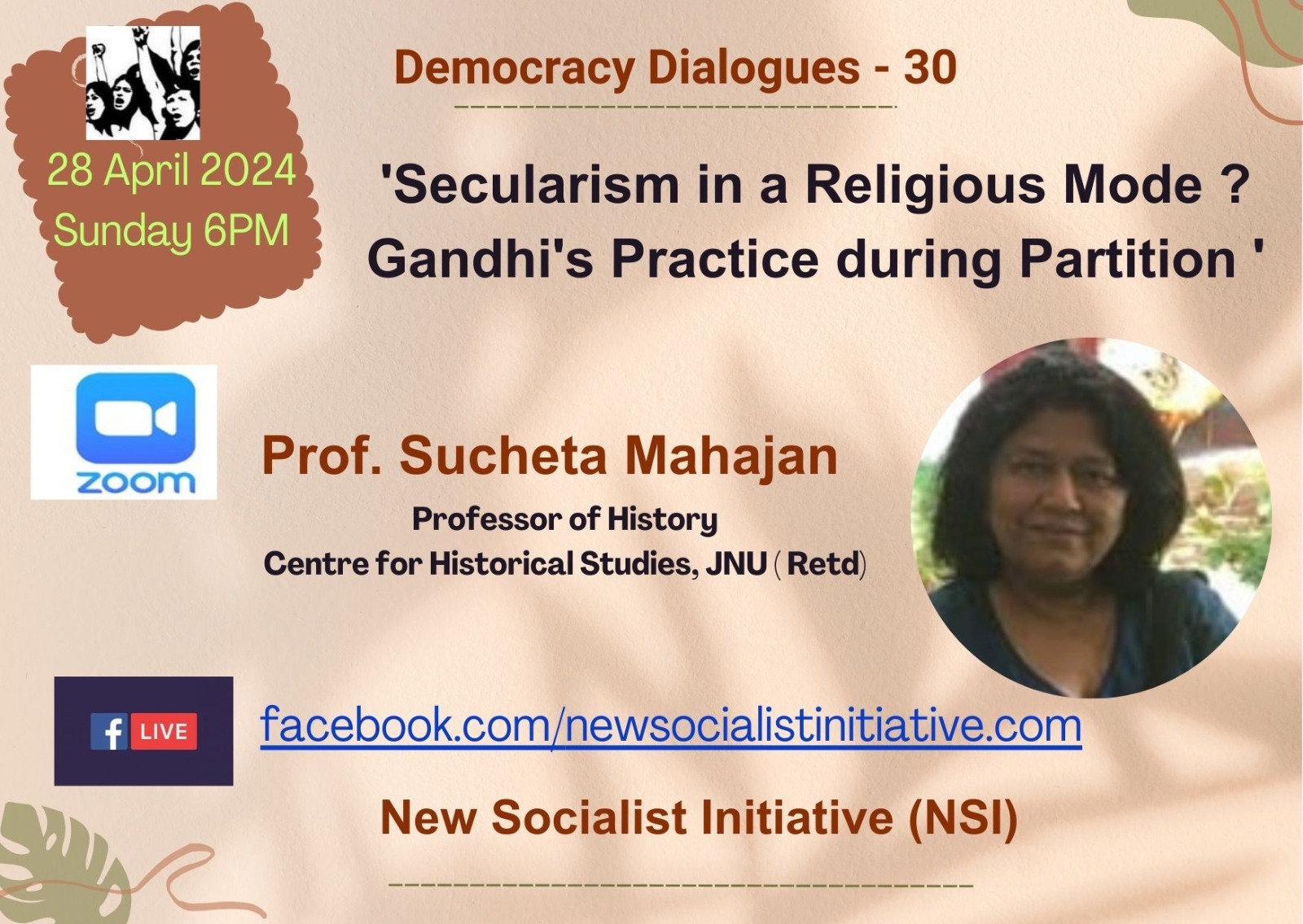
The talk looks at the practice of Gandhi in his struggle against communalism in the years leading up to Partition.
This is a hugely controversial subject with polarised positions taken by his followers and critics.
The perspective of the talk emerges from Gandhi’s oft quoted but not heeded statement, My Life is My Message. The talk is a reading of a life text in this sense: Gandhi’s mission in Noakhali to mend the social fabric torn by communal riots and spread of communal ideology.
Gandhi’s search for a way out may offer some insights to those sharing his concern for a secular, plural society and polity today.
About the Speaker :
Professor at the Centre for Historical Studies, Jawaharlal Nehru University, till the end of February 2023, Professor Mahajan has been visiting professor and Fellow at different International and National Institutions.
She was member of the prestigious international research projects such as SPECTRESS and CHCI-MELLON Crises of Democracy, Global Humanities Institute. She has authored and edited many books on India’s Independence Struggle, Partition, Challenge of Communalism, Composite Culture etc
Publications :
Towards Freedom: Documents on the Movement for Independence in India, 1947, Parts One and Two, (edited and with an Introduction) OUP, 2013 and 2015. Education for Social Change: MVF and Child Labour, National Book Trust, New Delhi, 2008. RSS, School Texts and the Murder of Mahatma Gandhi- The Hindu Communal Project (with Aditya and Mridula Mukherjee) Sage Publications, 2008. Composite Culture in a Multi-Cultural Society (Co-edited with Bipan Chandra), Pearson India & National Book Trust, New Delhi, 2006. Rites of Passage, A Civil Servant Remembers: H.M. Patel, (ed.), Rupa & Co., New Delhi,2005. Independence and Partition: The Erosion of Colonial Power in India, Sage Publications, New Delhi, 2000.
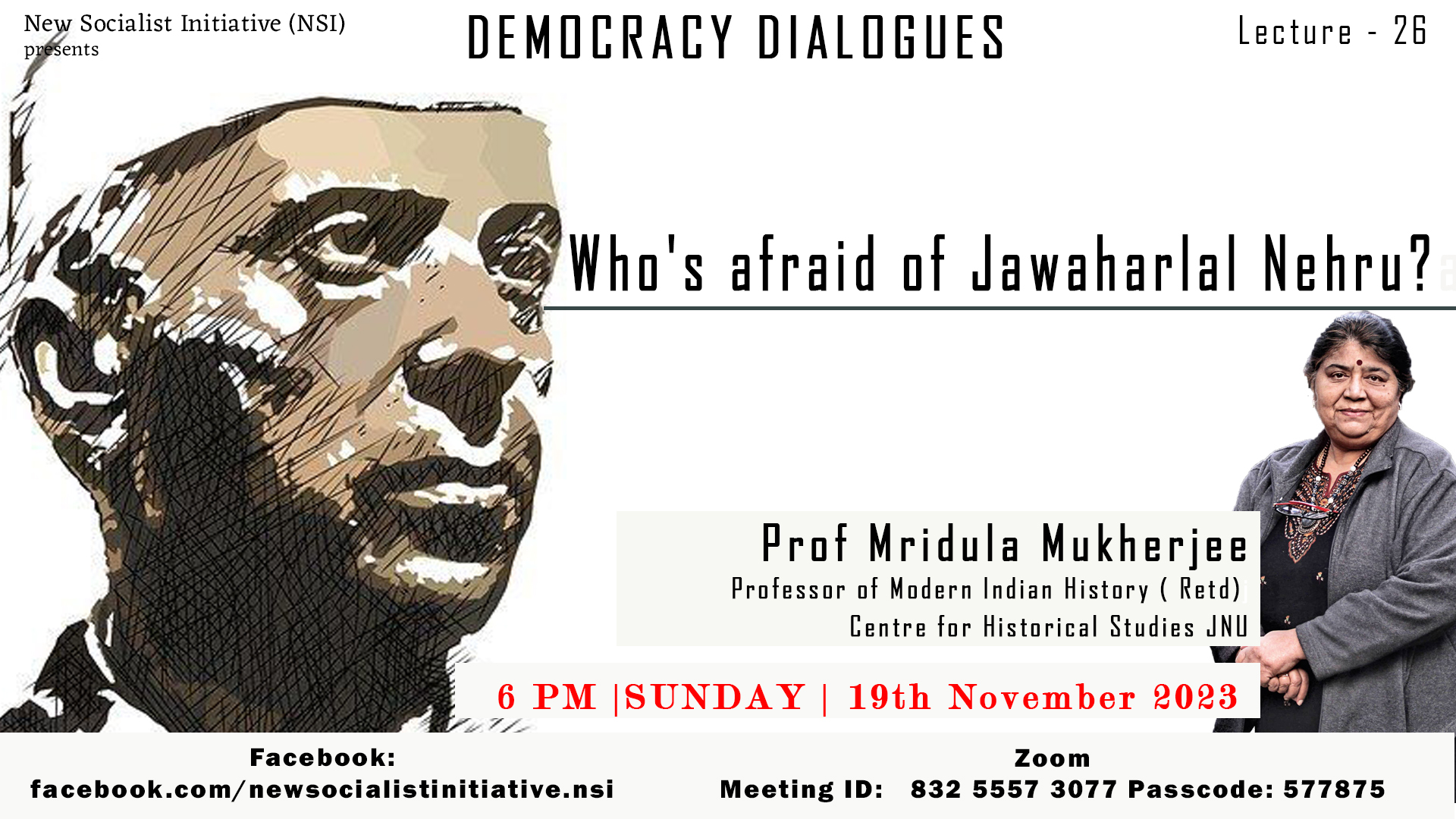
Professor Mridula Mukherjee, Professor of Modern Indian History ( Retd), Centre for Historical Studies, JNU, will be delivering the 26 th Democracy Dialogues Series lecture on Sunday, 19 th November 2023 at 6 PM (IST).
Theme : Who’s Afraid of Jawaharlal Nehru? Time: Nov 19, 2023 06:00 PM India
Summary : In his lifetime, Jawaharlal Nehru was recognized the world over as a statesman and an Indian leader second only to Gandhiji. A foremost leader of the freedom struggle, who gave it a decided socialist orientation, he remained unrivaled as Prime Minister after independence and built the solid foundations of a sovereign, secular, democratic, and egalitarian republic. He evolved the concept of non-alignment which enabled many ex-colonial countries to avoid becoming a part of the two power blocs engaged in the Cold War.
However, he is today the favourite whipping boy of the establishment. We are told he was responsible for the partition, for the mess in Kashmir, for the death of Subhash Bose, for delaying the integration of Hyderabad, and of Goa, for the defeat at the hands of China in 1962, for neglecting agriculture, and primary education, and much else. The reason for the defamation is of course that he stood for the exact opposite of what is valued today. His life and work present a continuous question mark to the regressive trends in fashion.
This will become evident as we focus in the talk especially on two areas of great relevance today in which we are facing a grave crisis: Democracy and Civil liberties, and Communalism/Secularism. We will also focus attention on Nehru’s evolving understanding of Mahatma Gandhi’s vision and method of non-violent struggle, of which he became the most ardent advocate after his death.
Speaker :
Author of many books, Prof Mukherjee has been a visiting Scholar at Duke University, USA, and at the Institute of Oriental Culture, University of Tokyo and was also Director of Nehru Memorial Museum and Library, ( NMML), New Delhi. She has published widely in the areas of agrarian history, peasant movements, social movements and the Indian national movement.
Here is a list of a few of her publications : Colonializing Agriculture, The Myth of Punjab Exceptionalism Sage (2005) ; Peasants in India’s Non Violent Revolution : Practice and Theory (Sage 2004).
This list also includes India’s Struggle for Independence (1999) and India After Independence 1947–2000 (2000), RSS, School Texts and the Murder of Mahatma Gandhi The Hindu Communal Project (2008) co-authored with Prof Bipan Chandra and others.
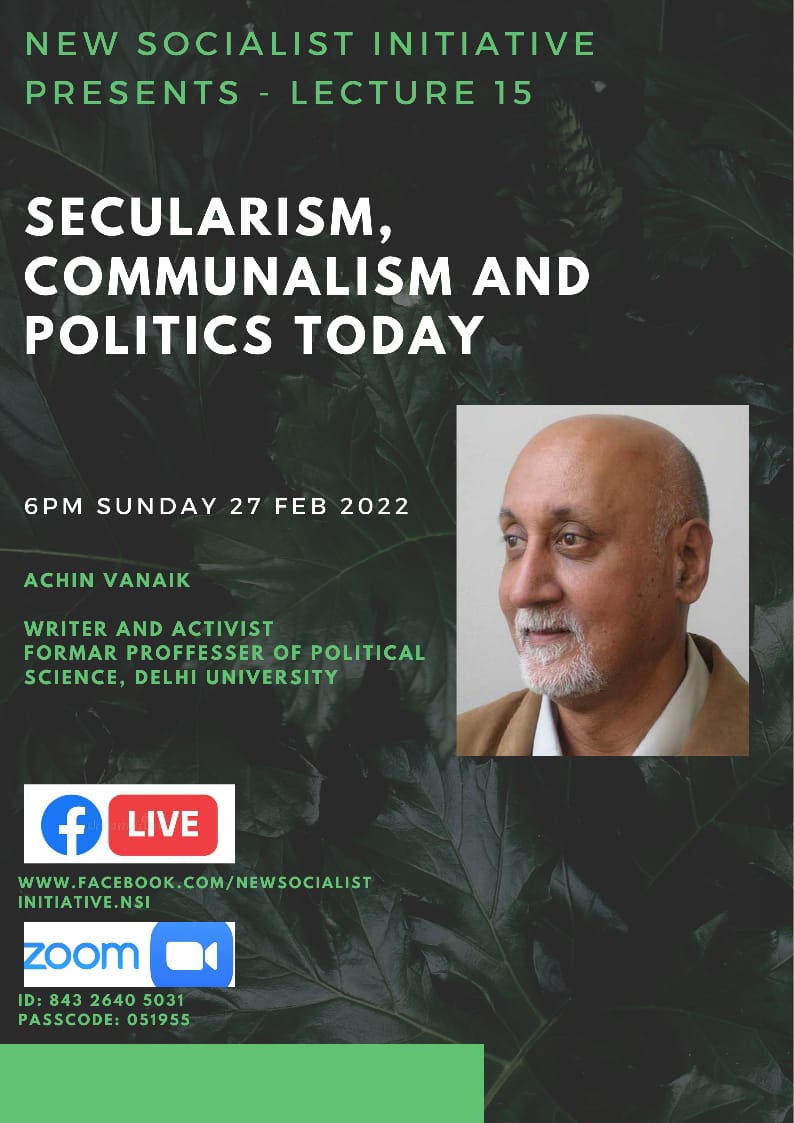
The 15 th lecture in the Democracy Dialogues Series will be delivered by Prof Achin Vanaik on Sunday, 27 th February at 6 PM (IST)
He will be speaking on
‘Secularism, Communalism and Indian Politics Today‘
Speaker
Writer and Social Activist, Former Professor of Political Science at Delhi University Prof Achin Vanaik is a fellow of the Transnational Institute
He is author of numerous books including The Furies of Indian Communalism ( 1997) , The Painful Transition : Bourgeois Democracy in India ( 1990) , Hindutva Rising – Secular Claims, Communal Realities (2017), “Nationalist Dangers, Secular Failings:A Compass for an Indian Left”
Summary :
The presentation will start with a series of definitions of crucial concepts such as secular, secularization, secularism as well as distinguishing between religious fundamentalism, religious nationalism and communalism. This is important to get a handle on how the widespread Indian understanding of secularism as an ancient form of ‘tolerance’ is dangerously mistaken. Of course the rise of the political right and far-right is a global phenomenon in the last few decades giving rise to different forms of what can be called the ‘politics of cultural exclusivism’. So the first principle of explanation for this rise has also to be transnational. After this the question of the rise of the Sangh/BJP in the wider context of developments in India over time will be taken up. It is obvious that the Sangh/BJP is seeking to expand its existing power and influence i.e., to establish and expand its hegemony and this must be understood as well as what are the projects central to its efforts to establish a Hindu Rashtra or Nation. It should be obvious that its particular conception of how to secure a strong Indian nation/nationalism must be exposed and combated. The presentation will end with recognising that this is a long term struggle and how we must go about it.
Perhaps celebrities know that talking about the plight of an animal—who died in a state not ruled by the ruling dispensation at the Centre—is a safe bet
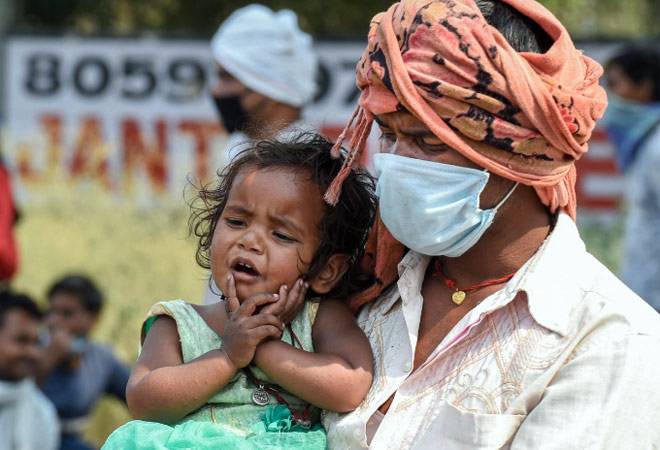
Migrants wait for a means of transport to travel to their native places during the fourth phase of the ongoing COVID-19 nationwide lockdown, at Kundali Industrial Area in Sonipat. (Photo: PTI)
The killing of a pregnant elephant has caused national outrage. The elephant had strayed into a village in Palakkad, Kerala, and is said to have been fed a fruit stuffed with firecrackers, which exploded in its mouth. It is impossible to comprehend the tremendous suffering of the elephant, who died a painful death. It is also learnt that people in the region have in the past used incendiary materials to protect their crop from animals, particularly wild boar.
One person was arrested after the matter came to light and few others have been identified. Kerala Chief Minister Pinarayi Vijayan has promised “justice will prevail”, but one does not know if that includes legal action against the hatemongers—including a former cabinet minister who gave the incident a communal colour by claiming, incorrectly, that the incident occurred in Muslim-majority Malappuram. A sitting cabinet minister also retweeted this fake news, which further vitiated the atmosphere.
In a complaint to the Malappuram Police, a lawyer has urged the police chief to file an FIR against the former minister and others for a “derogatory” campaign against the district.
Now, many Indian celebrities, for example Indian cricket team captain Virat Kohli, have said that they are “appalled” by the incident. The chairman of India’s biggest corporate giant, Ratan Tata, has compared the “criminal act” with “meditated murder”. The celebrities, the anchors of 24/7 news channels and many other prominent figures are undeniably upset by the plight of the elephant. But do they also feel the same kind of outrage and disquiet over the communal overtones being imparted to it?
BJP’s Delhi campaign was not divisive by sanyog or coincidence. That is its prayog or experiment. Which it will take to other elections.
Kitney aadmi thhe—how many were there?
A meme based on this famous monologue from the highly successful film, Sholay (Embers), from the early seventies, started trending when “David” Kejriwal, leader of the Aam Aadmi Party (AAP), defeated “Goliath” Bharatiya Janata Party (BJP) in Delhi’s recent Assembly elections.
No doubt this election’s result has put paid to the efforts of Home Minister Amit Shah to retain his image as “Chanakya” of Indian politics, at least for now. The result is despite BJP’s desperate attempts to win Delhi, as part of which pulled chief ministers, former chief ministers, cabinet ministers and more than 240 Members of Parliament to campaign in the city. Blame it on the high stakes battle that allegations surfaced that they had distributed cash and liquor ahead of the polls.
The result is for everyone to see.
The most toxic electoral campaign, perhaps ever, in which leaders of the ruling dispensation even provoked violence through their hate speeches, did not work. The BJP’s seat tally rose by merely five and a bloody nose.
This election verdict will have vital ramifications for democracy’s onward journey for decades together, and silencing and further invisibilisation of religious minorities would be its logical outcome.
“The crisis consists precisely in the fact that the old is dying and the new cannot be born; in this interregnum a great variety of morbid symptoms appear.” — – Gramsci
A journalist friends’ prophesy has finally come true.
The day India launched ‘surgical strikes’ across the border supposedly to avenge the Pulwama terror attack, this friend immediately sent a message on a WhatsApp group that Narendra Modi has ensured himself a second term. He stood his ground despite few heated exchanges on the group from Left leaning friends.
In the coming days, this not so expected debacle of the secular camp and the surge of the Hindutva Supremacist camp in newer areas and communities would be further analysed/debated/discussed from various angles. It will be debated why despite the caution expressed by the likes of Amartya Sen, who had concluded how India has taken “a quantum jump in wrong direction since 2014”; how despite being cautioned by leading scholars, intellectuals, scientists of our times that the very idea of India is at stake in the elections, the people in general did not pay any heed to their appeals and have resolved to continue the journey with a renewed frenzy in the same direction or have fully supposedly embraced this idea of ‘New India’ jettisoning the old one. Remember, not only has the Bharatiya Janata Party (BJP) been able to garner more seats than last time but its vote share has also increased more than 5%.
How Hindutva Supremacists are rushing to give themselves Clean Chit in terror related cases
(Picture : Courtesy – Indian Express)
Introduction
Whether investigations into Hindutva terror related cases are changing course? A series of apparently unconnected developments definitely strengthen the belief.
Close on the heels of renowned public prosecutor Rohini Salian’s revelations that she is being pressurised to go slow on the Malegaon bomb blast case (2008) and news of no of witnesses turning hostile in the Ajmer bomb blast case (2007) and sudden decision of the NIA to shift the Sunil Joshi murder case back to M.P, has come the news that the NIA has finally decided to close the Modasa bomb blast case citing ‘insufficient evidence’.
As is being rightly said it is the first concrete indication that with the assumption of power by the BJP investigations into Hindutva terror related cases a shift in emphasis is visible. Perhaps an indication of the changed times is the statement by a senior Minister that there is ‘nothing like Hindu terror in the country’ despite being aware of the fact that the NIA, the premier investigating agency formed after 2008 terror attack in Mumbai to focus on terror related cases, is handling at least a sixteen high profile cases supposedly involving Hindutva terrorists and many of their top bosses are still under scanner.
Bomb blast at Modasa, part of Sabarkantha district then and recently made into a separate district, which witnessed one death and injuries to many, is one of the least explored bomb blast in the country. The following write-up tries to discuss the blast, discusses the prevalent ambience then when bombs were discovered at different places without anyone claiming responsibility for it, the interim findings of the NIA when it took over the particular case during the UPA II regime and the announcement by the then home minister P Chidambaram that the central probe agency has achieved a “breakthrough” in the 2008 Modasa (Gujarat) blast case.
Praful Bidwai is no more. He died in Amsterdam on Tuesday evening due to a cardiac arrest, With his death we have lost the ‘best left-wing journalist’ in this part of South Asia whose articles appeared in many newspapers and magazines in the subcontinent and in the middle east and was frequently published by The Guardian, Le Monde Diplomatique as well. Praful will be missed by thousands and thousands of his readers (this pen pusher included) who were ‘groomed’ by him in a career spanning more than four decades. For them he was one such voice who remained uncompromising in his strident criticism of communal fundamentalisms of various kinds and the crony capitalism which is having a field day these days. He was a leading voice for nuclear disarmament and peace as well and had written extensively on it. It was a strange coincidence that we met last in the capital when a memorial meeting was organised by Communist Party of India to remember the legendary Comrade Govind Pansare who was assassinated few days back. He was to speak in the meeting. The meeting was yet to start and I could steal some time to talk to him. He told he is working on a book – which was near completion – on the left movement in the country and had interviewed many activists associated with the movement to listen to their understanding of challenges before the left. And in that connection he had long meeting with Com Pansare – once in Kolhapur and one possibly in Mumbai. He shared his fascination about the energies he still had at that age for ‘the cause’. Few days after the meeting, there was a call from him asking for a phone number of a dalit activist which incidentally I did not have. Yes, that was the last time I spoke to him.
Public Statement issued by People’s Alliance for Democracy and Secularism (PADS) on 6 June, 2015
A case has been filed by the Hyderabad police against well known Dalit writer and academic Kancha Ilaiah on a complaint by Vishwa Hindu Parishad members for hurting their religious sentiments. The complaint was filed on the basis of Ilaiah’s article Devudu Prajasamya Vada Kada? (Is God a democrat?) published in a Telugu daily on May 9. In the said article Ilaiah had argued that the possibility of democracy, or its lack inside different religious groups depend on the conception of their God(s). The VHP activists have accused Prof Ilaiah of comparing Hindu gods with God in Christianity and Islam, and of ridiculing their worship. Police have filed a case under sections 153A and 295A which prescribe imprisonment upto three years for spreading enmity among groups of people and outraging religious feelings. The police action against Ilaiah has come around the same time that the IIT Madras has derecognised a student group Ambedkar Periyar Study Circle that organises discussions around socio-cultural and political issues. The group was derecognised after an anonymous complaint against it was filed with the central HRD ministry. While many political parties and groups have justifiably come out in support of the APSC, it is surprising that Prof Ilaiah has received little solidarity. Both these incidences are a proof of the aggressive intent of Hindutva forces to attack any discourse which publicly questions their castiest, Brahminical and majoritarian understanding of Indian society. Successes of Mr Narendra Modi in the recent elections have emboldened them further . Continue reading Withdraw police case against Prof Kancha Ilaiah and revoke the ban on Ambedkar Periyar Study Circle : People’s Alliance for Democracy and Secularism→
Whether discussing issues of contemporary concern among students, raising debates around them on the campus – taking inspiration from the ideas of leading social revolutionaries of 20th century – should be construed as an act of creating ‘social disharmony’ or ‘spreading hatred’ ?
Any sane person would rather reject this weird proposal but it appears that the bureaucrats in the Ministry of Human Resources Development (MHRD) think otherwise. It was evident in the way they acted on an anonymous complaint regarding the activities of a group of students in IIT Madras which calls itself ‘Ambedkar-Periyar Study Circle’ (APSC) – which comprises mainly of dalit, bahujan and adivasi students. Perhaps they were worried that the particular students group, has been critical about PM Modi’s policies and has been raising issues of caste, communalism as well as corporate loot of resources and challenging the ‘development’ narrative which is popular these days among a section of people. The impetuosity with which they acted when they wrote to the management of the Institute can also be gauged from the fact that in this process they violated the recommendations of the CVC (Central Vigilance Commission) itself which has ‘barred’ organisations from taking action on such (anonymous) complaints.
As of now the issue of ‘derecognition’ of APSC by the IITM management, has snowballed into a major controversy, with issues of curtailment of freedom of expression, infringement of autonomy of educational institutions and dominance of caste in higher education all coming to the fore. Continue reading No To Ambedkar-Periyar in ‘Modern Day Agraharam’?→
Even as the communal cauldron in UP is kept on the boil, there is news that the RSS has launched a campaign to tie Rakhis to lakhs of Hindu men, asking them to pledge to protect their sisters from Muslim men and “love jehad.” The VHP has been running a helpline urging Hindus to approach them “if your daughter is being harassed by Muslim boys.” And a khap panchayat in Muzaffarnagar has imposed a ban on mobile phones and jeans for girls, claiming that these result in ‘eve-teasing’.
Woven into the above events is an old, familiar theme – that of patriarchal restrictions packaged as ‘protection’. In the wake of the anti-rape movement that followed December 16 2012, the streets of Delhi and many other parts of India had resounded with the voices of women declaring ‘Don’t take away our freedoms in the name of ‘protection’ – protect our right to fearless, fullest freedom instead’. Those women had raised their voice demanding freedom from sexual violence – and also freedom from rape culture that advices women to dress decently to avoid rape; and freedom from the khap panchayats, freedom even from the restrictions imposed by one’s own fathers and brothers.
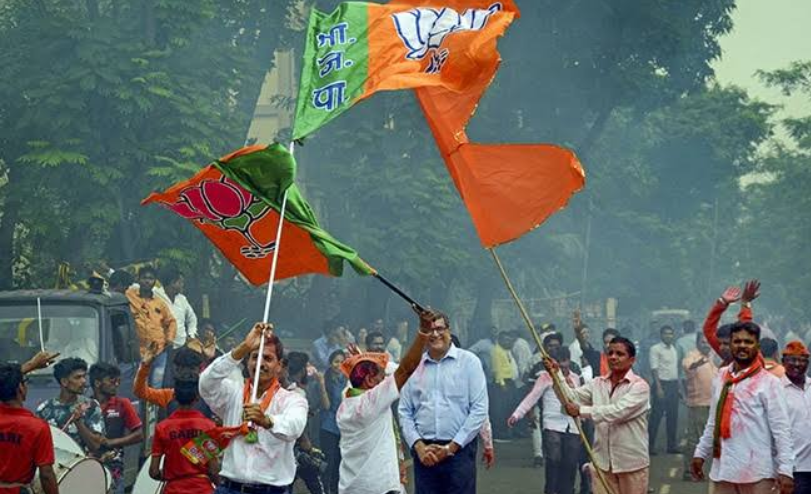
Although the BJP has attempted to build a campaign around the issue of “vikas” during this election, the hate filled fumes of “communalism” keep slipping through the cracks. Last week, we heard Ramdas Kadam say that Modi would find a permanent solution for recalcitrant Muslims and ship them off to Pakistan, which he would also incidentally destroy in six months. Giriraj Singh wanted to send everyone who opposed Modi to Pakistan. A video clip showed Praveen Togadia inviting his audience in Bhavnagar to evict Muslims and forcibly occupy their homes, openly encouraging criminal activity. FIRs have been filed against Kadam and Togadia after the Election Commission took note of their speeches while Singh has been barred from campaigning.
But then some would say other candidates and parties are no better and make similarly incendiary remarks: Shazia Ilmi, AAP’s candidate from Ghaziabad recently urged a group of Muslims to be more “communal” and less “secular” in deciding whom to vote for. She urged them to defend their own interests and to vote for one of “their own”, including Arvind Kejriwal in that category. Continue reading What is ‘communal’? The problem of false equivalence: Sheba Tejani→
‘It was all very well to say “Drink me”, but the wise little Alice was not going to do that in a hurry. “No, I’ll look first,” she said, “and see whether it’s marked ‘poison’ or not”; for she had read several nice little stories about children who had got burnt, and eaten up by wild beasts, and other unpleasant things, all because they would not remember the simple rules their friends had taught them: such as, that a red-hot poker will burn you if you hold it too long; and that, if you cut your finger very deeply with a knife, it usually bleeds; and she had never forgotten that, if you drink much from a bottle marked “poison,” it is almost certain to disagree with you, sooner or later.’
पड़ोसी कब पड़ोसी न रह कर अजनबी बन जाता है ? या वह हमेशा ही एक अजनबी रहता है जिस पर मौक़ा मिलते ही हमला करने में ज़रा हिचक नहीं होती ? हम अपना पड़ोस चुनते कैसे हैं? क्या पड़ोस मात्र एक भौगोलिक अवधारणा है? क्या जो भौगोलिक दृष्टि से हमारे करीब है, वही हमारा पड़ोसी होगा? पड़ोस चुनना क्या हमारे बस में नहीं? क्या पड़ोस कुछ–कुछ धर्म या भारतीय जाति की तरह है जिसके साथ जीवन भर जीने को हम बाध्य हैं? क्या पड़ोस का अर्थ हमेशा आत्मीयता ही है? क्या पड़ोस का मतलब एक दूसरे का ख़याल रखना,आड़े वक्त एक दूसरे के काम आना ही है? या यह रिश्ता अक्सर उदासीनता का होता है , जिसमें हमें दरअसल अपने पड़ोसी में दिलचस्पी नहीं होती? क्या इस उदासीनता के हिंसा में बदल जाने के लिए कोई भी कारण काफी हो सकता है? यह प्रश्न जितना शहर के सन्दर्भ में प्रासंगिक है उतना ही भारतीय गाँव के सन्दर्भ में भी पूछे जाने योग्य है. एक बार फिर, मुज़फ्फरनगर के गाँव में हुई हिंसा के बाद, पड़ोस के मायने पर बात करना ज़रूरी हो उठा है. Continue reading पड़ोसी और अजनबी→
क्या भगत सिंह और गांधी पर एक साथ बात की जा सकती है? परस्पर विरोधी विचारों और व्यक्तित्वों का ऐसा युग्म शायद ही मिले.एक को हिंसा का पक्षधर और दूसरे को हिंसा का घोर विरोधी माना जाता है.एक की छवि चिरयुवा की है,दूसरे की एक स्थिर वार्धक्य की. एक अधैर्य का प्रतीक माना जाता है,दूसरा धीरज की प्रतिमूर्ति.एक समाजवादी क्रान्ति का पैरोकार है तो दूसरा सह्य पूंजीवाद का वकील ठहराया गया है जिसके लिए उसने ट्रस्टीशिप की खूबसूरत आड़ ली.
असमानताएं यहीं खत्म नहीं होतीं.भगत सिंह ने औपचारिक शिक्षा न के बराबर ली, हालाँकि वे भयंकर अध्ययनशील थे,गांधी ने एक भले इंसान की तरह पूरी पढ़ाई की और फिर एक पेशेवर वकील की ज़िन्दगी बसर करने की कोशिश की. भगत सिंह अपनी पारिवारिक पृष्ठभूमि के कारण बचपन से ही ब्रिटिश साम्राज्य के घोर विरोधी थे.गांधी के जीवन के आरंभिक वर्ष ब्रिटिश साम्राज्य के वफादार के थे और वे उसकी बुनियादी अच्छाइयों में यकीन करते थे.भगत सिंह का ब्रिटिश हुकूमत के खिलाफ होना ही स्वाभाविक और तर्कसंगत था, गांधी कई संयोगों और दुर्घटनाओं के रास्ते इस नतीजे पर पहुंचे. Continue reading भगत सिंह और गांधी→
An obituary by ZAHIR JANMOHAMED: I first met Asghar Ali Engineer in January 2002 in Mumbai. I was a fellow with the America India Foundation and a few weeks later I would be posted to work with an NGO in Ahmedabad.
A few minutes before his presentation, I noticed him standing off to the side in silence, staring at the ground. I walked up and introduced myself. I was young, in my twenties, and I did not know what to say.
“As-salaam alaikum,” I said.
“Wa-alaikum salaam,” he replied.
I am not sure what response I expected but I thought that perhaps because he and I share the same faith that we might have a special bond, that my greeting would spark a conversation. After all, I always thought phrases like these serve less as greeting and more as an announcement, as in, I am part of the same religion as you.
But Asghar saab just held my hand and then put his hand on his heart. “Nice to meet you,” he said, and then stared at the ground again in silence. I thought it was odd, rude even.
As I continued to meet Asghar saab, I realized that he had very little patience for superficial connections. I witnessed this when I saw him greet crowds after his lectures. If you told him you were from the same caste or city he would not be as excited as if you told him that you also believe that we must fight patriarchy with the same vigor that we must fight communalism. Continue reading Asghar Ali Engineer (1939-2013)→
(An edited version of this Fact-Finding Report appeared in February issue of Samayantar)
गुजरात और मध्यप्रदेश की सीमा से लगे हुए महाराष्ट्र के धुले जिले में 6 जनवरी को होटल में पैसे के लेन-देन के आपसी विवाद को लेकर शुरू हुआ झगड़ा जल्द ही हिन्दू एवं मुस्लिम समुदाय के बीच पत्थर बाजी में तब्दील हो गया। इस हिंसा की परिणति पुलिस की गोली से मारे गए छः मुस्लिम नौजवानों (1) इमरान अली कमर अली (25) (2) असीम शेख नासिर (21) (3) सउद अहमद रईस पटेल (18) (4) हाफिज मो. आसीफ अब्दुल हलीम (22) (5) रिजवान हसन शाह (24) (6) युनुस अब्बास शाह (20) के रूप में हुई। लगभग 55 मुस्लिम नौजवानों, जिनमें से लगभग 40कोगोली लगी, पुलिस की हिंसा के शिकार हुए। 58ऐसे लोग हैं जिनके घर,वाहन, दुकान, ठेलागाड़ी को क्षतिग्रस्त किया गया। धुले में हुई इस साम्प्रदायिक हिंसा की खासियत यह है कि न तो पुलिस और न ही कोई साम्प्रदायिक संगठन झूठ बोल सकता है, क्योंकि धुले में लगभग 3 बजे के आसपास जब विवाद ने पत्थरबाजी का रूप ले लिया तब उसके बाद के ज्यादातर फुटेज वीडियोक्लिपिंग अथवा फोटोग्राफ के रूप में मौजूद हैं। धुले में हुई इस हिंसा की हकीकत जानने के लिए वर्धा के हिंदी विश्वविद्यालय के अध्यापक, छात्र, सामाजिक कार्यकर्ता एवं पुणे के स्वतंत्र पत्रकार ने 19-20 जनवरी को धुले जिले का दौरा किया। Continue reading राज्य हिंसा का एक और नमूना – धुले→
Our Moon Has Blood Clots by Rahul Pandita; Pages: 258; Vintage Books, Random House, India; Price: Rs 499
Rahul Pandita’s book Our Moon Has Blood Clots must be looked at both as a personal account of suffering as well as a political project that implicitly and explicitly makes use of that suffering towards a particular end. The undertaking is a legitimate one on both counts. What the book manages to achieve on each, warrants a fair and dispassionate assessment.
His narration of events experienced by the Pandits is a welcome exposition of subjectivity around a range of traumatic events, humiliations, killings and betrayals undergone prior to and after the outbreak of mass political rebellion in Kashmir in 1989. The events thus narrated, especially the account of the personal experiences of trauma do make one strongly identify with the suffering of the families involved and agree with the wide swathes of subjective anger and hurt shared by the community. The chilling accounts of individual and mass killings and the circumstances that made them possible, call for collective self-reflection, remorse and atonement. This account also calls for serious reflection on the fragility of human associations and trust in exceptional circumstances that we normally take for granted.
The book as well as the promotional interviews around the book push the claim that not only certain militants but also many ordinary people, including those personally known to the victims, were responsible for the exodus through their acts of omission and commission. This claim is substantiated through a range of indictments based on personal encounters with individuals, shared nuggets of information, as well as the interpretation of the larger political symbolism and slogans which were seen as a deliberate attempt to intimidate Pandits, and Pandits alone. While it is difficult to deny that a number of individuals took advantage of those anarchic times to gratify personal hate and lust for loot, it makes for an overstatement to underplay the equally frequent narrative of mutual support between individuals that one gets to hear during conversations between the members of the two communities privately. Such underplay does violence to those aspects of shared memory. Continue reading Our memories come in the way of our histories: Gowhar Fazili→



 An obituary by ZAHIR JANMOHAMED: I first met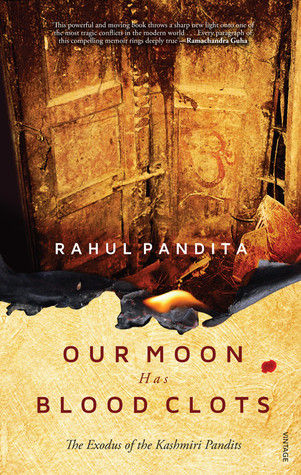
 KAFILA - COLLECTIVE EXPLORATIONS SINCE 2006