Category Archives: Culture

Why I Celebrate the Wedding of Nusrat Jahan: Zakia Soman

Guest post by ZAKIA SOMAN 

The wedding of Nusrat Jahan the TMC MP to Nikhil Jain is refreshing news. It is heartening to see two young Indians from different faith backgrounds uniting and celebrating their marriage in the times of religious hate and division.

The mixing of politics and religion has led to a climate where marrying a person from another faith has become extremely difficult specially for young people. The case of Hadiya may have been highlighted in the media but it is certainly not the only instance where a couple had to undergo tremendous hardships for falling in love. The self-appointed guardians of religion who seem omnipresent in family, community, police, judiciary, government, media would walk great lengths to prevent inter-faith marriages from taking place. Continue reading Why I Celebrate the Wedding of Nusrat Jahan: Zakia Soman

Gujarat Today Could be What ‘Hindu Rashtra’ Will Look Like for Dalits

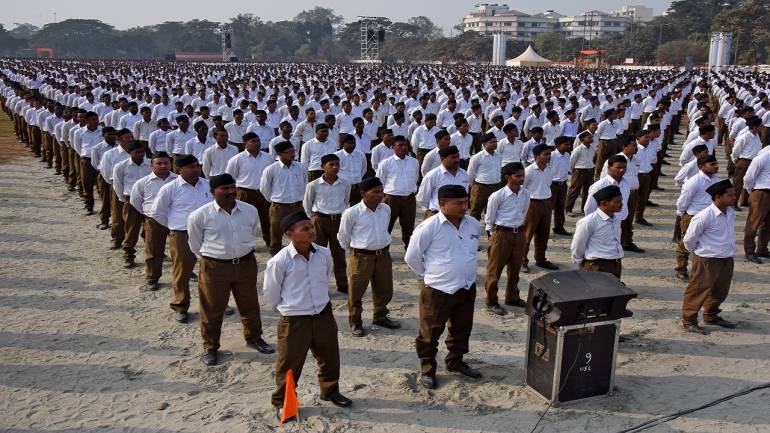
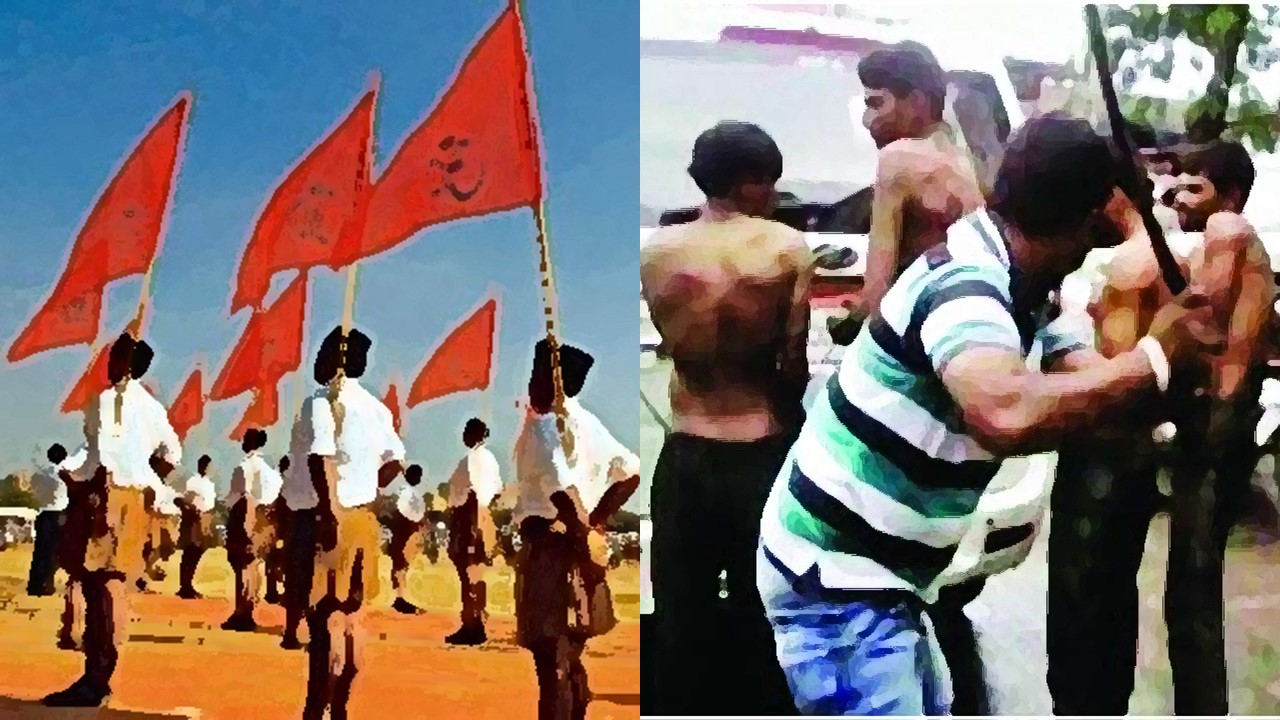
The recent spate of attacks on dalits in the state is an indicator of the fact that the unfolding project of RSS’s Hindu Rashtra has entered a new phase where the community is being construed as the ‘new other’.

Hindu Rashtra

When I was born, I was not a child

I was a dream, a dream of revolt

that my mother, oppressed for thousands of years,

dreamt.

Still it is untouched in my eyes

Covered with wrinkles of thousand years, her face

her eyes, two lakes overflowing with tears

have watered my body….

– Sahil Parmar (Noted Gujarati Poet)


‘You are Welcome to Enter … Village of Hindu Rashtra’!

It was around two decades ago that headlines in a few national newspapers reported the ‘arrival’ of Hindu Rashtra in parts of Gujarat. A few inquisitive journalists had even displayed photographs detailing the nascent phenomenon then.

The shock generated by the news died down in a short while.

Hardly anybody then could have a premonition that it won’t take much time for the idea of Hindu Rashtra to gain wider acceptability across India with a commonsense gaining ground rather getting consolidated where religious minorities were increasingly understood as ‘the other’.

Could it be said that the recent spate of attacks on dalits — leading to at least three deaths in the past one month in the same state, coupled with growing instances of life of insecurity of many concerning their lives or their continued deprivation by the dominant castes, is an indicator of the fact that the unfolding project of Hindu Rashtra has entered a new phase where dalits are being construed as the ‘new other’, one who could wreck the project of ‘Hindu Unity’ from within.

Perhaps it is too early to draw any such conclusion, but portents are there for everyone to see.

( Read the full article here : https://www.newsclick.in/Hindu-Rashtra-Gujarat-BJP-RSS-Dalits)

Statement of Academics on Rabindra Bharati University Incident of Harassment

Dear Friends,

As some of you might be aware, our friend and colleague, Dr. Saraswati Kerketta (Assistant Professor in the Department of Geography, Rabindra Bharati University), has recently been a victim of caste-based attack in the university. We write this statement to unequivocally condemn the attack.

We, the concerned faculty members/research scholars across institutions in India and abroad, are deeply disturbed by this incident of caste-based attack on Dr. Kerketta. Dr. Kerketta is a young faculty member from a Scheduled Tribe background, and the sole faculty member appointed in a substantive position in her department, thereby taking on the tremendous task of running the department on her young shoulders. This brazen instance of caste-based harassment meted out to her by a group of students who claim to be affiliated to a political party has hurt and disturbed us immensely as citizens of India. The nature of attack meted out to her – for instance she has been followed by the students up till home after the incident – also showcases the gendered nature of her vulnerability. The incident has been followed by mass resignation on the part of other faculty members from various positions in the university, thereby showing indirect proof of the same.

Continue reading Statement of Academics on Rabindra Bharati University Incident of Harassment

The politics of Hindutva and its erotic charge: Jaya Sharma

Guest post by JAYA SHARMA

In the post election bewilderment that continues to grip us, might it be that we are asking the wrong questions?

The questions are by now familiar. How can it be that a Pragya Thakur wins and an Atishi loses? How can it be that demonetization doesn’t translate into loss of votes? How can it be that the party under whom lynching of Dalits and Muslims becomes a norm gets re-elected? How can it be that hatred for the other wins over humanity?

In response, journalists, political scientists and writers have pointed out that our assumptions related to the significance of macro economic indicators, caste-based voting patterns, among other things, were faulty. But the questions still remain,  including the big one: why did facts and logic lose so dramatically?

Might it be that the bewilderment continues because there is a glaring blind spot in the way in which we understand politics? Might it be that facts and logic were never the only driving force? I will argue here that in order to understand the recent election results and the power of Hindu Nationalism more broadly, we need the lens of the psyche. The play of desire and the erotic is key to understanding politics and dipping into our own sex and love lives can help us see this.  ‘The personal is political’ mantra can come to the rescue in the bewilderment that we feel today.  In making this argument I will draw upon research that I have undertaken for a book that I am in the process of writing called Fantasy Frames: Sex, Love and Indian Politics, to be published later this year. Continue reading The politics of Hindutva and its erotic charge: Jaya Sharma

Caste and other demons

Can Dalits rightfully claim that they have a ‘homeland’?

Dr Babasaheb Ambedkar

( Review of The Doctor and the Saint: The Ambedkar-Gandhi Debate — Caste, Race, and Annihilation of Caste; By Arundhati Roy, Penguin, Rs 299)

“Gandhiji, I have no homeland.” The first meeting between Gandhi and B.R. Ambedkar, who later became chairman of the drafting committee of independent India’s Constitution and its first law minister, is memorialized in this sentence. It expresses the centuries-old plight of those most oppressed in the varna hierarchy under the “institutionalised social injustice at the heart of the country”.

Has there been a qualitative change in the situation of the ‘ex-untouchables’ since this meeting some 90 years back? Can Dalits rightfully claim that they have a ‘homeland’? Figures collated by National Crime Records Bureau show that “a crime is committed against a Dalit by a non-Dalit every sixteen minutes”, including four rapes a day and murders of 13 Dalits every week. And these figures do not include “the stripping and parading naked, the forced shit eating, the seizing of land and the social boycotts…” This is the backdrop of the book, The Doctor and The Saint: The Ambedkar-Gandhi Debate — Caste, Race, and Annihilation of Caste by Arundhati Roy. It earlier formed part of an introduction to an annotated 2014 edition of Annihilation of Caste — the historic pamphlet Ambedkar wrote when invited by the ‘Jat Paat Todak Mandal’ in Lahore. The invitation was withdrawn after the hosts read the lecture draft. Continue reading Caste and other demons

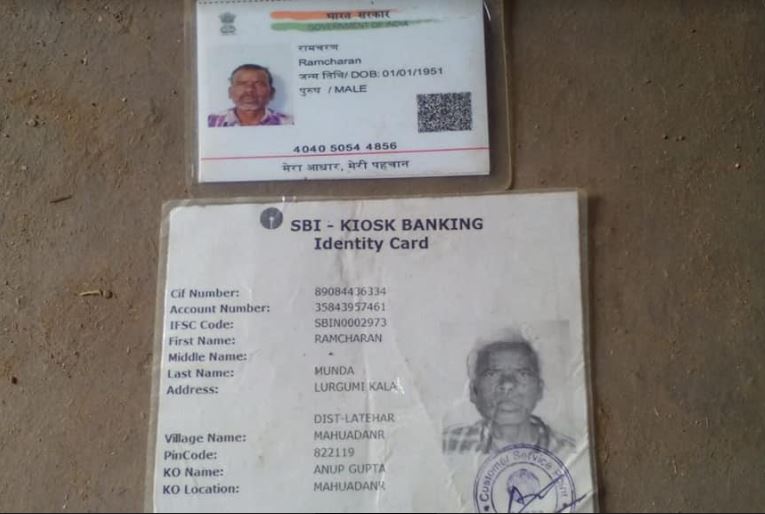
रामचरण मुंडा की मौत पर दो मिनट का मौन!

सोचने का सवाल है कि क्या इन मौतों को महज तकनीकी गड़बड़ियों तक न्यूनीकृत किया जा सकता है? क्या इसके कोई संरचनागत कारण नहीं हैं? ‘आखिर अधिक अनाज पैदा करने के बावजूद हम भूख की समस्या को मिटा क्यों नहीं पा रहे हैं।
Munda

‘‘रामचरण मुंडाउम्र 65 साल को विगत दो माह से सार्वजनिक वितरण प्रणाली के तहत राशन नहीं दिया गया था। हमारे अधिकारियों ने इसकी सत्यता की पड़ताल की है।’’

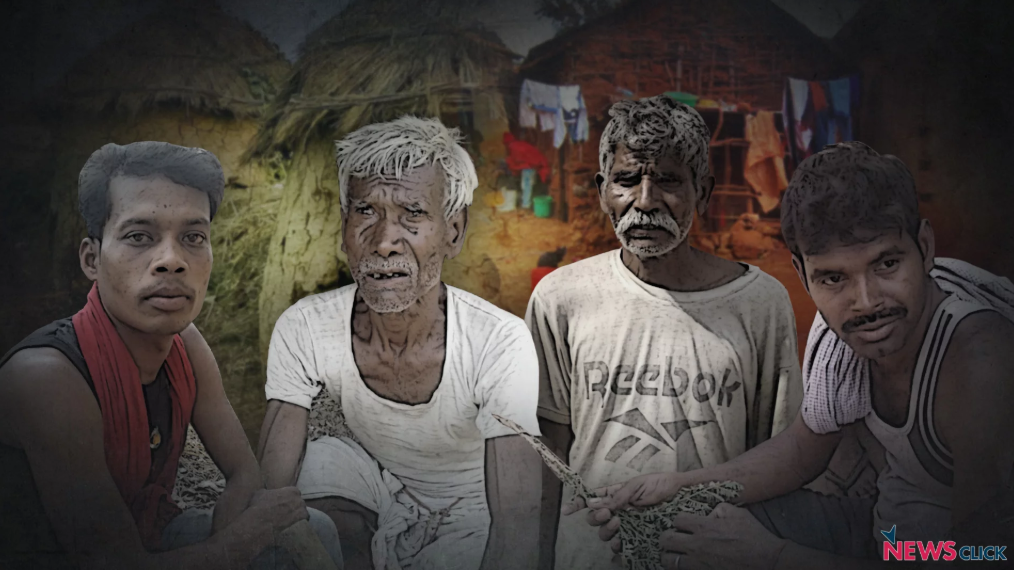
लातेहारझारखण्ड के डिप्टी कमीशनर जनाब राजीव कुमार द्वारा लातेहार के दुरूप गांव के रहने वाले उपरोक्त आदिवासी की मौत पर की ऐसी स्वीकारोक्ति बहुत कम देखने में आती है।

अपनी पत्नी चमरी देवी और बेटी सुनिला कुमारी के साथ रामचरण गांव में ही रहते थे उनके बेटे की मौत दो साल पहले टीबी के चलते हुई थी। राशन डीलर की बात मानें तो चूंकि इलाके में इंटरनेट की सेवा में दिक्कते हैंऔर राशन वितरण के लिए ऑनलाइन बायोमेट्रिक सिस्टम कायम किया गया हैइसलिए रामचरण को अनाज नहीं दिया जा सका था।

इस मामले की असलियत कभी सामने आएगी इस पर संदेह है।

वैसे भूख से होने वाली मौतें अब देश में अजूबा चीज़ नहीं रही।

दो साल पहले झारखण्ड के ही सिमडेगा जिले के कारीमाटी गांव की 11 वर्षीय हुई संतोषी की मौत के बाद ऐसी मौतों पर लोगों एवं समाज की अधिक निगाह गयी थी। पता चला था कि पूरा परिवार कई दिनों से भूखा था और राशन मिलने के भी कोई आसार नहीं थे क्योंकि राशन कार्ड के साथ आधार लिंक न होने के चलते उनका नाम लिस्ट से हटा दिया गया था। अपनी मां के गोद में ‘भात भात कहते हुए दम तोड़ी संतोषी की दास्तां ने लोगों को विचलित किया था।

( Read the full article here : https://hindi.newsclick.in/raamacarana-maundaa-kai-maauta-para-dao-mainata-kaa-maauna)

God in the Classroom!

Unfolding Debate about Secularising Education

( To be published in ‘Indian Journal of Secularism)

“There is in every village a torch – the teacher; and an extinguisher – the priest.”
-Victor Hugo

Introduction
“Keep the words God, Jesus and the devil out of the classroom.”

A school teacher’s message on the first day of the school for first-grade students had caused tremendous consternation among a section of the parents.

She had a simple rationale to present her proposal. With their being a public school with children coming from different religions and beliefs joining it, she did not “[w]ant to upset a child/parent because of these words being used,” In her letter she had also advised them to talk to the children when they go to the church/temple/synagogue – whatever might be the case – or discuss the issue at home at an appropriate time and place of talking about it.” (https://www.indystar.com/story/news/education/2017/08/30/teacher-tells-first-graders-dont-talk-god-classroom/612118001/)

Well, instead of the discussion getting fixed on the slow imposition of the concept of God or closing of child’s minds it turned into a debate on students’ free speech rights. It did not take much time for the management of the school to rescind this proposal.

There is nothing new about this dilemma faced by a teacher who has welfare of students at the center of her/his concerns. Continue reading God in the Classroom!

A Case of Harassment of Dalit Student in Jadavpur University: Srijan Dutta

Guest post by SRIJAN DUTTA

The value of a man was reduced to his immediate identity and nearest possibility.

The line quoted above is from Dalit PhD scholar Rohith Vemula’s ‘last’ letter, discovered after he was found hanging in his hostel room in January 2016. The letter had exposed how caste-based discrimination is used as a medium of oppression against Dalits and other minorities. Casteism serves both as an ideology and as a means for exploitation by the upper castes and upper classes of the Indian society.

Recently, a complaint has been made by a second year Masters student of the Department of Library and Information Science in one of the hotbeds of Bengal student politics, Jadavpur University. Jadavpur Uiversity is also a premier institution of higher learning, with a well deserved reputation.  Raja Manna, a student belonging to the ‘Scheduled Caste’ category, has revealed that he has been facing a lot of harassment and discrimination at the hands of his dissertation guide, Prof. Udayan Bhattacharya, an upper caste Brahmin.

Continue reading A Case of Harassment of Dalit Student in Jadavpur University: Srijan Dutta

Alvida, Girish Karnad, we promise to keep up the fight for India

Girish Karnad 1938-2019

Picking Humanity Over Religion: A Small but Critical Step

The idea of education being imparted without any compulsion to declare one’s religion is definitely a welcome thing

Bethune_College_Kolkata

Principal’s office of Bethune College, Kolkata, which included Humanity as an option under the religion category. Image Courtesy: college dunia


A college admission form introducing new options under ‘religion’? Talking about humanity, secular, non-religious, atheism!

Well, in an ambience loaded with religiosity and its increasing conflation with the State, it is rather difficult to believe that some colleges may take such a creative step to convey how they see what is happening around them? No doubt this is a small step but, as noted by analysts, this is an attempt to break/challenge the ‘construction of identity, thought and social and political space, indirectly conveying the vision of a secular and diverse India.’

The significance of this little step can be better understood if one looks into the fact that the elections held to the 17th Lok Sabha — which has returned the Bharatiya Janata Party (BJP) to power — have demonstrated that BJP is ‘the most preferred party of young India’. It drew support cutting across caste as well as class lines. This is the same BJP which, along with its ‘Parivar’ siblings, has consciously tried to conflate religion with exercise of power and has been successful in collapsing the majority faith into rabid nationalism that targets differences and dissent and other specific groups, as the ‘other’ according to its worldview.

( Read the full article here : https://www.newsclick.in/Religion-Humanity-College-Admissions-BJP-School-Education)

Arming Children, Securing a Future?

By distributing knives to meritorious children, organisations like the Hindu Mahasabha, are trying to give religious legitimacy to what is essentially a political use of faith.

Hindu Mahasabha distributing knives to children

Image courtesy: Twitter

What does an organisation do when it wants to congratulate meritorious students who have excelled in exams?

Reward them with some gifts, say, books, and (if finances allow) give them scholarships or laptops to facilitate their further studies. Definitely not gift them knives.

Well, Pooja Shakuni Pandey, the national secretary of Hindu Mahasabha, who had been making news for controversial reasons for more than a year, exactly did this on Savarkar Jayanti. This mathematics professor made it clear that she was not much interested in how they study further or what they wanted to become. With this knife distribution programme, along with a copy of Bhagwad Gita, she wanted to ‘create Hindu soldiers out of these children’ and it was basically a “[s]tep to motivate Hindus and empower them, especially the younger generation, with knives to protect themselves.”

( Read the complete text here : https://www.newsclick.in/Hindu-Mahasabha-Distributing-Knives-Meritorious-Children-Political-Use-of-Religion)

Modi 2.0: Majoritarianism Normalised?

This election verdict will have vital ramifications for democracy’s onward journey for decades together, and silencing and further invisibilisation of religious minorities would be its logical outcome.

minorities in india

“The crisis consists precisely in the fact that the old is dying and the new cannot be born; in this interregnum a great variety of morbid symptoms appear.”  — – Gramsci

A journalist friends’ prophesy has finally come true.

The day India launched ‘surgical strikes’ across the border supposedly to avenge the Pulwama terror attack, this friend immediately sent a message on a WhatsApp group that Narendra Modi has ensured himself a second term. He stood his ground despite few heated exchanges on the group from Left leaning friends.

In the coming days, this not so expected debacle of the secular camp and the surge of the Hindutva Supremacist camp in newer areas and communities would be further analysed/debated/discussed from various angles. It will be debated why despite the caution expressed by the likes of Amartya Sen, who had concluded how India has taken “a quantum jump in wrong direction since 2014”; how despite being cautioned by leading scholars, intellectuals, scientists of our times that the  very idea of India is at stake in the elections, the people in general did not pay any heed to their appeals and have resolved to continue the journey with a renewed frenzy in the same direction or have fully supposedly embraced this idea of ‘New India’ jettisoning the old one. Remember, not only has the Bharatiya Janata Party (BJP) been able to garner more seats than last time but its vote share has also increased more than 5%.

(Read the full text here : https://www.newsclick.in/Minorities-India-Silenced-Modi-Reelection-BJP-Majoritarianism-RSS)

Cyclone Fani: Prejudice in Times of Natural Disasters

Caste discrimination, even while faced with a calamity, is a clear outcome of the brahminical ideology of purity and pollution that has permeated deep into Indian society.

Cyclone Fani: Prejudice in Times of Natural Disasters

Image Courtesy: Al Jazeera

“[U]ntouchability, is a kind of disease of the Hindus…it is a mental twist…. I do not know how my friend is going to untwist the twist which the Hindus have got for thousands of years unless they are all sent to some kind of hospital.’ Dr B.R.Ambedkar , 1954

Cyclone Fani is over.

Despite being one of the strongest cyclones to hit India in last two decades the manner in which the state most affected by it — Odisha — was successful in keeping loss of life and numbers of affected people to a minimum has earned it kudos even from its critics.

People are slowly trying to pick up threads to restart their lives

It is rather difficult to say whether it will be easy for dalit villagers of Baripada village — part of Patali panchayat — to do so, who had to endure callous and inhuman behaviour from their own village brethren, during the stormy winds. Around 85 of them from 25 families were denied entry to three shelters located within a radius of approximately four km by ‘upper caste’ people. Nandini (name changed) belonging to the Dom caste narrated how they had to ultimately take shelter beside an uprooted banyan tree, while it was raining heavily.

( Read the full text here : https://www.newsclick.in/cyclone-fani-prejudice-times-natural-disasters)

Dear Hitler

Why does Hitler’s legacy in India greatly differs from that in the West. More removed from the traumas associated with World War II and the Holocaust  

…………………………………………………………………….

..An innocent question sometimes comes up with very troubling answer(s).

J’admire ( I admire)… a simple exercise given to students to know from them whom they appreciate as a great historical figure or a hero, became a great learning experience for a teacher who taught French at a private school.

Writer and Journalist Dileep D’souza, who has authored many books, and writes on social-political causes shared the experience of his wife who posed the said question before them during a discussion. What she was expecting that they would mention Gandhi or Bhagat Singh or other luminaries of India’s struggle for freedom and progress but none of her predictions came true. There was a lone student whose choice was Mahatma Gandhi but nine out of 25 students in her class admired Hitler as hero or as a great historical figure. Continue reading Dear Hitler

संस्कृति की ज़मीन, बदलाव के बीज : रवि सिन्हा

Guest Post by Ravi Sinha
1.
मार्क ट्वेन ने कभी कहा था – धूम्रपान की आदत छोड़ने में मैं ख़ासा माहिर हूँ; यह काम मैंने हज़ारों बार किया है.सन्धान की यह केवल तीसरी शुरुआत है. वह भी काग़ज़ पर छप कर नहीं. अभी केवल वेब-पेज़ के रूप में. अतः यह दावा तो नहीं किया जा सकता कि हमलोग शुरुआत करने के विशेषज्ञ हो गए. बल्कि ये मनायें कि इस मामले में ट्वेन सरीखी महारत न हासिल हो. इरादा नयी शुरुआत का और हौसले दूर तक चलने के हों तो फिर से शुरू करने में कोई बुराई नहीं है.
हज़ारों साल पहले एक्लेसियास्टीज़ की किताब में कहा गया था – जो हो चुका है, वही फिर होगा. जो किया जा चुका है, वही फिर किया जायेगा. सूरज के तले कुछ भी नया नहीं है. लेकिन दूसरी तरफ़ हेराक्लिटस का कहना था – तुम एक ही नदी में दो बार पाँव नहीं रख सकते. पानी हर पल बदल चुका होता है. अगला पाँव नयी नदी में पड़ेगा.बुद्धिमानी शायद इसमें हो कि एक जेब में एक्लेसियास्टीज़ और दूसरी में हेराक्लिटस को रख कर चला जाय. एक कुछ बिल्कुल नया कर गुज़रने के घमण्ड को क़ाबू में रक्खेगा तो दूसरा नये का सामना करने की हिम्मत देगा. जो हो चुका है वही फिर होगा तो भी कुछ नया होगा. और, उम्मीद है, जो कहा जा चुका है वही फिर से कहा जाय तो भी कुछ नया कहा जायेगा और अर्थ कुछ नये निकलेंगें. समय की उसी नदी में आप दो बार पाँव नहीं रख सकते.
और, इस नदी में त्वरण है. समय के बदलने की रफ़्तार बदल चुकी है. पिछली एक सदी में जितना कुछ हुआ है, उतना पहले के हज़ार सालों में नहीं हुआ था. इन्सानी इतिहास का प्रवाह समय के उबड़-खाबड़ भूगोल से गुज़रा है. थोड़ी देर का समतल थके विजेताओं को उस असीम-अनन्त चरागाह की तरह दिखने लगता है जिसकी खोज में वे पाँच सौ या पाँच हज़ार साल पहले निकले थे. इतिहास के अन्त की घोषणाएँ होती हैं. लेकिन घोषणाओं की समाप्ति के पहले ही समय का समतल समाप्त होने लगता है. आगे कुछ के लिये ख़तरनाक ढलान है तो दूसरों के लिये कठिन चढ़ाई है.

Continue reading संस्कृति की ज़मीन, बदलाव के बीज : रवि सिन्हा

The Saderla story – courage in the face of violent prejudice: Manindra Agrawal

This is a guest post by MANINDRA AGRAWAL

This is the story of a young man who made it to the premier institution of IIT Kanpur against heavy odds, but was then let down by the system and people at the institute. Yet, he showed exemplary courage and stood up for his rights firmly but gently. The story also highlights the frailties of human nature and the vindictiveness that can mar human actions. It is a story that needs to be told.

Prologue

IIT Kanpur, like all other IITs, has very few faculty from reserved categories.​ ​An initiative was taken in August 2017 with an exclusive advertisement for faculty under various reserved categories. The applications received were sent to the respective departments for evaluation, and the shortlisted candidates were called for seminars. The protagonist of this story, Dr SS (I am using initials for the key players for convenience, all names are in the public domain), who is from a scheduled caste of Andhra Pradesh, was shortlisted in the Aerospace Engineering department. He did both his M.Tech and Ph.D from IIT Kanpur under Professor AKG, who happened to be the head of the department at the time. Continue reading The Saderla story – courage in the face of violent prejudice: Manindra Agrawal

Farewell, Sister in Pain: A Tribute to Ashita


The thinking mind knows, but the heart keeps seeking the lingering traces of presence. Continue reading Farewell, Sister in Pain: A Tribute to Ashita

‘विश्व गुरु का सत्य’ और ज्ञान की दूसरी परम्परा : धीरेश सैनी

Guest Post by Dheeresh Saini – Review of ‘Charvak ke Vaaris’

 `चार्वाक के वारिस` को पढ़ते हुए ही मुझे हिंदी के आलोचक और जेएनयू के रिटायर्ड प्रोफेसर नामवर सिंह के निधन की ख़बर मिली। एक ऐसी किताब को, जो भारतीय समाज-संस्कृति में अतीत से लेकर आज तक ज्ञान-विज्ञान की विभिन्न प्रगतिशील, विवेकवादी, तर्कवादी और विद्रोही धाराओं के प्रति वर्णवादी-ब्राह्मणवादी शक्तियों के हिंसक रवैये की पड़ताल करती हो, पढ़ते हुए विचलित होते चले जाना स्वाभाविक था। Continue reading ‘विश्व गुरु का सत्य’ और ज्ञान की दूसरी परम्परा : धीरेश सैनी

When ‘Strange’ Visitors Called on Ram Puniyani

Recall Kalburgi and Shahid Azmi? There are several such unconnected looking incidents in recent times that are part of the same mindset that looks for ‘internal enemies’ in every dissenting voice.

When ‘Strange’ Visitors Called on Ram Puniyani

Image for representational use only.Image Courtesy : Siasat

Ram Puniyani, the affable and relentless campaigner for communal harmony and peace, who at the age of 73 displays the enthusiasm of a 25-year-old ever ready to go from place to place with his characteristic bag full of literature, had some unusual visitors in his house a few days ago.

What was rather strange was that the trio that visited his house in plain clothes on March 9, introduced themselves from CID but were reluctant to show their identity cards and supposedly had come to make enquiries regarding a non-existent passport application, as neither Professor Puniyani nor anyone else from his family had applied for the same.

( Read the full text here : https://www.newsclick.in/when-strange-visitors-called-ram-puniyani)


A Statement against Suppression of Dissent by IACLALS

We are publishing below a statement sent to us by the Indian Association of Commonwealth Literature and Language Studies against the suppression and criminalizing of dissent in India

The Indian Association of Commonwealth Literature and Language Studies (IACLALS) expresses its deep dismay over the continuing assault on civic freedoms and constitutional rights of writers, teachers, students, human rights activists and public intellectuals in the country. The current political climate of fear and intimidation – fuelled and vindicated by the state and the ruling party – has simultaneously targetted entire communities through a range of religious-ethnic violence, as much as it has sought to silence conscientious voices that have spoken up against such onslaughts. Vacuous rhetorical constructions like “anti-national” and “urban naxal” – with no basis in fact or in principles of democratic governance – have been repeatedly manufactured as the grounds for punitive-legal action and media trials, through the invoking of outdated colonial codes like the sedition laws. The latest of these forms of orchestrated witch-hunt has seen the attempted arrest or chargesheeting of Hiren Gohain, Anand Teltumbde and of several JNU students – in the cause of raking up an electoral consensus against the spirit of scientific inquiry and free-thinking.

The IACLALS’ academic investments have engaged with and gained from the works and ideas of these scholars, who now face the ire of the state. As a scholarly association, we believe in the need and power of a critical public sphere, as the only promise of a living democracy. We stand in firm solidarity with them, and strongly condemn every attempt being made at gagging forms of dissent and enforcing regimes of censorship.

Pondicherry University, Feb. 8, 2019.

GJV Prasad (Chariperson), Subhendu Mund and M. Asaduddin (Vice Chairpersons), Rina Ramdev (Secretary), Angelie Multani (Treasurer)


Celebrating Dalit Achievements: C. K. Raju

Guest post by C.K. RAJU

It was B. R. Ambedkar who first publicised the 22 Mahar names inscribed on the pillar commemorating the battle of Bhima-Koregaon.  Ambedkar, a Mahar himself, had experienced great indignities, and everyone appreciates his quest for a symbol of dalit achievement. Much has been written since on Bhima-Koregaon, but one question has not been asked:  is there really such a paucity of symbols of dalit achievement?

Not actually. There is no dearth of dalit and ‘lower caste’ achievers. Sages from such backgrounds range from Valmiki, author of the Ramayana, to Tukaram, Kabir, and Sri Narayana Guru. Dalit warriors and kings range from the Nanda dynasty, mere reports of whose mighty army so frightened Alexander’s troops (according to Plutarch), to the Chalukyas (who were dalits according to Bilhan), the Bhils, the Gonds, and to Udham Singh who avenged Jallianwallah Bagh.

Continue reading Celebrating Dalit Achievements: C. K. Raju