Category Archives: Movements

Crushing Dignity, Force-feeding Honour: The CPM is Back in Form Again!

The hunt, it seems, is on again. The CPM in power has begun to show its fangs again, and shamefully, they seem to threaten only dalit people who refuse and criticise their disciplinary/welfarist embrace.  In north Kerala, two dalit women were arrested for having allegedly attacked a DYFI leader who abused them in casteist terms. In the south, the persecution of the Buddhist Dalit Human Rights Movement (DHRM)seems to have begun afresh, with the police and the press foisting on them responsibility for the recent bomb blast at the premises of the Kollam Collectorate. The two women mentioned belong to the Congress party; as for the DHRM, the CPM has had a long-standing grouse against them, carried forward now from their last term in power. I am not sure, but the recent ouster of Laha Gopalan, the leader of the Chengara land struggle in the wake of the CPM’s return to power, could be part of this story too. I have no love lost for that man, who evoked the name of Ambedkar but ran the village set up by the landless in Chengara like a crude caste headman. But the timing of his expulsion and the way the village seems to be under the thumb of the police arouses discomfort. Continue reading Crushing Dignity, Force-feeding Honour: The CPM is Back in Form Again!

Resist the Modi Regime’s Assault on Students, Reject the Subramaniam Panel Report on Student Politics: Shehla Rashid

Guest Post by Shehla Rashid

When politics decides your future, decide what your politics should be !

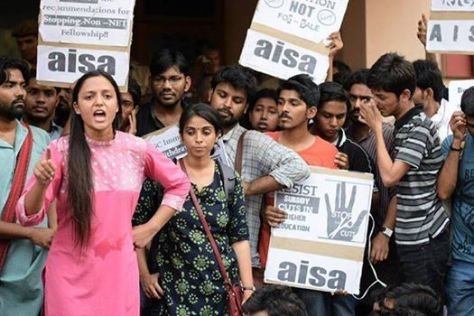
Shehla Rashid (AISA), Vice President JNUSU, speaks at a student protest, during the 'Occupy UGC' Movement
Shehla Rashid (AISA), Vice President JNUSU, speaks at a student protest, during the ‘Occupy UGC’ Movement

The recent government constituted panel‘s (headed by former cabinet secretary T.S.R. Subramaniam) report on student politics is unconstitutional, highly regressive and politically motivated, and signals the upcoming onslaught of total commercialisation of education and imposition of Hindutva ideology in universities. The TSR Subramaniam Panel’s report is the logical follow up to the Birla Ambani report (which was submitted in 2000), following which student unions across the country were banned. The Birla Ambani report had lamented that student unions are not allowing commercialisation of education: we accept the charge and take pride in it! We believe that education should be a right of everyone, not a privilege of a handful of people.

Continue reading Resist the Modi Regime’s Assault on Students, Reject the Subramaniam Panel Report on Student Politics: Shehla Rashid

रौशनी के बीज बोने का माददा – ‘अंधविश्वास उन्मूलन’ पुस्तकत्रयी के बहाने चन्द बातें 


(‘पहल’ के आगामी अंक हेतु )

Andhavishwas Unmoolan : Vichar - 1

1.

स्मशान में कवि सम्मेलन और वह भी अमावस की पूरी रात।

पिछले साल के अन्त में पुणे से आयी इस ख़बर की तरफ बहुत कम लोगों का ध्यान गया था। ( देखें इंडियन एक्स्प्रेस 14 नवम्बर 2015) उधर शहर में लोग दीपावली मना रहे थे और वहां सैकड़ों की तादाद मंे एकत्रित लोगों के बीच कविताएं पढ़ी जा रही थीं, एक कविता संग्रह का विमोचन भी हो रहा था, कुछ सांस्कृतिक  समूह भी बीच बीच में अपनी प्रस्तुतियां दे रहे थे। पुणे के उपनगर बोपोडी की स्मशानभूमि का परिसर उस अलग ढंग के कार्यक्रम का गवाह बना था।

‘अमावस्या की पवित्र रात में स्मशान में कवि सम्मेलन’ शीर्षक से आयोजित इस कार्यक्रम के मुख्य आयोजक थे , महाराष्ट्र अंधश्रद्धा निर्मूलन समिति – जिसके निर्माण में शहीद विचारक डा नरेन्द्र दाभोलकर ने पहल ली थी – तथा सिद्धार्थ संघ और सिद्धार्थ महिला संघ। समिति के सदस्यों द्वारा गाया एक गीत काफी चर्चित हुआ, जिसके बोल थे ‘बो रहे हैं हम प्रकाश बीज’। भूतों-प्रेतों के ‘अस्तित्व’ या उनके ‘विचरण’ को लेकर समाज में व्याप्त भ्रांत धारणाओं को चुनौती देने के लिए अंधश्रद्धा निर्मूलन समिति के बैनर तले आयोजित इस कार्यक्रम ने बरबस कुछ समय पहले कर्नाटक के बेलागावी सिटी कार्पोरेशन के अन्तर्गत आते वैंकुंठ धाम स्मशान में हुए एक अन्य आयोजन की याद ताजा कर दी थी,  जहां कर्नाटक के उत्पादनशुल्क/एक्साईज मंत्राी जनाब सतीश जरकीहोली ने सैकड़ों लोगों के साथ वहीं रात बीतायी थी अंौर वहां भोजन भी किया था। याद रहे कि महाराष्ट्र की तर्ज पर कर्नाटक विधानसभा में अंधश्रद्धा विरोधी बिल लाने में अत्यधिक सक्रिय रहे मंत्राीमहोदय दरअसल लोगों के मन में व्याप्त इस मिथक को दूर करना चाहते थे कि ऐसे स्थानों पर ‘भूत निवास’ करते हैं। Continue reading रौशनी के बीज बोने का माददा – ‘अंधविश्वास उन्मूलन’ पुस्तकत्रयी के बहाने चन्द बातें 

Three Photographs, Six Bodies: The Politics of Lynching in Twos: Megha Anwer

This is a guest post by MEGHA ANWER


file-19-1458409803749044900
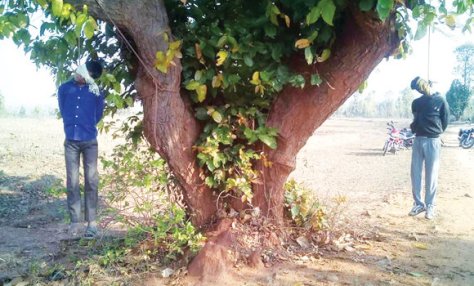
Mazlum Ansari and Imteyaz Khan, Jharkhand 2016.


The recent spate of vigilante attacks in India has lent a new, nearly domestic familiarity to the word “lynching”. This, though, is more than just a shift in language: the nation’s visual archive itself seems be shifting, towards instatement of a new normal. Inside just a year the “lynching photograph” has moved center-stage, filling mainstream news reportage and social media newsfeeds. The imagistic vocabulary of lynching has thus taken on a touch of mundane inevitability in caste and communal violence.

It began in March 2015, with the lynching of Syed Arif Khan in Dimapur, Nagaland. A couple of months later two teenage Dalit girls were raped, strangled and left hanging from a mango tree in Katra village in Uttar Pradesh. Then, on 28 September 2015, Mohammad Akhlaq was bludgeoned to death by a mob in his home near Dadri in what went on to gain spurious notoriety as a “beef-eating incident”. The following March, continuing with the logical rhythm of a scheduled sequel, the cattle herder Mazlum Ansari and his 14-year-old nephew Imteyaz Khan were lynched and hanged from a tree in Jharkhand. Most recently (on May 22) M. T. Oliva, a Congolese citizen, was beaten to death in the national capital of Delhi. This is an incomplete list: it includes only those incidents that resulted in fatalities. In the same timeframe there have been at least a dozen other cases in which the victims somehow survived the end-stage public shaming, torment and lurid physical violence, in short the ordeal of a completed lynching.

There is no lynching without its spectators. Continue reading Three Photographs, Six Bodies: The Politics of Lynching in Twos: Megha Anwer

Statement against the Attack on the ‘Velivada’ in Hyderabad Central University: SC/ST Faculty Forum and Concerned Teachers of Hyderabad University

Guest Post by SC/ST Faculty Forum and Concerned Teachers of Hyderabad University

In the early hours 28th May 2016, at around 2 P.M., the authorities at the University of Hyderabad removed the tents erected in North Shopcom around the Velivada and the venue of protest following the death of Rohith Vemula. This happened in the darkness of night, shrouded in secrecy and utterly insensitive towards the turmoil it was bound generate within the student community. Such an act reaffirms the dictatorial stance of the present administration as well as its intolerance to dissent.

The removal of the tent is a clear act of provocation against students since it is well known that they are emotionally attached to the Velivada and consider it as a place of mourning and memorial for Rohith. Especially for the Dalit students, it remains the site of challenge against caste discrimination. Further, bringing down the posters of Dr.Babasaheb Ambedkar’s quotes that surrounded the tent is a grave insult to the Father of the Constitution of this country and an atrocity in itself. It is indeed ironic that the university administration that overtly pronounces its intent  to celebrate Dr.Ambedkar’s 125th birth anniversary for a year has no qualms about removing his posters, or barring his grandson, Prakash Ambedkar, from entering the university. Such actions unmask the true character of the administration; revealing its deeply discriminatory, apathetic and disrespectful attitude towards Dalits and their leaders.

Perhaps the University officials have long forgotten that a University is not to be ruled and subjugated through the military doctrine of “shock and awe” (who can forget George Bush’s now ill famous use of the term during the military invasion of Iraq by the US in 2003!). Instead, patience, maturity and genuine dialogue with the students alone can help us through these difficult times. Unfortunately, the authorities have acted in an extremely unbefitting manner, without the slightest concern for the feelings of their own students. Further, this act of destruction appears doubly mindless and vindictive because the presence of a tent in the Shopcom area does not harm anyone. In fact, through the scorching summer, many people take shelter under it beating the intense heat—be it the students having their food there or other workers who need to be around the Shopcom area. Therefore, we see absolutely no justification for its removal, that too in such a stealthy and unceremonious manner, taking advantage of the the anonymity of the night during vacation. Clearly the authorities are well aware how heartless and unethical such an action is and the serious opposition that it is sure to encounter if carried out during daytime.

The thoughtless desecration of the Velivada compels us to ask a few critical questions. Is it necessary to instigate confrontations in a campus that is already struggling to come to terms with the tragic death of Rohith Vemula, the brutal lathicharge and imposition of false cases against students and faculty and the continuous harassment of students that takes many different forms? Is it not the urgent responsibility of the administration be a little more receptive to the concerns and feelings of the students, keeping in mind the larger interests of the University? It is a cruel irony that while the administration proclaims to the world that it wants “normalcy” to return to the campus, its actions remain blatantly aggressive, anti-student and discriminatory.

More than four months have passed by since that fateful night when a brilliant young man with immense potential and a strong sense of social justice gave up his life, hounded by the administration on the basis of a fictitious charge and non-existent evidence.  We may recall that the cruel and unusual punishment of suspension from hostels and all common spaces was handed out to the five Dalit students during another vacation—the winter of December 2015. Is it  just serendipity? Or, perhaps vacation is time of total impunity, when all natural and moral laws are suspended and humanity is forgotten? While the Rohith and his friends were forced to spend the cold winter nights out in the open, distraught students protesting the removal of the tent spent the day under the unforgiving Hyderabad sun near the main gate of the University on 28th May until they were pushed away by  the security guards.

Prof. Appa Rao Podile resumed office with the knowledge of a hand-picked teaching and non-teaching staff (after abandoning the University in a state of despair following the death of Rohith) on 22nd March, 2016, without so much as giving prior notice to the interim VC, Prof. Periasamy, fully aware how this would affect the protesting students and friends of Rohith. Now, once again, the Velivada has been desecrated when the world was asleep. We quote what a leading jurist Amita Dhanda had said recently with respect to the events at HCU: “A VC must not only be fair but be seen to be fair.” We leave it to our readers to decide whether the VC has ever acted or appeared to act as fair!

Evidently, the loss of Rohith’s life has not meant nor taught anything to the the University of Hyderabad authorities. Those who had closed their eyes to the evidence that screamed out that  Rohith and his friends were “Not Guilty”, have moved on. They now head important committees and speak on behalf of the University to the rest of the world. As ranks are bestowed upon the University, they brim over with pride and claim credit. It is well beyond their comprehension as to why large groups of students and faculty should hang on to a make-shift Velivada—with walls made up of flex-board images of Babasaheb Ambedkar, Jotiba and Savitribai Phule and Kanshi Ram. For them, it is time to “cleanse” and “sanitize” the Shopcom of those disturbing reminders that tell us that “Something is rotten in the state of the University of Hyderabad.”

But the memory of injustice is a powerful tool. The very same structure that has been an eyesore to the administration is our history—poignant, gut-wrenching and yet imbuing our present with direction and the strength to struggle. To recall a stirring line that has emerged through the Rohith Vemula movement: “A spectre is haunting the brahminical academia—the spectre of caste.” We welcome and embrace this history. The Velivada is the place where Rohith spent his final destitute days, anxious that his years of hard work and aspiration to give a better life to his family may come to nought. This is where we come to pay our respects and to remind ourselves that there should be no more Rohiths. Around this very place, a community has gathered—of those who may not have known each other  earlier but who understood how critical it was to work towards a world where “a man is not reduced to his immediate identity”. People thronged to this place from different Universities and from all walks of life to pay homage, and in solidarity. Those who could not come still became part of this imagined community—those from Uttar Pradesh, Bihar, Kerala, the North East, in fact, from every part of this country—threaded together by empathy and experience. Rohith became an icon and a rallying cry because his life struck a chord with the large majority of Dalit  and other minoritized and underprivileged groups in India for whom education is still a humungous struggle. More important, breaking into the bastions of higher education remain acts of transgression and trespassing. Perhaps that is why the august body that passed the fatal judgement on Rohith Vemula did not even bother to maintain a facade of impartiality. Unfortunately for them, the masses of India—the Dalit and the underprivileged, those who are the “wretched of the earth” in the immortal and evocative words of Frantz Fanon, recognized this judgement for what it is, even as it came cloaked in the language of discipline and bureaucracy.

The socially marginalized, struggling parents who dream of a better life for their children instinctively know what happened—they completely and empathetically identify with Radhika Vemula who sent her son to the big University only to lose him forever. Similarly, all those students and teachers who have relentlessly and often silently faced discrimination in the hallowed portals of premier institutions of learning also know. We, the concerned faculty and students at the University of Hyderabad know. We shall not forget. We cannot forget. The administration is bent upon erasing the Velivada. Can they erase our memory? Can they erase the memory of that fateful night of January 17th? Rohith has travelled from the shadows to the stars. We ask Mr. Appa Rao Podile and his believers, “Can you destroy the stars? Because every time, on each dark night, when we look up we will see Rohith Vemula and we will remember what he lived and died for.”

Perhaps the University Administration presumes that a Velivada rightfully and customarily belongs to the margins of the village—far far away from the modern, secular/brahminical, high-ranking spaces of the University. However, through an extraordinary and imaginative act of symbolism, Rohith and his four friends have re-installed the Velivada in the midst of the University, in our hearts and in our consciousness. We need not skirt past it or bemoan the loss of the Shopcom (as the administration has been doing). For us it is a living history of sacrifice and struggle, forcing us to continually work towards a more pluralistic and egalitarian idea of the University.

There is a writing on the wall that that the administration cannot whitewash! The Velivada can no longer be cast out into the margins; it is here to stay. The University must take note and be attentive to this momentous turn of history.

SC/ST Teachers’ Forum and Concerned Teachers, University of Hyderabad



बीएचयू में लाइब्रेरी को लेकर आंदोलन अभी भी जारी है: अनन्त प्रकाश नारायण

अतिथि पोस्ट: अनन्त प्रकाश नारायण

Guest Post by Anant Prakash Narayan

This is an urgent appeal from Banaras Hindu University (BHU) students to students, youth, intellectuals and journalists everywhere.  Please come to the support of BHU. Speak for BHU students. Students in BHU have been fighting for the right to study 24/7 in the BHU Library. The curtailing of the hours for which the library is open by the university authorities is a direct assault on the right to study. What else are students meant to do in an university? This is what has led students in BHU to agitate. Students even sat on an indefinite hunger strike for nine days in protest. Students have been assaulted and rusticated for their struggle to study in the library.  The hunger strike has been now lifted, because of the intense pressure of the university administration and the failing health of several students, but the struggle continues. BHU students are appealing to everyone to please send post cards in support of their demands to the Vice Chancellor of BHU.

You can also flood the VC with emails to his address  – vc@bhu.ac.in.

Bombard his office and email with messages in support of BHU students, in support of democracy and rights, for right to quality education and freedom of speech.

This slideshow requires JavaScript.

Students on Hunger Strike Were Forcibly Sent to Hospital by the University Authorities

‘बीएचयू में लडाई जारी है’

बीएचयू में लाइब्रेरी समेत 4 मांगो को लेकर 26 दिनों तक चला आंदोलन अभी भी जारी है। 9 दिनों तक चला अनिश्चितकालीन अनशन हमें प्रशासन के दबाव और साथियों की बिगडती तबीयत के कारण तोडना पडा लेकिन अपने सवालों  के साथ हम आज भी संघर्षरत है। इसलिए देश-दुनिया के सभी छात्रों, विश्वविद्यालयों और बुद्धिजीवियों से हम अपील करते हैं कि हमारे निम्न सवालों के समर्थन में आकर हमारे संघर्ष को मजबूत बनाएं और बीएचयू कैम्पस मे अभिव्यक्ति की लडाई में हमारी मदद करें
Continue reading बीएचयू में लाइब्रेरी को लेकर आंदोलन अभी भी जारी है: अनन्त प्रकाश नारायण

सामाजिक न्याय ही इस दौर की स्टूडेंट पॉलिटिक्स का मुख्य एजेंडा होगा: अनन्त प्रकाश नारायण

अतिथि पोस्ट: अनन्त प्रकाश नारायण

दिल्ली हाईकोर्ट के आदेश के बाद जे.एन.यू. में 16 दिन की एक भूख हड़ताल खत्म हुई. सभी तरह की सजाओ पर, जो जे.एन.यू. की उच्च स्तरीय जाँच कमिटी (HLEC) ने हम छात्र- छात्राओ पर लगा रखी थी, उन पर रोक लगा दी गई. इस आदेश को ले करके तमाम तरह की व्याख्याए/निर्वचन (Interpretation) है. इस भूख हड़ताल के दौरान कुछ ऐसी घटनाये घटी जिसे यह कैंपस हमेशा याद रखेगा जैसे एकेडेमिक कौंसिल को छोड़कर वाईस चांसलर द्वारा भाग जाना. एकेडेमिक कौंसिल में हमारी मांगे एकदम स्पष्ट थी. उच्च स्तरीय जाँच कमिटी को ख़ारिज करना, ओ.बी.सी. रिजर्वेशन को दोनों स्तर पर लागू करवाना, हॉस्टल में ओ.बी.सी. रिजर्वेशन और साक्षात्कार/ वाइवा के नंबर को कम करना इत्यादि. जब हम जे.एन.यू. की बात करते है तो हमे बिलकुल स्पष्ट हो जाना है कि जे.एन.यू. प्रशासन देश के किसी भी प्रशासन की ही तरह है और कई बार तो उससे भी बदतर. वह तो यहाँ का स्टूडेंट पॉलिटिक्स है जो कि इस कैंपस को समावेशी /इंक्लूसिव बनाने के लिए लड़ता है.
यह वही जे.एन.यू. प्रशासन है जिसने लगभग दस साल तक (1984-93) इस कैंपस से deprivation/ quartile पॉइंट्स को यह कहते हुए ख़त्म कर दिया था कि इस कैंपस में गाँवो से आने वाले स्टूडेंट्स के कारण यहाँ का अकादमिक स्तर ख़राब हो रहा है और कैंपस रेडिकलाईज़ हो रहा है. यह जे.एन.यू. का स्टूडेंटस मूवमेंट था जो की इसे जीत कर 1994 में वापस लाता है. हमने देखा इसी तर्ज़ पर किस तरह से प्रशासन ने ओ.बी.सी. रिजर्वेशन के मिनिमम ‘कट-ऑफ’/cut-off की गलत व्याख्या करके सैकड़ो पिछड़े वर्ग के छात्र- छात्राओ को 2008-2010 तीन वर्षो तक कैंपस से बाहर रखा. यह जे.एन.यू. स्टूडेंट्स मूवमेंट था जिसने कि एक लम्बे पोलिटिकल और लीगल बैटल के बाद एक सही व्याख्या को इस कैंपस में ही नही पूरे देश में लागू करवाया. मदरसा सर्टिफिकेट की लड़ाई हो या फिर अभी ओ.बी.सी. मिनिमम एलिजिबिलिटी का मामला हो, सारे मामले में प्रशासन हमारे खिलाफ ही खड़ा रहा है. आज जब हम ओ.बी.सी. रिजर्वेशन के उद्देश्य/स्पिरिट को इंश्योर कराने के लिए दोनों स्तर पर रिलैक्सेशन लागू कारवाने की कोशिश कर रहे है तब हम देखते है कि किस तरह से इस प्रशासन ने अपने सारी नैतिकता/ मर्यादा को एक तरफ रखते हुए पिछले वी.सी. के समय हुए स्टैंडिंग कमिटी के फैसले को बदल दिया और हद तो तब हुई जब जे.एन.यू. स्टूडेंट्स यूनियन के अध्यक्ष और महासचिव ने यह दावा किया कि इनविटेसन लेटर पर उनके हस्ताक्षर फर्जी किये गये है.

Continue reading सामाजिक न्याय ही इस दौर की स्टूडेंट पॉलिटिक्स का मुख्य एजेंडा होगा: अनन्त प्रकाश नारायण

Choice, Agency and the Naming of Names – The Trap of ‘Immediate Identities’ and the Vision of a Democratic Revolution: Chintu Kumari & Umar Khalid

Paired Guest Posts by CHINTU KUMARI and UMAR KHALID

[ Every struggle goes through highs and lows. The students who are part of the  movements that are spreading out of universities in India – Hyderabad Central University, Jawaharlal Nehru University and Jadavpur University have had their share of internal debates and disagreements, even as they have found moments of significant victory. and solidarity

Students at JNU who have recently concluded their hunger strike to give time to the university authorities to respond reasonably to the High Court directives on the HLEC punishments are now being criticized for having ‘abandoned the struggle’ by some sections who claim to play a role within the broader students movement, when, in fact, nothing of that sort has actually happened.

The majority of the students who were on hunger strike (including several JNUSU office bearers, and others) have said that they have given up the hunger strike against the HLEC recommendations in keeping with the court order.  In doing so, they have never said that they are suspending the agitation against the attempts by the JNU administration to weaken OBC reservation in admissions, hostel seats and deprivation points for women and oppressed sections of society.

In fact it is not as if the HLEC punishments issue has taken precedence over the other issues. It is actually the other way round. The students have decided to give priority to the struggle for ’social justice’ within the campus, while simultaneously giving time to the university authorities to respond adequately to the court directive on the HLEC punishment question.The call for a demonstration against the University Authorities by the JNUSU to continue the struggle on the social justice issues on the 16th of May is indicative of this fact.

13237814_1106943902682435_4288761213192298400_n

The attacks and insinuations against the majority of the students at JNU who were on hunger strike have also featured a deliberate attempt to create divisions within the unified ‘Red-Blue’ / ‘Jai Bhim-Lal Salaam’ dynamics of the movement on the grounds of identity. Activists, such as Umar Khalid, on the left have been singled out for being ‘Savarna-Syed’, if they happen to bear a Muslim name, and for being ‘sold out to the Savarna left’ if they are Dalit, as happened with Chintu Kumari and Rama Naga. This attack has come primarily from individuals representing organizations like BAPSA that claim to speak from a ‘Dalit’ position, and it is given traction by several other individuals eager to flaunt their disdain for the ‘left’ students on Facebook and social media.  Continue reading Choice, Agency and the Naming of Names – The Trap of ‘Immediate Identities’ and the Vision of a Democratic Revolution: Chintu Kumari & Umar Khalid

Run Jaggu Run — The JNU VC Runs Away from the Academic Council Meeting

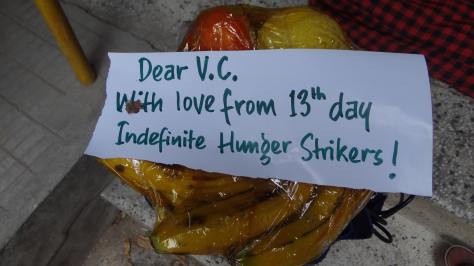
The 10th of May, the 13th Day of the Hunger Strike by JNU Students in protest against the HLEC Report was also the day scheduled for a meeting of the Academic Council of JNU. Students and faculty had resolved to stage a massive protest. Student and Faculty members of the Academic Council had also resolved to forcefully present issues related to the current crisis in the university at the AC Meeting. The events of the day are presented here through a series of videos and photographs uploaded by different people from JNU.

[ Video by Samim Asgor Ali, taken from his Youtube Channel ]

They tell the story of how students were generous with their tormentor, the VC, Jagadeesh Kumar, and how he ran away.

One day, his backers, Smriti Irani, Rajnath Singh and even Narendra Modi, and all the goons in the RSS headquarters at Mahal, Nagpur and Jhandewalan, Delhi will have to run for cover in a similar fashion when faced with the ‘gift’ of the fruits of their actions.

Photo by Samim Asgor Ali

The students gathered on hunger strike collected their meals from their hotel messes and placed them in front of the AC meeting venue as a ‘gift’ to the Vice Chancellor, JNU and the university administration. Continue reading Run Jaggu Run — The JNU VC Runs Away from the Academic Council Meeting

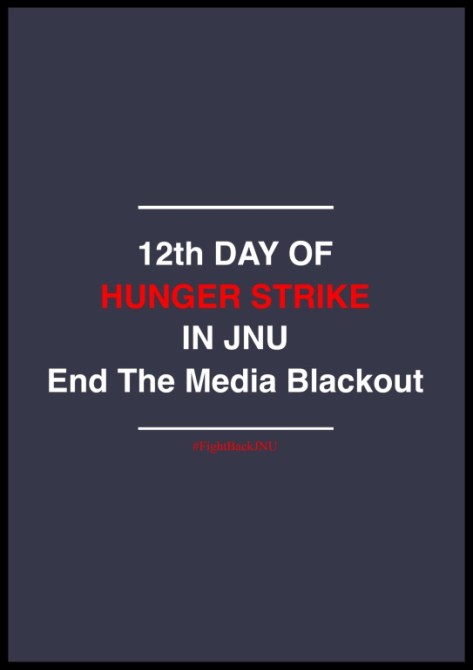
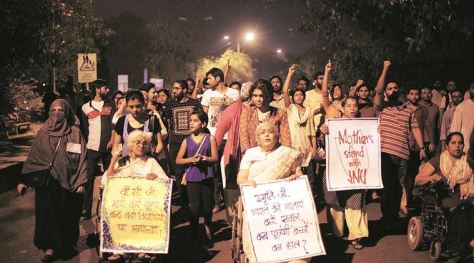
JNU Hunger Strike Day 12 : Game On – Students 1, Media, Authorities 0

The JNU Students’ Hunger Strike Enters Day 12. Ketone counts go up, Weight goes down, Morale stays miles high. Media fatigue shows that crusading news anchors are no match to hunger striking students when it comes to stamina, and, may we say, courage. The university authorities, the JNU VC and his gang, the government, the RSS-ABVP, remain what they are – losers.

(Images taken, with thanks, from the ‘We are JNU‘ Facebook Page, and the ‘Mothers Stand with JNU‘ Facebook Page.)

This slideshow requires JavaScript.

MEANWHILE, RADIOSILENCE CONTINUES (BESIDES RAVISH KUMAR’S SHOW) ON MAINSTREAM MEDIA

13177661_10153973732855546_8091436192653453340_n

This slideshow requires JavaScript.

Mothers’ Manifesto: Mothers Stand With JNU

Guest Post by ‘Mothers Stand With JNU‘ 

[On Mothers’ Day, 8th May 2106, which was also the 11th Day of the Indefinite Hunger Strike by JNU students in protest against the vindictive measures taken against them by the university authorities, a group that has named itself ‘Mothers Stand With JNU’ joined the protest in solidarity. This is the ‘manifesto’ that they released on the occasion.]

13096182_963393620396364_2922119042104761582_n

Continue reading Mothers’ Manifesto: Mothers Stand With JNU

जिशा, मेरी दोस्त, दलितों की जान इतनी सस्ती क्यों है? चिंटू

अतिथि पोस्ट : चिंटू

Josh
जिशा

जिशा, मेरी दोस्त मेरी यार, क्या कहूँ यार तुम्हारे साथ जो दंविये बर्बरता हुई उसके लिए मुझे  शब्द नहीं मिल रहे हैं कुछ कहने को. ये देश ये समाज हर रोज़ ऐसे झटके  देता रहता है और इतना देता है, इतना देता है, की हमारे लिए वीभत्स से वीभत्स घटना क्रूरतम से क्रूरतम घटना साधरण बन गई है और इन घटनाओं को पचाने की क्षमता में भी हम माहीर हो गए है. देखो न दोस्त, असाधारण कहाँ कुछ रह गया है. बचपन से आज तक तो यही सब देख- देख कर पले बढे हैं हम सब की, जो कुछ हो अपना हक़ मत मांगना, पढने लिखने की बात मत करना , बाप या भाई लात घूंसे  मार- मार कर तुम्हे अधमरा कर दे लेकिन एक शब्द भी उनके खिलाफ बोलने की गुस्ताखी मत करना, गाँव के उच्च जाति वर्ग के सामंती तुम्हे अगर छेड़े तुम्हारा बलात्कार करे तो उसका बहिष्कार मत करना कियोंकि ये तो उनका जन्म सिद्ध अधिकार है.

तुम्हारे लिए जो लक्ष्मण रेखा खिंची गई है उससे बाहर जाने की कोशिश की तो तुम्हारी शामत आना पक्की है. और शादी? ये तो दूसरी जात में तो दूर की बात अपनी जाति  में भी करने का अधिकार या आजादी की बात मत करना ये तय करना घर के बड़े पुरुषों के कंधे पर छोड़ो. सती सावित्री बनो, एक सद्गुणी बेटी, बहु और पत्नी बनो इसी में तुम्हारी भलाई है.


Continue reading जिशा, मेरी दोस्त, दलितों की जान इतनी सस्ती क्यों है? चिंटू

17 Faces of Hunger for Justice – Day 6 of the Indefinite Hunger Strike at JNU: ‘We Are JNU’

Guest Post by ‘We Are JNU

At the end of the 6th day of the Indefinite Hunger Strike by JNU Students, the ‘We Are JNU‘ Facebook Page uploaded a gallery of portraits of the 17 students on Hunger Strike, together with details of their medical conditions. We are sharing this post on Kafila in solidarity

This slideshow requires JavaScript.

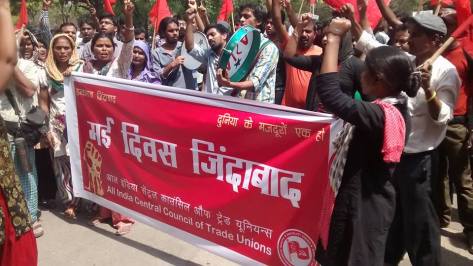
Workers and Students Unite on May Day in JNU: Aswathi Nair & Umar Khalid

Guest Post by Aswathi Nair and Umar Khalid (With Photographs and Videos by K. Fayaz Ahmed, Azhar Amim, Samim Asgor Ali, Reyazul Haque and Agnitra Ghosh)

Exactly nine years back, in 2007, ten students were rusticated (again) in the month of May for their “crime” of agitating along with workers to ensure the legally mandatory minimum wages for the workers here in JNU. It was the peak of summer, the time of holidays, and the administration (like this time, like every time) thought that they could break the unity of the workers and students with crackdown timed to coincide with what was thought to be the ‘weakest’ time for mobilization on campus. The administration’s plans did not bear fruit then, they will not work now either.

Workers and Students Unite in JNU on May 1, 2016, International Labour Day

We are in that strange time again. The summer of 2016 has witnessed a May Day wherein the workers in JNU not only took out their own rally, but also rallied with us students sitting on the 4th Day of their Indefinite Hunger Strike against administrative crackdown on our democratic spaces. Continue reading Workers and Students Unite on May Day in JNU: Aswathi Nair & Umar Khalid

Diary of a JNU Student on Hunger Strike: Pankhuri Zaheer

Guest Post by Pankhuri Zaheer

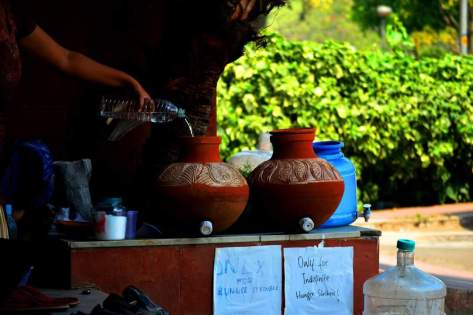
Water - A Gift for Hunger Strikers. Photo Courtesy, Azhar Amim
Water – A Gift for Hunger Strikers. Photo Courtesy, K. Fayaz Ahmed

“I wanted to bring you something but I didn’t know what to get you so I got you a bottle of water,” says a friend who would perhaps never identify herself as a student activist but since 9th February, like many like her, has been an integral part of the stand with JNU movement.

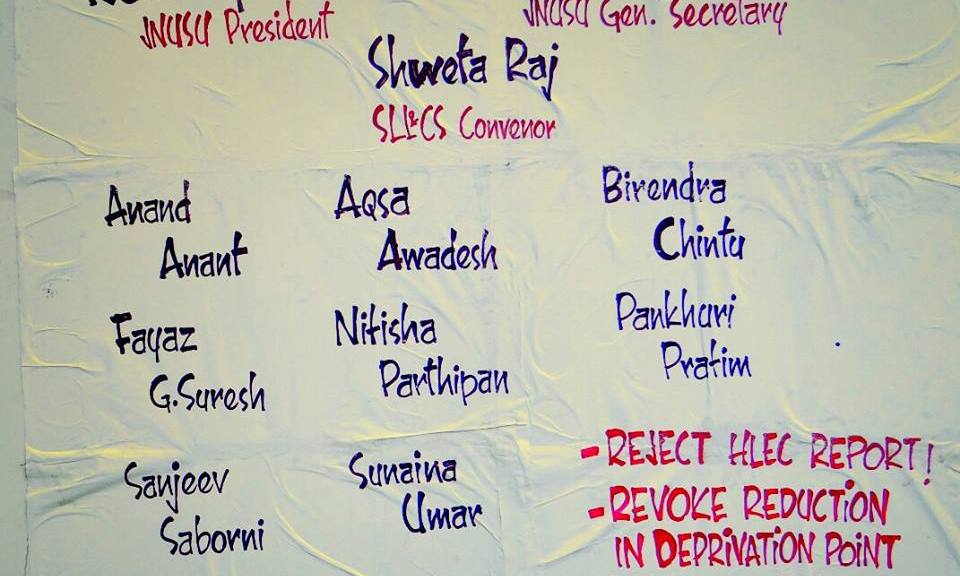
19 of us have decided to sit on an indefinite hunger strike till the time the farcical report of the High Level Enquiry is not rolled backed in its entirety. Today, April 30th, is the third day of our hunger strike.

Continue reading Diary of a JNU Student on Hunger Strike: Pankhuri Zaheer

‘Radical’ Critics and KaBodyscapes

What does it mean to dissent in a world in which everyone claims to be a dissenter? What does it take to build a critical vantage-point, one that is not merely the easy pastime of fault-finding, when we all seem to already know what will be truly critical? Ever since the oppositional energy generated against Hindutva fascism in and through the Kiss of Love campaigns dissipated into the rival folds of the Human and the Anti-Human in Kerala, these questions have troubled me. The prospect of being sucked into one side of such a binary formation is terrifying enough to scare one away from  engaging with either side; but worse is the pain that follows the realization that the unique moment of hope – the hope that the diverse groups that populate the anti-Hindutva civil society may well be able to form a bond of trust, however tentative and fragile, more than merely strategic connections – is well and truly in the past. Both sides have indulged in belligerent and damaging caricaturing of each other’s positions, as if the annihilation of the other was the very condition of the survival of the one. Continue reading ‘Radical’ Critics and KaBodyscapes

Summer of Rage: JNU Students Begin Fast Unto Death against HLEC Report

13083178_1763261193905640_250606241251585686_n

Spring has given way to the beginning of a turbulent summer. April, is a cruel month. Temperatures have risen, and so has the level of rage in university campuses. The JNU University Authorities (and their masters – in the Ministry of Human Resources Development, the Prime Minister’s Office and the RSS Citadels in Mahal, Nagpur and Jhandewalan, Delhi) thought that they could break the resolve of the students by enacting a series of harsh measures against them just before exams begin and the university term ends in summer vacations.

Chintu Kumari, Anirban Bhattacharya and other students give the call to protest against the HLEC and call for a Hunger Strike. Photo, Courtesy, Azhar Amim

13055719_10154616732485016_4978357478249045500_o

This is a time, they must have thought, when students will be busy with preparations, and the rising heat will discourage the kind of mass mobilizations that the campus has seen since February. Students in JNU resolved a few hours ago to prove them wrong, and decided to fight back . A massive gathering stood its ground at the Administrative Block, aptly re-christened, ‘Freedom Square’.

Rama Naga, Gen.Sec. JNUSU, (Centre) and JNU Students Calling for Indefinite Hunger Strike on April 27, 2016. Photo, Courtesy, Azhar Amim

They have decided that a batch of students will sit on indefinite hunger strike – a ‘fast unto death’ – until the JNU authorities roll back the draconian measures listed in the HLEC Report.

The 20 students who will be sitting in indefinite hunger strike at JNU.

There’s no looking back now. Whatever happens from now on wards, will be seen as a consequence of the cruel, evil mindset of the current regime, which truly treats the lives of the young as dispensable ballast. Its time to prove them wrong. This is a call that goes out to all students and teachers, and sensible individuals, not just in JNU, not just in Universities and Colleges all across India and all the territories administered by the Indian republic, but to everyone reading this post anywhere in the world, to stand by the courageous students of JNU. It is our responsibility to see that the JNU Authorities see reason and back down. If anything untoward happens to any student, the university authorities, and the regime backing them, will be clearly culpable.

Here is Umar Khalid, speaking just before commencing his Hunger Strike

Here is Chintu, former Gen. Sec. JNUSU, speaking at the Mashaal Juloos, (Torchlight Procession) just before beginning the Hunger Strike.

Listen to Kanhaiya Kumar, President of the JNUSU – restating the reasons for the continuation of the movement.

Thanks to the ‘We are JNU Media Group’ and the AISA Youtube Channel, for the videos.

Sanghis, Sex and University Students – What is it Really All About? Ayesha Kidwai

Guest Post by Ayesha Kidwai

[ The prurient fantasies contained in the ‘JNU Dossier’, produced by some right wing faculty members of JNU in or around October 2015, have been ‘outed’ by an excellent report by Ajoy Ashirwad Mahaprashasta in Wire.org. This comes exactly at the time when the JNU administration has shown its fangs by delivering a low blow by way of the measures outlined in the report of the ‘High Level Enquiry Committee’ appointed by the Vice Chancellor. An impartial examination of the HLEC document and the ‘Dossier’ in will reveal some startlingly resonant patterns. Clearly, the ‘Dossier’, which had been dismissed by the former Vice-Chanceller, Prof. Sopory, has been reincarnated at the express orders of the Nagpuri masters of the present dispensation. We are sharing below an excellent response to the ‘Dossier’ by Ayesha Kidwai, one of the professors – ‘named’ in the dossier. This is taken from Ayesha Kidwai’s status update on her Facebook Page.

For another take down of the ‘Dossier’ – see also – “Sex and sedition: What the JNU dossier tells us about the right-wing imagination” – in Scroll.in by Kavita Krishnan. Meanwhile, JNU Students have commenced on a ‘fast unto death’ in protest against the university administration’s senseless measures. Kafila]

Sanghi smut is in season again! For the authors of the Dirty Dossier, JNU nights are forever scented with musk, with couples draped on every bush, suitably fortified by free alcohol, thoughts of secession, and cash payments supplied by the Awesome Foursome. At its peak, the party can practically involve the whole university, because as per Shri Gyan Dev Ahuja’s estimates, the number of students frolicking this will be 7000 (3000 condom users X 2, plus 500 injectable walas X 2). (Assuming of course that the few hundred left over have gone to fieldwork, have exams, or are abstemious and/or abstinent in nature.)

Laugh as we may (and must) at these feverish imaginings, it’s also important to understand that the very notion of a free university challenges not only misogyny, but also the social apartheid produced by caste and exclusionary religion.

Continue reading Sanghis, Sex and University Students – What is it Really All About? Ayesha Kidwai

Rise Up against the Proxy War on Students by the Modi Regime: Shehla Rashid

Guest Post by Shehla Rashid, (Vice President, Jawaharlal Nehru University Students’ Union)

Rise up against the proxy war on students by the Modi regime.

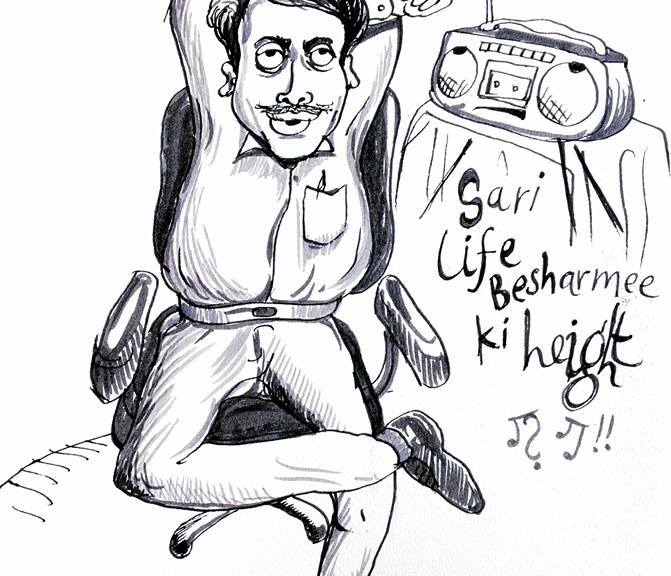
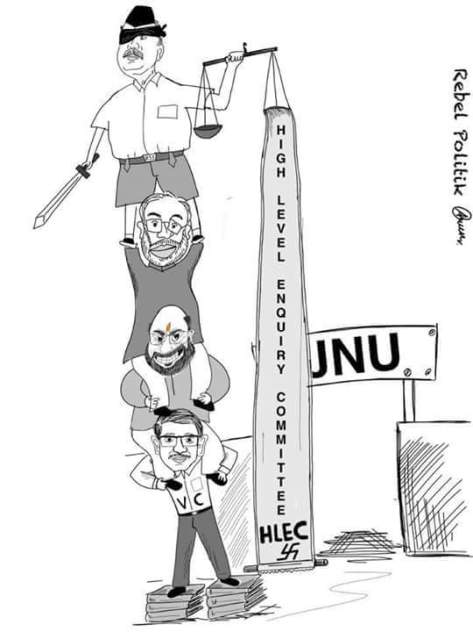
Cartoon by V. Arun Kumar

JNUSU rejects the report of the enquiry committee constituted by the Vice-Chancellor to look into the 9th of February incident. JNUSU also rejects its reports and any punishment handed out by it. The JNUSU and JNUTA had repeatedly asked the administration to democratise the enquiry committee, but this was not done.  Now, when the holidays are here, the VC has made public the punishments, after one and a half months of submission of the HLEC (High Level Enquiry Committee) report. Continue reading Rise Up against the Proxy War on Students by the Modi Regime: Shehla Rashid

Jayadeva Uyangoda on Ambedkar’s Legacy

Text of the talk delivered on April 22, 2016 at the Indian Cultural Centre, Colombo on the occasion of B. R. Ambedkar Commemoration.

Ambedkar’s Legacy: Critique of Religion, Quest for Social Justice and the Paradox of Constitutionalism

Jayadeva Uyangoda, Senior professor of Political Science, University of Colombo

Ambedkar

May I begin my talk this evening by thanking His Excellency Y. K. Sinha the Indian High Commissioner in Colombo for inviting me to deliver this lecture on B. R. Ambedkar? This event is part of a series of celebrations in connection with the 125th birth anniversary of Babasaheb Ambedkar, which fell on the 14th of April. I am afraid my talk may not celebrate great Ambedkar’s memory and legacy as such. It will only present some disjointed and hurriedly constructed thoughts about the life and legacy of this great son of South Asia.

Ambedkar’s name is well known in Sri Lanka. In Sinhalese society, the popular culture of which I am somewhat familiar with, Ambedkar is known as the leader of India’s Harijan communities. The word dalit is not in much use in Sinhalese society. The Gandhian neologism of harijan is better known. Ambedkar is respected as the Harijan leader who embraced Buddhism along with several thousands of his followers. Sinhalese Buddhists are particularly sympathetic to Ambedkar and his social reform movement. For them, Ambedkar’s project constituted a critique and a rejection of Hinduism. This is despite the fact that Buddhism has historically and in terms of elite as well as popular practices been closely interwoven with Hinduism. Quite independent of Ambedkar, Sri Lankan Buddhists have a somewhat ambivalent attitude towards Hinduism and Hindu traditions as well. It is almost like their ambivalence towards India in general, as some of their intellectuals and professionals seem to be inclined to demonstrate these days. Continue reading Jayadeva Uyangoda on Ambedkar’s Legacy

To the Puppets and Puppeteers – We Students Will Fight Back: Anirban

Guest Post by Anirban Bhattacharya 

To the puppets and their puppeteers…

Free speech cannot come with a price tag -10,000/- or 20,000/- or even a rupee!
Dissent cannot be evicted!
Ideas cannot be made out of bounds!
Reason cannot be rusticated!

Continue reading To the Puppets and Puppeteers – We Students Will Fight Back: Anirban