Category Archives: Culture

The Spectre of Evil…The world Since 1989 : Kumar Ketkar


The fifth lecture in the ‘Democracy Dialogues Series’ organised by New Socialist Initiative was delivered by Kumar Ketkar, Member of Parliament, Rajya Sabha at 6 PM (IST) on Sunday, 6 th December

Theme : The Spectre of Evil…The world Since 1989

Continue reading The Spectre of Evil…The world Since 1989 : Kumar Ketkar

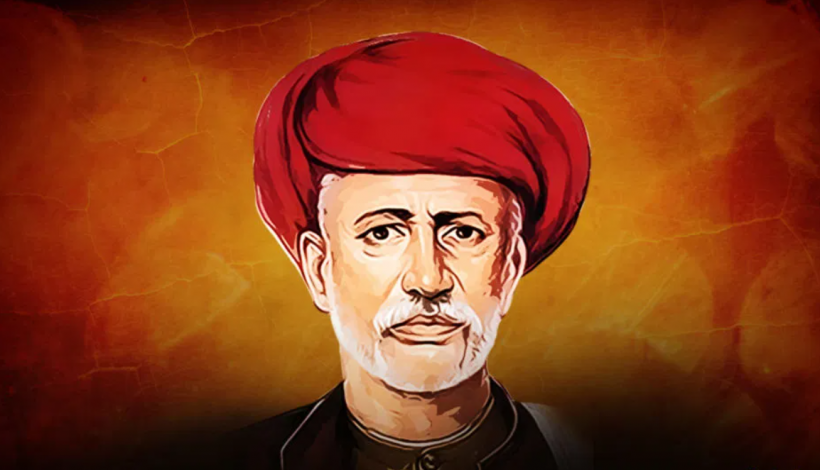
How Can India Reinvigorate Phule’s Revolutionary Legacy ?

Remembering a colossus in the times of Hindutva.

Jyotirao phule.

Who will reinvigorate Phule’s legacy? This question stares us in the eye on 28 November, the 130th death anniversary of Jyotirao Phule, considered the “father of social revolution in India”. Phule largely remains relegated to the background—a result of selective amnesia and identity politics in modern India, where his path-breaking contributions, and those of his wife Savitribai and her fellow traveller Fatima Sheikh are rarely remembered.

They are credited with opening the first school for girls from the historically “untouchable” communities in Pune, which was once ruled by the Peshwas. This school created an upheaval in the Brahmin-dominated Maharashtra of yore, as a 14-year-old Muktabai, belonging to the formerly “untouchable” Mang caste, who studied in the school, wrote: “O learned Pandits, wind up the selfish prattle of your hollow wisdom and listen to what I say.” The student’s essay was published in 1855 in Dnyanodaya, a journal popular then. (From Women Writing in India, Edited by Susie Tharu and K Lalitha, Pandora.)

Jyotirao Phule was given the honorific of “Mahatma” a few years before he breathed his last in 1890, for a life spent engaging in tremendous innovation and creativity. He initiated his wife into writing and she later became an independent activist too—a rarity in those days. He opened the doors of his home for those considered the lowliest among the low. He came to the defence of scholar-activists, such as Pandita Rambai, when she embraced Christianity. So he fought against the conservative onslaught single-handedly. Many such instances in his life are worth emulating today.

( Read the full article here)

Jawaharlal Nehru and the Current Challenge to the Idea of India : Prof aditya mukherjee


The fourth lecture in the Democracy Dialogues series organised by New Socialist Initiative was  delivered by eminent scholar Prof Aditya Mukherjee, Centre for Historical Studies, JNU who is also editor of the ‘Sage Series in Modern Indian History’

Theme :
Jawaharlal Nehru and the Current Challenge to the Idea of India
Sunday, November 15, 2020
Facebook.Com / newsocialistinitiative.nsi
Abstract :

In this talk I will look at how Jawaharlal Nehru tried to implement the vision of our national liberation struggle, which was reflected in our Constitution.  Critical elements of this vision were the creation  of a sovereign, secular, inclusive, democratic and pro-poor state. There was a consensus among the entire  Nationalist spectrum, from the Left to the Right on all these elements. While there was a consensus on the “pro-poor” aspect, from the early nationalists to Gandhiji to socialists and communists, there was no consensus on the idea of socialism, though a large and growing section was moving towards that objective. (The communalists and other loyalists who claimed to represent sectional interests, naturally did not share any aspect of this vision).

I will seek to outline how Nehru undertook the stupendous and in many respects historically unique task of creating a modern democratic nation state in a plural society, left deeply divided through the active collusion of the colonial state; of promoting modern industrialization within the parameters of democracy and sovereignty in a backward and colonially structured economy; of finding the balance between growth and equity in an impoverished, famine-ridden country; of empowering the people and yet expecting them to tighten their belt for the sake of the nation as a whole; of promoting the highest level of scientific education, a field left barren by colonialism; in short, of un-structuring colonialism and bringing in rapid economic development but doing it consensually, without the use of force, keeping what has been called the “Nehruvian consensus” intact in the critical formative years of the nation. I will also briefly discuss Nehru, who was deeply influenced by Marxism, tried to creatively move towards the socialist objective without compromising on the non-negotiable principle of democracy; though with limited success because of  a variety of reasons.

I shall end with reminding ourselves that, in these days of trying to erase Nehru’s memory altogether or to remember him in an unrecognisable demonised image created though false propaganda, much can be learnt from the legacy left behind by Nehru’s ideas and practice by those who wish to struggle to meet the current challenges to all the pillars of the Idea of India.
Sun, 15 Nov at 06:00 GMT+05:30
[https://www.youtube.com/playlist?list=PLtXBfoS5KZ78UFI_aYzROjUss8ZzhUKxy
This is the link of the playlist where you can find all the democracy dialogues video.]


The Tragic innocence of being faisal khan

India cannot take its syncretic tradition for granted. A culture of communal amity has to be rebuilt from the ground up.

Fasial.

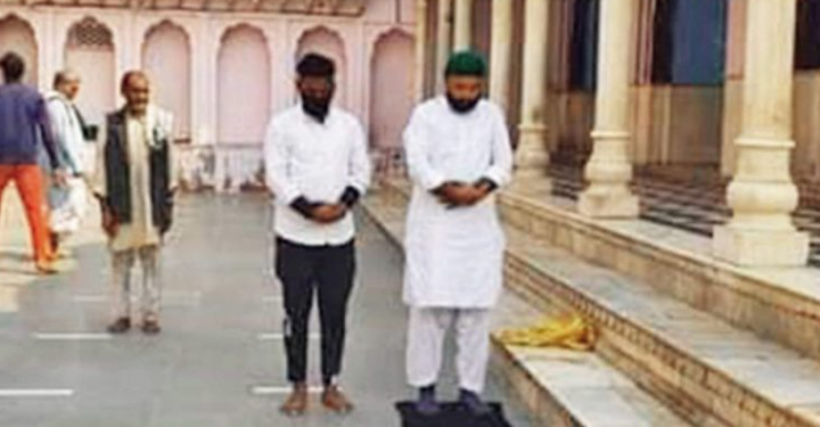
Irony died a thousand deaths on Monday, 2 November, when 48-year-old non-violent activist Faisal Khan, a founder member of a revived Khudai Khidmatgar, was arrested by the Uttar Pradesh police. The charge against him is that he spread disharmony and hurt religious sentiment, by offering namaz at a Krishna temple in Mathura. He and three other members of his organisation, whose name roughly translates to “servants of god”, have been charged by the police, though Faisal is the only one arrested so far.

Faisal was arrested at “Sabka Ghar”, a centre for communal harmony he has established near Ghaffar Manzil. People of all faiths can stay at this centre and celebrate festivals of all religions together. He had revived the historic Khudai Khidmatgar, an organisation established by the legendary Abdul Ghaffar Khan, also known as Frontier Gandhi, whose role in the anti-colonial struggle has been documented in South Asia and the world.

Faisal himself is well-regarded for his deep knowledge of Hindu and Islamic religious traditions and scriptures, and it is for promoting harmony within India, and between India and Pakistan, that he is most recognised. He and his team have also provided relief to people devastated by communal riots or natural disasters.

( Read the complete article here)

Who is afraid of anuradha bhasin ?

Attacks on the media have become more “sophisticated”, such as stopping advertisements, which adds to the threat of violence.

Anuradha bhasin

In the first week of October came news from Jammu that the government-allotted apartment where Anuradha Bhasin, the executive editor of Kashmir Times has lived for twenty years, had been ransacked. The act was allegedly perpetrated by the relative of a former member of the Legislative Council. The intruders tried not to be photographed in the act by Bhasin, but later she published them and wrote on social media about how her “jewellery, silverware and other valuables” were taken by them in “connivance with the [Jammu and Kashmir] Estates Deptt and some police personnel”. Bhasin had not been served a show-cause notice to vacate the flat.

Soon after the office of her newspaper, located in the Press Enclave area in Srinagar, was also sealed, again without giving its legal owner or editor any reason. “Today, Estates Deptt locked our office without any due process of cancellation & eviction, same way as I was evicted from a flat in Jammu, where my belongings including valuables were handed over to ‘new allottee’,” Bhasin wrote.

One is suddenly reminded of the various storms the oldest and most-circulated newspaper published from Jammu and Kashmir has faced all these years. In 1983, some 200 Hindu right-wing lumpen, armed with batons and sharp weapons, barged into the offices of Kashmir Times in Jammu and attacked the editor at the time, Ved Bhasin. This attack followed a news report published by the then forty-year-old newspaper, which had apparently “hurt” their sentiments. The grand old man of English journalism, as Ved Bhasin was known in Jammu and Kashmir, survived the attack and continued his work with renewed vigour.

(Read the full article here)

Postcolonial Critiques of Modernity : Dr Ravi sinha

( New Socialist Initiative presents the 2nd Lecture* in the Series on Modernity, 18 th October 6 pm IST)

*Youtube Link to the first lecture : https://youtu.be/J5m7Z-I8jPg


Continue reading Postcolonial Critiques of Modernity : Dr Ravi sinha

Petition to Ban Toxic News Channels

The following petition initiated by Prof Apoorvanand ; Bhasha Singh, Journalist/Activist ; Jitendra Kumar, Senior Journalist ;  Mahendra Mishra, Editor, Janchowk and Subhash Gatade appeals to the Associated Chambers of Commerce and Industry of India (ASSOCHAM), The Confederation of Indian Industry (CII), The Dalit Indian Chamber of Commerce & Industry (DICCI) and The Federation of Indian Chambers of Commerce & Industry (FICCI) to boycott toxic new channels.  The petition can be signed here :

It is a welcome sign that two prominent business houses, namely Bajaj Auto and Parle have taken the WELCOME DECISION to not advertise on TV channels spreading hatred. We urge all the advertisers to BOYCOTT HATE MONGERS, because the history is witness that the hate ruins the whole society and does not spare anyone, however rich and high and mighty a person may be. Let us remind ourselves the unforgettable words of Pastor Martin Niemoller that he spoke on emerging from the Nazi prison: “… When they came for me, there was none left to protest”. Don’t ask for whom the bell tolls, it tolls for thee.

These corporates need to recall that not long ago when Black Lives Matter movement was at its peak in the West, more than 1,000 companies had decided to boycott a section of social media platforms for their dubious stand on race.

We are aware of the background: The qualitative changes – for the worse – that have taken place in the Indian media, especially the electronic variant during last few years. The ownership of the large media houses has become limited to a few big players. And these big corporates are not concerned with the concerns of the common people, and use the media for their own and their political masters’ vested interests by focusing on non-issues and indulgence in sensationalism, false propaganda and hatred – thereby actively participating in the destruction of social unity in diversity among Indians that has existed despite any and every difference of class, caste, gender, region, religion, language, ideology or any other.

Without going back to the times when the lynching became the new political weapon – with the accused being welcomed by the ruling party leaders and even minister – during the last few months, we saw that in order to deflect attention from the catastrophe that had befallen on the people in general but migrant labour in particular because of the COVID-19 pandemic and to advance the agenda of demonizing Muslims – a la Jews in Nazi Germany – how ‘Tablighi Jamat’ was willfully portrayed falsely as the ‘corona jehadi’ and what not. Then, we witnessed the suicide of Sushant Singh Rajput being transformed into an endless ‘issue’, and the less said about the latest Hathras gang-rape, the better – the bizarre brazenness of hate-speech and hate-driven crime is unmistakably on the rise!

HIGH TIME THAT BOYCOTT OF HATE MONGERS BECOMES A COLLECTIVE PRACTICE!

A history of conservative strike on books

Even in a future in which books are outlawed, ideas cannot be vanquished.

Nazi's Boook burning

“You may burn my books and the books of the best minds in Europe, but the ideas those books contain have passed through millions of channels and will go on,” wrote Helen Keller, in An Open Letter to German Students in 1933. Keller’s How I Became a Socialist was on the list of books to be burned. “History has taught you nothing if you think you can kill ideas. Tyrants have tried to do that often before, and the ideas have risen up in their might and destroyed them,” she wrote.

Today you cannot perhaps have campaigns like Nazi’s book burnings, nor can books disappear off the shelves as they did in the United States during the McCarthy era. Yet the powers that be have thought of ingenious ways to stop people from reading books.

A recent order by the department of education in Britain needs to be seen in this context. It has ordered schools in England to stop accepting funds from groups or organisations which have expressed the desire to end capitalism. Anti-capitalism is seen by the department as an “extreme political stance”, similar to opposing freedom of speech, anti-Semitism and endorsing illegal activities.

( Read the full text here)

Hathras and Beyond: the Upper Caste Counter-Revolution


If the post-Mandal Dalit Bahujan upsurge was an expression of the democratic revolution, the advent of Adityanath’s BJP government constituted the beginning of a counter-revolution that is on the way to consolidating itself in Uttar Pradesh.

Police at the Delhi-UP order, image courtesy The Print

The facts of the case are well known, even though the Yogi Adityanath government in Uttar Pradesh is trying, ever so hard, to produce a different narrative by resorting to the usual Hindutva tactic of assigning it to an international conspiracy. It is typical of the utterly farcical and shoddy nature of the Indian police (and maybe indicates the regime’s over-confidence) that it in the name  of collecting evidence of the conspiracy, it has done a cut-and-paste job from an American site, even forgetting to delete references to ‘NYPD’ and ‘white supremacism’! Incidents of gang-rape and murder have since also happened elsewhere in the state, notably in Balrampur and Bulandshahr. We are witnessing the heinous episode of the Hathras gang rape and murder when the memory of the Unnao rape case in which then BJP leader Kuldeep Sengar was accused, is still fresh in our minds. The victim’s father died in police custody, having already been very badly beaten by Sengar’s brother and their goons, a video of which was proudly circulated on social media. Some other members of the family were killed in an  accident when a truck with a blackened number plate hit their car. In a second rape case, in the very same Unnao, two years later, a 23-year old woman who had been raped and was on the way to a hearing of the rape case, was caught and set ablaze by five men and died soon after that. In the first case, the rape-accused was a ‘popular’ figure – a Rajput leader – in whose support demonstrations were organized after he was arrested. In the second case, the girl was a Lohar (a blacksmith jati) while those who brutalized and killed her were Brahmins.

Continue reading Hathras and Beyond: the Upper Caste Counter-Revolution

Over 10,000 Feminist groups and individuals condemn gangrape and murder of dalit woman in hathras

Received via SAHELI WOMEN’S RESOURCE CENTRE

We condemn the horrific rape and murder of a young Dalit woman from Hathras, UP.

We stand with the family in their sorrow. Extend support, solidarity and rage.

We demand immediate action against the state officials responsible for mishandling the case, destroying key evidence, and further traumatising the family and community.

SHAME ON THE STATE THAT STANDS WITH THE GUILTY.
SHAME ON THE STATE THAT INCREASES THE IMPUNITY WITH WHICH UPPER CASTE FORCES COMMIT VIOLENCE AND HATE CRIMES.

Today, over 10,000 people from all walks of life, cutting across caste, religion, gender, occupation and community came together from almost every state in India and more than a dozen countries across the world such US, UK, Canada, Australia, UAE, Hong Kong, Japan, Nepal, Netherlands, Sweden, Slovenia etc to demand justice for the heinous rape, brutalising attack and murder of a young Dalit woman from Hathras.

In a sharp statement condemning the incident, they got together to say thatdespite a continuing saga of countless other cases of brutal sexual assault and murders especially of young Dalit women the conscience of this nation does not seem to be shaken enough to do anything serious to stop the systematic targeting of women, Dalits and the poor.

While there is a historicity to these incidents, but under CM Yogi’s rule, Uttar Pradesh has only gone from bad to worse. Crimes against women and Dalits have increased, and police have been given unlimited powers without any accountability. Today UP tops the charts for atrocities against Dalits, it also tops the charts for crimes against women.

Continue reading Over 10,000 Feminist groups and individuals condemn gangrape and murder of dalit woman in hathras

बेटी बचाओ का नारा देने वाले बलात्कारियों को बचाने में लगे हैं – यौन हिंसा और राजकीय दमन के खिलाफ महिलाएँ

Statement by WOMEN AGAINST SEXUAL VIOLENCE AND STATE REPRESSION on Hathras and other cases in UP

यौन हिंसा और राजकीय दमन के खिलाफ महिलाएँ (WSS)  उत्तर प्रदेश में महिलाओं पर बढ़ रही यौन हिंसा पर चिंता व्यक्त करती है। पिछले दिनों हाथरस और बलरामपुर में दलित लड़कियों के साथ हुए बलात्कार और हाथरस के पूरे मामले में उत्तर प्रदेश पुलिस और प्रशासन की लापरवाही और बलात्कारियों को फायदा पहुंचाने वाली कार्यवाही, जिसमें रातों रात पीड़िता के शव को जलाना भी शामिल है, की कड़े शब्दों में निंदा करते करते हैं। 

हाथरस के जघन्य बलात्कार और हत्या की घटना पर रोष व्यक्त करते हुए WSS का कहना है कि उत्तर प्रदेश में महिलाओं और उसमे भी दलित समुदाय की महिला की कोई सुनवाई नहीं है।

Continue reading बेटी बचाओ का नारा देने वाले बलात्कारियों को बचाने में लगे हैं – यौन हिंसा और राजकीय दमन के खिलाफ महिलाएँ

Unpacking Religious Nationalism

Review of ‘Religious Nationalism – Social Perceptions and Violence : Sectarianism on Political Chessboard‘- Ram Puniyani (Media House 2020)

“Blatant dictatorship – in the form of fascism, communism, or military rule – has disappeared across much of the world. Military coups and other violent seizures of power are rare. Most countries hold regular elections. Democracies still die, but by different means.

Since the end of the Cold War, most democratic breakdowns have been caused not by generals and soldiers but by elected governments themselves.”

(How Democracies Die, Steven Levitsky and Daniel Ziblatt)

The contrast had never been so sharper.

Continue reading Unpacking Religious Nationalism

How to see in the dark? An open letter to the women in cinema collective

Dear friends in the WCC

I am writing to you at a time so dark that unless we hold hands and feel the warmth of each others’ palms, we may even lose our sense of reality. This is my way of holding your hand and gaining strength from your presence.

Continue reading How to see in the dark? An open letter to the women in cinema collective

AIDMAM & NDMJ Condemn Rising Atrocities Against Dalit Women and Minor Girls in UP

Joint Press Statement issued by All India Dalit Mahila Adhikar Manch (AIDMAM)  and National Dalit Movement for Justice (NDMJ)

On 29th September 2020 India has once again failed Dalit Women and Girls in upholding their rights and safety; we have lost another young life to the savage brutal gangrape and murder. This brutal incident occurred on 14th September in Hathras, Uttar Pradesh and once again exposes the harsh realities of caste based sexual assault faced by Dalit women and girls in this country. Victim was dragged with the dupatta around her neck into the field where she was gang raped; suffered severe spinal cord injury, severely beaten up and also got deep cut in her tongue as she fought back the rapist. She was not in a situation to give her statement till 23rd September 2020 due to the severe injuries that paralyzed her condition.
The level of brutality and inhumanity continues even after the demise of the victim, as the UP police forcibly cremated the body in the early morning around 3 AM on 30th September. Victim’s body was burnt by the police against the will of the family members and not letting them take her home one final time. Beside this, the police locked family members and locals inside the house as per the statement of family members of the deceased.

Rising Atrocities
Such ghastly incidents of violence are perpetrated everyday against women and minors and especially during the Pandemic and the Lockdown. The state of Uttar Pradesh has witnessed several cases of atrocities against Dalit women; with Lakhimpur Kheri leading in the graph of violence. In the past 60 days more than six atrocities were reported in the district against Dalit women and minor girls. Similarly in Saharanpur district, six cases of abduction and rape have been reported where NDMJ has intervened. These gruesome incidents of sexual violence reflect the real picture of Indian society constructed on violent casteist patriarchal structure.
It should be noted that the crime rate against Dalits in Uttar Pradesh has been rising exponentially in the last few years. As per the NCRB report of 2018, Uttar Pradesh tops the list of number of crimes committed against Dalits including Dalit women in 2018. Also, Uttar Pradesh has recorded the maximum number of cases of rape (526), attempt to rape (48), incidences of kidnap and abduction of Dalit women (381) and incidences of assault (711) in the year of 2018 under the SC/ST (PoA) Act. As per the compiled data of the NCRB reports of 2014-18, Uttar Pradesh has witnessed the maximum number of atrocities against Dalit women in India and an increase of 15% in the number or rape cases against Dalit women from 2015-18. 7,920 number of atrocities against Dalit women have been registered under the SC/ST (PoA) Amendment Act in Uttar Pradesh from 2014-18. A big majority of this figure has been for the cases of assault (3,421) and rape (2,410) of Dalit women. Attempt to rape (219) and kidnap and abduction (1,870) also form a major form of violence committed against Dalit women in Uttar Pradesh from 2014-18. Continue reading AIDMAM & NDMJ Condemn Rising Atrocities Against Dalit Women and Minor Girls in UP

And Now, Pathetic patriarchy

Finally. Decades have passed in which we slumbered on eased by the magic mantra that women’s empowerment will emerge like a butterfly from the cocoon of women’s self-help groups, whispered in our ears by the state in Kerala. In the meantime, what we saw was often the opposite. Indeed, the more women became central to family sustenance and public care-giving in society, the deeper the misogyny penetrated, the wider it spread.

Continue reading And Now, Pathetic patriarchy

Ethics of Selective Outrage – On Converting Mosques and Museums: Aejaz Ahmad and Irshad Rashid

Guest post by AEJAZ AHMAD and IRSHAD RASHID

What does turning Hagia Sophia into a mosque mean for global political practice? 

In an unusally brazen move Turkey’s top court recently ruled in favour of transforming Hagia Sophia, a museum of global tourist attraction, into a mosque. Originally a cathedral built in pre-Islamic Turkey but converted into a mosque when Ottomans invaded Constantinople in 1453, with the liquidation of the Ottoman Empire, Attaturk transformed it into a museum in 1934 as a secular gesture to herald what is called modern secular Turkey. This was more recently followed by  transforming another historic Chora Church, that went exactly through the same iteration, into yet another mosque.

Continue reading Ethics of Selective Outrage – On Converting Mosques and Museums: Aejaz Ahmad and Irshad Rashid

Sursamalaya’s Documentary Series “Folk Stories” – Assam Beyond Bihu, Borgeet and Sattriya: Dipanjali Deka

Guest post by DIPANJALI DEKA

I recently finished watching Sursamalaya’s “Folk Stories” on Youtube, a documentary series made during the lockdown.

 “Folk Stories” depicts the art and life of folk artists from many lesser known genres of Assam. It has released one season as of now and is amply promising, for many reasons. One of them is the accessibility offered, in short crisp episodes, to the social and cultural landscape of Assam beyond the genres of Bihu, Borgeet and Sattriya popularly known to the mainstream.

In the first episode, we meet Mehu Bora from Golaghat who builds traditional instruments like tokari (stringed instrument), dotara (stringed instrument), bahi (flute), pepa (hornpipe) etc.

Sur Samalaya Resource Centre for Arts was established in 1990 by renowned folk artist Dijen Gogoi. What began with a small workshop on instrument-making, later took off to train many local youth in producing almost 100 indigenous musical instruments belonging to various communities of North East India. The Research and Documentation cell of Sursamalaya looks into research, publication and documentation on indigenous cultures, under the ambit of which the series “Folk Stories” has come into fruition. Continue reading Sursamalaya’s Documentary Series “Folk Stories” – Assam Beyond Bihu, Borgeet and Sattriya: Dipanjali Deka

सब चंगा सी: मुरीद बरघूती/अनुवाद: आयेशा किदवई

You can see the English translation by Radwa Ashour of the original poem in Arabic by the Palestinian poet Mourid Barghouti , after this translation into Hindustani by AYESHA KIDWAI

The Roadmap Creeps in the Page of My Notebook by Arpita Singh

सब चंगा सी

मैं अपने आप को देखता हूँ:

सब चंगा सी.

अच्छा ही तो दिखता हूँ,

और कुछ लड़कियों को तो,

मेरे पक्के बाल भी भा जाएं;

मेरा चश्मा सुड़ौल है,

शरीर का तापमान ठीक ३७ डिग्री.

इस्त्री-की हुई कमीज़ है मेरी, और मेरे जुते काटते नहीं.

सब चंगा सी. Continue reading सब चंगा सी: मुरीद बरघूती/अनुवाद: आयेशा किदवई

Secularism and the Myth of ‘Hindu’ Tolerance

‘Secularism’ has now become a bad word and it is quite fashionable to attack, criticize and ridicule it. Just about anyone, regardless of whether s/he has spent even a minute thinking about it, can attack it. A television channel  recently even decided to have a vote on whether we should ‘have’ secularism or not, I understand, after an utterly ill-informed debate. It is almost as if the blame for everything that is wrong with Indian society can be laid at the door of this monster called ‘Secularism’. Modern Hindu ideologues have of course, mastered this art of blaming every evil practice of Hindu society on to some ‘Other’: From untouchability and sati to child marriage, purdah and the everyday violence of caste oppression –  everything apparently happened because of ‘Islam’ and Christianity’. Later, Marxism and secularism were added to the list. And while we are at it, let us remember that the great Bal Gangadhar Tilak led what was perhaps the first mass nationalist anticolonial mobilization, against raising the  Age of Consent of girls for sexual intercourse from 10 to 12 years! Much of that righteous indignation continues to be the hallmark of the new defensiveness that the 21st century ‘raging Hindu’  exhibits.

For everything wrong in the behaviour of these adult men with walrus moustaches, an explanation exists in some founding childhood trauma for which their adulthood can never be held responsible! ‘Secularism’ now is the name of the insistence that wants to hold the modern Hindu responsible for his acts today, rather than let it remain suspended in a permanent state of childhood. I suspect, the term ‘secularism’ today, in Hindu Right discourse, is no longer about the ‘separation of religion and politics’ or ‘sarva dharma samabhava‘ (equal respect for all religions) and ‘dharma-nirpekshata‘ (neutrality between religions) at all, but the ghost-house where all the pathologies of this traumatized child(hood) are played out.

Continue reading Secularism and the Myth of ‘Hindu’ Tolerance

Statement of Solidarity for Dr. Maroona Murmu from the Faculty of Presidency University

We are publishing below the following statement in support of and solidarity with Dr Maroona Murmu, signed by more than eighty faculty members of Presidency University, was issued yesterday.  

We, the undersigned teachers of Presidency University, Kolkata, are shocked to know about the recent attacks on Dr. Maroona Murmu, Associate Professor of History, Jadavpur University, Kolkata.

Dr. Murmu is an accomplished scholar, an activist, and an intellectual. She is an important voice of our time insofar as she regularly writes and speaks about the rights and plights of the Adivasi community. She is a unique personality to have graced the academia with her rare ability to combine scholarship with activism.

We are aware that the academic space in West Bengal, as elsewhere in the country, is, even today, predominantly Brahminical. Students and teachers hailing from SC, ST, and OBC communities regularly face discrimination due to their caste and tribal backgrounds. The suicides of Chuni Kotal, Rohith Vemula, and Payal Tadvi amply demonstrate the fatal consequences of such discrimination. As various instances from academic institutions from across the country suggest, not only students but teachers from such communities also face victimization regularly. We are also aware that only a tiny percentage of such instances of discrimination make it to the news.

Continue reading Statement of Solidarity for Dr. Maroona Murmu from the Faculty of Presidency University

यह भी तो ठीक है : मुरीद बरघूती/अनुवाद: आयेशा किदवई

You can see the English translation by Radwa Ashour of the original poem in Arabic by the Palestinian poet Mourid Barghouti , after this translation into Hindustani by AYESHA KIDWAI

http://www.metmuseum.org/art/collection/search/454359

“The Death of King Dasharatha, the Father of Rama”, Folio from a Ramayana ca. 1605. Courtesy the Metropolitan Museum of Modern Art


ऐसे मरना भी ठीक है, अपने बिस्तर में

साफ़ तकिया पर सर रखे

अपने दोस्तों के बीच.

ऐसे मरना भी तो ठीक है,

चाहे एक बार ही सही,

हाथ सीने पर बांधे हुए,

खाली, बेरौनक़,

बिन एक भी खरौंच के,

बिन बेड़ियों के,

बिन बैनर उठाये,

बिन याचिका दिए. Continue reading यह भी तो ठीक है : मुरीद बरघूती/अनुवाद: आयेशा किदवई