Category Archives: Government

Modinama : Issues That Did Not Matter

In May 2019, the party of the Hindu Right, Bharatiya Janata Party, under Narendra Modi, won a spectacular electoral victory.

The victory seemed to defy common sense – why did conversations of life and livelihood not dominate the election? Why did the thuggery of the Hindutva vigilantes seem inconsequential to vast numbers of ordinary, decent people? Why is an aggressive, masculine fundamentalism so normalized in our society today?

In other words, why didn’t the issues that matter, seem to matter? The question goes deeper than electoral arithmetic. It asks if Modi and the BJP have not only changed the electoral map, but also begun to corrode social norms.

This book, based on Modi’s first five years as prime minister, is a warning for the next five.

SUBHASH GATADE

Subhash Gatade is a left activist and author. He is the author of Charvak ke Vaaris (Hindi, 2018), Ambedkar ani Rashtriya Swayamsevak Sangh (Marathi, 2016), Godse’s Children: Hindutva Terror in India (2011) and The Saffron Condition (2011). His writings for children include Pahad Se Uncha Aadmi (2010).

978-81-934666-9-8

LeftWord Books, New Delhi, 2019

Language: English

128 pages, 5.5″ x 8.5″

Price INR 195.00 Book Club Price INR 137.00

(https://mayday.leftword.com/catalog/product/view/id/21450)


Lok Sabha Elections 2019 – Calling the Election Commission to account: Statement by retired civil servants, veterans, academics and concerned citizens

Letter to the Election Commission of India written by 64 former civil servants, endorsed by 83 veterans, academics and other concerned citizens.

Shri Sunil Arora, Chief Election Commissioner, Shri Ashok Lavasa,  Election Commissioner, and Shri Sushil Chandra, Election Commissioner.

Election Commission of India.

Sirs,

Serious Irregularities in the Conduct of General Elections, 2019  

  • We are a group of former civil servants that takes up, from time to time, matters of exceptional national interest, seeking to remind our cherished democratic institutions of their responsibility to uphold the lofty ideals of the Constitution. We write to you today to draw your attention to the several very troubling and still unexplained issues pertaining to the conduct of the General Elections, 2019, by the Election Commission of India (ECI).
  • From time to time, the media has reported on various irregularities in the conduct of the 2019 General Elections. While we accept that not every media report is accurate or true, the ECI’s non-rebuttal of an untrue or inaccurate story leaves the public to draw its own conclusion: that the ECI has no valid explanation to offer. The mere dismissal of the allegations as baseless, without an explanation as to why they should be so considered, is unsatisfactory. As the custodian of the most precious commodity in a democracy – the people’s mandate – it is your duty to be transparent, and accountable to the Constitution and the people of India. Continue reading Lok Sabha Elections 2019 – Calling the Election Commission to account: Statement by retired civil servants, veterans, academics and concerned citizens

How Many More ‘Halal’ Ponzi Schemes?

It is important to note that the very idea of Islamic banking and promoting it as a parallel to conventional banking – which is being portrayed as un-Islamic – and which has caught the imagination of a section of god-fearing Muslims, is a clear manifestation of shifts in Muslim politics over the world.

'Halal' Ponzi Schemes

Image for representational use only.Image Courtesy : Business Today

Afzal Pasha, a 55-year-old labourer, is dead. He died of a heart attack a few days back.

The news that the attractive scheme in which he had invested his life’s savings worth Rs 8 lakh went bust proved unbearable for him.

While Afzal’s tragic death could catch headlines, we will never know the plight of the thousands of investors – all of them belonging to the Muslim community – who had similarly invested their hard-earned savings in the said investment scheme launched by Mohammed Mansoor Khan in 2006 through his firm I Monetary Advisory (IMA).

The scheme was declared ‘Shariah-compliant’ and worked on ‘“no interest” policy of Islamic banking. A section of the clergy had even certified this scheme as “halal”, which means “lawful” or “permitted” in Arabic, which helped it easily earn the trust of the Muslim community. Small investors from across the state of Karnataka had flocked to it with their investments ranging from a few thousand rupees to a few lakhs.

A few days back, the promoter of IMA just disappeared from Bengaluru and is supposed to have fled to Dubai.

Continue reading How Many More ‘Halal’ Ponzi Schemes?

रामचरण मुंडा की मौत पर दो मिनट का मौन!

सोचने का सवाल है कि क्या इन मौतों को महज तकनीकी गड़बड़ियों तक न्यूनीकृत किया जा सकता है? क्या इसके कोई संरचनागत कारण नहीं हैं? ‘आखिर अधिक अनाज पैदा करने के बावजूद हम भूख की समस्या को मिटा क्यों नहीं पा रहे हैं।
Munda

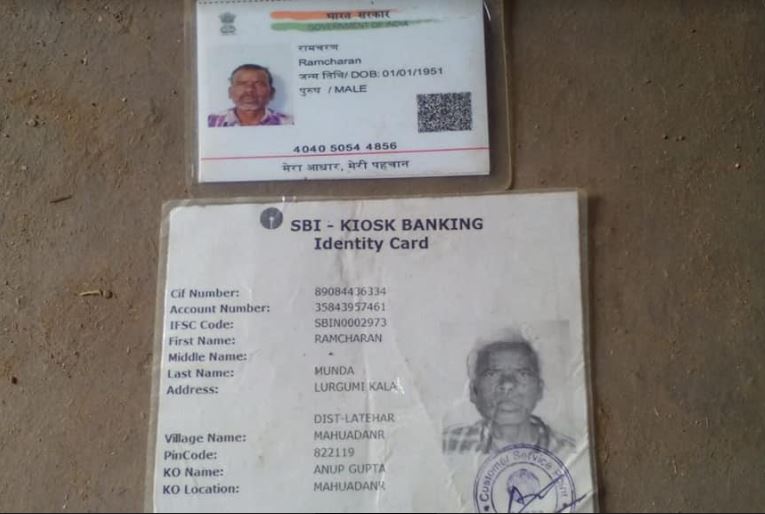
‘‘रामचरण मुंडाउम्र 65 साल को विगत दो माह से सार्वजनिक वितरण प्रणाली के तहत राशन नहीं दिया गया था। हमारे अधिकारियों ने इसकी सत्यता की पड़ताल की है।’’

लातेहारझारखण्ड के डिप्टी कमीशनर जनाब राजीव कुमार द्वारा लातेहार के दुरूप गांव के रहने वाले उपरोक्त आदिवासी की मौत पर की ऐसी स्वीकारोक्ति बहुत कम देखने में आती है।

अपनी पत्नी चमरी देवी और बेटी सुनिला कुमारी के साथ रामचरण गांव में ही रहते थे उनके बेटे की मौत दो साल पहले टीबी के चलते हुई थी। राशन डीलर की बात मानें तो चूंकि इलाके में इंटरनेट की सेवा में दिक्कते हैंऔर राशन वितरण के लिए ऑनलाइन बायोमेट्रिक सिस्टम कायम किया गया हैइसलिए रामचरण को अनाज नहीं दिया जा सका था।

इस मामले की असलियत कभी सामने आएगी इस पर संदेह है।

वैसे भूख से होने वाली मौतें अब देश में अजूबा चीज़ नहीं रही।

दो साल पहले झारखण्ड के ही सिमडेगा जिले के कारीमाटी गांव की 11 वर्षीय हुई संतोषी की मौत के बाद ऐसी मौतों पर लोगों एवं समाज की अधिक निगाह गयी थी। पता चला था कि पूरा परिवार कई दिनों से भूखा था और राशन मिलने के भी कोई आसार नहीं थे क्योंकि राशन कार्ड के साथ आधार लिंक न होने के चलते उनका नाम लिस्ट से हटा दिया गया था। अपनी मां के गोद में ‘भात भात कहते हुए दम तोड़ी संतोषी की दास्तां ने लोगों को विचलित किया था।

( Read the full article here : https://hindi.newsclick.in/raamacarana-maundaa-kai-maauta-para-dao-mainata-kaa-maauna)

Update on “tally mismatch” in 2019 Lok Sabha Elections: Ravi Nair

In an earlier post  we made note of the serious matter of unaccounted movement of EVMs in private vehicles in different parts of the country and the mismatch between the ECI figures for voter turnout and EVM votes cast, neither of which the EC has satisfactorily explained until today.

Now in a detailed analysis in NewsClick, Ravi Nair points out that even three weeks after the last phase of the election, ECI is yet to publish the “final data”, and whatever it has put out till now is “provisional numbers”.  More worryingly, Nair points out that when glaring anomalies came into the public domain, ECI not only deleted the uploaded data from both Suvidha Portal and its main website, but also issued a release to say that whatever was published was “the provisional voter turnout data”, which was “tentative”.

However, the ECI never bothered to answer the fundamental questions: How did it announce winners based on these “provisional” and “tentative” data? How did the automated counting of votes polled in EVMs become “tentative”?

Read Ravi Nair’s article “ECI’s stance on data discrepancies: No right to question?” on NewsClick here.

God in the Classroom!

Unfolding Debate about Secularising Education

( To be published in ‘Indian Journal of Secularism)

“There is in every village a torch – the teacher; and an extinguisher – the priest.”
-Victor Hugo

Introduction
“Keep the words God, Jesus and the devil out of the classroom.”

A school teacher’s message on the first day of the school for first-grade students had caused tremendous consternation among a section of the parents.

She had a simple rationale to present her proposal. With their being a public school with children coming from different religions and beliefs joining it, she did not “[w]ant to upset a child/parent because of these words being used,” In her letter she had also advised them to talk to the children when they go to the church/temple/synagogue – whatever might be the case – or discuss the issue at home at an appropriate time and place of talking about it.” (https://www.indystar.com/story/news/education/2017/08/30/teacher-tells-first-graders-dont-talk-god-classroom/612118001/)

Well, instead of the discussion getting fixed on the slow imposition of the concept of God or closing of child’s minds it turned into a debate on students’ free speech rights. It did not take much time for the management of the school to rescind this proposal.

There is nothing new about this dilemma faced by a teacher who has welfare of students at the center of her/his concerns. Continue reading God in the Classroom!

The “massive mandate” of 2019 and the role of the Election Commission

Caution: Long read!

This is the elephant in the room, is it not? Was this “massive mandate” of the Lok Sabha elections 2019, the result of a free and fair election? Should we continue to discuss this outcome – the scale of the BJP victory, the numbers of seats, the margins by which seats were won – through political analysis alone?

Rather, has not political analysis of the election become inevitably deeply influenced by these margins and these numbers of seats, by the scale of the sweep?  In other words, the analysis is of necessity post facto, assuming that these seats have actually been won fairly, and therefore represent the views of the electorate.

I found very revealing a story by two Reuters journalists who covered rural North India extensively.  Mayank Bhardwaj and Rajendra Jadhav ruminate on how they could have gone so wrong in assessing the mood of the electorate. Although they say they never thought Modi would lose this election, it looked certain that he would return with a reduced majority. There was nothing  they heard and observed on the ground that suggested the actual outcome. They conclude that next time they will travel even more, push their respondents harder, “be more aware of our limitations.”

Many seasoned journalists have the same sense of shock. But what if they were not wrong after all?

Continue reading The “massive mandate” of 2019 and the role of the Election Commission

Picking Humanity Over Religion: A Small but Critical Step

The idea of education being imparted without any compulsion to declare one’s religion is definitely a welcome thing

Bethune_College_Kolkata

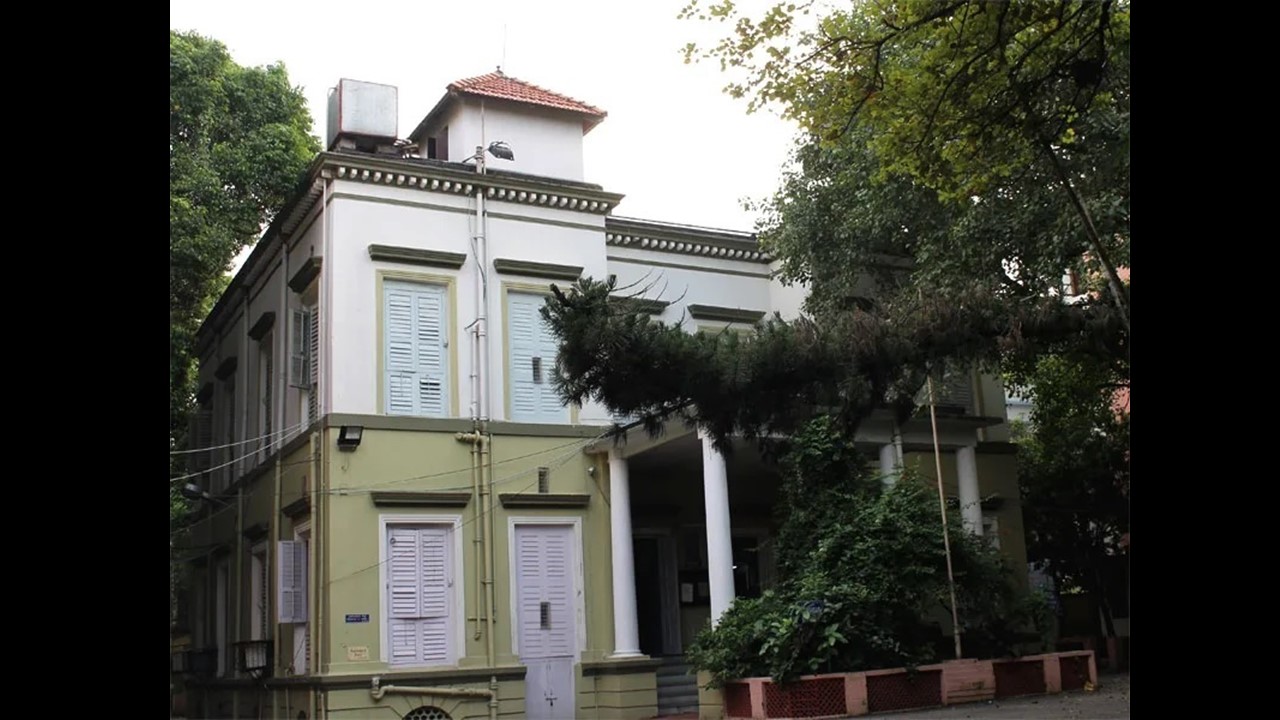
Principal’s office of Bethune College, Kolkata, which included Humanity as an option under the religion category. Image Courtesy: college dunia


A college admission form introducing new options under ‘religion’? Talking about humanity, secular, non-religious, atheism!

Well, in an ambience loaded with religiosity and its increasing conflation with the State, it is rather difficult to believe that some colleges may take such a creative step to convey how they see what is happening around them? No doubt this is a small step but, as noted by analysts, this is an attempt to break/challenge the ‘construction of identity, thought and social and political space, indirectly conveying the vision of a secular and diverse India.’

The significance of this little step can be better understood if one looks into the fact that the elections held to the 17th Lok Sabha — which has returned the Bharatiya Janata Party (BJP) to power — have demonstrated that BJP is ‘the most preferred party of young India’. It drew support cutting across caste as well as class lines. This is the same BJP which, along with its ‘Parivar’ siblings, has consciously tried to conflate religion with exercise of power and has been successful in collapsing the majority faith into rabid nationalism that targets differences and dissent and other specific groups, as the ‘other’ according to its worldview.

( Read the full article here : https://www.newsclick.in/Religion-Humanity-College-Admissions-BJP-School-Education)

Arming Children, Securing a Future?

By distributing knives to meritorious children, organisations like the Hindu Mahasabha, are trying to give religious legitimacy to what is essentially a political use of faith.

Hindu Mahasabha distributing knives to children

Image courtesy: Twitter

What does an organisation do when it wants to congratulate meritorious students who have excelled in exams?

Reward them with some gifts, say, books, and (if finances allow) give them scholarships or laptops to facilitate their further studies. Definitely not gift them knives.

Well, Pooja Shakuni Pandey, the national secretary of Hindu Mahasabha, who had been making news for controversial reasons for more than a year, exactly did this on Savarkar Jayanti. This mathematics professor made it clear that she was not much interested in how they study further or what they wanted to become. With this knife distribution programme, along with a copy of Bhagwad Gita, she wanted to ‘create Hindu soldiers out of these children’ and it was basically a “[s]tep to motivate Hindus and empower them, especially the younger generation, with knives to protect themselves.”

( Read the complete text here : https://www.newsclick.in/Hindu-Mahasabha-Distributing-Knives-Meritorious-Children-Political-Use-of-Religion)

Modi 2.0: Majoritarianism Normalised?

This election verdict will have vital ramifications for democracy’s onward journey for decades together, and silencing and further invisibilisation of religious minorities would be its logical outcome.

minorities in india

“The crisis consists precisely in the fact that the old is dying and the new cannot be born; in this interregnum a great variety of morbid symptoms appear.”  — – Gramsci

A journalist friends’ prophesy has finally come true.

The day India launched ‘surgical strikes’ across the border supposedly to avenge the Pulwama terror attack, this friend immediately sent a message on a WhatsApp group that Narendra Modi has ensured himself a second term. He stood his ground despite few heated exchanges on the group from Left leaning friends.

In the coming days, this not so expected debacle of the secular camp and the surge of the Hindutva Supremacist camp in newer areas and communities would be further analysed/debated/discussed from various angles. It will be debated why despite the caution expressed by the likes of Amartya Sen, who had concluded how India has taken “a quantum jump in wrong direction since 2014”; how despite being cautioned by leading scholars, intellectuals, scientists of our times that the  very idea of India is at stake in the elections, the people in general did not pay any heed to their appeals and have resolved to continue the journey with a renewed frenzy in the same direction or have fully supposedly embraced this idea of ‘New India’ jettisoning the old one. Remember, not only has the Bharatiya Janata Party (BJP) been able to garner more seats than last time but its vote share has also increased more than 5%.

(Read the full text here : https://www.newsclick.in/Minorities-India-Silenced-Modi-Reelection-BJP-Majoritarianism-RSS)

Modi’s Meditation ‘Tour’

The art of legitimising religiosity in a secular country and live happily ever after.

Modi in KedarnathReligion is regarded by the common people as true, by wise people as false and by the rulers as useful. — Seneca (4 BC-AD65)

A picture is worth a thousand words.

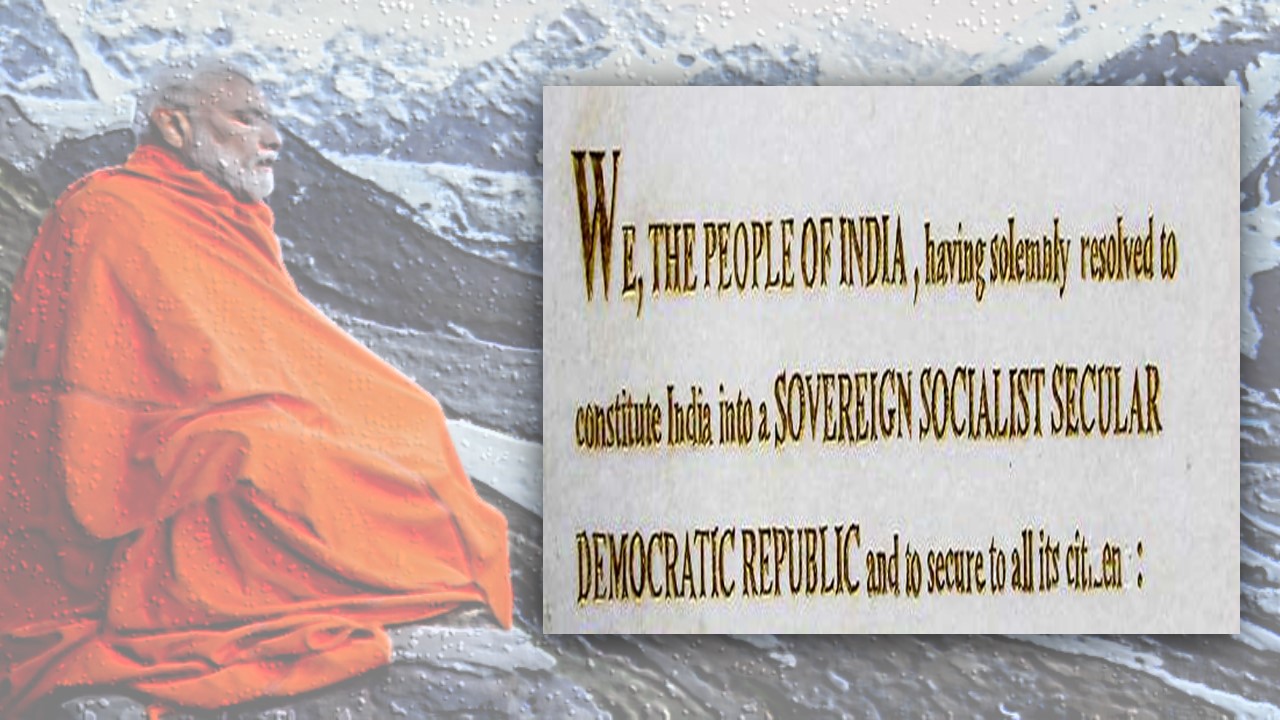
An outgoing Prime Minister of the ‘world’s biggest democracy’ seen meditating under the glare of cameras in a cave specially opened for the occasion and with a dress stitched for the event, conveys many things simultaneously.

First and foremost, it tells us that the present incumbent to the post would at least be remembered for his varied sartorial tastes among the galaxy of PMs who headed the republic earlier. It appears that either all the others lacked the sense to dress for the occasion or found it a mundane job not befitting the post and the responsibilities they held then. Continue reading Modi’s Meditation ‘Tour’

Democracy as Majoritarianism

Extract from the Preface of  ‘Hindutva’s Second Coming’

Preface

Democracy as Majoritarianism

We can never forget that everything that Hitler did in Germany was ‘legal,’ and everything the Hungarian freedom fighters did was ‘illegal.’ It was ‘illegal’ to aid and comfort a Jew in Hitler’s Germany, but I am sure that if I lived in Germany during that time I would have comforted my Jewish brothers even though it was illegal… we who engage in nonviolent direct action are not creators of tension. We merely bring to the surface the hidden tension that is already alive.
— Martin Luther King, Jr

What is the signature of democracy?

It is the understanding that minority voices will be allowed to flourish and they will not be bulldozed.
At the apparent level majoritarianism – rule by majority – sounds very similar to democracy but it essentially stands democracy on its head. For real democracy to thrive, it is essential that ideas and principles of secularism are at its core. The idea that there will be a clear separation between state and religion and there won’t be any discrimination on the basis of religion has to be its guiding principle.
Majoritarianism clearly defeats democracy in idea as well as practice.
While democracy’s metamorphosis into majoritarianism is a real danger, under rule of capital – especially its present phase of neoliberalism – another lurking danger is its evolution into what can be called as plutocracy – government by the rich.
As India enters the race for elections to the 17 th Lok Sabha, these are the two broad questions which are staring in everyone’s mind, whether the same dynamic – which has made the last five years as unique in Independent India’s history – will continue or we will witness a rupture.
It is a disturbing scenario when the biggest democracy in the world seems to have taken a ‘[Q]uantum Jump In Wrong Direction Since 2014’ (Amartya Sen) – prompting even the normally reticient community of scientists to ask people to reject the politics which ‘.[d]ivides us, creates fears, and marginalises a large fraction of our society’ and remind them that “[D]iversity is our democracy’s greatest strength; discrimination and non-inclusivity strike at its very foundation.’
Whether there would be further normalisation of majoritianism or ordinary people’s desire to live a more inclusive, egalitarian life and in a less toxic world would ultimately triumph the designs of the hatemongers and secondly, whether free run being given to the crony capitalists and moneybags would be over and ideas of redistribution would make a comeback with vengeance.
What has added a new dimension to this dynamic is the existence of a ‘self proclaimed cultural organisation’ called RSS – whose principles, ideology and activities contravene the very basis of Constitution – which is de facto ruling the country. It is an organisation whose principles “[d]epicting Indian nationalism in terms of the faith of the religious majority – have serious negative social and political implications for sections of the citizen-body and are in violation of the Constitution.” ( http://caravandaily.com/rss-principles-are-in-violation-of-constitution-detrimental-to-india-hamid-ansari/)
It was exactly 42 years back that Indian people defeated the attempts to throttle the democratic experiment by their united struggle, whether they would be we able to have an encore when more secretive, sinister and communal forces are on ascent who are also popular among a significant section of people.
0 0
The central concern of the collection of essays (some of them published earlier and revised for this collection) presented here is this normalisation of majoritarianism which is taking place here. A situation where representation of the biggest religious minority in the outgoing Parliament had been at its lowest since independence and where it is being slowly invisiblised even from public discourse.
Section I tries to situate these developments in India in South Asian context and search for any commonality in the experiences of people and also looks at the societal roots for this fascination of hate filled ideologies and leaders.
Section II deals with the ‘pioneers of the Hindutva Supremacist movement and the new icons they want to present for a ‘New India’ which is supposedly taking shape under their wings. Section III tries to offer tentative suggestions to fight the menace which is trying to overwhelm the Indian republic.
….0 0
The book is dedicated to the memory of the legendary Indonesian author Pramoedya Ananta Tur (February 20, 1925 – April 30, 2006) who survived persecution, imprisonment and censorship, whose writings have inspired generations of Indonesian People,
What was remarkable that Pramoedya, a leftist, was jailed not only during the anti-colonial struggle but had to undergo a long phase of detention which started in mid-sixties when Indonesia witnessed a CIA sponsored military coup – which witnessed killings of lakhs of people. He was released from imprisonment in 1979, but remained under house arrest in Jakarta until 1992.
His tetralogy of novels – for which he is best known – ‘Buru Quartet’ was written during the tormenting period of detention only. “Is it possible,” Pramoedya asked later, “to take from a man his right to speak to himself?”


Glory to his memory !

—————————————————————

—————————————————————-

Contents

Dedication
Preface
Section I
1. India: The Road Less Travelled by
2. Time to Militarise Hindus, Hinduise the Nation
3. South Asia: Forward March of Majoritarianism
4. Dear Hitler
Section II
5. Veer of a different Kind
6. Can the Real Shyamaprasad Mukherjee Ever Stand Up?
7. Godse: In Love with the Assasin
8. Deendayal Upadhyay: BJP’s “Gandhi”
9. Many Silences of Mr Mohan Bhagwat
Section III
10. Hindutva’s Second Coming
Appendix IV
Nehru, Ambedkar and Challenge of Majoritarianism

Index
—–
About the author
Subhash Gatade ( born 1957) is a left activist, writer and translator.
He has done M Tech ( Mech Engg 1981) from BHU-IT, Varanasi.
He has authored few books including  Modinama : On Caste, Cows and the Manusmriti ( Leftword, in press), Charvak ke Vaaris ( Authors Pride, Hindi, 2018), Ambedkar ani Rashtriya Swayamsevak Sangh ( Sugava, Marathi, 2016), Beesavi Sadi Mein Ambedkar ka Sawal ( Dakhal, Hindi, 2014), Godse ki Aulad ( Pharos, Urdu, 2013) , Godse’s Children – Hindutva Terror in India (Pharos,  2011), The Saffron Condition ( Three Essays, 2011)
He also occasionally writes for children. Pahad Se Uncha Aadmi ( NCERT, Hindi, 2010)



When ‘Strange’ Visitors Called on Ram Puniyani

Recall Kalburgi and Shahid Azmi? There are several such unconnected looking incidents in recent times that are part of the same mindset that looks for ‘internal enemies’ in every dissenting voice.

When ‘Strange’ Visitors Called on Ram Puniyani

Image for representational use only.Image Courtesy : Siasat

Ram Puniyani, the affable and relentless campaigner for communal harmony and peace, who at the age of 73 displays the enthusiasm of a 25-year-old ever ready to go from place to place with his characteristic bag full of literature, had some unusual visitors in his house a few days ago.

What was rather strange was that the trio that visited his house in plain clothes on March 9, introduced themselves from CID but were reluctant to show their identity cards and supposedly had come to make enquiries regarding a non-existent passport application, as neither Professor Puniyani nor anyone else from his family had applied for the same.

( Read the full text here : https://www.newsclick.in/when-strange-visitors-called-ram-puniyani)


Statement in Support of Prof Ram Puniyani

Condemn attempts at intimidating Prof Ram Puniyani

Related image

To
The Commissioner of Police
Mumbai

We the undersigned strongly condemn the way in which attempts were recently made to intimidate Prof Ram Puniyani by people supposedly belonging to CID. We fear that it is to silence his voice which has always remained critical of communal forces and has fought for peace and harmony.

We are told that on 9 th March three men who said they were from CID visited his home in the garb of an inquiry for passport, which neither Prof Ram Puniyani had applied for nor did anyone else from his family applied for one. What is worrisome is that they asked all kinds of objectionable questions to him and his family members.

Looking at the fact that not only the Maharashtra government but the BJP led dispensation at the center is trying to suppress all voices of dissent against their acts of omission and commission – which has generated tremendous concern among human rights defenders everywhere – we feel that this can be a precursor to involve him in some legal hassles, or implicate him in some case so that he is silenced.

It need be underlined here that Prof Ram Puniyani, who was a professor in biomedical engineering at the prestigious Indian Institute of Technology Bombay had taken voluntary retirement in December 2004 to work full-time for communal harmony in India. Author of many books on communal harmony and secularism, he writes regularly in different publications to strengthen voices of sanity and has consistently questioned and challenged divisive forces of various kinds and has even received the prestigious Indira Gandhi Award (2006) and National Communal Harmony Award (2007) apart from many other awards for his work.

We demand that an inquiry be ordered into this whole episode and the guilty be brought to book for their act of intimidating a widely known writer and noted activist.
Endorsed by

( Please send your endorsements to Ms Shabnam Hashimi, shabnamhashmi@gmail.com latest by 11 am 13 th March 10)

‘Patriotism’ Made Easy in Times of ‘WhatsApp Elections’

A WhatsApp-sponsored report, prepared in partnership with Queen Mary University, has raised the alarm that the 2019 elections in India, which already has cleavages on lines of caste, race, gender, religion, would be a fertile ground for damaging fake news.

‘Patriotism’ Made Easy in Times of ‘WhatsApp Elections’

There was a time when ‘Good Morning’ messages were causing much “pain” to internet giants?

It was the beginning of last year when the obsession of Indians with starting their day with a deluge of ‘Good Morning’ messages flooded WhatsApp, and generated a lot of chuckle. But it but also raised serious concerns such as the overloading WhatsApp servers, and clogging Android phones.

We were told how millions of Indians were getting online for the first time and how everyone was getting hooked on to WhatsApp. Their obsession with sending such messages was causing “..[s]ome serious pain for Internet giants.” Not only WhatsApp but even Google researchers in Silicon Valley had noted how “[I]nternet newbies are overloading their Android phones with Good Morning messages.”

Nobody then had any premonition that India would shortly come under scanner for the spread of online disinformation and fake news resulting in a string of murders and growth of anti-minority sentiments. A report published by BBC’s Beyond Fake News Series had tried to corroborate this.

( Read the full article here : https://www.newsclick.in/patriotism-made-easy-times-whatsapp-elections)


‘Mother to Indians’ Kasturba, Bose versus Hindu Sangathanists

Image result for kasturba gandhi

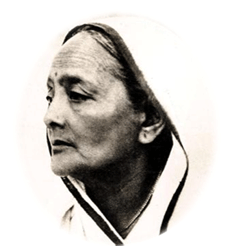
“Kasturba Gandhi is no more. She died at the age of 74 in British jail….I salute this great woman who was like a mother to Indians ….Kasturba was an inspiration for millions of Indian girls with whom she lived and met during the freedom struggle of our motherland. She was party to the many travails and tribulations of life with her great husband since the days of Satyagrah in South Africa.. She went to jail many times, which severely impacted her health but she did not fear going to jail even at the age of 74 years. When Mahatma Gandhi led the Civil Disobedience Movement, Kasturba was in the forefront of that struggle’

With these words Subhash Chandra Bose remembered Kasturba when she expired in detention at Agha Khan Palace – which had in fact been turned into a jail – on 22 nd February 1944. History bears witness to the fact that it was a death precipitated by the callous and ruthless colonial rulers who had refused to release her despite her worsening medical condition. She had been suffering from heart disease for more than four months. She also had a heart attack during this period. Continue reading ‘Mother to Indians’ Kasturba, Bose versus Hindu Sangathanists

A Statement against Suppression of Dissent by IACLALS

We are publishing below a statement sent to us by the Indian Association of Commonwealth Literature and Language Studies against the suppression and criminalizing of dissent in India

The Indian Association of Commonwealth Literature and Language Studies (IACLALS) expresses its deep dismay over the continuing assault on civic freedoms and constitutional rights of writers, teachers, students, human rights activists and public intellectuals in the country. The current political climate of fear and intimidation – fuelled and vindicated by the state and the ruling party – has simultaneously targetted entire communities through a range of religious-ethnic violence, as much as it has sought to silence conscientious voices that have spoken up against such onslaughts. Vacuous rhetorical constructions like “anti-national” and “urban naxal” – with no basis in fact or in principles of democratic governance – have been repeatedly manufactured as the grounds for punitive-legal action and media trials, through the invoking of outdated colonial codes like the sedition laws. The latest of these forms of orchestrated witch-hunt has seen the attempted arrest or chargesheeting of Hiren Gohain, Anand Teltumbde and of several JNU students – in the cause of raking up an electoral consensus against the spirit of scientific inquiry and free-thinking.

The IACLALS’ academic investments have engaged with and gained from the works and ideas of these scholars, who now face the ire of the state. As a scholarly association, we believe in the need and power of a critical public sphere, as the only promise of a living democracy. We stand in firm solidarity with them, and strongly condemn every attempt being made at gagging forms of dissent and enforcing regimes of censorship.

Pondicherry University, Feb. 8, 2019.

GJV Prasad (Chariperson), Subhendu Mund and M. Asaduddin (Vice Chairpersons), Rina Ramdev (Secretary), Angelie Multani (Treasurer)


In Imagination, in Resistance, in Solidarity and Rage – People’s Literary Festival in Kolkata: Tamoghna Halder

Guest post by TAMOGHNA HALDER

“It was the unlikeliest setting for a ‘literature festival’. A run-down auditorium with rickety chairs secured with rope. Noisy ceiling and pedestal fans. Battle scarred tables covered with threadbare cloth. But the first edition of the People’s Lit Fest, held in Kolkata, was designed to be just that – a radically different interpretation of literature and its role in modern India”

These were the opening lines of a report by Scroll.in, on the 1st edition of People’s Literary Festival, 2018. In less than a couple of weeks, the 2nd edition of People’s Literary Festival (henceforth, PLF) will commence, once again at that run-down auditorium with rickety chairs, namely ‘Sukanta Mancha’ in Kolkata. The present article hopes to shed some light on the reasons why those rickety chairs or the noisy fans are related to PLF, but before that, as a member of Bastar Solidarity Network (Kolkata Chapter), I feel compelled to explain why we even organize PLF in the first place.

Continue reading In Imagination, in Resistance, in Solidarity and Rage – People’s Literary Festival in Kolkata: Tamoghna Halder

Gandhi’s Assassination – Much More Than Just a Murder

Mahatma Gandhi’s assassination was a culmination of a vicious campaign launched by Hindu communal groups in post-independent India

Gandhi’s_Assassination_Much_More_Murder

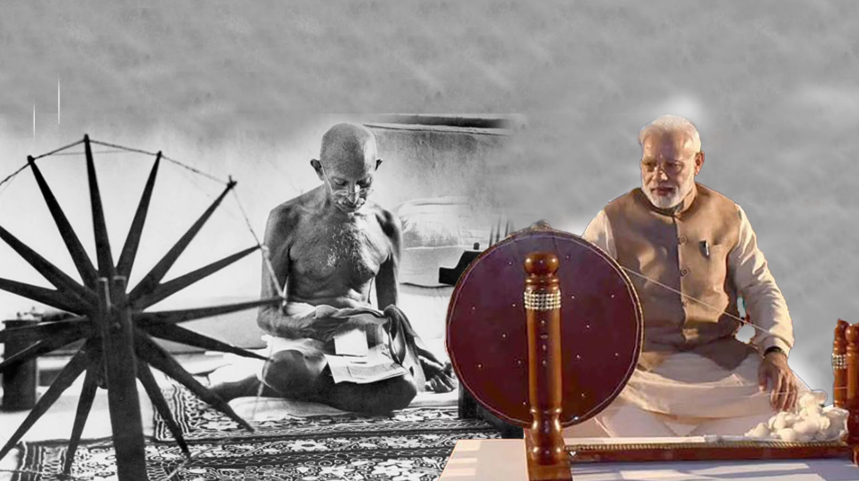
File Photo : Modi – India’s New Mahatma

It is far too early to dismiss the possibility of a future Hindu State in India. However, the possibility does not appear a strong one. The secular state has far more than an even chance of survival in India”

(India as Secular State, 1963).

It was the early sixties when American political scientist Donald Eugene Smith commented about the “possibility of a Hindu state in India”.

Today, even to a layperson, the secular state in India seems to be standing on very weak foundations, and the possibility of a Hindu State is far stronger than it was more than half a century ago, in 1963.

Perhaps, a pertinent expression of this transformation of India is the metamorphosis we witness in the image of Nathuram Godse – the assassin of Mahatma Gandhi — and the growing trivialisation of his most despicable act for which he and his accomplice Narayan Apte were sent to gallows. (November 15, 1949)

No doubt the act itself was the first terrorist act in independent India but was it just that or much, much more.

( Read the full article here : https://www.newsclick.in/gandhis-assassination-was-much-more-just-murder)

My Friend Anand

Image result for anand teltumbde

It is rather difficult to begin when you know that within a few days or weeks, one of your close friends could be behind bars under one of the most draconian laws crafted by this Republic.

The world knows him as Anand Teltumbde, but for me he has always been Anand.

Merely four months ago, we were together in a seminar in Vijayawada (Andhra Pradesh) where Anand spoke on one of his key concerns, namely, the divergence between dalit and Left movements. Continue reading My Friend Anand

Statement on threatened arrest of Prof. Anand Teltumbde : AIFTRE

Guest Post by AIFTRE

AIFRTE condemns threatened arrest of Prof. Anand Teltumbde

Image result for anand teltumbde

 Professor Anand Teltumbde, an IIM-Ahmedabad alumnus, IIT Professor, Executive Director of BPCL, Ex-MD & CEO of Petronet India, Senior Professor and Chair, Big Data Analytics in GIM, author of 26 books, columnist in EPW, writer of innumerable articles, a noted scholar of caste-class and public policy issues, Leading Public Intellectual and Democratic and Educational Rights Activist faces imminent threat of arrest as an ‘Urban Maoist’ in the vilest post-independence plot by the state.  

The criminal farce of exploiting an important day of commemoration for the Dalits, the anniversary of the battle that took place at Bhima-Koregaon in 1818 in which the Mahar soldiers played a leading role in defeating the Peshwa rulers, to incarcerate select human rights defenders, intellectuals and activists in peoples’ movements and curb dissent in the country is an unprecedented and blatant abuse of power

Justice P B Sawant, retired judge of the Supreme Court and Justice B G Kolse-Patil, ex-judge of the Bombay High Court invited activists and progressive intellectuals to the Elgar Parishad on 31 December 2017 at Shaniwarwada to mobilize people against the communal and casteist policies of the NDA government led by the BJP. More than 250 organizations joined, including  some Maratha organizations who had never before aligned politically with the Dalits. This alarmed the power obsessed BJP, which responded by commissioning its agent provocateurs, Milind Ekbote of Samastha Hindutva Aghadi and Sambhaji Bhide of Shiv Chhatrapati Pratishan, to create a rift between Dalits and Marathas.

At the end of the conference, participants took an oath not to vote for the BJP and to protect the constitution of India. The entire conference was video-recorded by the police as well as by the organizers. Nothing untoward took place at the conference and all the delegates dispersed peacefully.

On 1 January, when Dalits congregated at Bhima-Koregaon, the Hindutva goons mounted a planned attack pelting stones from the terraces of houses lining the road, beating people and burning stalls. The police merely looked on, establishing the administration’s complicity. Rumours that mischief was planned were widespread among common people, but the administration had feigned ignorance and allowed riots to happen. WhatsApp messages showed saffron flag bearers shouting slogans in the name of Ekbote and Bhide chasing and beating the Dalits who were caught unawares.

On 8 January, one Tushar Damgade, an RSS functionary and a disciple of Sambhaji Bhide, filed an FIR naming Kabir Kala Manch activists for organizing the Elgar Parishad, claiming that inflammatory speeches caused the violence on 1 January.

Nine days after the conference, the police began working according to this scripted plan. They raided houses of specific people and insinuated that Maoists had funded and organized the Parishad, ignoring the public statements by Justice Kolshe-Patil and in the chargesheet attached a statement attributed to Justice Sawant, which he has publicly denied.