Category Archives: Movements

Caste and other demons

Can Dalits rightfully claim that they have a ‘homeland’?

Dr Babasaheb Ambedkar

( Review of The Doctor and the Saint: The Ambedkar-Gandhi Debate — Caste, Race, and Annihilation of Caste; By Arundhati Roy, Penguin, Rs 299)

“Gandhiji, I have no homeland.” The first meeting between Gandhi and B.R. Ambedkar, who later became chairman of the drafting committee of independent India’s Constitution and its first law minister, is memorialized in this sentence. It expresses the centuries-old plight of those most oppressed in the varna hierarchy under the “institutionalised social injustice at the heart of the country”.

Has there been a qualitative change in the situation of the ‘ex-untouchables’ since this meeting some 90 years back? Can Dalits rightfully claim that they have a ‘homeland’? Figures collated by National Crime Records Bureau show that “a crime is committed against a Dalit by a non-Dalit every sixteen minutes”, including four rapes a day and murders of 13 Dalits every week. And these figures do not include “the stripping and parading naked, the forced shit eating, the seizing of land and the social boycotts…” This is the backdrop of the book, The Doctor and The Saint: The Ambedkar-Gandhi Debate — Caste, Race, and Annihilation of Caste by Arundhati Roy. It earlier formed part of an introduction to an annotated 2014 edition of Annihilation of Caste — the historic pamphlet Ambedkar wrote when invited by the ‘Jat Paat Todak Mandal’ in Lahore. The invitation was withdrawn after the hosts read the lecture draft. Continue reading Caste and other demons

Rainbow Social Coalition – To What End ?

Image may contain: 3 people, people smiling, people sitting and outdoor


USS passe rani hai, iss passe Gandhi!
(“On that side is the Queen, on this is Gandhi)
(https://indianexpress.com/elections/patiala-dharamvira-gandhi-aap-elections-2019-bjp-congress-5726029/)

Nawan Punjab Party’s candidate ex MP Dr Dharamvira Gandhi’s election campaign and the way he projected his appeal as ‘battle against the royals’ had rightly evoked interest in a section of the media as well as pro-people circles.(https://www.newsclick.in/electoral-mobilisation-vehicle-rainbow-social-coalition)

It is of interest to know that in this era of money and muscle power politics the campaign was largely run on support generated by people. What is also notable (-do-) that the campaign was successful in building a social coalition – cutting across various fissures in our society – and could challenge “populist fascism of the Bharatiya Janata Party, patronage-based populism of the Congress, and a fractious identity politics of SAD which cannot see beyond its narrow aims. “. Continue reading Rainbow Social Coalition – To What End ?

Democracy as Majoritarianism

Extract from the Preface of  ‘Hindutva’s Second Coming’

Preface

Democracy as Majoritarianism

We can never forget that everything that Hitler did in Germany was ‘legal,’ and everything the Hungarian freedom fighters did was ‘illegal.’ It was ‘illegal’ to aid and comfort a Jew in Hitler’s Germany, but I am sure that if I lived in Germany during that time I would have comforted my Jewish brothers even though it was illegal… we who engage in nonviolent direct action are not creators of tension. We merely bring to the surface the hidden tension that is already alive.
— Martin Luther King, Jr

What is the signature of democracy?

It is the understanding that minority voices will be allowed to flourish and they will not be bulldozed.
At the apparent level majoritarianism – rule by majority – sounds very similar to democracy but it essentially stands democracy on its head. For real democracy to thrive, it is essential that ideas and principles of secularism are at its core. The idea that there will be a clear separation between state and religion and there won’t be any discrimination on the basis of religion has to be its guiding principle.
Majoritarianism clearly defeats democracy in idea as well as practice.
While democracy’s metamorphosis into majoritarianism is a real danger, under rule of capital – especially its present phase of neoliberalism – another lurking danger is its evolution into what can be called as plutocracy – government by the rich.
As India enters the race for elections to the 17 th Lok Sabha, these are the two broad questions which are staring in everyone’s mind, whether the same dynamic – which has made the last five years as unique in Independent India’s history – will continue or we will witness a rupture.
It is a disturbing scenario when the biggest democracy in the world seems to have taken a ‘[Q]uantum Jump In Wrong Direction Since 2014’ (Amartya Sen) – prompting even the normally reticient community of scientists to ask people to reject the politics which ‘.[d]ivides us, creates fears, and marginalises a large fraction of our society’ and remind them that “[D]iversity is our democracy’s greatest strength; discrimination and non-inclusivity strike at its very foundation.’
Whether there would be further normalisation of majoritianism or ordinary people’s desire to live a more inclusive, egalitarian life and in a less toxic world would ultimately triumph the designs of the hatemongers and secondly, whether free run being given to the crony capitalists and moneybags would be over and ideas of redistribution would make a comeback with vengeance.
What has added a new dimension to this dynamic is the existence of a ‘self proclaimed cultural organisation’ called RSS – whose principles, ideology and activities contravene the very basis of Constitution – which is de facto ruling the country. It is an organisation whose principles “[d]epicting Indian nationalism in terms of the faith of the religious majority – have serious negative social and political implications for sections of the citizen-body and are in violation of the Constitution.” ( http://caravandaily.com/rss-principles-are-in-violation-of-constitution-detrimental-to-india-hamid-ansari/)
It was exactly 42 years back that Indian people defeated the attempts to throttle the democratic experiment by their united struggle, whether they would be we able to have an encore when more secretive, sinister and communal forces are on ascent who are also popular among a significant section of people.
0 0
The central concern of the collection of essays (some of them published earlier and revised for this collection) presented here is this normalisation of majoritarianism which is taking place here. A situation where representation of the biggest religious minority in the outgoing Parliament had been at its lowest since independence and where it is being slowly invisiblised even from public discourse.
Section I tries to situate these developments in India in South Asian context and search for any commonality in the experiences of people and also looks at the societal roots for this fascination of hate filled ideologies and leaders.
Section II deals with the ‘pioneers of the Hindutva Supremacist movement and the new icons they want to present for a ‘New India’ which is supposedly taking shape under their wings. Section III tries to offer tentative suggestions to fight the menace which is trying to overwhelm the Indian republic.
….0 0
The book is dedicated to the memory of the legendary Indonesian author Pramoedya Ananta Tur (February 20, 1925 – April 30, 2006) who survived persecution, imprisonment and censorship, whose writings have inspired generations of Indonesian People,
What was remarkable that Pramoedya, a leftist, was jailed not only during the anti-colonial struggle but had to undergo a long phase of detention which started in mid-sixties when Indonesia witnessed a CIA sponsored military coup – which witnessed killings of lakhs of people. He was released from imprisonment in 1979, but remained under house arrest in Jakarta until 1992.
His tetralogy of novels – for which he is best known – ‘Buru Quartet’ was written during the tormenting period of detention only. “Is it possible,” Pramoedya asked later, “to take from a man his right to speak to himself?”


Glory to his memory !

—————————————————————

—————————————————————-

Contents

Dedication
Preface
Section I
1. India: The Road Less Travelled by
2. Time to Militarise Hindus, Hinduise the Nation
3. South Asia: Forward March of Majoritarianism
4. Dear Hitler
Section II
5. Veer of a different Kind
6. Can the Real Shyamaprasad Mukherjee Ever Stand Up?
7. Godse: In Love with the Assasin
8. Deendayal Upadhyay: BJP’s “Gandhi”
9. Many Silences of Mr Mohan Bhagwat
Section III
10. Hindutva’s Second Coming
Appendix IV
Nehru, Ambedkar and Challenge of Majoritarianism

Index
—–
About the author
Subhash Gatade ( born 1957) is a left activist, writer and translator.
He has done M Tech ( Mech Engg 1981) from BHU-IT, Varanasi.
He has authored few books including  Modinama : On Caste, Cows and the Manusmriti ( Leftword, in press), Charvak ke Vaaris ( Authors Pride, Hindi, 2018), Ambedkar ani Rashtriya Swayamsevak Sangh ( Sugava, Marathi, 2016), Beesavi Sadi Mein Ambedkar ka Sawal ( Dakhal, Hindi, 2014), Godse ki Aulad ( Pharos, Urdu, 2013) , Godse’s Children – Hindutva Terror in India (Pharos,  2011), The Saffron Condition ( Three Essays, 2011)
He also occasionally writes for children. Pahad Se Uncha Aadmi ( NCERT, Hindi, 2010)


In Imagination, in Resistance, in Solidarity and Rage – People’s Literary Festival in Kolkata: Tamoghna Halder

Guest post by TAMOGHNA HALDER

“It was the unlikeliest setting for a ‘literature festival’. A run-down auditorium with rickety chairs secured with rope. Noisy ceiling and pedestal fans. Battle scarred tables covered with threadbare cloth. But the first edition of the People’s Lit Fest, held in Kolkata, was designed to be just that – a radically different interpretation of literature and its role in modern India”

These were the opening lines of a report by Scroll.in, on the 1st edition of People’s Literary Festival, 2018. In less than a couple of weeks, the 2nd edition of People’s Literary Festival (henceforth, PLF) will commence, once again at that run-down auditorium with rickety chairs, namely ‘Sukanta Mancha’ in Kolkata. The present article hopes to shed some light on the reasons why those rickety chairs or the noisy fans are related to PLF, but before that, as a member of Bastar Solidarity Network (Kolkata Chapter), I feel compelled to explain why we even organize PLF in the first place.

Continue reading In Imagination, in Resistance, in Solidarity and Rage – People’s Literary Festival in Kolkata: Tamoghna Halder

Gandhi’s Assassination – Much More Than Just a Murder

Mahatma Gandhi’s assassination was a culmination of a vicious campaign launched by Hindu communal groups in post-independent India

Gandhi’s_Assassination_Much_More_Murder

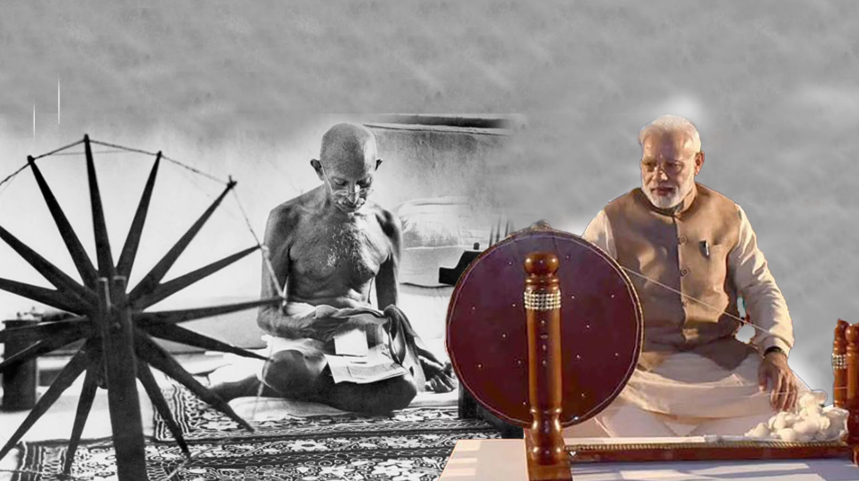
File Photo : Modi – India’s New Mahatma

It is far too early to dismiss the possibility of a future Hindu State in India. However, the possibility does not appear a strong one. The secular state has far more than an even chance of survival in India”

(India as Secular State, 1963).

It was the early sixties when American political scientist Donald Eugene Smith commented about the “possibility of a Hindu state in India”.

Today, even to a layperson, the secular state in India seems to be standing on very weak foundations, and the possibility of a Hindu State is far stronger than it was more than half a century ago, in 1963.

Perhaps, a pertinent expression of this transformation of India is the metamorphosis we witness in the image of Nathuram Godse – the assassin of Mahatma Gandhi — and the growing trivialisation of his most despicable act for which he and his accomplice Narayan Apte were sent to gallows. (November 15, 1949)

No doubt the act itself was the first terrorist act in independent India but was it just that or much, much more.

( Read the full article here : https://www.newsclick.in/gandhis-assassination-was-much-more-just-murder)

Statement on the People’s Resistance against the Citizenship Amendment Bill : New Socialist Initiative

This is a guest post by New Socialist Initiative

New Socialist Initiative stands in solidarity with the people of Assam, Tripura and the other North Eastern states in their heroic struggle against the communally motivated Citizenship Amendment Bill (CAB). It was only because of the resistance of the people that the government couldn’t table the Bill for voting in the Rajya Sabha after surreptitiously passing it in the Lok Sabha. This is in fact a victory for all the progressive and democratic forces of the country,who have been fighting to save and expand the secular character of the nation. While the danger still looms large and there is a strong possibility that the government may try to bring back the bill in the upcoming budget session, the mass resistance of the people has demonstrated very clearly that the evil designs of the fascists in power will not go unanswered and that the people will fight back with all their might. Continue reading Statement on the People’s Resistance against the Citizenship Amendment Bill : New Socialist Initiative

हिंदी समाज में हीरा डोम की तलाश – स्मृतिलोप  से हट कर यथार्थ की ओर

( अकार, 51 – हिंदी समाज पर केंद्रित अंक में जल्द ही प्रकाशित)

‘देवताओं, मंदिरों और ऋषियों का यह देश ! इसलिए क्या यहां सबकुछ अमर है ? वर्ण अमर, जाति अमर, अस्पृश्यता अमर ! ..युग के बाद युग आए ! बड़े बड़े चक्रवर्ती आये ! ..दार्शनिक आए ! फिर भी   अस्पृश्यता  , विषमता अमर है ! ..यह सब कैसे हो गया ? किसी भी महाकवि, पंडित, दार्शनिक, सत्ताधारी सन्त की आंखों में यह अमानुषिक व्यवस्था चुभी क्यों नहीं ? ..बुद्धिजीवियों, संतों और सामर्थ्यवानों का यह अंधापन, यह संवेदनशून्यता दुनिया भर में खोजने पर भी नहीं मिलेगी ! इससे एक ही अर्थ निकलता है कि यह व्यवस्था बुद्धिजीवियों, सन्तों और राज करनेवालों को मंजूर थी ! यानी इस व्यवस्था को बनाने और उसे बनाये रखने में बुद्धिजीवियों और शासकों का हाथ है।

– बाबुराव बागुल /17 जनवरी 1930 –  26 मार्च 2008/

जानेमाने मराठी लेखक

1.

वर्ष 2014 में हिन्दी की प्रथम दलित कविता कही जानेवालीे एक कविता ‘अछूत की शिकायत’ 1 के सौ साल पूरे हुए। महावीर प्रसाद द्विवेदी द्वारा सम्पादित ‘सरस्वती’ पत्रिका के सितम्बर माह में प्रकाशित अंक में यह कविता छपी थी।

हीरा डोम द्वारा रचित इस कविता पर बहुत कुछ लिखा गया है, किस तरह यह कविता साहित्य में नयी जमीन तोड़ती है, धर्म, पूंजीवाद, सामाजिक गैरबराबरियों को वैधता प्रदान करती मौजूदा व्यवस्था को प्रश्नांकित करती है, ढेर सारी बातें लिखी गयी हैं। फिलवक्त़ न मैं इसकी तरफ आप का ध्यान दिलाना चाहता हूं, न इस बहस की तरफ कि क्या उसे प्रथम दलित कविता कहा जा सकता है या नहीं ! साहित्य के सुधी पाठक एवं प्रबुद्ध आलोचक इसके बारे में मुकम्मल राय दे सकते हैं। /इतनाही याद रखना जरूरी है कि पत्रिका में छपनेवाली रचनाओं के बारे में संपादक के तौर पर महावीर प्रसाद द्विवेदी काफी सख्त माने जाते थे। उनकी इस सख्ती का अन्दाज़ा इस बात से लगता है कि निराला – जो बाद में महाकवि के तौर पर सम्बोधित किए गए – उनकी चन्द कविताएं भी शुरूआत में उन्होंने लौटा दी थीं। लाजिम है कि हीरा डोम की इस कविता को प्रकाशित करने में भी उन्होंने अपने पैमानों को निश्चित ही ढीला नहीं किया होगा।/

कल्पना की जाए कि सरस्वती के अंक में अगर उपरोक्त कविता छपी नहीं होती तो हीरा डोम नामक वह शख्स ताउम्र लगभग गुमनामी में ही रहते। कोई नहीं जान पाता कि उत्पीड़ित समुदाय में एक ऐसे कवि ने जन्म लिया है, जिसकी रचनाओं में जमाने का दर्द टपकता है। Continue reading हिंदी समाज में हीरा डोम की तलाश – स्मृतिलोप  से हट कर यथार्थ की ओर

50 Years Later, Shadow of Keezhvenmani Continues to Hover Over our Republic

December 25, 1968, termed as ‘Black Thursday’, saw the first mass crime against Dalits in independent India, who were fighting for respectable wages under the leadership of the Communist Party.

50 Years Later, the Shadow Keezhvenmani Continues to Hover Over our Republic

Image for representational use only; Image Courtesy : Socialist India

P Srinivasan, a veteran village functionary who cremates the dead had, in an interview done few years ago, described the darkening early morning on December 26, 1968, when the bodies began arriving from Keezhvenmani, a non-descript village in Thanjavur district of Tamil Nadu.

The village functionary, called Vettiyan, who is nearing 60 now, still remembered the number: “There were 42 corpses in all, horribly burnt and mangled. The stench was awful,” Pointing towards the plot of land where they were cremated, he said “All of them were Dalits, burnt to death in a caste clash. I cremated them on these very grounds.”

Srinivasan, then 23-year-old, shared vivid details of that ‘Black Thursday’ in 1968, a day that has remained etched in his mind.

December 25, 2018, completes 50 years of that ‘Black Thursday in 1968’, which is remembered as the first massacre of Dalits in independent India. The Dalits were martyred while fighting for respectable wages under the leadership of the Communist Party. All of these landless peasants had started to organise themselves into a campaign for higher wages following the increase in agricultural production in the area.

(https://www.newsclick.in/50-years-later-shadow-keezhvenmani-continues-hover-over-our-republic)

Scrap the Citizenship (Amendment) Bill, 2016, It is Unconstitutional, Illegal and Immoral : 70 People’s Organizations of Assam

Guest Post by 70 People’s Organizations of Assam 

Image result for citizenship (amendment) bill 2016

( Photo Courtesy : AISA)

Protestors from various democratic organisations in Assam have began an indefinite dharna in Jantar Mantar from today 9 Dec. This includes KMSS and peasant leader Akhil Gogoi, AJYCP, Tai Ahom Satra Sontha, Asom Moran Sabha, All Asam Motok Sonmilon, All Asam Minority Students Union, and 70 other organizations of indigenous population of Assam, who are part of an umbrella platform against the Citizenship (Amendment) Bill 2016. This Bill seeks to change the very definition of a Citizen of the country and include a religious dimension to it as part of the RSS’s ideological project. The effects of this Bill can be seen in starkly in Assam – which has been to fuel ethnic and religious anxieties and conflict. Protests against it has also taken unprecedented forms in recent months with participation of millions of indigenous people, including Assam bandhs, and so on.
Find below the text of the Leaflet issued by them. Please forward and Join in the Solidarity.
The Citizenship (Amendment) Bill, 2016 which was introduced in the Lok Sabha on 15thJuly, 2016 [Bill No. 172 of 2016] has already caused deep anguish in the minds of the democratic India. A Joint Parliamentary Committee has also been constituted to examine this Bill. Despite wide-spread protests in Assam against the Bill, the BJP aggressively aims to pass the Bill in the coming Winter Session of the Parliament which will help to make their dream of the Hindurashtra a reality. 
 
*Why the Citizenship (Amendment) Bill, 2016 is unconstitutional, illegal, unethical and immoral?*
 
The Citizenship (Amendment) Bill, 2016 seeks to make fundamental alterations in the citizenship and immigration norms of India on the basis of religion. The Bill proposes to exclude ‘minority communities, namely, Hindus, Sikhs, Buddhists, Jains, Parsis and Christians from Afghanistan, Bangladesh and Pakistan’ – from the scope of the definition of being ‘illegal migrant’. The Bill further reduces the requirement of 11 years to acquire “citizenship by naturalization” to only six years of ordinary residence for such immigrants. The ‘Statement of objects and reasons’ of the Citizenship (Amendment) Bill, 2016 also makes it clear that the Bill intends to declare ‘illegal migrants’ as Indian citizens. Several Indian government notifications and orders have already enabled persons of these communities who had entered India till 31st December, 2014 to get shelter without valid documents. 
 
The Bill will change the philosophical premise on which Indian citizenship is granted. The principle on which Indian citizenship is granted is jus soli where citizenship of a person is determined by the place where a person is born. However,if the Bill passes, it will make a shift from jus soli to jus sanguinis, where a person acquires citizenship on the principle of blood, which our Constitution-makers consciously avoided. India’s Constitutional experts have opined that the Bill is unprecedented as never before has religion been specifically identified in the citizenship law as the ground for distinguishing between citizens and non-citizens. The ideas spelt out in the proposed Bill are against the ethos and spirit of the Indian Constitution. It will violate the spirit of the Preamble of the Indian Constitution and is also against the Articles 14, 15, 25 and 26 of the Indian Constitution. 
 
An extra-ordinary and widespread peoples’ movement has now swept across Assam and the entire North-East India against the Bill. We, the people of Assam feel that the Bill will change Assam’s political, economic and social fabric forever. The Bill will violate the clause 6 (A) of the Citizenship Act, 1955, a special provision for Assam, which is a non-obstante clause. If the Bill passes, it will make the Assam Accord null and void. It will be a violation of the national promise. The people of Assam are afraid that the Bill will open ways to creating further insecurity and pressures in a region already over-burdened with large-scale demographic changes due to illegal migration. It will create religious basis for it, and fuel fresh rounds of ethnic and religious conflict.
 
*We, an umbrella platform of 70 ‘Jatiya’ (national) organizations of Assam, are on a hunger strike for an indefinite period in Delhi from 9th December, 2018 demanding the immediate scrapping of the Citizenship (Amendment) Bill, 2016 for the sake of the Indian Constitution, and its moral, legal and ethical values, and to protect Assam and her inhabitants from another long spell of social and political strife.*
 
*The Government of India plans to pass the Bill in this Winter Session of the Parliament. We appeal all political parties, organizations and individuals of India to be united to oppose this unconstitutional Bill. We sincerely believe that you will extend your support to us, and oppose the Bill to save our Constitution and democracy.*
 
contact: secretarykmss@gmail.com, 8638084494, 8826219749


The Kisan Charter – ‘Farmers are not just a residue from our past but integral to the future of India and the world’

Kisan Mukti March in Delhi, image courtesy New Indian Express
Till just the other day, they were committing suicide, while some of them were demonstrating in Jantar Mantar, Delhi, humiliating themselves by disrobing and eating rats, trying in vain to draw the attention of the political establishment to their plight.  And to pour salt on their wounds, BJP leaders were saying that committing suicide had become a fashion among farmers! Today they are out on the streets, demanding, among other things, that their own debts be written off, not of the powerful and predatory capitalists. (See the Charter of the All India Kisan Sangharsh Coordination Committee below). This is, in all probability, the sign of a decisive shift, for today the charter relseased by the Coordination Committee declares loud and clear that
Farmers are not just a residue from our past; farmers, agriculture and village India are integral to the future of India and the world.

Continue reading The Kisan Charter – ‘Farmers are not just a residue from our past but integral to the future of India and the world’

Statement of Jadavpur University Alumni Against University Decision to Scrap Entrance Examinations

Following is a statement of Jadavpur University alumni on the current controversy around the scrapping of the entrance examination by the university authorities. 

There is also a Change.org petition that has been put up for those wanting to sign. Over 5075 people have signed the petition at last count.

Thos who who wish to sign in solidarity with Jadavpur University teachers, students and staff can do so here.

We, the alumni of Jadavpur University, unequivocally condemn the decision of the authorities to not conduct entrance examinations for admission to the university’s Bachelor of Arts programme.

Several departments of the Jadavpur Arts Faculty annually conduct their own entrance examinations. For the last forty years, teachers have carefully prepared question papers and rigorously evaluated the answers in order to admit the candidates that they deem fit. The tradition of the entrance examination, in which thousands of students participate every year, has ensured that the Faculty of Arts continues its legacy of academic excellence. No weightage is given to Board examination marks because the Boards’ prescribed methods of arts education and evaluation simply do not match those of tertiary education in the humanities. The entrance examinations test students for their interest in literature, history, philosophy and arts, their ability to think independently about texts, and their commitment to understanding the world around them using the skills of reasoning and speculation, the theoretical and methodological capital furnished by the humanities.

The entrance examination has enabled these departments to gain talented students year after year. Many of us would have never made it to the top-ranked Arts departments in the country had we been judged solely on the basis of our marks in school-leaving examinations. Admissions based on Board exam scores would have never enabled students from varied cultural, class and economic backgrounds to be trained in the humanities by the best minds in the country. The rich and diverse professional accomplishments of Jadavpur University alumni – in art, academia, film, entrepreneurship, publishing, writing, advertising and many other fields – constitute a further testament to the success of these departments in scouting and honing talent. First-person accounts of how the erstwhile admissions process created equality of opportunity and access for students from across a range of social and educational backgrounds have poured in from Jadavpur alumni since yesterday (3/7/2018). (To read personal testimonials and opinion pieces from faculty, alumni, staff and current students regarding the significance of the admission process, visit https://juforadmissiontest.wordpress.com/)

The admission test is a time-tested process which has ensured academic excellence in the Faculty of Arts and brought glory to the university. To tamper with this process is to threaten the very core of the humanities – to attack free thinking, liberty, and equality of opportunity. It directly undermines the dreams and hopes of the 17,000-odd students who have applied to Jadavpur University this year. Among these 17,000, there must be brilliant young minds that couldn’t obtain 90% or more in the Board examinations. Their merit cannot be reliably boxed into multiple-choice questions. There must be, in those 17,000, young people who do not seek conventional careers, or if they do, wish to combine them with independent thinking, exploring and lifelong learning.

To stop the admission test is to kill the dreams of anyone who does not participate in the mad rat race of public examinations. It is an attack on the community of scholars, researchers, teachers, alumni, students, and staff who have carefully built up the university and its reputation over the years. To stop the admission test is to tear into the very fabric of the university – its tradition and its history. We must recall that Jadavpur University was set up as an alternative to the education imparted by the erstwhile rulers of India, the British. It has always been home to those who dare to defy norms.

The larger implications of this administrative decision concern the scope and function of higher education in this country. Do we, as a nation, wish to create a more homogenised and technocratic culture that rewards learning by rote, or do we wish to invest in greater autonomy for centres of excellence? Difference and dissent are what all democracies should aspire to; they are the touchstones of any free and open society, and any administration that encourages these tendencies signals its confidence in itself and hope for the future. What we are seeing here is, accidentally or not, congruent with a larger attempt to fundamentally redefine the idea of higher education, to increase administrative interference in universities large and small, more and less prominent (similar conflicts are playing out in JNU, to cite just one example) and to condemn generations of young people to the backwaters of real learning, thought and creativity.

As concerned alumni, we strongly condemn the decision of the authorities to take away independent admission tests from the Faculty of Arts. We demand an immediate revocation of this order, which irrationally, pointlessly, and appallingly undertakes to disrupt a fair and successful admission process. This disruption will impact the futures of countless students, and reduce the entry-point of tertiary education in the humanities to a lottery.

We stand in solidarity with the protesting teachers, students and staff of Jadavpur University. Continue reading Statement of Jadavpur University Alumni Against University Decision to Scrap Entrance Examinations

Citizens’ Solidarity with Voices of Democracy – Against the Arrest of Five HR Activists

[This is a statement of solidarity endorsed and signed by over 200 intellectuals, artists, academicians, lawyers, journalists, and students in support of the five arrested in connection with Bhima-Koregaon case. In the 43rd year after Emergency was declared in this country, this statement was issued on June 25th 2018 condemning the arrest of such voices of democracy and demanding their immediate and unconditional release.]

We condemn the arrest of five human rights activists, professors and lawyers in connection with the Bhima-Koregaon clashes early this year. The alarming arrest of Advocate and General Secretary of Indian Association of Peoples’ Lawyers (IAPL) Surendra Gadling, Committee for the Release of Political Prisoners (CRPP) Public Relations Secretary Rona Wilson, Head of English Department Professor Shoma Sen of Nagpur University and member of Women against Sexual Violence and State Repression (WSS), cultural activist and founder of Republican Panthers Jaatiya Antachi Chalwal Sudhir Dhawale and anti-displacement activist and Prime Ministers Rural Development Fellow (PMRDF) Mahesh Raut is a clear manifestation of state terror to crush the voices of dissent in this country.

The intemperate use of sections of the IPC and Unlawful Activities (Prevention) Act (UAPA) on all five reveals legal over-reach and exposes the desperation to foist extraordinary and excessive charges on all five to ensure they remain in the clutches of the Fadnavis-Maharashtra government. All the arrested have consistently worked for the assertion of oppressed and marginalised communities against majoritarian forces, spoken out against Brahmanical patriarchy, upheld peoples’ rights to land, life and dignity, and have strived for the release of political prisoners.

Continue reading Citizens’ Solidarity with Voices of Democracy – Against the Arrest of Five HR Activists

Civil Disobedience under Democracy: The Case of Boycott of Centralised Compulsory Attendance in JNU: Tejal Khanna

Guest post by TEJAL KHANNA

It is often advised that civil disobedience in the form of breaking a law must not be practiced under a democracy. It is because democracy by giving the space for open discussion prevents a situation wherein people are compelled to think of civil disobedience. Moreover, if citizens develop faith in civil disobedience then that only undermines the rule of law. Such an act doesn’t strengthen democracy but rather helps in diminishing its ethos. People must be discouraged to break laws because in a democracy, it is they who elect their representatives through free and fair elections. These representatives then make laws to which open disobedience must not be practiced. Citizens can also vote for change of leadership in the subsequent election cycle, if they feel their representatives have been incompetent. However, while these provisions fulfil the conditions of a well functioning procedural democracy, what recourse do citizens have, when their representatives don’t act in the interest of the governed continuously but function in an autocratic manner? What if laws are made without following the spirit of democracy? Does that really result in making a substantive democracy?

Continue reading Civil Disobedience under Democracy: The Case of Boycott of Centralised Compulsory Attendance in JNU: Tejal Khanna

The Crisis in JNU – Calling out the Administration : Parnal Chirmuley

Guest Post by Parnal Chirmuley

This is the complete version of the edited text published as “Learning Without Regimentation: On Compulsory Attendance” published in The Hindu on February 19, 2018

It may, at first glance, seem odd that students of the Jawaharlal Nehru University, New Delhi, are pouring out in the thousands in angry protest against the administration’s move to enforce compuslory attendance. A leading national daily even misrepresents the boycott of this move by students and faculty as a struggle for the ‘right to not attend classes’, suggesting that they are angry over a triviality, which it is not. It is yet another assault by the present University admnistration against proven academic practices that choose not to infantilise students, and rely more on active learning and participation than on mere physical presence. It has been one among other important practices that has set this university apart. The nuances, therefore, of the anger among the students and faculty of JNU need to be fleshed out.

Continue reading The Crisis in JNU – Calling out the Administration : Parnal Chirmuley

The Festering Sore of the Caste-Wall at Vadayambady: T T Sreekumar

T T Sreekumar, an important commentator on contemporary politics in Kerala — a public intellectual who now qualifies to be an irritant in the eyes of the Kerala police, now that he has openly declared his allegiance to the dalit people fighting injustice and Vadayambady and inaugurated a protest-event there — writes about the issue and its historical origins:

When I visited Vadayambady the other day to express my solidarity with the cause of the agitation, what I witnessed there was an atmosphere of utmost fear and police terror. A big task force of police was stationed at the location. The team that included the special branch officers, had created a situation of terror at the peaceful site. Activists mentioned that a particular police officer continuously hurled abuses, including caste abuses, at the protesters that included Dalit women and children. When the protest began to draw national attention, the ruling dispensation of CPIM that had hitherto remained unconcerned has started to take up some damage control measures. However, when they finally arrived at the site of the agitation almost after a year since the agitation began, the CPIM leaders allegedly refused to address the caste question involved. Dalit activists, including women activists, surrounded them and raised several objections to this attitude pointing to their sheer hypocrisy and lack of integrity.

Read more at:

https://countercurrents.org/2018/02/02/fighting-peripheralization-dalit-movement-hindu-caste-wall-kerala/


A Revolution Called Chandrashekhar Azad ‘Ravan’ – the Republic on Trial

देख ज़िन्दां के परे, रंग-ए-चमन, जोश-ए-बहार

रक्स करना है तो पॉंव की ज़ंजीर न देख – मजरूह सुल्तानपुरी

Look –  beyond the the prison walls, the brilliance of flowers, the vitality of spring

If you must dance, ignore the chains that bind your feet – Majrooh Sultanpuri

Today, the scared Republic that has imprisoned its young idealistic fighter son, Chandrashekhar, is on trial. The Republic, scared of its own offspring, stands in the dock. This Republic Day, we must all answer how it came to pass that a gang of adventurers and marauders simply took it over, submitted it to their command, while all the elderly, wise men and women, watched. Today, when the Republic bondage we must seek answers from all those who watched helplessly – or self-righteously – as marauders took it over.

It is official now. A radiogram from the Deputy Secretary, Home, Govt of Uttar Pradesh to the Superintendent, Saharanpur District Jail, dated 23 January 2018, confirms the slapping of charges under the National Security Act, on Bhim Army founder, Chandrashekhar Azad ‘Ravan’. Pradeep Narwal, Coordinator, Committee for the Defence of Bhim Army, who met Chandrashekhar in jail yesterday, underlined how the Karni Sena activists attacking school buses and vandalizing schools were being allowed the freedom to do so while Chandrashekhar, responsible for setting up and running of schools (see the video below), is being held in jail for months and has now been slapped with charges under NSA. “Karni Sena are apparently deshbhakts and Shekher bhai and Bhim Army are ‘terrorists’ in the perverted logic of this government,” he said.


In conversations with friends and sympathizers who have been meeting him over the past months, including Pradeep Narwal, Chandrashekhar ‘Ravan’ has been expressing a fear that many of us have also had, independently, for some time now: that the government wants to actually get rid of him – just as judge Loya was, it now transpires. Continue reading A Revolution Called Chandrashekhar Azad ‘Ravan’ – the Republic on Trial

Statement about the attacks on Dalits in Bhima Koregaon & the Subsequent developments in Maharashtra : Umar Khalid

Guest Post by Umar Khalid

I went to Maharashtra as I along with other activists and intellectuals were invited to come there. I along with others was a guest there. And I would remember fondly the love and support that I received in Pune and Mumbai. I would remember the resilience and enthusiasm of the people I met and their resoluteness to fight Manuvaad and centuries old casteist tyranny. I would remember the immense inspiration that I felt, when we paid homage to Jyotiba Phule and Savitribai Phule in Phule-wada, Pune. And, No I will not let two days of media trials by a few TV anchors, who are more of professional howlers, spoil these wonderful memories. I will not let their criminal cacophony and mindless vilification of me, Jignesh & others shadow my beautiful memories of Maharashtra.

The state of Maharashtra as well as the rest of the country is at a critical juncture today. On the one hand are forces in power who want to push our country back to many centuries and on the other are people who are resisting this Neo-Peshwahi, the casteist-communal-fascist regime of BJP-RSS. In my speech at Elgar Parishaad on 31st December 2017, I had said that the year 2018 is going to be a very challenging one. The last 3 and half years of the Modi Sarkar has exposed the BJP’s jumlas of Ache Din and Vikas as hollow, bitter and brutal lies.

As the General Elections of 2019 approach, BJP/RSS will now resort to creating civil strife amongst the people, polarising them on the basis of caste and religion and unleashing attacks on muslims and Dalits. The developments over the last few days vindicate me, a little too soon. Several regions of Maharashtra are in the midst of an acute agrarian distress. Both Marathas and Dalits are victims of this agrarian crisis that has been precipitated by the policies of both Modi and Fadnavis. The BJP/RSS regime has no resolution to offer to the farmers of Maharashtra. Therefore, unleashing attacks on Dalits through their hoodlums and portraying it as a caste clash between Dalits & Marathas will remain their only strategy. Continue reading Statement about the attacks on Dalits in Bhima Koregaon & the Subsequent developments in Maharashtra : Umar Khalid

The Meaning of Jignesh Mevani

[A shorter version  of this article was published in The Wire on 18 December. I thank K. Satyanarayana, P. Sanal Mohan and Jangam Chinnaiah for their very helpful comments on it, which have helped me to clarify and elaborate on certain points.]

Jignesh Mevani, image courtesy New Indian Express

The rise of Jignesh Mevani constitutes a significant landmark in the political configuration in which the Congress has risen, despite itself, from a state of utter disarray to become the point of articulation for a possible political realignment in the near future. The process of political reconfiguration had already begun as a very significant section of the powerful patidar community, long understood to be the bedrock of the BJP’s social base in the state, had broken away from it. But alongside this, the rise of the young leaders Hardik Patel, Alpesh Thakore and Jignesh Mevani together produced the new young face of emergent Gujarat.

There is no doubt that the vacuum that characterized the space where the opposition should have been, no longer exists. The masthead of a new opposition formation is evident on the horizon. This turnaround in the fortunes of the Congress would not have been possible without the re-alignments in the non-electoral arena, facilitated in no small measure by the rise of this young leadership.

Continue reading The Meaning of Jignesh Mevani

The Indian Constitution too was Demolished Along With Babri Masjid 25 Years Ago

Twenty five years ago, on 6 December 1992, the structure of Babri Masjid was brought down by a mob of vandals, presided over by the top leadership of the BJP/RSS/VHP, as the Congress government led by prime minister Narasimha Rao looked on benignly. As did the Supreme Court before which a commitment was made by the Kalyan Singh (BJP) government in Uttar Pradesh – to the effect that nothing would be allowed to happen to the structure of the mosque.

Journalist Sajeda Momin, covering the demolition, recalls the scene thus,

I can still see the thousands of saffron-clad ‘kar sevaks’ clambering atop the 16th century mosque and pounding it with shovels, iron rods, pickaxes and anything they could lay their hands on. I can hear the screeching of Sadhvi Uma Bharti egging them on shouting “ek dhakka aur do, Babri Masjid tod do” through the microphones from atop the specially-built watchtower for the BJP/RSS/VHP leadership. I can visualize the three domes of the mosque collapsing inwards one by one at intervals of roughly an hour on that cold, wintery Sunday afternoon.

Everyone knew who were the dramatis personae at each level – and practically every bit of evidence that would ever have been required exists, captured in videos and photographs. Our present prime minister was said to be  one of the key organizers of the of the Rath Yatra that led up to the demolition and can be seen holding the microphone in his  hands in the photograph below.

Rath Yatra – precursor to the demolition, image courtesy Quora.com

Worse was to follow the demolition. The  demolition of the structure of the mosque was over that day but the process of the demolition of the Indian Constitution that had begun with what was called the ‘Ram janmabhoomi movement’ continued. By ‘Constitution’ I do not simply mean the book that embodies the law of the land but rather the very weave that came to constitute Indian society as a result of the new contract that the document called the Constitution embodied. Constitution, therefore in a triple sense. The document called the Constitution too was not merely a book of laws; it was rather, the only existing, largely agreed upon, vision of a modern India. It was a vision which was put in place through the long process of struggles, debates and contestations over the long decades of the anticolonial movement and finally given shape in, in the Constituent Assembly. There was nothing benign or innocuous about it – every bit of it had to be achieved through a fight. And yet, in the end, that was the document that embodied the vision of modern India. The only political current that stood far away from both the anticolonial struggle and had no role in the creation of this vision is the political force that rules India today.

The RSS and its numerous offshoots were neither fighting the British nor joining in the anti-caste and anti-untouchability struggles through the period since they came into existence in the mid-1920s. No wonder leaders of the Sangh combine think the anti-colonial/ national struggle was about cow-protection. That they neither subscribed to the anti-British agenda nor to the anti-caste agenda around which struggles of that period took shape, is not just a matter of historical record but is also visible in the way its leaders and ranks conduct their politics today. Every single step taken by the Sangh leaders is a step out of sync with the vision of the future spelt out by the social contract of modern India. That the Sangh attributes this vision to the Congress is an expression of its own illiteracy about the diverse forces in struggle throughout that period.

Even though it is conducted in the name of Hindus, there is nothing ‘Hindu’ about its agenda. Sangh and Sanghism is the name of a malignant political machine that seeks to destroy the very body of society in the name of an ancient past. That is the political machine we confront today. That is the political machine that we must fight today with all our vigour.

An open letter to Brinda Karat: why do female supporters of the Kerala CPIM spew such venom at Hadiya?

Dear Comrade

I can hardly describe the joy and relief I felt reading your piece on the Hadiya case in the Hindu yesterday. By now I am nearly deaf from the cacophony of misogyny, islamophobia, and sheer short-sighted rage that CPM supporters on Facebook are unleashing against this young woman.

Your voice of sanity, Comrade, is therefore a great restorative. If not for your writing, one could have well thought that the CPM was nothing more than a bunch of short sighted, power hungry, strategisers, whose total lack of ethics and values is covered up by a vapid, outdated rationalism and an equally problematic liberalism. You refuse to condemn Hadiya for choosing Islam. You acknowledge that she is brave. You unequivocally reject the father and other minions of patriarchy. You rightly criticise state patriarchy evident in the Supreme Court. Unlike many CPM supporters here, you have no illusions about the times we live in; you are clearly aware that the NIA is not something which will spare us if we stay good. Importantly, you put paid to the idea that the High Court judgement that sanctioned her illegal custody was justified — an idea assiduously nurtured by certain public figures allied with the CPM against religious Muslims. Comrade, thank you again for being so forthright and in the face of snarling islamophobes in your own ranks actually gunning for the voice you raised against her illegal custody long back.

Continue reading An open letter to Brinda Karat: why do female supporters of the Kerala CPIM spew such venom at Hadiya?

महाड़ सत्याग्रह के नब्बे साल

‘‘जब पानी में आग लगी थी’’
Inline image 1
प्रस्तावना
‘क्या पानी में आग लग सकती है ?’’
किसी भी संतुलित मस्तिष्क व्यक्ति के लिए यह सवाल विचित्र मालूम पड़ सकता है। अलबत्ता सामाजिक-राजनीतिक आंदोलनों पर निगाह रखनेवाला व्यक्ति बता सकता है कि जब लोग सदियों से जकड़ी गुलामी की बेड़ियों को तोड़ कर आगे बढ़ते हैं तो न केवल /बकौल शायर/ ‘आसमां में भी सुराख हो सकता है’ बल्कि ‘ पानी में भी आग लग सकती है।’
2017 का यह वर्ष पश्चिमी भारत की सरजमीं पर हुए एक ऐसे ही मौके की नब्बेवी सालगिरह है, जब सार्वजनिक स्थानों से छूआछूत समाप्त करने को लेकर महाड नामक जगह पर सार्वजनिक तालाब से पानी पीने के लिए डा अंबेडकर की अगुआई में हजारों की तादाद में लोग पहुंचे थे। /19-20 मार्च 2017/ कहने के लिए यह एक मामूली घटना थी, लेकिन जिस तरह नमक सत्याग्रह ने आज़ादी के आन्दोलन में एक नयी रवानी पैदा की थी, उसी तर्ज पर इस अनोखे सत्याग्रह ने देश के सामाजिक सांस्कृतिक पटल पर बग़ावत के नए सुरों को अभिव्यक्ति दी थी।

Continue reading महाड़ सत्याग्रह के नब्बे साल