
Tomorrow, Thiruvananthapuram will witness a protest march to the Kerala Legislative Assembly by those who feel that the recommendations of the report of the Western Ghats Ecology Experts Panel (WGEEP 2011), popularly known as the Gadgil Committee Report, submitted to the Union Ministry of Environment and Forests (MoEF) in August 2011, and published recently following an order from the Central Information Commission, must be implemented. Kerala is one the states affected deeply by the recommendations of the report. Please join the march from the Secretariat Gate in Thiruvananthapuram at 11 AM. Continue reading March to Implement the Gadgil Committee Report in Kerala: An Appeal and Some Dilemmas
Category Archives: Politics
On A Prayer and a Petition: Babu Gogineni
This is a guest post by BABU GOGINENI
“What exactly happened, and what gave you the strength to fight your case, Mr. Salve?” I asked. “Your job as an English teacher was at risk, and your own colleagues shunned you. You are from the Dalit community, and you live in Maharashtra state where militant religion has frequently silenced dissenters – how could you hold out for 7 years?” Continue reading On A Prayer and a Petition: Babu Gogineni
Azadi in the Lexicon of the Aam Admi: Gowhar Fazili
Guest Post by GOWHAR FAZILI
During the swearing in speech at Ram Leela Maidan, the word Azadi found its place of pride on Arvind Kejriwal’s symbolic cap. ‘ Mujhe Chahiye Poori Azadi’ it said. The word Azadi has travelled from the freedom struggle in Kashmir, to the movement against gendered violence in Delhi and is now entering the lexicon of Aam Aadmi. The Aam Aadmi’s historic ascension to power through a referendum resonates well with the long standing demand in Kashmir seeking to let the people decide their political future directly.
Continue reading Azadi in the Lexicon of the Aam Admi: Gowhar Fazili
Independent inquiry into Muzaffarnagar ‘Riots’: Mohan Rao, Ish Mishra, Pragya Singh, Vikas Bajpai
Press Statement on the Report prepared by Mohan Rao, Ish Mishra, Pragya Singh and Vikas Bajpai
December 30, 2013
A team of independent academics and a journalist carried out an inquiry into the communal violence that shook Muzaffarnagar district in UP this past September. The report is based on the findings of the team during its visit to Muzaffarnagar district on the 9th and the 10th of November and again on the 27th November. The members of the team were:
- Dr. Mohan Rao, Faculty, Centre for Social Medicine and Community Health, JNU.
- Mr Ish Misra, Faculty, Department of Political Science, Hindu College, Delhi University.
- Ms.Pragya Singh, Journalist, Outlook, and
- Dr. Vikas Bajpai, Ph.D. Scholar, Centre for Social Medicine and Community Health, JNU.
The team also drew upon the assistance of Dr. Subhash Tyagi, Professor of Geography, Machra College, Meerut, and Praveen Raj Tyagi, Principal Greenland Public School, Duhai, Ghaziabad, in the collection of some data and the conduct of the visit.
OBJECTIVES OF OUR ENQUIRY:
- To investigate the role of state agencies in either preventing or containing violence, in taking appropriate punitive actions against the guilty and also to investigate some incidents of communal violence.
- To investigate the role of the government in providing relief and rehabilitating the displaced and the progress made in displaced people going back to their villages and homes.
- To understand economic, social and political reasons that led to the recent spate of communal violence in this area of Western Uttar Pradesh. Continue reading Independent inquiry into Muzaffarnagar ‘Riots’: Mohan Rao, Ish Mishra, Pragya Singh, Vikas Bajpai
ऐसा तो गुजरात में भी नहीं हुआ था: अपूर्वानंद
ऐसा तो गुजरात में भी नहीं हुआ था! हाँ! हमें 2002 की गर्मियां ज़रूर याद हैं, मस्जिदों में चल रही पनाहगाह की याद है, याद हैं गम से खामोश और समझदार आँखें जो हमें देख रही थीं जो उनका दुःख बँटाने आए थे वहाँ, कुछ घंटे, कुछ दिन, कुछ वक्त गुजारने, फिर जो अपने घरों को लौट जाने को थे क्योंकि हमारे घर थे जहां हम लौट सकते थे, घर जो आपका इंतज़ार जितना करता है उससे कहीं ज़्यादा दिन-हफ्ते उससे बाहर गुजारते हुए आप उसका करते हैं. वे आँखें जानती थीं कि हमारे घर हैं लौटने को और उनके नहीं हैं. वे अशफाक, सायरा, शकीला होने की वजह से बार-बार घर खोजने को नए, सिरे से उन्हें बसाने को मजबूर हैं, कि उनको और उनकी आगे की पीढ़ियों को इसका इत्मीनान दिलाने में यह धर्मनिरपेक्ष भारत,यह हिन्दुस्तान लाचार है. जिसकी हस्ती कभी नहीं मिटती, उस हिन्दुस्तान को बनाने वालों में कई को ज़रूर एक ज़िंदगी में कई जिंदगियां गढ़नी पड़ती हैं. एक घर के बाद कई घर बसाने पड़ते हैं. Continue reading ऐसा तो गुजरात में भी नहीं हुआ था: अपूर्वानंद
The Year That Was and the Challenge of 2014
This is a slightly modified version of the article ‘Winds of Change’, published in Economic and Political Weekly (28 December, 2013). As the year ends and we brace up for the big battle that lies ahead in the coming year, here are some reflections on matters that may have a bearing on that battle. Politics is undergoing a transformation, in India as elsewhere. But perhaps, more importantly, it is also what we have so far understood as politics, that is on the point of transformation. For over a century, social science disciplines have maintained a neat distinction between the political and the economic, between state and capital and so on. Marxism ostensibly challenged this false division – but only to assert that the real thing was ‘economics’; that politics was mere epi-phenomenon. But the story of capital was never an economic story alone. In diverse ways, movements in different parts of the world are about this forced division, and the destruction of politics that followed in actual life as economics became a domain of so-called iron laws and economic models began to determine the ways we were taught to see and understand politics. In the neoliberal 1990s and part of the 2000s, economic laws and the ‘needs’ of capital became sacrosanct – all politics was made to sing and dance to its tune. Only rank outsiders to this world could ask the emperor’s new clothes kind of questions. That is what seems to be happening. Till now, even those who saw that the emperor was naked, went on a maun vrata (vow of silence), fearing ridicule.
The dying old Kulin Brahmin in Goutam Ghose’s Bengali film Antarjali Jatra suddenly sprang to life on seeing his new attractive wife who had been married to him for the sole purpose of accompanying him in his life beyond as sati. Much like that character, the decrepit and ramshackle BJP seems to have suddenly sprung to life at the fantasy of power, having been out in the cold for almost a decade. And just as the young bride in the film was provided by another old impoverished Brahmin (his unmarried daughter), so an utterly impoverished Congress has provided the BJP with the most tantalizing possibility of what it might get in its life beyond.
How else do we explain the fact that the BJP after 2004, already in shambles with all its old leaders gone and its organization ridden with internal bickering and loss of direction, suddenly seems to have made such a comeback in the recent elections in five states? The ‘return of the BJP’ seems to be the overt message of the results of these elections. For there is certainly no doubt that in the past one year so, ever since the orchestrated rise of Narendra Modi in all-India level politics, the BJP’s fortunes too seem to have started turning. This development, however, was greatly facilitated by the Congress in more ways than one. The Congress seemed determined to hand over the game to Modi and the Hindu Right. Continue reading The Year That Was and the Challenge of 2014
Corporate Sabotage and AAP’s Chavez Moment
Even as the new AAP government was preparing to take oath of office, the news came of an unprecedented hike in the price of CNG (Compressed Natural Gas) – a hike of Rs 5.15 per kg. In principle, there is nothing wrong with a price-hike that is supposedly necessitated by the need to reduce supplies to metropolitan centres in order to ensure a more equitable distribution to other towns. However, knowing the way the Congress Party functions, the timing of this hike gives rise to legitimate suspicion that the intention is mala fide. At the very least, the decision could have waited till the new government assumed office and some consultation with the new government was carried out. This move shows up the nature of what can be expected from Congress and its ‘outside support’ to the new government.
Expectedly, auto-rickshaw drivers have started making noises about going on strike if fares are not commensurately hiked. If auto fares are raised, it hits the middle class, and if they are not, it alienates the auto-drivers.This clearly throws any new government into a quandary. Continue reading Corporate Sabotage and AAP’s Chavez Moment
Arvind Kejriwal, master-blaster
Arvind Kejriwal is the new Sachin Tendulkar. You throw him the most difficult googly and he sweeps it to add runs for his century. In 2011, he started a national anti-corruption movement with the specific aim of setting up an anti-corruption ombudsman called Lokpal. The movement’s public face and leader was Anna Hazare, a respected social leader, who like Gandhi, believes in fasting for politics. The critics said Anna is just a puppet and it’s Kejriwal’s movement, and that such sophistry showed Kejriwal (who takes oath as chief minister of Delhi tomorrow) had sinister motives.
Kejriwal’s critics said that fasting unto death was a blackmail strategy not suited to a democracy. Kejriwal can’t have a Lokpal just because he wants it. His popular support is just media hype. If he really wants a Lokpal, why doesn’t he form a political party and contest elections?
Kejriwal’s critics said he was supported by the RSS and the BJP, that he is a BJP stooge, that the Lokpal movement was a right-wing conspiracy to remove pristine, super-secular, people-loving, chosen-by-god Congress party from power. Continue reading Arvind Kejriwal, master-blaster
Sex and the courtroom
A politician is exposed using State surveillance to allegedly woo his love interest. An editor tells a reporter his daughter’s age that the easiest way for her to keep her job would be to have sex with him. A godman and his son are both arrested for sexual assault and rape. A riot in Muzaffarnagar over false rumours of inter-religious ‘eve teasing’ left 48 dead and 15,000 homeless. The debate on rape, consent, gender relations sparked by December 16, 2012 continued throughout 2013. And by the end of it the Indian Supreme Court decided that the Indian Constitution’s letter and spirit were not being violated by criminalising consenting adults for having sex, in case the sex happened to be anything other than peno-vaginal.
India 2013 is like a pubescent 13 year old realising there’s something about the body that the mind needs to grapple with. There’s something about power, pleasure, social mores, class, law and so on, that comes together in the body and negotiates its way through bodily desire. There’s a sexual churning out there, and it’s not as titillating as the annual sex surveys news magazines do, nor is it as literary and profound as the language an incarcerated editor wields. Continue reading Sex and the courtroom
Why AAP is the new Congress
There is nothing novel about new parties upsetting the two-party binary. We have seen that happen through the process of Mandalisation in many states. But all those new parties have come up in the name of one or more identities caste, community, region. The BJP is the Brahmin-Bania party of Hindu nationalism. The BSP is the party of the Dalits, the JD(U) of the Kurmis, the BJD of Odisha. Many of these parties don’t have ambitions to rival the Congress or the BJP on the national stage.
The Aam Aadmi Party (AAP) is an exception in that its central ideology is good governance. This helps it escape identity politics. At the same time, the AAP embraces identity politics like everyone else does: its symbol, the broom, was from day one targeted at the Valmikis. Be it Muslims or Dalits or Brahmins, the AAP quietly takes note of identity politics and gives lip service, even as the party as a whole does not identify itself with any one community. The only other party which handles identity politics this way is the Congress. Continue reading Why AAP is the new Congress
An Incomplete Reunion – Ruining the Post-Partition Party: Archit Guha
Guest post by ARCHIT GUHA
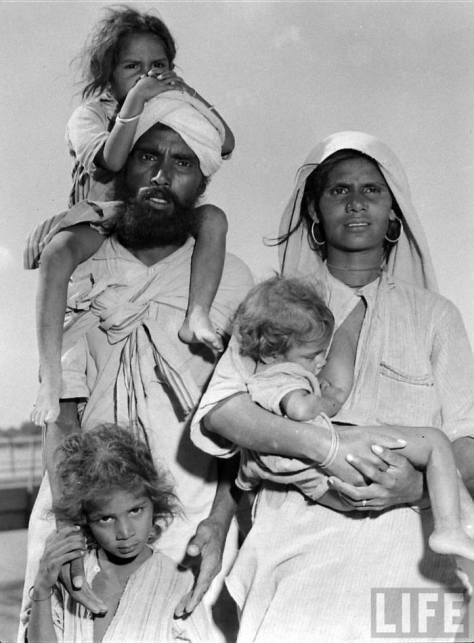
By this point, every Indian, Pakistani, and their grandfathers has watched the Google Partition ad, tears welled up in their eyes. For the uninitiated, Google’s recent advertisement tugs at heartstrings, telling the tale of two chaddi buddies, separated by Partition, and reunited by their grandchildren nearly seventy years later. When the ad went viral via Facebook, sitting thousands of miles away in America, I bawled as I watched the granddaughter listening to her grandfather’s nostalgic retelling of the idyllic life he led in Lahore, eating jhajhariya, with his buddy Yusuf, and his granddaughter’s instant Google fixes to reunite him with Yusuf in Delhi. Continue reading An Incomplete Reunion – Ruining the Post-Partition Party: Archit Guha
As a religious minority, I empathize with sexual minorities: M Reyaz
This is a guest post by M. REYAZ
The Apex Court judgment of December 11, putting aside the Delhi High Court order on decriminalisation of homosexuality, pertaining to Section 377 of the IPC has clearly divided into two ‘queer’ camps, where on one side besides LGBTS are those liberals extending their support to the LGBT cause, and on the other side, there are religious leaders and groups, who otherwise would not even see eye to eye with each other (what is ‘queer’ about this second camp is not so much its sexual orientation, as the strangeness of its banding together against queer people despite their antagonism toward each other).
Continue reading As a religious minority, I empathize with sexual minorities: M Reyaz
AAP’s Rise and Congress Rout – Some Obvious but Unconventional Questions: Sanjay Kumar
Guest post by SANJAY KUMAR
A Congress rout and the AAP success are the most obvious results of recent polls. Both are spectacular, in their own ways. Even BJP’s landslide victory in Rajasthan and Madhya Pradesh pales in comparison, for these two open up new possibilities.
Why a party whose legacy of anti-colonial struggle had lost sheen generations ago, whose top leadership is in the grip of a seemingly disinterested and incompetent dynasty, that lacks any organised cadre, coherent ideology, social base, and whose average leader appears more of a wheeler-dealer, and scamster, should continue to get close to thirty percent of votes from Indians even in worst of times, is a genuine mystery. That the Indian social analyses, barring a few exceptions, have tried little to unravel this mystery, is not only an indication of their intellectual limitations, but also of their ideological biases. The enduring success of Congress indicates seamier side of liberal democracy in general, which bourgeois social sciences try more to paper over than explore.
From voters’ perspective elections under liberal democracy are an exercise in choice, but not in freedom. When people vote, they are not acting as citizens shaping their social world, but as little men and women facing pre-existing structures of social power. The magic of elections under liberal democracy is precisely this. They offer a choice, the choice is not fake, its collective outcome is uncertain, yet the choice is already pre-determined in ways that by and large reproduce pre-existing power structures. That is why, exercising franchise is not necessarily a marker of democratic exercise, and leaders of fascist persuasion are often the loudest votaries of compulsory voting. But that is not all. If elections were mere gears in a machine that simply revolved on and on, they would be quickly become a ritual, like those under state socialism in which the Party and leaders always got more than 95% approvals. Elections under liberal democracy in contrast provide flexible adjustment of state political functionaries to changing social conditions. They allow reflection of changes in public opinion, demography, gender politics, caste equations and balance of class forces, whose origins lie somewhere else, onto state politics. Punctuated adjustment with a time lag produces a sense of drama. Personae on stage appear as victors and losers, for voters there is enough stage space to allow their hope, vengeance or gratitude to play their part. For a time, and only for a time, the impersonal structure of state power becomes humanly palpable. Continue reading AAP’s Rise and Congress Rout – Some Obvious but Unconventional Questions: Sanjay Kumar
Delhi Magistrate orders FIR against woman for anti-Modi posts: Kavita Krishnan
Guest post by KAVITA KRISHNAN:
The footsteps of fascism can be heard – this time in the hallowed hallways of the national capital’s courts. A woman who filed an FIR against a man physically threatening her for her anti-Modi Facebook posts, found to her dismay that the Metropolitan Magistrate in the Tis Hazari courts let off the man accused of threatening her safety, while ordering an FIR against her instead! The media’s coverage of this outrageous incident has been, till now, biased and factually misleading.
Sheeba Aslam Fehmi, a journalist and a Ph.D. Fellow in JNU, received several threats by emails from one Pankaj Kumar Dwivedi, which warned her of ‘consequences’ and even demanded she meet the man so that he could ‘cleanse’ her of her ‘filth.’ Continue reading Delhi Magistrate orders FIR against woman for anti-Modi posts: Kavita Krishnan
AAP Halts BJP Advance in Delhi
Over a year ago, I had written on Kafila about the (Ir)resistible rise of Arvind Kejriwal, a phenomenon thoroughly misread from the beginning to this moment, by free radicals and Left devotees of Congress-style politics. Taking the risk of saying ‘I-told-you-so’, some lessons need to be underlined, learnt from the political developments of the last three years. That post said – referring back to the days of the Anna Hazare movement (itself dubbed reactionary, casteist, even RSS-sponsored and fascist, by pundits of all hues) –
But here was the political class and the intelligentsia from Left to Right taking the protestors to task – asking them to tame their dissent and channel it through ‘proper channels’. Contest elections and let us see how much support you have, they challenged. Anna Hazare stuck to his guns, refusing the bait. Kejriwal however, seems to have decided to call their bluff. And much before the last hunger strike failed, his political mobilization started moving away from the single point agenda of the Lokpal Bill. Apparently taking up the challenge and moving towards the constitution of a political party, Kejriwal has entered the field in a manner that might even begin to pose an electoral challenge to ruling as well as opposition parties. How much of a challenge it will be we cannot say. However, one thing is quite clear: It will probably introduce an element of serious uncertainty in the coming elections, whenever they are held. Old formulas will cease to work. Equations are bound to change with new imponderables entering the scene.
Manmohan Singh says ‘No’ to CHOGM 2013, with a whimper: Anonymous
An Anonymous Guest Post
So, Prime Minister Manmohan Singh will not be attending CHOGM 2013 in Colombo after all. Many sections of Indian political and civil society, in Tamil Nadu in particular, will no doubt welcome this. But in reality, far from packing a punch this decision comes more as a whimper. If media reports are to be believed the PM’s letter to Rajapakse “does not talk about the reasons for Dr. Singh skipping the meet”. Muddled and last minute as it has been, far from demonstrating intent the decision actually betrays a singular lack of it, leaving India with little by way of leverage while doing its credibility no good. The PM’s absence will not be comfortable for Rajapakse but in the manner it has come it will in fact cost him little or at least much less than it would have if Delhi had made this decision count politically. But then the United Progressive Alliance is too busy dealing with its own rising electoral insecurities to care for India’s strategic interests let alone the human rights of Tamils in Sri Lanka. Continue reading Manmohan Singh says ‘No’ to CHOGM 2013, with a whimper: Anonymous
Waiting for the Director:Indian Premiere of ‘No Fire Zone: The Killing Fields of Sri Lanka’
On 7th November the full length version of the documentary “No Fire Zone: The Killing Fields of Sri Lanka’ will be premiered at the India International Center for the first time in India and discussed by eminent thinkers, journalists and activists. Callum Macrae, the Director of ‘No Fire Zone’, a film on the last days of the civil war in Sri Lanka has not received his visa to come to India and participate in the discussions despite applying over eight months ago!
Two years ago when Channel 4 in the UK first aired the documentary, it sent shockwaves through the international community. The Sri Lankan civil war, which ended in mid-2009 with the decimation of the LTTE by the Sri Lankan army was supposed to have been a ‘glorious’ chapter in the vanquishing of a ‘terrorist’ force. Continue reading Waiting for the Director:Indian Premiere of ‘No Fire Zone: The Killing Fields of Sri Lanka’
1984 and the Spectre of Narendra Modi: Ravinder Kaur
Guest Post by Ravinder Kaur
As India begins the countdown to the 2014 general elections, a new discourse has started taking shape around its minority populations. It is called the ‘what about 1984’ argument. The supporters of Narendra Modi in a bid to deflect attention from his role in 2002 pogrom usually throw 1984 at his critics. The critics have lately begun responding by placing 1984 pogrom in a less grave category in comparison to 2002. The difference we are told is the political ideology – Congress is inherently secular and 1984 an aberration whereas BJP is communal and 2002 symptomatic. This unfortunate comparison means that the ‘what about 1984’ argument has unintentionally turned 1984 pogrom into an exclusive Congress problem even when it sets out to call out Modi’s anti-minority stance. The role of Hindutava ideology has been airbrushed out of the history that led to 1984 pogrom as a consequence.
Continue reading 1984 and the Spectre of Narendra Modi: Ravinder Kaur
Chanting Sacred Election-Ritual Mantras by Regulating Free Speech: ‘A Status Update’ from EFLU, Hyderabad:Kt Hafis
This is a guest post by KT HAFIS
What follows is a ‘status update’ from EFL University, Hyderabad, with special reference to the recent regulation of free speech on social networking sites in the university. It follows the polemical structure of a facebook status update as it tries to bring in a new dimension to the nature and scope of the idea of public and public sphere. At the very outset, let me make this point very clear. We are not fighting for some anarchic and absolutist idea of free speech. We know very well that freedom of expression also means a lot of responsible thinking.
First, some detail about the facts of the matter before we reflect on the philosophical and theoretical problems that they posit in the face of the ‘here and now’ of student politics in Indian universities in general and EFLU in particular.Two students, Kt Hafis (the author) and Thahir Jamal were handed show-cause notices, issued by the Proctor’s office signed by Deputy Proctor Sujata Mukhri, for having expressed our opinion on Facebook regarding the anti-reservation remarks made by Mr. Tariq Sheik, a member of the administration and Deputy Dean of Student welfare, at a students’ general body meeting organized by the Dean of Students welfare to select the electoral committee for the upcoming students’ union election at EFL university. In that meeting, students sensitive towards the problems of representation raised genuine concerns about the absence of reservation in the central panel (President, Vice-President, General Secretary, Joint Secretary, Cultural Secretary, Sports Secretary) and against the denial of the posts of SC/ST, OBC, women, disabled and foreign representatives in the new constitution of the Students’ Union. These had been approved by the Vice Chancellor of EFLU and in response to a students’ struggle conducted the last year. Continue reading Chanting Sacred Election-Ritual Mantras by Regulating Free Speech: ‘A Status Update’ from EFLU, Hyderabad:Kt Hafis
A Night at the Pow Wow: Jay Desai
This is a guest post by JAY DESAI
As I approached the brown fields at the foothills of the rugged San Bernardino Mountains, the rhythm of the foot- stomping grew into a crescendo. I was visiting the annual pow wow of the San Manuel Band of Serrano Mission Indians. Thousands of Natives from many of the 500 or so Indian nations of North America had gathered for three days of dance, song and celebration of their rich heritage. Above us, the autumn California sun had turned the barren high peaks into a shade of angry red at dusk. As the night fell, the enthusiasm of the dancers grew to match the vibrant colors of their traditional outfits and headdresses. My young niece, visiting from India, asked me if the dancers wore these dresses in their everyday lives and if yes, why she never saw them during her long travels through this vast country. She asked me if they were Americans. Continue reading A Night at the Pow Wow: Jay Desai
पड़ोसी और अजनबी
पड़ोसी कब पड़ोसी न रह कर अजनबी बन जाता है ? या वह हमेशा ही एक अजनबी रहता है जिस पर मौक़ा मिलते ही हमला करने में ज़रा हिचक नहीं होती ? हम अपना पड़ोस चुनते कैसे हैं? क्या पड़ोस मात्र एक भौगोलिक अवधारणा है? क्या जो भौगोलिक दृष्टि से हमारे करीब है, वही हमारा पड़ोसी होगा? पड़ोस चुनना क्या हमारे बस में नहीं? क्या पड़ोस कुछ–कुछ धर्म या भारतीय जाति की तरह है जिसके साथ जीवन भर जीने को हम बाध्य हैं? क्या पड़ोस का अर्थ हमेशा आत्मीयता ही है? क्या पड़ोस का मतलब एक दूसरे का ख़याल रखना,आड़े वक्त एक दूसरे के काम आना ही है? या यह रिश्ता अक्सर उदासीनता का होता है , जिसमें हमें दरअसल अपने पड़ोसी में दिलचस्पी नहीं होती? क्या इस उदासीनता के हिंसा में बदल जाने के लिए कोई भी कारण काफी हो सकता है? यह प्रश्न जितना शहर के सन्दर्भ में प्रासंगिक है उतना ही भारतीय गाँव के सन्दर्भ में भी पूछे जाने योग्य है. एक बार फिर, मुज़फ्फरनगर के गाँव में हुई हिंसा के बाद, पड़ोस के मायने पर बात करना ज़रूरी हो उठा है. Continue reading पड़ोसी और अजनबी

