Category Archives: Bad ideas

Who Needs Romila Thapar’s CV?

Thapar questioned imperialist versions of Indian history, which the Hindutva Brigade still goes by.
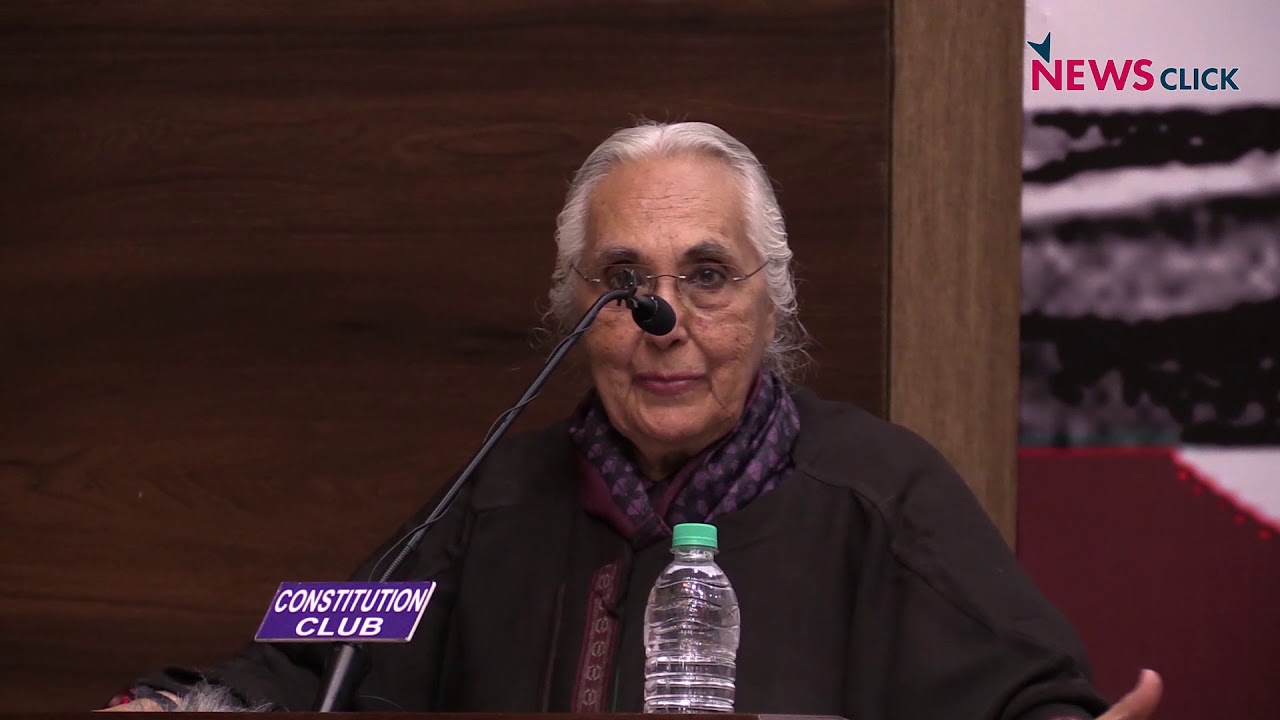
Romila Thapar

..an historian who is indefatigable in the pursuit of knowledge and prolific in its publication, and who is above all a devoted partisan of the truth. … The early history of the country has been illuminated by Professor Thapar, whom I now present, more than by almost any other scholar. An historian of that period who seriously wishes to refute accepted fictions and dispel the general darkness will need several high qualities. (From a citation presented by Oxford University to Romila Thapar while conferring on her an honorary Doctorate of Letters in 2002.)

It was 1960, when Romila Thapar, a young historian at the time, wrote a 400 plus-page monograph on Asoka and the Decline of the Mauryas. According to Oxford University Press, which published it in 2017, it tried to “trace virtually the entire span of Indian history.” The monograph is considered a classic today.

Thapar’s scholarly journey continues unabated at the age of 88. She is among the world’s foremost intellectuals, known for path-breaking work on Indian ancient history, as this interview acknowledges. Undoubtedly, her work has informed and inspired at least three generations of history students.

It hardly needs mention that Thapar has prestigious prizes to her credit for the scores of books and academic papers she has published. Twice, she declined the Padma Bhushan, the third highest civilian award granted by the government.

Now Thapar is in the news because of a strange query from the Jawaharlal Nehru University (JNU) administration, where she has held teaching and administrative positions for roughly three decades.

( Read the full article here : https://www.newsclick.in/Romila-Thapar-CV-JNU-Historian-Hindutva-Brigade-Indian-History)
 

Books About Wars in Your Country

A brief history of books, resistance, the police and politicians.

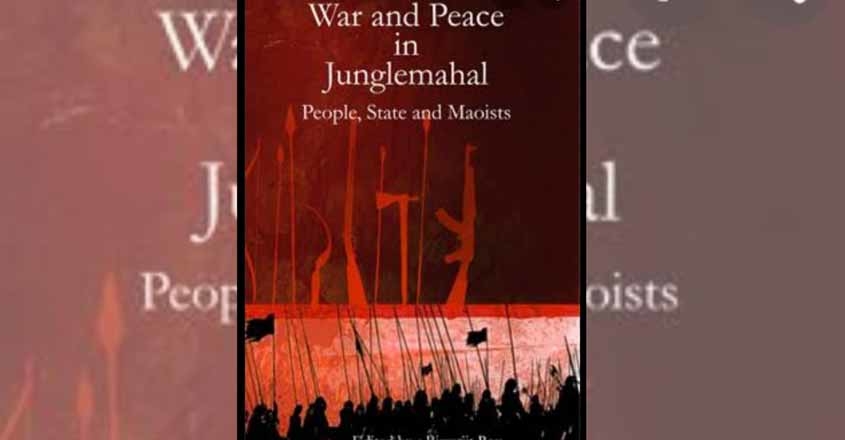
War and Peace

It is humanly impossible for even the most learned judge to have read every book referred to in their court. For a brief while this week, the judge conducting the trial of activist Vernon Gonsalves, an accused in the Bhima Koregaon incident of 2018, became an example of this. That was until the judge clarified that he is, in fact, aware of the Russian writer Leo Tolstoy and his epical novel War and Peace.

His response when the Bhima Koregaon charge sheet was placed before his court proves he knew of the provenance and contents of War and Peace. The confusion, it now appears, arose because the charge sheet had mentioned another book with a similar title. That is how the judge had ended up asking Gonsalves’ lawyers why their client possessed a book about wars in “other countries.”

It is not the judge’s knowledge of great literature but his belief that books about wars in other countries should not be owned (or read) by Indians that is a bigger surprise. Of course, since that remark, many commentators have pointed out that Tolstoy’s writings supported peace and not war. Accordingly, Mahatma Gandhi’s long correspondence with the literary legend is being highlighted afresh.

That said, this is not the first time that judges have expressed a curious indifference to the value of the written word, whether fictional or literary. The question arises, how can we tell if this incident is an aberration or the tip of an iceberg of flimsy excuses to keep people behind bars.

( Read the full article here : https://www.newsclick.in/books-about-wars-your-country)

Arvind Kejriwal, Article 370 and a Blind Alley

(Photo Courtesy : http://www.newslaundry.com)

He came, he saw and he concurred

– Caption of a RK Laxman cartoon in early 90 s


AAP’s stand on article 370 has confused and disheartened many.

For its workers the party has opened itself to attacks by its adversaries because of its support to stripping of statehood for Jammu and Kashmir and thus weakening its own plank for full statehood for Delhi which was its key slogan during the 2019 Lok Sabha campaign.

A section of its fellow-travelers who had high hopes of the experiment, activists/scholars – who were rather enthused with its ‘participatory’ approach – also feel betrayed or disheartened now.

It is a different matter that not many have made their displeasure known.

May be it is a sign of their increasing fatigue or possible cynicism with politics in general, they have preferred to share their frustrations at private levels only. Continue reading Arvind Kejriwal, Article 370 and a Blind Alley

In Kashmir Health Professionals Speak Truth to Power

It’s an outrage to dismiss valid concerns that doctors and medical journals are raising.

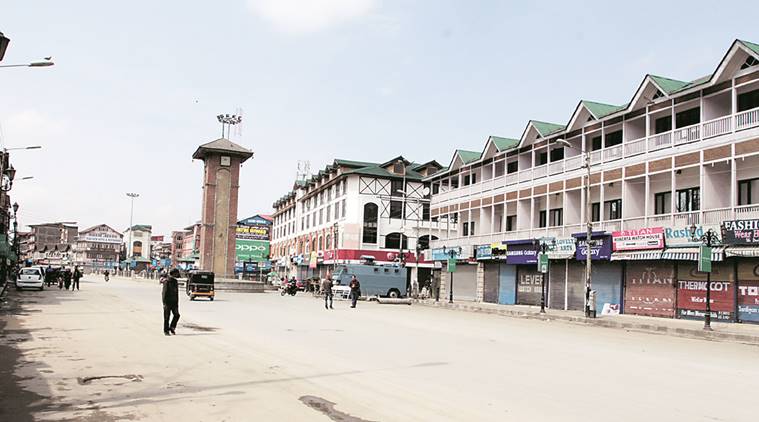
Kashmir Article 370

Representational image. | Image Courtesy: Indian Express

These are strange times. A state can just get ‘obliterated’ from the map of the nation. Constitutional propriety is set aside to deprive millions of citizens of their basic human rights while a significant section of the rest of the country ‘rejoices’ over it all.

A large section of the media has abandoned its role as watchdog of democracy but health professionals are coming forward to speak truth to power.

Reports have appeared that eighteen doctors from across India, including Dr Ramani Atkuri, a public health professional, have written to the BMJ, a prominent medical journal, urging the central government to “ease restrictions on communication and travel at the earliest [in Kashmir] and undertake any other measures that are required to allow patients to access health care without hindrance.”

This group of doctors has thrown crucial light on the humanitarian crisis unfolding in the Valley. One consequence of the crisis is “violation of the right to life and to health care.”

( Read the full article here : https://www.newsclick.in/Kashmir%27s-Future-Mental-Health-Article-370-Lancet-Journal)

A Crime of ‘Pure’Indifference

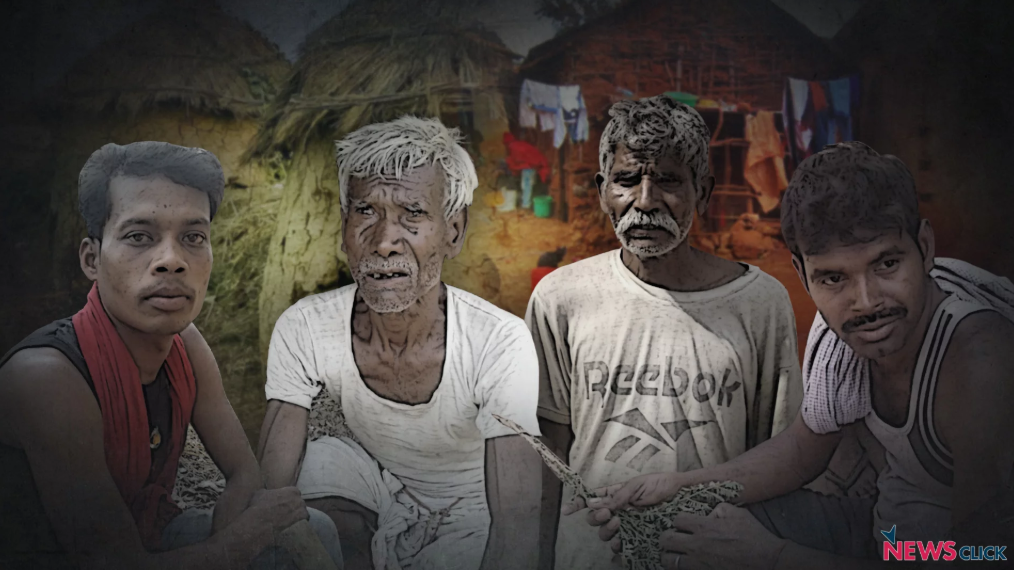
The ethic that dehumanises dalits continues 72 years after the country’s Independence.

A Crime of ‘Pure’

What, to the American slave, is your Fourth of July? I answer: a day that reveals to him, more than all other days in the year, the gross injustice and cruelty to which he is the constant victim. To him, your celebration is a sham; your boasted liberty, an unholy license; your national greatness, swelling vanity; your sounds of rejoicing are empty and heartless… There is not a nation on the earth guilty of practices more shocking and bloody than are the people of the United States, at this very hour.

These fiery lines from a speech delivered on July 4, 1852 in New York by Frederick Douglass, a former slave who had become a national leader of the abolitionists, rattled a predominantly White audience. The speech was delivered 10 years before slavery in the Southern states was abolished.

More than 80 years later, on August 14, 1931, Dr Bhimrao Ambedkar, a Columbia University and London School of Economics graduate, who was then leading a movement of the oppressed and exploited in India, met Mahatma Gandhi for the first time. “Gandhiji, I have no homeland,” Ambedkar told Gandhi, according to a transcript of that meeting. “No untouchable worth the name will be proud of this land.” As expected, the Varna (caste) mindset that dominated India then did not take kindly to Ambedkar’s charge.

( Read the full article here : https://www.newsclick.in/A-Crime-Pure-Indifference-Dehumanises-Dalits)

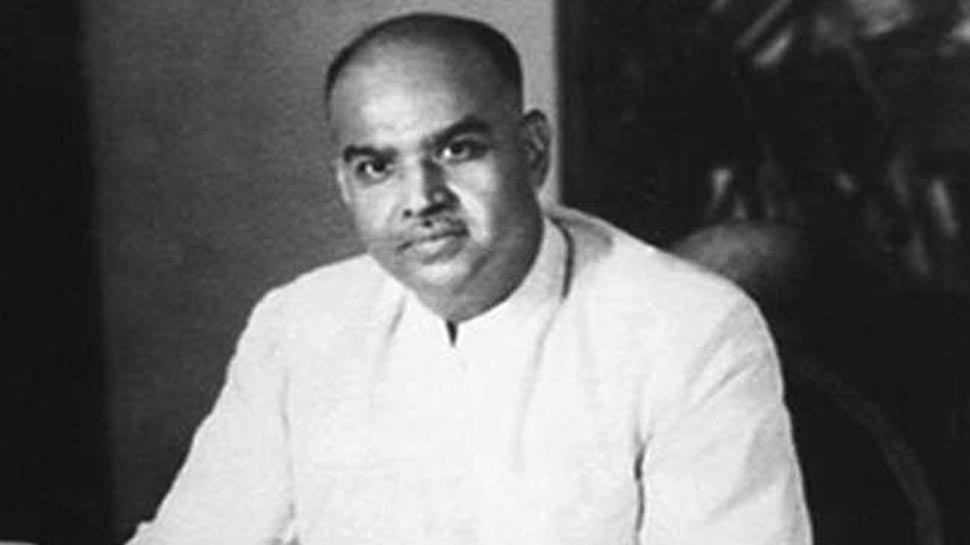
Shyama Prasad Mukherjee’s Role: Official Myths on J&K Busted

Dear Prime Minister, nothing about Jammu & Kashmir is as your party sees it

Syama Prasad

Economist and activist Jean Dreze, who has co-authored books with Nobel laureates, such as Amartya Sen and Angus Deaton, was in the headlines for a placard he carried to a protest rally in Delhi earlier this week. His placard challenged the government’s most critical justification for its controversial move to scrap Article 35A and read down Article 370 in Jammu and Kashmir (J&K). The placard displayed statistics that compare J&K with Gujarat, which is Prime Minister Narendra Modi and Home Minister Amit Shah’s home state. Dreze clearly showed how Gujarat lags behind J&K on a raft of development indices.

Although Dreze’s data beautifully punctures the government’s claim that J&K’s special status was a hindrance to its progress, Modi in his address to the nation on Wednesday night repeated the same argument, based on dubious claims. For instance, his claim that J&K lags behind other Indian states in matters of health services, education and so on, is patently incorrect.

Figures recorded in the National Family Health Survey (NFHS) has extended the debate further and shown that J&K already excels many other Indian states on several human development counts. Once again, this underlines that all talk about how “development” will reach J&K after Article 370 is made redundant is sheer humbug.

The propagation of false information brings home the fact that the government has gone very far to generate legitimacy for its decisions in J&K. In his address to the nation, Modi also said that his government had “fulfilled the dreams of [BR] Ambedkar as well as [the then Home Minister Vallabhbahi] Patel”.

( Read the full article here : https://www.newsclick.in/index.php/shyama-prasad-mukherjees-role-official-myths-jk-busted)

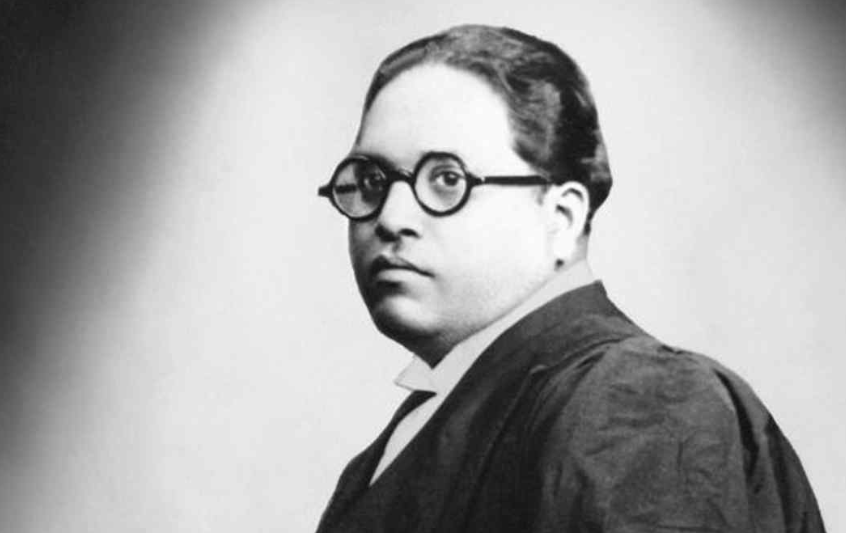
Towards a ‘Suitable’ Ambedkar

Is tweaking of Babasaheb’s iconic slogan — Educate, Organise, Agitate — by the Gujarat government part of a pan-India phenomenon in the saffron camp?

Towards a ‘Suitable’ Ambedkar

Does anyone still remember the ‘re-editing’ of Collected Works of Mahatma Gandhi during National Democratic Alliance (NDA)-I period when demands were raised that it should to be scrapped and the original collected works should to be reinstated so that readers/scholars are made available the ‘most authentic version of writings and utterances of Gandhi’. Noted Gandhians had underlined then how the revised Collected Works and adjoining CDs (compact discs) issued during 2001 had ‘five hundred entries missing’ from the original one.

Thanks to the exit of the Bharatiya Janata Party-led NDA government in 2004, the original Collected Works could be restored and even published online so that henceforth no government — deliberately or inadvertently — is able to make any changes in the works.

Well, while the project to ‘re-edit’ Gandhi was undertaken in a big way, which could be exposed in time, what one observes that surreptitiously or not so surreptitiously, the project to edit other icons of the anti-colonial or social emancipation movement is on in very many ways. It has been quite a long time since both Gandhi as well as Ambedkar — who were once anathema to the Hindutva project — have been included as ‘Pratahsmaraniya‘ (worth remembering in the morning) in the RSS shakhas. The emphasis seems to be on to present a more sanitised image of them which is more acceptable to the ruling dispensation.

A recent example of this has come from Gujarat.

(Read the full article here : https://www.newsclick.in/index.php/Towards-Suitable-Ambedkar)

रवीश कुमार: हिंदुस्तान का दुखता हुआ दिल

यह बिरले होता है कि ख़बरनवीस ख़ुद ख़बर बन जाए।पिछले तीन रोज़ से एक ख़बरची ही ख़बर है: रवीश कुमार।

याद आती है कोई 18 साल पहले रवीश से एक मुलाक़ात। “ दिक्कत यह हुई है टेलिविज़न की दुनिया में कि जिसे ख़बर दिखाने का काम है, वह सोच बैठा है कि लोग समाचार नहीं, उसे देखने टी वी खोलते हैं।” रवीश ने कहा। उस वक़्त वे रिपोर्टिंग का काम कर रहे थे। हमने महात्मा गांधी अंतरराष्ट्रीय विश्वविद्यालय में अपने संघर्ष को लेकर उनसे रिपोर्टिंग का अनुरोध किया था। रिपोर्ट बनी।लेकिन रवीश ने कहा, “ माफ़ कीजिए, कमज़ोर रिपोर्ट है!” कोई रिपोर्टर यह कहे,तब भी यह सोचना भी मुश्किल था,आज तो है ही।

Continue reading रवीश कुमार: हिंदुस्तान का दुखता हुआ दिल

Militarising Minds, Hindutvaising the Nation

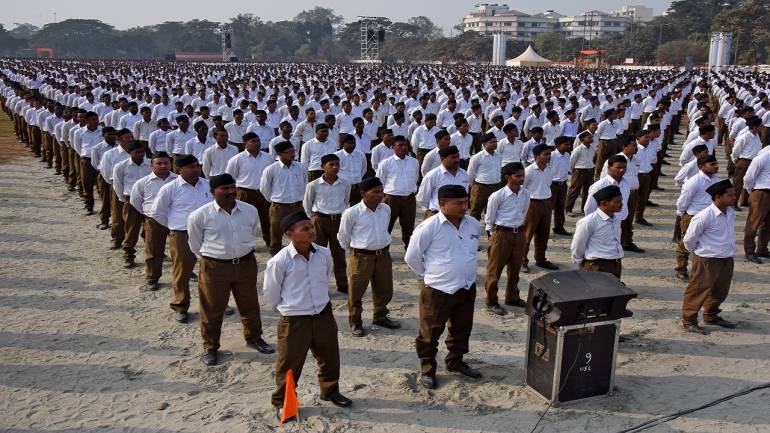
A military school under RSS is worrisome because of earlier experiences, such as the Malegaon and Nanded blasts, that were concretised with the intervention and involvement of Hindutva activists.

RSS military school

Representational image. | Image Courtesy: Money Control

Rare are the occasions when the Rashtriya Swayamsewak Sangh (RSS) — which could be said to be the biggest organisation of Hindu men — moves beyond its founder member Dr Hedgewar to build memorials.

Whatever might be the consideration behind it, but it came as a little surprise that the RSS has decided to start a school in the memory of its first non-brahmin and non-Maharashtrian supremo Rajendra Singh alias Rajju Bhaiya (1922-2003), who was its chief from 1994-2000. This proposed ‘Rajju Bhaiya Sainik Vidya Mandir’, will be set up in Shikarpur tehsil of Bulandshahr district, where the former supremo was born and it will start functioning from next year.

Vidya Bharati, the education wing of the RSS, which already runs 20,000 schools across India, would be running this military school as well. It is being said that this Army School will follow the Central Board of Secondary Education (CBSE) curriculum and will have classes running from Class 6 to Class 12.

Normally, an idea to start a school is met with jubilation, but this news has caused an opposite effect. From educationists, to social activists to political leaders, one can hear voices of concern.

( Read the full article here : https://www.newsclick.in/RSS-Military-School-Uttar-Pradesh-Hindutva)

DIsmantling of JNu

20 September is close. Birthday of Chandrashekhar. The young left leader who was murdered in Siwan in 1997. Before he went there he was in the Jawaharlal Nehru University. Known to generations of the university as the President of its students’union. We organise an annual  memorial lecture in his name at Patna . This year we had decided to invite a Professor from his university to deliver the lecture. She said a cautious yes as she was not sure if she would be given leave for it. For the last three years the teachers of the JNU have seen their leave application rejected, not only for popular lectures like the one above but also for seminars organised by their professional bodies or peers. But we insisted that she should try. So, we wrote a formal invitation letter to her, without mentioning the significance of the lecture. I apologised to Chandrashekhar for my cowardice. He would have smiled and called it an act of Brechtian cunning, defeating the vicious enemy non-violently.

Continue reading DIsmantling of JNu

About Menstrual Rights: Astha Savyasachi

Guest post by Astha Savyasachi

Humankind, right in the beginning, came face to face with menstruation. So, by now we as a society should have learnt to deal with it. But as we all know that it remains a problem for most of us. When we say this we don’t deny that we have successfully made it less of discomfort for a section of the people. 

It should not lead us to forget we are still far behind as a society to realize that the female body deserves and requires medical assistance to sustain the bodily changes [mostly hormonal] and mineral losses during the entire menstrual cycle. The politicians thumping their chests and taking oaths to protect Bharat Mata are yet to realize that the existing and breathing women also are entitled to human rights and need to be paid a lot more attention than the mere national personification of India [that too notinclusive of everyone in the geographical boundaries of India] in the image of a woman that is Bharat Mata . The irony is that the goddesses enjoy privileges and the existent women are devoid of even basic rights.

Continue reading About Menstrual Rights: Astha Savyasachi

Will India Remember Dadri’s Akhlaq, as Germany Recalls Victims of Nazi Barbarism?

The German acceptance for stolpersteine plaques helps them honour victims of Nazism. One wonders if it will ever be possible to take up similar projects in this part of South Asia.

Germany Recalls Victims of Nazi Barbarism

Hier Wohnte Bernhard Marx

JB 1897

Deportiert 20.07.1942

Minsk

Ermordet 24.07.1942

‘Here lived Bernhard Marx

Year of Birth 1897

Deported 20.07.1942

Minsk

Assassinated 24.07.1942’

It was while walking past a desolate street in Bonn that we stumbled upon some brass plates on which the names of the members of a family were engraved. The name Bernhard, supposedly the head of this family, was engraved on the first plate, followed by three to his right: Erna Marx Geb Hartman, (born 1899), Helena (1929) and Julie (1938).

This was an ill-fated Jewish family from Bonn, deported to the dreaded Minsk concentration—rather extermination—camp that was brutally murdered just four days after they got there. The youngest, Julie was barely four when she died.

Estimates of how many died in this camp over a period of two years vary but at least 65000, mainly Jews, perished there until it was liberated by the Soviet forces.

The young researcher who was our host and guide to the city said that the brass plaques, raised on stone, are called stolpersteine. Stolper means to stumble in German and steine means stone. The idea behind erecting stolpersteine is to raise awareness about events that took place in the late thirties and early forties in this region, when millions of innocent people—Jews, Romas, Jehovah’s Witnesses, homosexuals and political dissidents—were sent to the gas chambers or brutally killed by the Nazi regime.

( Read the full article here : https://www.newsclick.in/India-Remember-Dadri-Akhlaq-Germany-Victims-Nazi-Barbarism)

“वन्दे मातरम” जय नहीं, क्षय का नारा है

जब संसद में सरकार का कोई मंत्री कहे कि “वन्दे मातरम” न कहने वाले को भारत में रहने का हक़ नहीं है, तो उसे संसद में और बाहर जवाब देना ही पड़ेगा कि भारत में रहने की शर्त “वन्दे मातरम” का जाप या नारा नहीं है।नहीं हो सकता। भारत में रहने के लिए आप मुझे “जन गण मन” गाने को भी बाध्य नहीं कर सकते। आप मुझे किसी झंडे को सलाम करने को मजबूर नहीं कर सकते।

गाँधी का दिसंबर,1947 की एक प्रार्थना सभा का वक्तव्य याद कर लें हम जिसमें वे कहते हैं कि आप मेरे सर बंदूक लगाकर मुझे गीता पढ़ने के लिए भी बाध्य नहीं कर सकते।

यह तो कहने की ज़रूरत भी नहीं कि आप मुझे “जयश्री राम” या “भारत माता की जय” बोलने का हुक्म नहीं दे सकते। अगर आप ऐसा करते हैं तो आप अपराध कर रहे हैं। आप मेरी स्वायत्तता और मेरी गरिमा का अतिक्रमण कर रहे हैं। यह भारत के संविधान और क़ानून के मुताबिक़ जुर्म है।सज़ा मुझे नहीं आपको होनी चाहिए। लेकिन यह तभी होगा जब भारत का पुलिस और प्रशासन और न्याय तंत्र भारत के संविधान के मुताबिक़ काम करे। आज के भारत को देखते हुए इसकी पूरी गारंटी करना संभव नहीं है। अगर सबसे बड़ी अदालत सिनेमा घर में राष्ट्र गीत बजाने और सबको सावधान खड़े होने का हुक्म दे सकती है तो प्रशासन और पुलिस पर शक लाज़िमी है।
Continue reading “वन्दे मातरम” जय नहीं, क्षय का नारा है

Tabrez is dead, India lives

My friends from Jharkhand sent me a video of a man – to be exact, a Muslim – being lynched. I avoided opening it. Then a message followed – that the man being beaten up on camera has now died. They were at the police station and were meeting senior officers later. I decided to watch the video.

It is a long clip: ten minutes and 49 seconds. In it, you see a man – a young man – tied to a pole. He is half bent. You can see that he is writhing in pain. His head is unsteady and his legs twisted. There is darkness around him, but there is also some light – from the mobiles being flashed at him, to keep him in focus. There are sounds. Human sounds. Abuses. People moving. You can see eyes. Again, human eyes.

A stick is swung in the air and then you see a hand catching it. The man cries out loud. You cannot see if he has been hit or has cried out anticipating a beating. The camera is brought closer to the face. The man is asked to look into the camera. The crowd is moving around, you can sense some excitement in the air. He is asked his name. Continue reading Tabrez is dead, India lives

Who cares for bengal?

( First published in a different form in the Wirehttps://thewire.in/communalism/bengal-violence-tmc-bjp on 14 June, 2018. This article is its revised and updated version.)

Do all of us, those who love Rabindra Sangeet, those who wistfully talk about Satyajit Ray, Ritwik Ghatak, Mirnal Sen, Aparna Sen, those who cannot live without Nazrul Islam, those whose first love across generations remains Sukanto Bhattacharji, women and men, ever thankful to Raja Ram Mohan Roy for his relentless struggle against his own people for abolishing the practice of Sati ,and this list is long, just sit and wring our hands and let Bengal bleed to death?  

Bengal is being ravaged by a cynical game between political parties. It is up for grabs. The Bhartiya Janata Party is relishing the moment and the Trinamul Congress, by its foolishness and hotheadedness is driving the state into the hands of the BJP. Mamata Banerjee needs to realise that she is the Chief Minister of the state and not merely the head of her party. It is unbecoming of her when she says that among the people killed after elections, the number of her people is higher than their( BJP’s) number. All suffering violence are the citizens of Bengal and therefore it is her responsibility, as the CM of the state  to give them a sense of security. It is not for her to only speak for her party members. But we can see that she is doing exactly this. She has started looking partisan and her appeal to save the Bangla culture sounds hollow and unconvincing to the people. Cannot she see that her own party people are now joining the BJP in large numbers?

Continue reading Who cares for bengal?

हमदर्दी और हमशहरीयत: ट्विंकल, टप्पल और भारत

( सत्य हिंदी.कॉम पर 10 जून,2019 को सहनागरिकता का भाव विकसित करना ज़रूरी शीर्षक से प्रकाशित टिप्पणी https://www.satyahindi.com/waqt-bewaqt/twinkle-sharma-murder-case-aligarh-102906.html का परिवर्द्धित रूप)

अलीगढ़ के क़रीब टप्पल में दो साल की ट्विंकल की हत्या के बाद सिर्फ़ अलीगढ़ नहीं, देश के कोने कोने से बच्ची के लिए इंसाफ़ की माँग की जा रही है। हत्या पर अफ़सोस, शर्म और नाराज़गी का इजहार किया जा रहा है।

दो साल की बच्ची को आपसी रंजिश के चलते ही क्यों नहीं, मार डालना परले दर्जे की विकृति है और उसका कोई मनोवैज्ञानिक औचित्य नहीं दिया जा सकता। यह तथ्य कि अभियुक्त पहले से ही ऐसा था, कि उसपर अपनी बच्ची के साथ बलात्कार का आरोप था, मारी गई बच्ची के परिजनों को कोई राहत नहीं पहुँचाता।दो साल की बच्ची की हत्या इसलिए भी अधिक क्रूर है कि वह किसी भी तरह अपनी रक्षा नहीं कर सकती थी।

शायद ट्विंकल बच जाती अगर पुलिस ने पहले ही परिवार की गुहार सुन ली होती। इसलिए ज़िम्मेवार पुलिसकर्मियों को सज़ा भी ज़रूरी है।

Continue reading हमदर्दी और हमशहरीयत: ट्विंकल, टप्पल और भारत

Modi’s Meditation ‘Tour’

The art of legitimising religiosity in a secular country and live happily ever after.

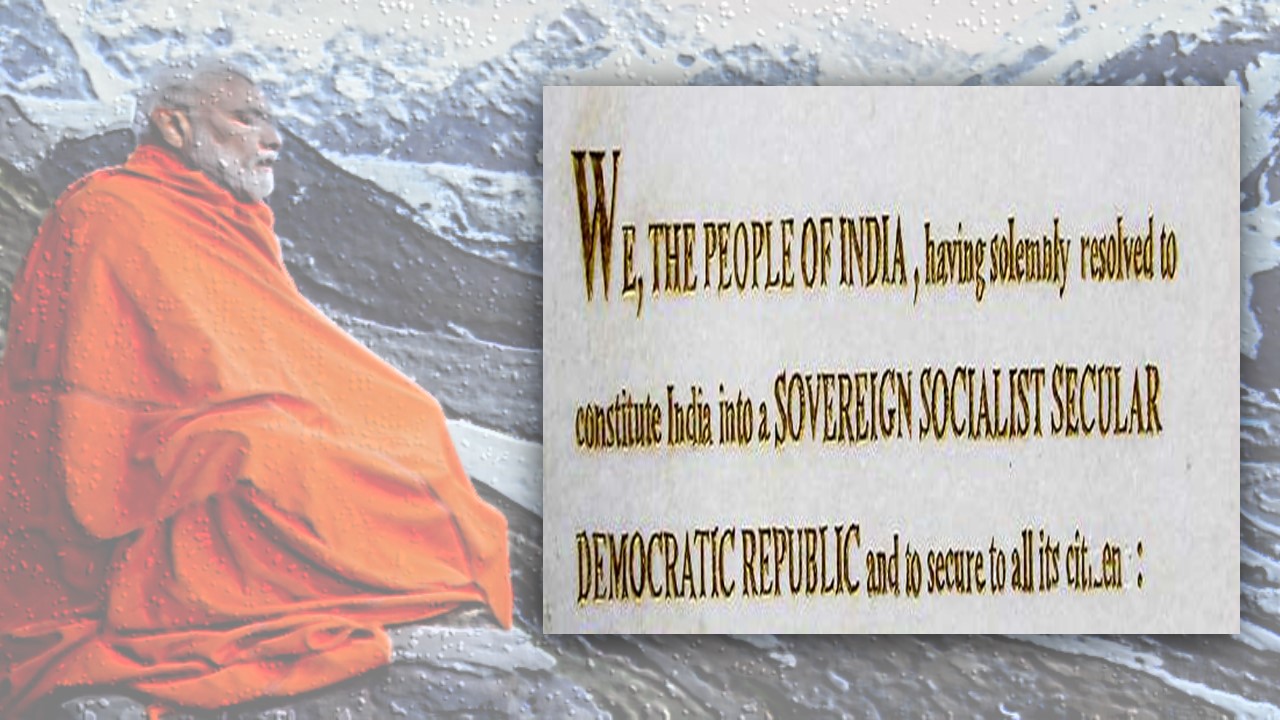
Modi in KedarnathReligion is regarded by the common people as true, by wise people as false and by the rulers as useful. — Seneca (4 BC-AD65)
A picture is worth a thousand words.

An outgoing Prime Minister of the ‘world’s biggest democracy’ seen meditating under the glare of cameras in a cave specially opened for the occasion and with a dress stitched for the event, conveys many things simultaneously.

First and foremost, it tells us that the present incumbent to the post would at least be remembered for his varied sartorial tastes among the galaxy of PMs who headed the republic earlier. It appears that either all the others lacked the sense to dress for the occasion or found it a mundane job not befitting the post and the responsibilities they held then. Continue reading Modi’s Meditation ‘Tour’

नयी पेशवाई, पुरानी पेशवाई 

भीमा कोरेगांव संघर्ष: एक अन्तहीन लड़ाई ?

(उदभावना के आगामी अंक में प्रकाशन हेतु)

Related image

Image : Courtesy – scroll.in

‘वे कौन लोग थे जो ईस्ट इण्डिया कम्पनी की सेना में भरती हुए और जिन्होंने हिन्दोस्तां जीतने में ब्रिटिशों की मदद की ? मैं जो उत्तर दे सकता हूं और – वह काफी सारे अध्ययन पर आधारित है – कि वे लोग जो ईस्ट इण्डिया कम्पनी द्वारा बनायी गयी सेना में शामिल हुए वह भारत के अछूत थे। प्लासी की लड़ाई में क्लाइव के साथ जो लोग लड़े वे दुसाध थे और दुसाध अछूतों की श्रेणी में आते हैं। कोरेगांव की लड़ाई में जो लोग लड़े वे महार थे और महार अछूत होते हैं। इस तरह चाहे उनकी पहली लड़ाई या आखरी लड़ाई हो अछूत ब्रिटिशों के साथ लड़े और उन्होंने हिन्दोस्तां जीतने में ब्रिटेन की मदद की। इस सच्चाई को मार्केस आफ टिवडलीडेल ने पील आयोग के सामने पेश अपनी नोट में रेखांकित किया है, जिसका गठन भारतीय सेना के पुनर्गठन के बारे में रिपोर्ट तैयार करने के लिये 1859 में किया गया था।

ऐसे कई हैं जो अछूतों द्वारा ब्रिटिश सेना में शामिल होने को देशद्रोह का दर्जा देते हैं। देशद्रोह हो या न हो, अछूतों की यह कार्रवाई बिल्कुल स्वाभाविक थी। इतिहास ऐसे तमाम उदाहरणों से भरा है कि किस तरह एक मुल्क के लोगों के एक हिस्से ने आक्रमणकारियों से सहानुभूति दिखायी है, इसी उम्मीद के साथ कि आगुंतक उन्हें अपने देशवासियों के उत्पीड़न से मुक्ति दिला देगा। वे सभी जो अछूतों की आलोचना करते हैं उन्हें चाहिये कि वे अंग्रेज मजदूर वर्ग द्वारा जारी घोषणापत्रा को थोड़ा पलट कर देखें।’’

– अम्बेडकर

/लन्दन में आयोजित गोलमेज सम्मेलन हेतु अम्बेडकर ने जो आलेख प्रस्तुत किया, जो बाद में ‘अनटचेबल्स एण्ड द पैक्स ब्रिटानिका’ नाम से उनकी संकलित रचनाओं में शामिल किया गया, उसमें उन्होंने यह बात कही थी।/

प्रस्तावना

स्मृति का वजूद कहां होता है ? और विस्मृति के साथ उसका रिश्ता कैसे परिभाषित होता है ?

कभी लगता है कि स्मृति तथा उसकी ‘सहचर‘ विस्मृति एक दूसरे के साथ लुकाछिपी का खेल खेल रहे हों। स्मृति के दायरे से कब कुछ चीजें, कुछ अनुभव, कुछ विचार विस्मृति में पहुंच जाएं और कब किसी शरारती छोटे बच्चे की तरह अचानक आप के सामने नमूदार हो जाएं इसका गतिविज्ञान जानना न केवल बेहद मनोरंजक बल्कि मन की परतों की जटिल संरचना को जानने के लिए बेहद उपयोगी हो सकता है । यह अकारण ही नहीं कि किसी चीज / घटनाविशेष को मनुष्य कैसे याद रखता है और कैसे बाकी सबको भूल जाता है इसको लेकर मन की पड़ताल करने में जुटे मनीषियों / विद्वानों ने कई सारे ग्रंथ लिख डाले हैं । Continue reading नयी पेशवाई, पुरानी पेशवाई 

Thejus – The Death of a Daily Newspaper

[This is a GUEST POST by N P CHEKKUTTY]


It is rarely that a journalist writes about himself or herself, because they are supposed  to be detached observers of history-in-the-making. But this time I cannot help it because one of the things that happened in the Sabarimala-obsessed state of Kerala this week happens to be the demise of Thejas, a daily newspaper that I was associated with for almost 14 years. It was a death foretold over two and half months ago, but no one took notice and no one raised any serious concerns about the passing of a newspaper that existed in our civil society for over a decade. It is sad that the newspaper which was known for its fierce anti-Sangh Parivar positions leave the scene just a few months ahead of a general election that will decide the future course of this country. Continue reading Thejus – The Death of a Daily Newspaper

Hindutva Terror and Left Hegemony: After Women’s Entry into Sabarimala

Hours after the two women entered Sabarimala, the Hindu terrorists began their handiwork. Mad mobs, including women, began to roam the streets and attack by-passers, in their desperation to foment violence and provoke riots. In Karunagappally, Muslim establishments and shops were singled out for vandalism. The Sangh-backed Sabarimala Action Council called for a hartal today and they have spared no effort to make sure that people are terrorized. Continue reading Hindutva Terror and Left Hegemony: After Women’s Entry into Sabarimala

50 Years Later, Shadow of Keezhvenmani Continues to Hover Over our Republic

December 25, 1968, termed as ‘Black Thursday’, saw the first mass crime against Dalits in independent India, who were fighting for respectable wages under the leadership of the Communist Party.

50 Years Later, the Shadow Keezhvenmani Continues to Hover Over our Republic

Image for representational use only; Image Courtesy : Socialist India

P Srinivasan, a veteran village functionary who cremates the dead had, in an interview done few years ago, described the darkening early morning on December 26, 1968, when the bodies began arriving from Keezhvenmani, a non-descript village in Thanjavur district of Tamil Nadu.

The village functionary, called Vettiyan, who is nearing 60 now, still remembered the number: “There were 42 corpses in all, horribly burnt and mangled. The stench was awful,” Pointing towards the plot of land where they were cremated, he said “All of them were Dalits, burnt to death in a caste clash. I cremated them on these very grounds.”

Srinivasan, then 23-year-old, shared vivid details of that ‘Black Thursday’ in 1968, a day that has remained etched in his mind.

December 25, 2018, completes 50 years of that ‘Black Thursday in 1968’, which is remembered as the first massacre of Dalits in independent India. The Dalits were martyred while fighting for respectable wages under the leadership of the Communist Party. All of these landless peasants had started to organise themselves into a campaign for higher wages following the increase in agricultural production in the area.

(https://www.newsclick.in/50-years-later-shadow-keezhvenmani-continues-hover-over-our-republic)