Category Archives: Politics

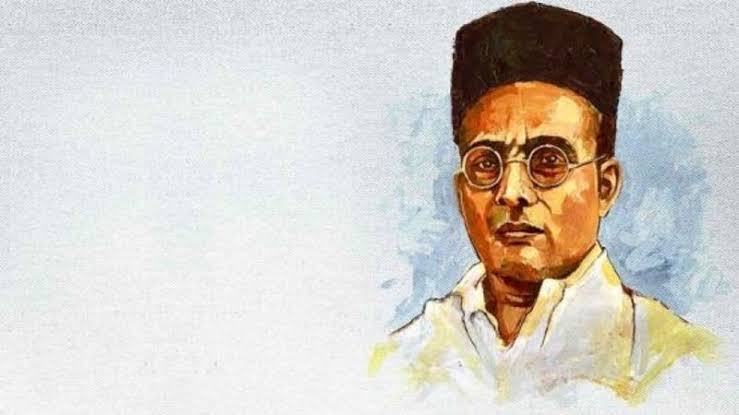
Savarkar, India’s ’Ratna’ of a Different Kind!

BJP’s poll promise of Bharat Ratna for Savarkar, who inspired a wide spectrum of fanatic individuals and violent organisations, shows the moral vacuousness of the Hindutva project

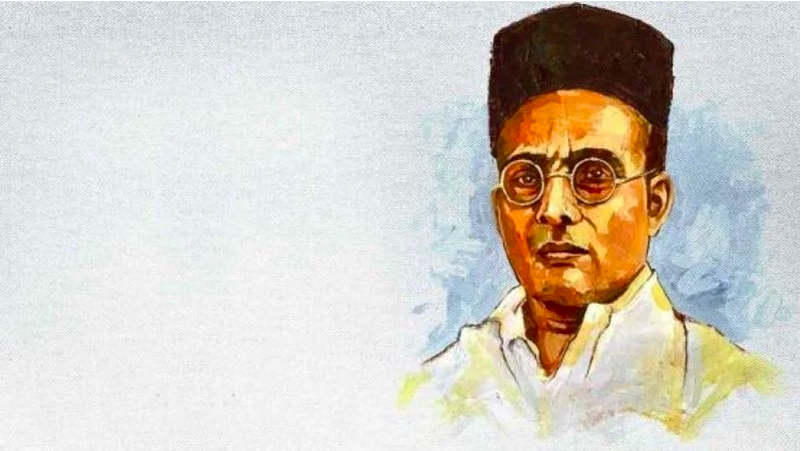
Savarkar

“The curious fact is that as we move into the 21st century, historians have become central to politics. We historians are the monopoly suppliers of the past. The only way to modify the past that does not sooner or later go through historians is by destroying the past….Mythology is taking over from knowledge”.

It was in the wee hours of dawn of the 21st century that renowned scholar and historian, Eric Hobsbawm, had talked about the process of  “destroying the past” to “modify” it or how “mythology is replacing knowledge” in his speech at Columbia University in New York City.

Much water has flown down the Ganges, the Rheins, the Yangtzes of the world and as we stand at the cusp of the third decade of the 21st century, one realises that how this process — both literally and metaphorically — has advanced to different corners of the globe.

With the ascent of Hindutva supremacist forces in polity and society in this part of the world, perhaps this process has reached its extreme, so much so that every other saffronite seems to have gathered enough confidence to claim legitimacy to any weird thing. The news that the Bharatiya Janata Party (BJP), in its election manifesto (for the Maharashtra Assembly) has promised that it would confer Bharat Ratna, the country’ topmost honour, on VD Savarkar if voted to power, should be seen in this light.

( Read the full text here : https://www.newsclick.in/Savarkar-India-Ratna-of-a-Different-Kind)

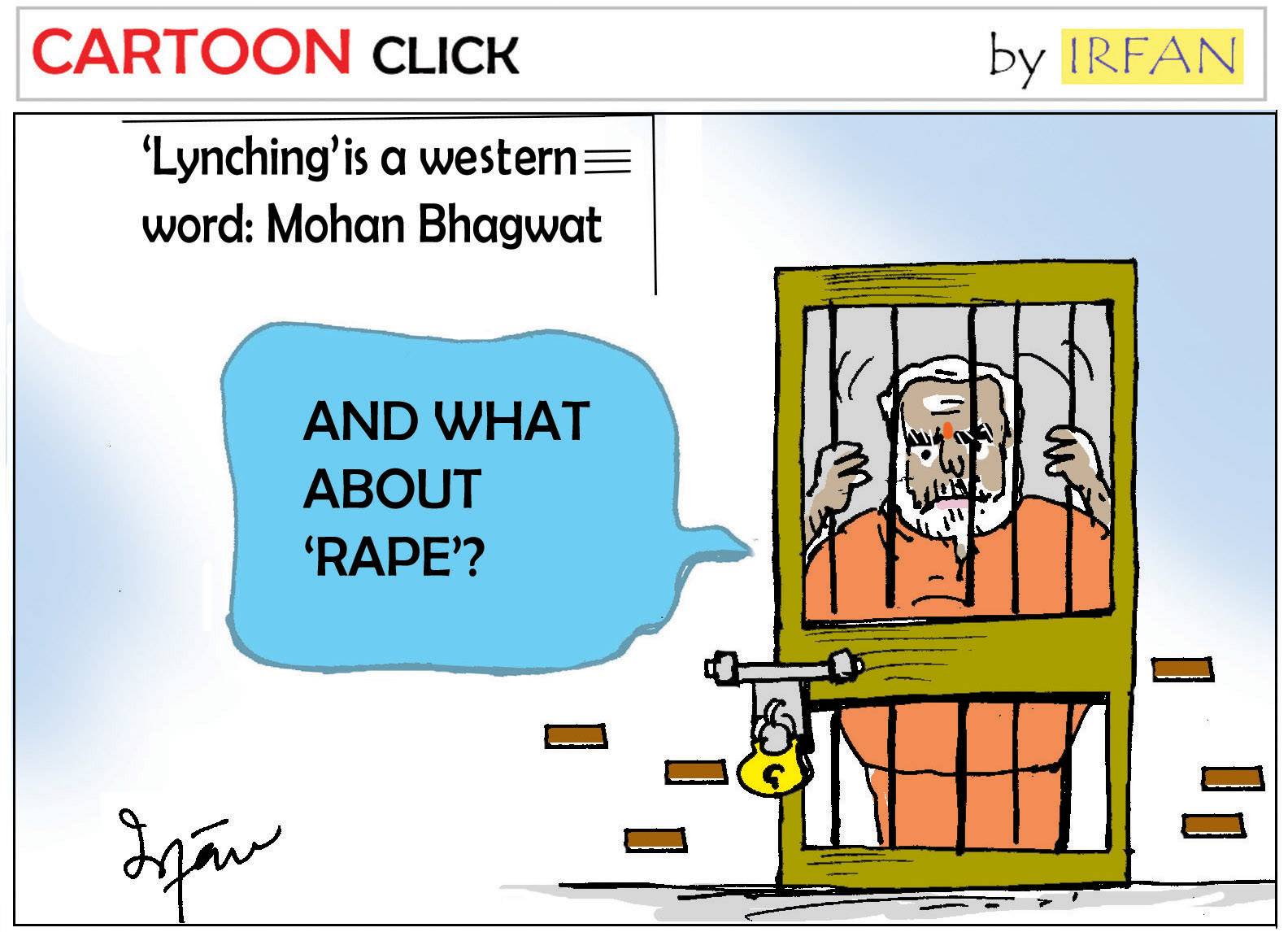
Will Lynching in Bharat Be Called Vaddh?

The Sangh’s obsession with vocabulary is not innocent.

Will Lynching in Bharat

The speech by Rashtriya Swayamsevak Sangh (RSS) supremo Mohan Bhagwat on its foundation day (Dusshera) has now become an event, watched with interest. The speech itself has a long tradition within the organisation, which all its affiliated (anushangik) bodies look upon as a guiding light.

This year was no different. Donning the Sangh’s uniform, the top echelons of its organisations attended the event. Union Minister Nitin Gadkari, Maharashtra Chief Minister Devendra Fadnavis attended too, and wore the black cap and Sangh “uniform”.

Yet, the speech by Bhagwat itself had nothing seemingly strategic. Some analysts even felt that he could not show any new direction to the RSS and its affiliates; that it seemed to have made a weak defence of the Bharatiya Janata Party (BJP) government that is ruling at the Centre and several states. “Have the tables turned on the Sangh Parivar?,’ The Wire asked, in its analysis of Bhagwat’s speech.

( Read the full text here : https://www.newsclick.in/Lynching-Bharat-Called-Vaddh)

शौचालय: एक हत्यारी कथा 

Guest Post : Fact finding team of Communist Party of India ( CPI)

[पिछले सितम्बर की 25 तारीख़ को मध्य प्रदेश के शिवपुरी ज़िले के एक गाँव भावखेड़ी में दो बच्चों की नृशंस हत्या कर दी गयी थी।  मीडिया में कारण यह आया था कि उन्हें खुले में शौच करते देख उसी गाँव  व्यक्ति को गुस्सा आ गया और उसने बच्चों को मार डाला। 

सीपीआई का एक छः सदस्यीय जाँच दल मामले की तहक़ीक़ात के लिए 1 अक्टूबर 2019 को शिवपुरी और भावखेड़ी गया था।  ग्रामीणों और पीड़ित परिवार से तथा अन्य कर्मचारियों, शिक्षकों व बच्चों से बात करने पर हमारे सामने जो तस्वीर उभरी, उसके आधार पर तैयार यह रिपोर्ट]

The Open is No Place for India's Children to Go

मृतक बच्चे (फाइल फोटो दि वायर से साभार) Continue reading शौचालय: एक हत्यारी कथा 

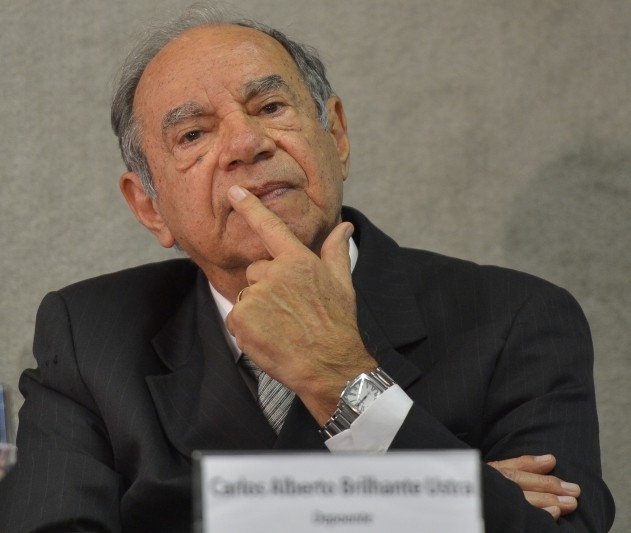
India’s Answer to Brazil’s Ustra

The Hindu Right is analogous to Right-wing regimes elsewhere.

UstraComissao

As Brazil’s Far Right rises, army man Ustra (who died in 2015), who tortured hundreds, is becoming a cult figure of a kind. Image Courtesy: Wikipedia

The popularity of Good Night Stories for Rebel Girls, which present female role models before young readers, has proved rather phenomenal. Within a span of three years, it has been published in 47 languages around the world and has sold more than a million copies.

The plan to render a Turkish version has met with a big roadblock. A board for the protection of minors from obscene publications of the Turkish government has found them offensive. It recently ruled that these books should be partially banned and treated like pornography.

The reason—they could have a ‘detrimental influence’ on young minds.

It is beyond comprehension what “negative impact” a book that promotes equality can have on impressionable minds, other than the fact that they take the idea seriously and extend it to other arenas of life. Erdogan’s Turkey is no different from Right-wing regimes elsewhere that are very particular about what children should read or not.

Jair Bolsonaro, the controversial Far Right President of Brazil, who is also known as the Trump of the Tropics, was recently in the news for similar reasons.

( Read the full text here : https://www.newsclick.in/india-answer-brazil-ustra)

एन आर सी और उससे जुड़े चंद सवाल : सबीहा फ़रहत

Guest post by SABIHA FARHAT

[भारतीय-हिन्दू मिथकों और परम्परा पर लंबे समय से लिखते आ रहे  बुद्धिजीवी श्री देवदत्त  पट्टनायक  अपनी एक ट्वीट में  एक लाजवाब  बात  कही . उनहोंने कहा कि जहाँ हिन्दू धर्मं  का मतलब  वसुधैव  कुटुम्बकम है , उसके  लिए  अगर  समूची वसुधा , सारी एक कुनबा  है , वहीँ  हिंदुत्व  का मतलब  सिर्फ़  एन आर सी  (यानी नागरिकों की राष्हैट्रीय फेहरिश्त ) है. बिलकुल दो शब्दों में  , बड़ी खूबसूरती  से पट्टनायक साहब ने इन दोनों  फलसफों के बीच का फर्क़ खोल कर सामने रख दिया  है. इस  संक्षिप्त लेख में   डाक्यूमेंट्री  फ़िल्मकार  और पत्रकार  सबीहा फ़रहत  उसी एन आर सी  से पैदा हुए  चंद सवाल उठा रही हैं.]

आजकल अमित शाह केवल एनआरसी पर स्टेटमेंट दे रहे हैं। “घुसपैठियों ” को बाहर फेंक देंगे और हिन्दू, सिख, बौद्ध, जैन, ईसाई, पारसी को नागरिकता दे देंगें। फिर चाहे उसके लिये संविधान को तक पर रख  कर सिटीज़नशिप ऐक्ट ही क्यों ना बदलना पड़े!

उनकी इस बात से साफ़ ज़ाहिर है कि देश के 16 करोड़ मुसलमान ही “घुसपैठिये” हैं। “दीमक” हैं और उन्हें देश से बाहर खदेड़ने की ज़रूरत है। लेकिन सिर्फ़ मुसलमान से इतनी नफ़रत क्यों? मुसलमान ने इस देश का क्या बिगाड़ा है? क्या उसने किसी की रोटी छीनी, किसी की नौकरी छीनी, किसी का बिज़नेस हड़प लिया। नहीं! क्योंकि अगर वो ऐसा करता तो आर्थिक तौर पर सबसे ज़्यादा कमज़ोर नहीं होता।

Continue reading एन आर सी और उससे जुड़े चंद सवाल : सबीहा फ़रहत

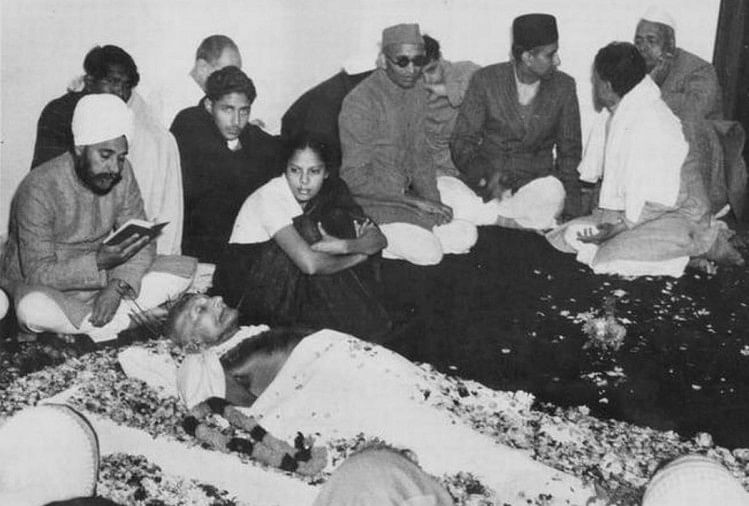
New India  – New Father of Nation?

Image result for mahatma gandhi

Ms. Amruta Fadanavis – wife of Maharashtra Chief Minister Devendra Fadanavis – found herself at the centre of controversy two weeks back. Her birthday greetings to PM Modi – whom she wished ‘Father of Our Country @narendramodiji a very Happy Birthday -…’ – on her twitter evoked reaction from twitterati. Her ‘height of ignorance’,  was pointed out and her attempt was called ‘sycophancy at its top’ (https://twitter.com/fadnavis_amruta/status/1173877700290678785)

Anyway, as one hoped that this chapter around ‘discovery of a new Father of Nation’ was over and one was attempting to turn a new leaf what one witnessed was rather unusual.

The debate around ‘Father of Nation” came back with a vengeance. Continue reading New India  – New Father of Nation?

Humko Savarkarich Mangta

Jinnah propounded his two-nation theory in 1939—exactly two years after Savarkar presented it.

Savarkar

Who could have been the best prime minister of independent India? 

Nehru or (Vallabhbhai) Patel?

For more than last five years, we have been a witness to this manufactured debate—courtesy Bharatiya Janata Party (BJP), which has tried all the tricks in its kitty to create a false binary between these leading stalwarts of independence movement, who called themselves ‘Gandhi’s sipahis’.

Anyway, thanks to the differences of perception within the saffron fraternity, a new competitor to Sardar Patel seems to have emerged from within the Hindutva Brigade who is being projected as someone who would have been a “better PM”.

Uddhav Thackreay, chief of Shiv Sena and at present, a junior ally of the BJP in Maharashtra, recently made his choice clear by stating that if Veer Savarkar would have become the prime minister, “Pakistan would not have come into existence”. At a book release event, he even refused to call Nehru a Veer (courageous), making a rather provocative statement: ‘I would have called Nehru brave if he would have survived jail for 14 minutes against Savarkar who stayed in the prison for 14 long years.’

Definitely, the fact that Nehru spent more than nine years in different jails of the colonialists without ever compromising his basic principles—whereas, the 14 years spent by Savarkar were interspersed with mercy petitions sent by him to the British, wherein he had even expressed his readiness to ‘serve the government in any capacity they like’—did not bother him at all.

( Read the full article here : https://www.newsclick.in/humko-savarkarich-mangta

Statement by Teachers and Academics in Support of Dr. Hany Babu

The following is a statement issues by teachers and academics in support of Dr Hany Babu, whose residence was raided early morning non 10 September by Pune Police

We, teachers and members of the academic community from across universities, are shocked to know of the illegal raid at the residence of Dr. Hany Babu, Associate Professor in the Department of English, University of Delhi on the morning of 10 September 2019. While the horrifying overreach of a search conducted without a warrant has become routine harassment for dissenting citizens, the attempt made by the Pune Police to forcefully detain Babu’s family for six hours and deprive them of any communication with lawyers or friends amounts to extreme duress. Finally, forcing Babu to change passwords and forfeit access to his email account and other personal online media clearly makes way for a possible planting of evidence, to concoct a case against an assumed ‘suspect’

Continue reading Statement by Teachers and Academics in Support of Dr. Hany Babu

Everyday Tips for Surviving Tyranny: Anonymous

Guest Post by ANONYMOUS

Suspected Banksy mural in London in support of environmentalist protest. 

As authoritarian right-wing populist leaders across the world unleash a reign of tyranny and hate, there is a need to think together about everyday strategies of survival. As an individual, it can get a bit overwhelming. Everything could look pointless. Many friends talk about how they find it impossible to write or work in an atmosphere of hate and violence. However, it is important to remember that what might look invincible today may not last for even half a decade. But while it lasts, how does one live under tyranny and what are the ways of building non-violent resistance? Continue reading Everyday Tips for Surviving Tyranny: Anonymous

Lynchistan

Southern trees bear a strange fruit,

Blood on the leaves and blood at the root,

Black bodies swinging in the southern breeze,

Strange fruit hanging from the poplar trees.

The word lynching conjures up images of a dark period in the history of the United States of America. Between 1877 and 1950, white supremacist gangs murdered 4,000 African Americans, while the government and the police looked the other way. James Baldwin, whose essays Dark Days captures the unfolding violence, wrote, ‘A mob is not autonomous. It executes the real will of the people who rule the State’. In 1888, white supremacists lynched seven African American men for drinking from a well – which they had said was for ‘white’s only’. Baldwin recounts that story and writes, ‘The blood is on the hands of the state of Alabama which sent those mobs into the street to execute the will of the State’.

The lyrics quoted above are from the iconic song – Strange Fruit – written by the communist artist Abel Meeropol and sung by Billie Holiday. Continue reading Lynchistan

A War For Scientists to Join

Scientists have barely offered resistance to pseudoscience. This must change—IIT students show how.

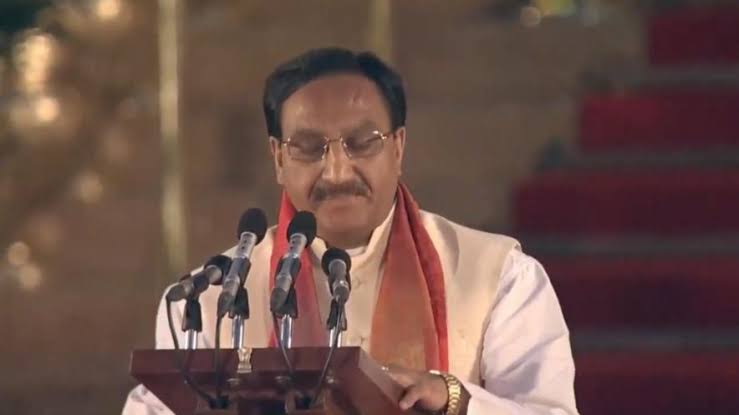
Ramesh Pokhriyal

Surely India’s scientific community must be waking up to the realisation that their silence is detrimental to scientific development and allows many varieties of mischief to breed. In a rare show of gumption, students of the elite engineering institute, IIT Bombay, have slammed the recent decision to invite the Human Resources Development (HRD) Minister Ramesh Pokhriyal ‘Nishank’ to chair their graduation ceremony.

For too long India’s scientists have remained silent—even the credulous claims by Prime Minister Narendra Modi in a speech at the Ambani hospital in November 2014 was not challenged by them for a long time. A key role has to be played by the scientific community in the ongoing battle of ideas. Perhaps students of IIT Bombay show the way.

They have said in their in-house publicationInsight IIT Bombay, that a guest who “recognised, embodied and endorsed the scientific and moral values” of their institute should have been invited instead of the minister. Their problem is with Pokhriyal’s speech, pervaded by unscientific claims and “twisted facts”. They are under no illusion the speech tried to stoke “patriotic feelings”. To the IIT students, the speech was a “mild form of scientific blasphemy”.

( Read the full article here : https://www.newsclick.in/war-scientists-join)

Protest Prime Minister Modi’s visit to the United Nations: Coalition Against Fascism in India

Statement by the US-based COALITION AGAINST FASCISM IN INDIA

cafiusa2019@gmail.com Twitter @Hum_CAFI_hai)

Protest on Friday, September 27th at 10:30 am

United Nations Plaza, New York City

India’s Prime Minister Narendra Modi will visit the United States at the end of September. He will attend the United Nations General Assembly Session on September 28.  Please join us to protest Modi’s visit. Modi’s government has been orchestrating a pogrom of hate and violence against Muslims and Dalits in India. His government has been cracking down on all forms of dissent and all those who question its politics of hate. Its economic policies have resulted in escalating poverty and thehighest unemployment rate in half a century. We call upon all anti-fascist, anti-racist,secular, and environmentalist groups in the United States to join us in protesting his visit and exposing the retrograde, near-fascist politics of Modi’s government.

Continue reading Protest Prime Minister Modi’s visit to the United Nations: Coalition Against Fascism in India

Wishful visions, dishonest tales and bitter fruit

Review of ‘Malevolent Republic : A Short History of New India’ by K. S. Komireddi

Image result for malevolent republic

‘The idea of a peace-loving, nonviolent India exists, persists, as part of a selectively constructed and assiduously cultivated national self-image in the midst of a society pervaded by social and political violence…’ argued Prof Upinder Singh, in her well-researched voluminous book ‘ Political Violence in Ancient India’ which had appeared around two years back. She had also added that pioneers of independence struggle were instrumental in creating this ‘[m]yth of non-violence in ancient India which obscures a troubled, complex heritage.’

‘Malevolent Republic’ – A Short Hisotry of New India’ by K. S. Komireddi – a commentator, critic and journalist who has written for leading western publications, reminds one of this debate. The book tries to chronicle the trajectory of post-independence India from Nehru to Modi – and does not shy away from raising uncomfortable questions which demand broader contemplation as well as deep soul searching.

( Read the full story here : https://epaper.telegraphindia.com/calcutta/2019-09-06/71/Page-11.html)

Who Needs Romila Thapar’s CV?

Thapar questioned imperialist versions of Indian history, which the Hindutva Brigade still goes by.

Romila Thapar

..an historian who is indefatigable in the pursuit of knowledge and prolific in its publication, and who is above all a devoted partisan of the truth. … The early history of the country has been illuminated by Professor Thapar, whom I now present, more than by almost any other scholar. An historian of that period who seriously wishes to refute accepted fictions and dispel the general darkness will need several high qualities. (From a citation presented by Oxford University to Romila Thapar while conferring on her an honorary Doctorate of Letters in 2002.)

It was 1960, when Romila Thapar, a young historian at the time, wrote a 400 plus-page monograph on Asoka and the Decline of the Mauryas. According to Oxford University Press, which published it in 2017, it tried to “trace virtually the entire span of Indian history.” The monograph is considered a classic today.

Thapar’s scholarly journey continues unabated at the age of 88. She is among the world’s foremost intellectuals, known for path-breaking work on Indian ancient history, as this interview acknowledges. Undoubtedly, her work has informed and inspired at least three generations of history students.

It hardly needs mention that Thapar has prestigious prizes to her credit for the scores of books and academic papers she has published. Twice, she declined the Padma Bhushan, the third highest civilian award granted by the government.

Now Thapar is in the news because of a strange query from the Jawaharlal Nehru University (JNU) administration, where she has held teaching and administrative positions for roughly three decades.

( Read the full article here : https://www.newsclick.in/Romila-Thapar-CV-JNU-Historian-Hindutva-Brigade-Indian-History)


Books About Wars in Your Country

A brief history of books, resistance, the police and politicians.

War and Peace

It is humanly impossible for even the most learned judge to have read every book referred to in their court. For a brief while this week, the judge conducting the trial of activist Vernon Gonsalves, an accused in the Bhima Koregaon incident of 2018, became an example of this. That was until the judge clarified that he is, in fact, aware of the Russian writer Leo Tolstoy and his epical novel War and Peace.

His response when the Bhima Koregaon charge sheet was placed before his court proves he knew of the provenance and contents of War and Peace. The confusion, it now appears, arose because the charge sheet had mentioned another book with a similar title. That is how the judge had ended up asking Gonsalves’ lawyers why their client possessed a book about wars in “other countries.”

It is not the judge’s knowledge of great literature but his belief that books about wars in other countries should not be owned (or read) by Indians that is a bigger surprise. Of course, since that remark, many commentators have pointed out that Tolstoy’s writings supported peace and not war. Accordingly, Mahatma Gandhi’s long correspondence with the literary legend is being highlighted afresh.

That said, this is not the first time that judges have expressed a curious indifference to the value of the written word, whether fictional or literary. The question arises, how can we tell if this incident is an aberration or the tip of an iceberg of flimsy excuses to keep people behind bars.

( Read the full article here : https://www.newsclick.in/books-about-wars-your-country)

The RSS coup d’etat in India, and a collage of solidarity actions for Kashmir

Protest in Philadephia on abrogation of Article 370

Since the 5th of August, the now abolished state of Kashmir has been under de facto military rule, as shown both by news reports of the numbers of troops stationed there currently, as well as by a fact-finding report released after a visit to Kashmir by Jean Dreze, Kavita  Krishnan, Maimoona Mollah and Vimal Bhai, which begins:

When we arrived in Srinagar on 9 August, we found the city silenced and desolated by curfew, and bristling with Indian military and paramilitary presence. The curfew was total, as it had been since 5th August.

The intention of this post was initially only to put together a quick collage of some news items and statements of solidarity and protests across India and the world, on the abolition of the state of Jammu & Kashmir, bringing the two newly formed Union Territories directly under the rule of the Hindutva formation currently in power at the centre.

However, this move can only be understood in the context of the fact that since May 23, 2019, India is barely any longer even the formal democracy it claimed to be.  Effectively, a coup d’etat was carried out on that date by the RSS (now under the complete control of Modi-Shah), through the extremely dubious “sweeping victory” of the BJP.  We begin therefore with a section on RSS and The Lie as Political Strategy.

The second section is the compilation and in the third, some reflections on democracy in India today. Continue reading The RSS coup d’etat in India, and a collage of solidarity actions for Kashmir

Arvind Kejriwal, Article 370 and a Blind Alley

(Photo Courtesy : http://www.newslaundry.com)

He came, he saw and he concurred

– Caption of a RK Laxman cartoon in early 90 s


AAP’s stand on article 370 has confused and disheartened many.

For its workers the party has opened itself to attacks by its adversaries because of its support to stripping of statehood for Jammu and Kashmir and thus weakening its own plank for full statehood for Delhi which was its key slogan during the 2019 Lok Sabha campaign.

A section of its fellow-travelers who had high hopes of the experiment, activists/scholars – who were rather enthused with its ‘participatory’ approach – also feel betrayed or disheartened now.

It is a different matter that not many have made their displeasure known.

May be it is a sign of their increasing fatigue or possible cynicism with politics in general, they have preferred to share their frustrations at private levels only. Continue reading Arvind Kejriwal, Article 370 and a Blind Alley

In Kashmir Health Professionals Speak Truth to Power

It’s an outrage to dismiss valid concerns that doctors and medical journals are raising.

Kashmir Article 370

Representational image. | Image Courtesy: Indian Express

These are strange times. A state can just get ‘obliterated’ from the map of the nation. Constitutional propriety is set aside to deprive millions of citizens of their basic human rights while a significant section of the rest of the country ‘rejoices’ over it all.

A large section of the media has abandoned its role as watchdog of democracy but health professionals are coming forward to speak truth to power.

Reports have appeared that eighteen doctors from across India, including Dr Ramani Atkuri, a public health professional, have written to the BMJ, a prominent medical journal, urging the central government to “ease restrictions on communication and travel at the earliest [in Kashmir] and undertake any other measures that are required to allow patients to access health care without hindrance.”

This group of doctors has thrown crucial light on the humanitarian crisis unfolding in the Valley. One consequence of the crisis is “violation of the right to life and to health care.”

( Read the full article here : https://www.newsclick.in/Kashmir%27s-Future-Mental-Health-Article-370-Lancet-Journal)

Nationalism and Politics – An Open Letter to Arvind Kejriwal

I write this open letter to you as a well wisher, and someone who has been seriously supportive of the Aam Aadmi Party (AAP) through all the ups and downs in the years since its formation.  Perhaps like many others, I too have high expectations of the experiment that AAP is and the new ground it has tried to break in terms of providing a government that has steadfastly kept the interests of the common person in mind while taking decisions.

But I also write this letter because I, like many others, have been perturbed by some developments which do not augur well for the future either of your party or of the country. The latter in any case, is set on a disastrous course, thanks to the current dispensation at the Centre. Let me also make it clear right away that I am not one of those who criticize AAP for ‘lacking a clear ideology’ and I in fact value the fact that on many critical issues, AAP has been able to resist the pressure to step into well trodden, familiar responses to specific situations and issues – especially well trodden among Leftists. But I do think that AAP needs to think a bit more seriously  about politics – which is not the same thing as ideology.

Continue reading Nationalism and Politics – An Open Letter to Arvind Kejriwal

Mujh se integration karogi? Sanghvaad and its war on women

Determined, defiant – not the Kashmiri women of Sanghi fantasies

Protest in Srinagar against the abrogation of Article 370 on August 11, 2019, despite the clampdown by the Indian government. Image courtesy The Wall Street Journal.

When trolls on social media started circulating photographs of young Kashmiri girls, gloating, “now we can marry them”, it was only the overt manifestation by Sanghis of the real spirit behind abrogating Article 370. While Prime Minister Narendra Modi held forth at length on development, rights to education, rights for women and for Dalits, all of which the people of J&K were deprived of because of Article 370, the truth of course, is that J&K stands in the top 10 to 15 states on  different indicators ranging from life expectancy, people served per government doctor, poverty rate and infant mortality rate, to human development index.

Or as Haseeb Drabu puts it:

The level of economic empowerment is evident from the fact that more than 25% of the household earnings in J&K are from own cultivation. In “prosperous” Punjab, it is only 18%, in “vibrant” Gujarat, it is less than 16% and in “terrific” Tamil Nadu, it is only 3%. And yet, J&K is being portrayed as a “sick” state.

Continue reading Mujh se integration karogi? Sanghvaad and its war on women

On Eid, two stories in Times of India June 28, 1958: Ayesha Kidwai

Guest post by AYESHA KIDWAI


On the same page of the Times of India of June 28, 1958 are two news items. The one on the left is a report of how Bakrid was celebrated the day before in various cities, including Jammu, where Hindus and Sikhs offered namaz along with their Muslim brethren. On the right  is another story that reports the expulsion of Ms. Mridula Sarabhai from the Congress party for her ‘anti-party activities’ in opposing the arrest of Sheikh Abdullah in 1953 and the muzzling of democratic rights in Kashmir.

Continue reading On Eid, two stories in Times of India June 28, 1958: Ayesha Kidwai