Category Archives: Politics

Shyama Prasad Mukherjee’s Role: Official Myths on J&K Busted

Dear Prime Minister, nothing about Jammu & Kashmir is as your party sees it

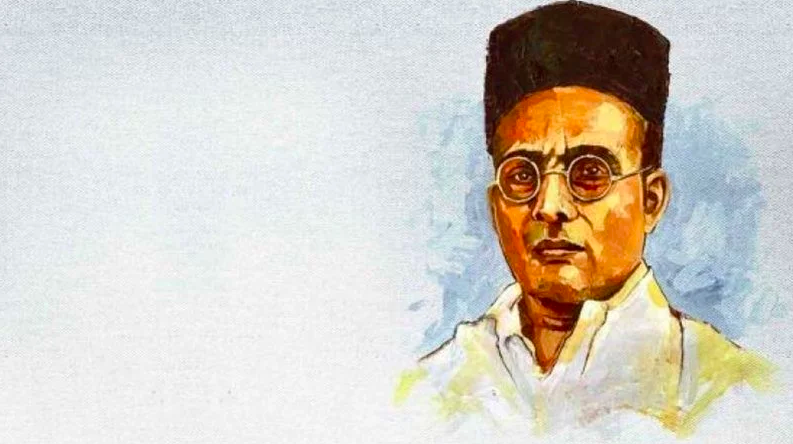
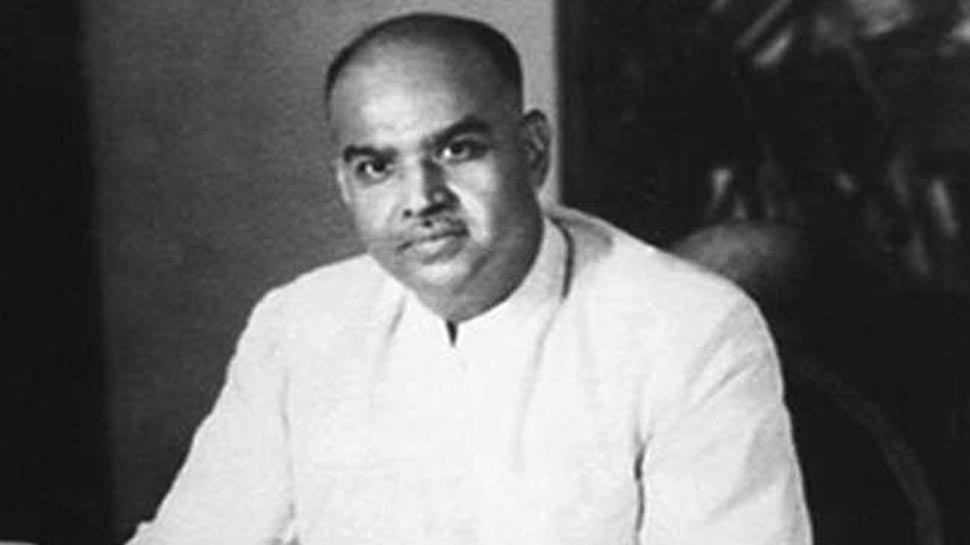
Syama Prasad

Economist and activist Jean Dreze, who has co-authored books with Nobel laureates, such as Amartya Sen and Angus Deaton, was in the headlines for a placard he carried to a protest rally in Delhi earlier this week. His placard challenged the government’s most critical justification for its controversial move to scrap Article 35A and read down Article 370 in Jammu and Kashmir (J&K). The placard displayed statistics that compare J&K with Gujarat, which is Prime Minister Narendra Modi and Home Minister Amit Shah’s home state. Dreze clearly showed how Gujarat lags behind J&K on a raft of development indices.

Although Dreze’s data beautifully punctures the government’s claim that J&K’s special status was a hindrance to its progress, Modi in his address to the nation on Wednesday night repeated the same argument, based on dubious claims. For instance, his claim that J&K lags behind other Indian states in matters of health services, education and so on, is patently incorrect.

Figures recorded in the National Family Health Survey (NFHS) has extended the debate further and shown that J&K already excels many other Indian states on several human development counts. Once again, this underlines that all talk about how “development” will reach J&K after Article 370 is made redundant is sheer humbug.

The propagation of false information brings home the fact that the government has gone very far to generate legitimacy for its decisions in J&K. In his address to the nation, Modi also said that his government had “fulfilled the dreams of [BR] Ambedkar as well as [the then Home Minister Vallabhbahi] Patel”.

( Read the full article here : https://www.newsclick.in/index.php/shyama-prasad-mukherjees-role-official-myths-jk-busted)

83 Delhi University English Teachers’ Statement against Politically Motivated Attacks on Syllabus

The following is the full text of the statement issued by 83 English teachers of Delhi University against the attack on the syllabus:

We, the teachers of English across Delhi University are shocked and appalled at the unacademic, politically motivated attack on our syllabus. This is a democratically drafted syllabus, which involved faculty participation from around 40 colleges; over 2 years, and more than 3000 working hours have been spent on it. It is a matter of sorrow and deep academic concern that the syllabus is now being maligned, and is sought to be scuttled, by certain political groups at the University.

Continue reading 83 Delhi University English Teachers’ Statement against Politically Motivated Attacks on Syllabus

More lies from the Election Commission – good job, The Quint!

Previous posts on the stealing of the 2019 Lok Sabha Elections on Kafila, which have links to many other substantiated stories in other journals and news portals:

The “massive mandate” of 2019 and the role of the Election Commission  – Nivedita Menon

Update On “Tally Mismatch” In 2019 Lok Sabha Elections: Ravi Nair

Lok Sabha Elections 2019 – Calling The Election Commission To Account: Statement By Retired Civil Servants, Veterans, Academics And Concerned Citizens

EC Misleads Public With Bogus RTI Reply On VVPAT Count: Poonam Agarwal

RTI Reveals Pvt Consultants Have EVM Access, Why is EC Denying It? POONAM AGARWAL in The Quint.

The Election Commission of India has always maintained that no private company or outsourcing in any form is involved in the election process. But The Quint’s investigation has found this to not be true.

An RTI in The Quint’s possession shows that the Electronics Corporation of India Limited (ECIL), a PSU that manufactures EVMs and VVPAT machines, engaged private engineers as “consultants” and that these private engineers have worked with the Election Commission in Assembly Elections since 2017 and even in the 2019 Lok Sabha election.

Their job was extremely sensitive – to check and maintain EVMs and VVPATs, starting from First level Checking (FLC) right up till and including the Counting Day, which means they had easy access to EVMs through the course of the elections.

Read the full article here.

From revered icon to unruly subject – Irom Sharmila and the politics of gender: Panchali Ray

Guest Post by PANCHALI RAY

In the month of August, 2016, Irom Sharmila Chanu, also known as the ‘Iron Lady’ and ‘Mengoubi’ (the fair one) announced that she would break her 16 year long hunger fast, which she commenced  as a protest against the imposition of AFSPA (Armed Forces (Special Powers) Act) by the Indian state on the tiny hilly state of Manipur. While some cheered, others were curious, and many shocked and angry at what they perceived as her betrayal of the Manipuri cause. The backlash from her community was quick and ferocious, and newspaper headlines carried titillating stories of how she was rejected by her ‘own’.[1]

While much has been written on Sharmila’s hunger strike, her breaking of the fast, and entry into electoral politics, there has not been an equal amount of discussion on the politics of gender. For instance, the fact that Sharmila’s location in the North-Eastern part of the country has been central to her marginalization and non-acknowledgement[2], or that the mainstream media’s highlighting of her predicament, post-hunger strike, reinforced stereotypes of Manipur as the ‘wild’ and ‘savage’ North East[3] has received considerable attention.

Continue reading From revered icon to unruly subject – Irom Sharmila and the politics of gender: Panchali Ray

Return of Hindutva: A Challenge for Secularism

Guest Post by Gargi Chakravartty

BOOK REVIEW

Hindutva’s Second Coming by Subhash Gatade; published by Media House, Delhi; 2019; pages: 272; Rs 395 (US $ 18).

The return of Modi to power with a huge margin in this 2019 election is a clear verdict for the Hindutva plank. Why and how it happened leave us, the secular billions, to ponder about the reality and its aftermath. And at that juncture Subhas Gatade’s 272-page analysis titled ‘Hindutva’s Second Coming’ gives us something concrete to think over once again. This in-depth study with rich academic perception is a commendable work, bereft of jargons and convoluted expressions, often found in books written from a high pedestal which goes beyond the mental reach of lay readers. Precisely for this reason the author needs to be specially acclaimed for bringing out facts at one place based on notes and references which are so far scattered in divergent historical materials. It serves as a Reader for millions who are combating communalism and distortion of history at the grassroot level.

( Read the full text here : http://www.mainstreamweekly.net/article8847.html)

EC Misleads Public With Bogus RTI Reply on VVPAT Count: Poonam Agarwal

Evidence mounts of something extremely rotten in the state of India and the recent Lok Sabha elections.

We have raised this question on Kafila for a while now, see The Massive Mandate and Open Letter to Election Commission of India by civil servants, the serious charges in which have been met with total silence.

Now POONAM AGARWAL writes in The Quint, which has been investigating the issue for some time.

The current state of India’s Election Commission (EC) raises doubts about its transparency and fairness, especially when we find that it is misleading the public in its RTI replies.

The EC was constituted in 1950 to conduct free and fair elections, and was established as an autonomous body solely so that it can work independently. Is that what it’s doing?

The Quint filed an RTI seeking information and documents on the VVPAT count data during the Lok Sabha elections 2019. In reply, the EC refused to share the documents on the grounds that the VVPAT data is not available with the Commission (which means, at the EC headquarters in Delhi).

Here’s How the EC Is Misleading Citizens.

Read the full article at The Quint.


मोदीनामा : हिंदुत्व का उन्माद


मई 2019 में नरेंद्र मोदी के नेतृत्व में हिंदुत्ववादी दक्षिणपंथी भारतीय जनता पार्टी ने शानदार चुनावी जीत हासिल की।

यह जीत सामान्य समझ को धता बताती है – जीवन और आजीविका जैसी आधारभूत बातें इस चुनाव का मुद्दा क्यों नहीं बन पाईं? ऐसा क्यों है कि सामान्य और सभ्य लोगों के लिए भी

हिंदुत्व के ठेकेदारों की गुंडागर्दी बेमानी हो गई? क्यों एक आक्रामक और मर्दवादी कट्टरवाद हमारे समाज के लिए सामान्य सी बात हो गई है? ऐसा क्यों है कि बेहद जरूरी मुद्दे आज गैरजरूरी हो गए हैं?

ये सवाल चुनावी समीकरणों और जोड़-तोड़ से कहीं आगे और गहरे हैं। असल में मोदी और भाजपा ने सिर्फ चुनावी नक्शों को ही नहीं बदला है बल्कि सामाजिकं मानदंडों के तोड़-फोड़ की भी शुरूआत कर दी है।

यह किताब प्रधानमंत्री के तौर पर मोदी के पिछले पांच वर्षों की यात्रा को देखते हुए आने वाले पांच वर्षों के लिए एक चेतावनी है।

978-81-940778-5-5

LeftWord Books, New Delhi, 2019

Language: Hindi, 131 pages, 5.5″ x 8.5″

Price INR 195.00 Book Club Price INR 137

(https://mayday.leftword.com/catalog/product/view/id/21471)

SUBHASH GATADE
Subhash Gatade is a left activist and author. He is the author of Charvak ke Vaaris (Hindi, 2018), Ambedkar ani Rashtriya Swayamsevak Sangh (Marathi, 2016), Godse’s Children: Hindutva Terror in India (2011) and The Saffron Condition (2011). His writings for children include Pahad Se Uncha Aadmi (2010).

The Politics of Piety in Naya Pakistan: Afiya Zia

Guest Post by AFIYA ZIA

A year ago, Pakistan’s national elections brought in a new government led by the Pakistan Tehreeq e Insaf (PTI) and headed by the former-cricketer-turned politician, Imran Khan. Khan had been drifting in the political wilderness for 22 years, waiting for providence to appoint him Prime Minister. As the 2018 elections loomed, this was not looking possible. However, a series of legal cases of corruption started being levelled against the serving PM, Nawaz Sharif, and efforts were made to atrophy others from the major parties of the PML-N and PPP (who had signed the ‘charter of democracy’ to prevent military intervention in civilian governance). The methods of these moves made it clear that the ‘establishment’ was betting on a new horse. Khan was not taking any risks though.

Six months before the national election, he entered marriage for the third time (with no less controversy than his previous marriages) to Bushra Maneka who was also his spiritual guide or pirni. A mother and a grandmother, there was speculation that Bushra divorced her husband for the higher cause of marrying the PM-in-waiting. In the days prior to the summer election, Khan performed Umrah in Mecca with Bushra, and was seen prostrating at a shrine in Pakistan and accessorised with rosaries and amulets in preparation for the polls.

Continue reading The Politics of Piety in Naya Pakistan: Afiya Zia

Will India Remember Dadri’s Akhlaq, as Germany Recalls Victims of Nazi Barbarism?

The German acceptance for stolpersteine plaques helps them honour victims of Nazism. One wonders if it will ever be possible to take up similar projects in this part of South Asia.

Germany Recalls Victims of Nazi Barbarism

Hier Wohnte Bernhard Marx

JB 1897

Deportiert 20.07.1942

Minsk

Ermordet 24.07.1942

‘Here lived Bernhard Marx

Year of Birth 1897

Deported 20.07.1942

Minsk

Assassinated 24.07.1942’

It was while walking past a desolate street in Bonn that we stumbled upon some brass plates on which the names of the members of a family were engraved. The name Bernhard, supposedly the head of this family, was engraved on the first plate, followed by three to his right: Erna Marx Geb Hartman, (born 1899), Helena (1929) and Julie (1938).

This was an ill-fated Jewish family from Bonn, deported to the dreaded Minsk concentration—rather extermination—camp that was brutally murdered just four days after they got there. The youngest, Julie was barely four when she died.

Estimates of how many died in this camp over a period of two years vary but at least 65000, mainly Jews, perished there until it was liberated by the Soviet forces.

The young researcher who was our host and guide to the city said that the brass plaques, raised on stone, are called stolpersteine. Stolper means to stumble in German and steine means stone. The idea behind erecting stolpersteine is to raise awareness about events that took place in the late thirties and early forties in this region, when millions of innocent people—Jews, Romas, Jehovah’s Witnesses, homosexuals and political dissidents—were sent to the gas chambers or brutally killed by the Nazi regime.

( Read the full article here : https://www.newsclick.in/India-Remember-Dadri-Akhlaq-Germany-Victims-Nazi-Barbarism)

Marx in Brussels

The most remarkable development during his time in Brussels was the penning down of the Communist Manifesto, which firmly established Marx as well as Engels as the intellectual leaders of the working class movement.

Marx in Brussels

Karl Marx

Lived in Brussels from February 1845 to March 1848

He celebrated New Year’s Eve 1947/48 together with the “Deutscher Arbeiterverein” and the “Association Democratique” in this place

The plaque put on a building which housed a restaurant ‘Le Cygne, The Swan’ now is the only memory left of the days when history was ‘made’ here. According to legend, it is the same place ‘[w]here the First International had convened’  and Marx and his lifelong friend and comrade Engels ‘[h]ad written the Communist Manifesto’.

No doubt it was the same place when Marx, Engels, Mozes Hess – who was another early luminary of socialism and who supposedly had influenced Engels about communism – and other associates of the surging workers movement pondered over many of those ideas which have been memorialised in the opening sentences of the Manifesto, “A spectre is haunting Europe — the spectre of communism….”

May be the historic slogan ‘Workers of the World Unite, You have nothing to lose but your chains’ which later reverberated throughout the world – whose echoes are still heard – had its ‘humble’ beginning in one of those very rooms, where Marx and his close associates used to educate workers about their exploitation.

Scores of people sitting in this particular restaurant which was serving them sumptuous food and choicest drinks were completely oblivious of all those details. Few of them rather looked at us with a sense of disbelief and dismay, when they witnessed us taking photos of the nondescript wall which had the plaque put on it. Perhaps they looked more satisfied that they are enjoying food at a place which is situated on the Grand Place or Grote Markt, which is the central square of Brussels and is considered one of the most beautiful squares in Europe and is also part of UN Heritage.

( Read the full article here : https://www.newsclick.in/karl-marx-in-brussels)

Modinama : Issues That Did Not Matter

In May 2019, the party of the Hindu Right, Bharatiya Janata Party, under Narendra Modi, won a spectacular electoral victory.

The victory seemed to defy common sense – why did conversations of life and livelihood not dominate the election? Why did the thuggery of the Hindutva vigilantes seem inconsequential to vast numbers of ordinary, decent people? Why is an aggressive, masculine fundamentalism so normalized in our society today?

In other words, why didn’t the issues that matter, seem to matter? The question goes deeper than electoral arithmetic. It asks if Modi and the BJP have not only changed the electoral map, but also begun to corrode social norms.

This book, based on Modi’s first five years as prime minister, is a warning for the next five.

SUBHASH GATADE

Subhash Gatade is a left activist and author. He is the author of Charvak ke Vaaris (Hindi, 2018), Ambedkar ani Rashtriya Swayamsevak Sangh (Marathi, 2016), Godse’s Children: Hindutva Terror in India (2011) and The Saffron Condition (2011). His writings for children include Pahad Se Uncha Aadmi (2010).

978-81-934666-9-8

LeftWord Books, New Delhi, 2019

Language: English

128 pages, 5.5″ x 8.5″

Price INR 195.00 Book Club Price INR 137.00

(https://mayday.leftword.com/catalog/product/view/id/21450)


Lok Sabha Elections 2019 – Calling the Election Commission to account: Statement by retired civil servants, veterans, academics and concerned citizens

Letter to the Election Commission of India written by 64 former civil servants, endorsed by 83 veterans, academics and other concerned citizens.

Shri Sunil Arora, Chief Election Commissioner, Shri Ashok Lavasa,  Election Commissioner, and Shri Sushil Chandra, Election Commissioner.

Election Commission of India.

Sirs,

Serious Irregularities in the Conduct of General Elections, 2019  

  • We are a group of former civil servants that takes up, from time to time, matters of exceptional national interest, seeking to remind our cherished democratic institutions of their responsibility to uphold the lofty ideals of the Constitution. We write to you today to draw your attention to the several very troubling and still unexplained issues pertaining to the conduct of the General Elections, 2019, by the Election Commission of India (ECI).
  • From time to time, the media has reported on various irregularities in the conduct of the 2019 General Elections. While we accept that not every media report is accurate or true, the ECI’s non-rebuttal of an untrue or inaccurate story leaves the public to draw its own conclusion: that the ECI has no valid explanation to offer. The mere dismissal of the allegations as baseless, without an explanation as to why they should be so considered, is unsatisfactory. As the custodian of the most precious commodity in a democracy – the people’s mandate – it is your duty to be transparent, and accountable to the Constitution and the people of India. Continue reading Lok Sabha Elections 2019 – Calling the Election Commission to account: Statement by retired civil servants, veterans, academics and concerned citizens

Global Warming – The Disaster that has Long Been Brewing: Nagraj Adve

Guest post by NAGRAJ ADVE

This essay is the first of a two-part excerpt from the booklet by Nagraj Adve, Global Warming in the Indian Context: An Introductory Overview (Ecologise Hyderabad, 2019). This covers the basic science of global warming, the roots of the problem, and how inequality relates to climate change. The  second piece, to appear soon, will focus on impacts in India, both on humans and other species, and the reasons for urgency in tackling the problem. You can read the second part here.

 What they told us in Gujarat

A few years ago, a group of us went to northern and eastern Gujarat to find out how climate change was affecting small farmers there. In villages in eastern Gujarat, they told us that the wheat and maize crops had been getting hit for some years during winter. Wheat and maize are important sources of nutrition for poor households in these and nearby regions. But because winters have been getting warmer, the dew (os) had lessened, or stopped entirely for the last few years. For those without wells—most of them poor households—dew is the only source of moisture for their crop. With less or no dew falling, either their crop dried up, or they were being forced to leave their lands fallow.

When we asked them why the winters had been getting milder, the people’s response there was interesting: “Prakruti ki baat hai (it has to do with Nature).” They did not consider it imaginable that human beings had the power to alter Nature on this scale. We do.


Sick Earth
Sick Earth, image courtesy Epispastic clipart (UI-Ex.com)

Continue reading Global Warming – The Disaster that has Long Been Brewing: Nagraj Adve

Gujarat Today Could be What ‘Hindu Rashtra’ Will Look Like for Dalits

The recent spate of attacks on dalits in the state is an indicator of the fact that the unfolding project of RSS’s Hindu Rashtra has entered a new phase where the community is being construed as the ‘new other’.

Hindu Rashtra

When I was born, I was not a child

I was a dream, a dream of revolt

that my mother, oppressed for thousands of years,

dreamt.

Still it is untouched in my eyes

Covered with wrinkles of thousand years, her face

her eyes, two lakes overflowing with tears

have watered my body….

– Sahil Parmar (Noted Gujarati Poet)


‘You are Welcome to Enter … Village of Hindu Rashtra’!

It was around two decades ago that headlines in a few national newspapers reported the ‘arrival’ of Hindu Rashtra in parts of Gujarat. A few inquisitive journalists had even displayed photographs detailing the nascent phenomenon then.

The shock generated by the news died down in a short while.

Hardly anybody then could have a premonition that it won’t take much time for the idea of Hindu Rashtra to gain wider acceptability across India with a commonsense gaining ground rather getting consolidated where religious minorities were increasingly understood as ‘the other’.

Could it be said that the recent spate of attacks on dalits — leading to at least three deaths in the past one month in the same state, coupled with growing instances of life of insecurity of many concerning their lives or their continued deprivation by the dominant castes, is an indicator of the fact that the unfolding project of Hindu Rashtra has entered a new phase where dalits are being construed as the ‘new other’, one who could wreck the project of ‘Hindu Unity’ from within.

Perhaps it is too early to draw any such conclusion, but portents are there for everyone to see.

( Read the full article here : https://www.newsclick.in/Hindu-Rashtra-Gujarat-BJP-RSS-Dalits)

Standing up for those who stood with us – Statement of support for Lawyers Collective

We, the undersigned concerned citizens, are extremely perturbed at the increasing tendency of the Government, through its agencies, to use excessive power to curb the voice of the people, which is the very essence of democracy.

The work of Lawyer’s Collective in general and that of Indira Jaising and Anand Grover in particular, has contributed to changing the lives not just of individuals but of citizens of a democratic republic. They have not only represented the rights of individuals and communities such as slum dwellers, workers, trade unions, prisoners, SC/ST associations, Bhopal Gas tragedy victims, women, LGBTQ+ and other marginalized communities as lawyers, but have also contributed immensely to the discourse of human rights and state accountability as public intellectuals.

Continue reading Standing up for those who stood with us – Statement of support for Lawyers Collective

Caste and other demons

Can Dalits rightfully claim that they have a ‘homeland’?

Dr Babasaheb Ambedkar

( Review of The Doctor and the Saint: The Ambedkar-Gandhi Debate — Caste, Race, and Annihilation of Caste; By Arundhati Roy, Penguin, Rs 299)

“Gandhiji, I have no homeland.” The first meeting between Gandhi and B.R. Ambedkar, who later became chairman of the drafting committee of independent India’s Constitution and its first law minister, is memorialized in this sentence. It expresses the centuries-old plight of those most oppressed in the varna hierarchy under the “institutionalised social injustice at the heart of the country”.

Has there been a qualitative change in the situation of the ‘ex-untouchables’ since this meeting some 90 years back? Can Dalits rightfully claim that they have a ‘homeland’? Figures collated by National Crime Records Bureau show that “a crime is committed against a Dalit by a non-Dalit every sixteen minutes”, including four rapes a day and murders of 13 Dalits every week. And these figures do not include “the stripping and parading naked, the forced shit eating, the seizing of land and the social boycotts…” This is the backdrop of the book, The Doctor and The Saint: The Ambedkar-Gandhi Debate — Caste, Race, and Annihilation of Caste by Arundhati Roy. It earlier formed part of an introduction to an annotated 2014 edition of Annihilation of Caste — the historic pamphlet Ambedkar wrote when invited by the ‘Jat Paat Todak Mandal’ in Lahore. The invitation was withdrawn after the hosts read the lecture draft. Continue reading Caste and other demons

How Many More ‘Halal’ Ponzi Schemes?

It is important to note that the very idea of Islamic banking and promoting it as a parallel to conventional banking – which is being portrayed as un-Islamic – and which has caught the imagination of a section of god-fearing Muslims, is a clear manifestation of shifts in Muslim politics over the world.

'Halal' Ponzi Schemes

Image for representational use only.Image Courtesy : Business Today

Afzal Pasha, a 55-year-old labourer, is dead. He died of a heart attack a few days back.

The news that the attractive scheme in which he had invested his life’s savings worth Rs 8 lakh went bust proved unbearable for him.

While Afzal’s tragic death could catch headlines, we will never know the plight of the thousands of investors – all of them belonging to the Muslim community – who had similarly invested their hard-earned savings in the said investment scheme launched by Mohammed Mansoor Khan in 2006 through his firm I Monetary Advisory (IMA).

The scheme was declared ‘Shariah-compliant’ and worked on ‘“no interest” policy of Islamic banking. A section of the clergy had even certified this scheme as “halal”, which means “lawful” or “permitted” in Arabic, which helped it easily earn the trust of the Muslim community. Small investors from across the state of Karnataka had flocked to it with their investments ranging from a few thousand rupees to a few lakhs.

A few days back, the promoter of IMA just disappeared from Bengaluru and is supposed to have fled to Dubai.

Continue reading How Many More ‘Halal’ Ponzi Schemes?

Update on “tally mismatch” in 2019 Lok Sabha Elections: Ravi Nair

In an earlier post  we made note of the serious matter of unaccounted movement of EVMs in private vehicles in different parts of the country and the mismatch between the ECI figures for voter turnout and EVM votes cast, neither of which the EC has satisfactorily explained until today.

Now in a detailed analysis in NewsClick, Ravi Nair points out that even three weeks after the last phase of the election, ECI is yet to publish the “final data”, and whatever it has put out till now is “provisional numbers”.  More worryingly, Nair points out that when glaring anomalies came into the public domain, ECI not only deleted the uploaded data from both Suvidha Portal and its main website, but also issued a release to say that whatever was published was “the provisional voter turnout data”, which was “tentative”.

However, the ECI never bothered to answer the fundamental questions: How did it announce winners based on these “provisional” and “tentative” data? How did the automated counting of votes polled in EVMs become “tentative”?

Read Ravi Nair’s article “ECI’s stance on data discrepancies: No right to question?” on NewsClick here.

The “massive mandate” of 2019 and the role of the Election Commission

Caution: Long read!

This is the elephant in the room, is it not? Was this “massive mandate” of the Lok Sabha elections 2019, the result of a free and fair election? Should we continue to discuss this outcome – the scale of the BJP victory, the numbers of seats, the margins by which seats were won – through political analysis alone?

Rather, has not political analysis of the election become inevitably deeply influenced by these margins and these numbers of seats, by the scale of the sweep?  In other words, the analysis is of necessity post facto, assuming that these seats have actually been won fairly, and therefore represent the views of the electorate.

I found very revealing a story by two Reuters journalists who covered rural North India extensively.  Mayank Bhardwaj and Rajendra Jadhav ruminate on how they could have gone so wrong in assessing the mood of the electorate. Although they say they never thought Modi would lose this election, it looked certain that he would return with a reduced majority. There was nothing  they heard and observed on the ground that suggested the actual outcome. They conclude that next time they will travel even more, push their respondents harder, “be more aware of our limitations.”

Many seasoned journalists have the same sense of shock. But what if they were not wrong after all?

Continue reading The “massive mandate” of 2019 and the role of the Election Commission

Arming Children, Securing a Future?

By distributing knives to meritorious children, organisations like the Hindu Mahasabha, are trying to give religious legitimacy to what is essentially a political use of faith.

Hindu Mahasabha distributing knives to children

Image courtesy: Twitter

What does an organisation do when it wants to congratulate meritorious students who have excelled in exams?

Reward them with some gifts, say, books, and (if finances allow) give them scholarships or laptops to facilitate their further studies. Definitely not gift them knives.

Well, Pooja Shakuni Pandey, the national secretary of Hindu Mahasabha, who had been making news for controversial reasons for more than a year, exactly did this on Savarkar Jayanti. This mathematics professor made it clear that she was not much interested in how they study further or what they wanted to become. With this knife distribution programme, along with a copy of Bhagwad Gita, she wanted to ‘create Hindu soldiers out of these children’ and it was basically a “[s]tep to motivate Hindus and empower them, especially the younger generation, with knives to protect themselves.”

( Read the complete text here : https://www.newsclick.in/Hindu-Mahasabha-Distributing-Knives-Meritorious-Children-Political-Use-of-Religion)

Modi 2.0: Majoritarianism Normalised?

This election verdict will have vital ramifications for democracy’s onward journey for decades together, and silencing and further invisibilisation of religious minorities would be its logical outcome.

minorities in india

“The crisis consists precisely in the fact that the old is dying and the new cannot be born; in this interregnum a great variety of morbid symptoms appear.”  — – Gramsci

A journalist friends’ prophesy has finally come true.

The day India launched ‘surgical strikes’ across the border supposedly to avenge the Pulwama terror attack, this friend immediately sent a message on a WhatsApp group that Narendra Modi has ensured himself a second term. He stood his ground despite few heated exchanges on the group from Left leaning friends.

In the coming days, this not so expected debacle of the secular camp and the surge of the Hindutva Supremacist camp in newer areas and communities would be further analysed/debated/discussed from various angles. It will be debated why despite the caution expressed by the likes of Amartya Sen, who had concluded how India has taken “a quantum jump in wrong direction since 2014”; how despite being cautioned by leading scholars, intellectuals, scientists of our times that the  very idea of India is at stake in the elections, the people in general did not pay any heed to their appeals and have resolved to continue the journey with a renewed frenzy in the same direction or have fully supposedly embraced this idea of ‘New India’ jettisoning the old one. Remember, not only has the Bharatiya Janata Party (BJP) been able to garner more seats than last time but its vote share has also increased more than 5%.

(Read the full text here : https://www.newsclick.in/Minorities-India-Silenced-Modi-Reelection-BJP-Majoritarianism-RSS)