Category Archives: Movements

CAA-NRC: Turning India Into a Warzone of ‘Peace’

Is the Indian state turning into a religious dystopia, like some of its neighbours?

CAA-NRC: Turning India Into a Warzone of ‘Peace’

Image Courtesy: Free Press Journal

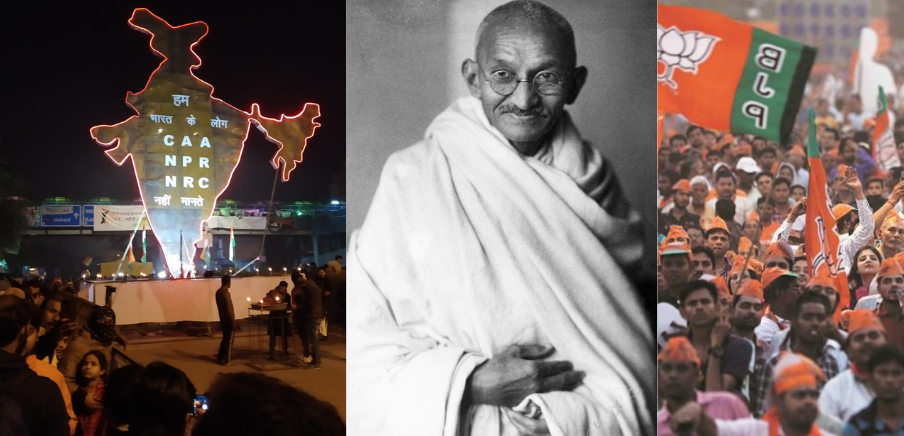
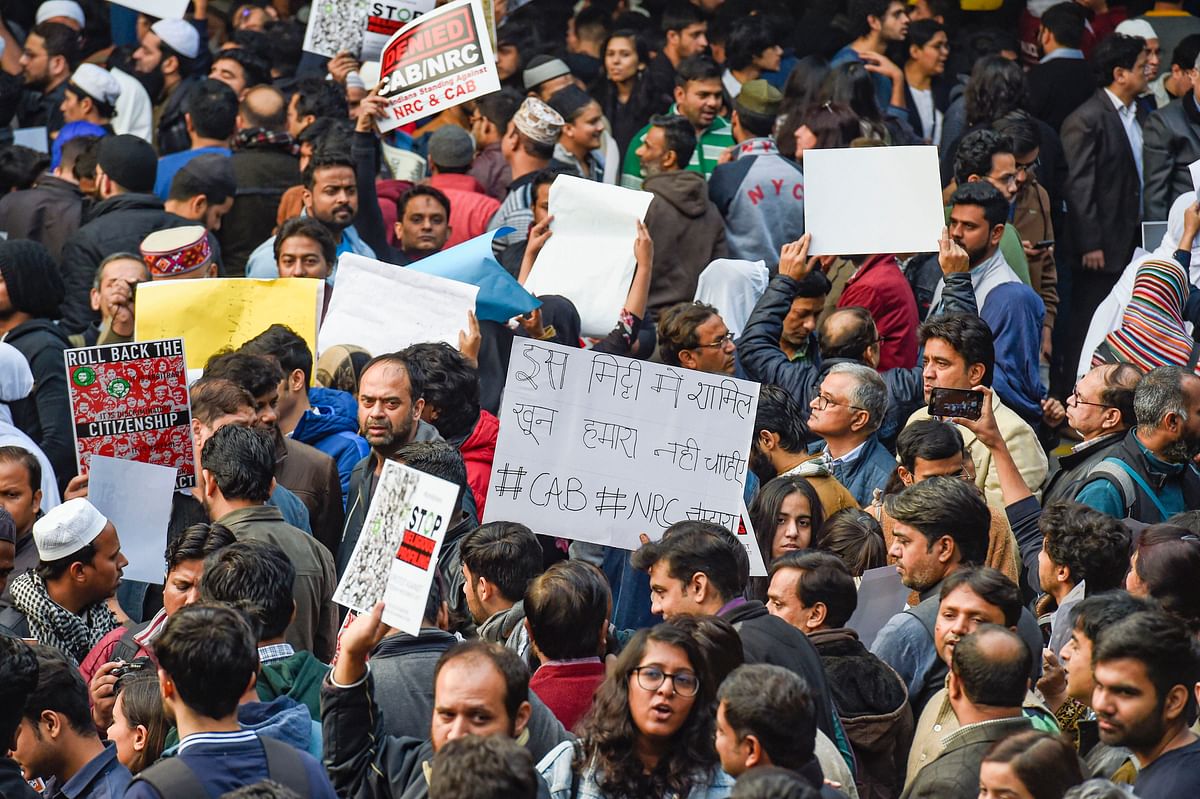
The Bharatiya Janata Party-led central government has pushed the Citizenship Amendment Act through, but it is struggling to manage its fallout and the national outrage that a related proposal to create a National Register of Indian Citizens or NRIC has generated. At first, BJP leaders desperately assured those who were excluded in the NRC, or national register of citizens, that was finalised in October this year for the people of Assam. Its pleas were meant to reassure the Hindus who were excluded in the state’s citizen-count that it would hold a fresh all-India count of citizens, in which they will be included. The reason for the BJP’s desperation was the outcome of the Assam NRC, which turned out to be contrary to its expectations: out of 19 lakh found “illegal” in the state, only about 5 lakh are Muslim, almost all the rest are Hindu.

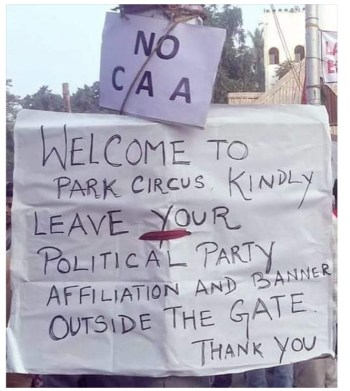
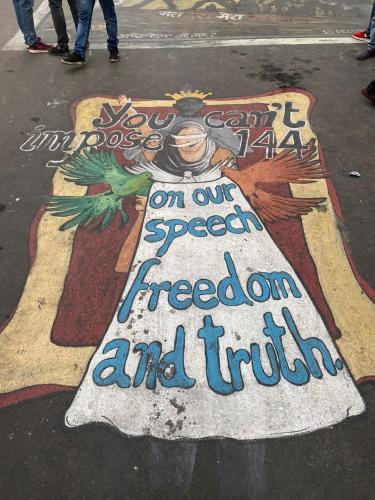
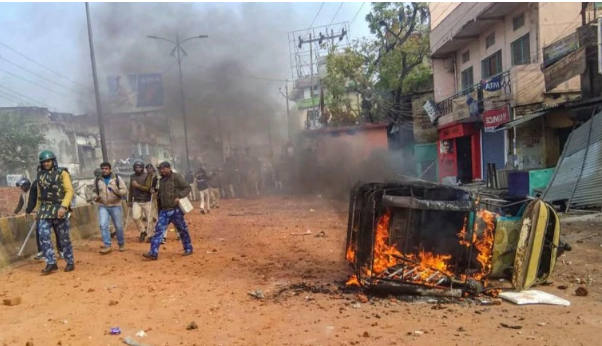
Yet, the fears of the citizenship law, combined with the resistance to an all-India NRC, have now given rise to tremendous mass resistance across India. There have been massive marches and rallies in many places, some of them culminating in aggressive confrontations with police and security forces. There is an ongoing massive crackdown on several universities, including in Lucknow, Aligarh, and Delhi where students were agitating against the new citizenship law and the all-India listing of citizens or NRIC.

( Read the full story here : https://www.newsclick.in/CAA-NRC-turning-india-earzone-peace)

Why the JNU #FeesMustFall is a Mass Intersectional Movement: Paresh Hate

Guest Post by PARESH HATE

It has been more than a month that students in JNU have been protesting against the new IHA Hostel Manual. The fight had initially begun against the exorbitant fee hikes, introduction of curfew timings and dress codes, lack of reservations and deprivation points in the manual, and the undemocratic manner in which the manual was passed. At this juncture, the movement has become broader, and articulates its resistance to the National Education Policy and its defence of the idea of public university and what it stands for.

While there have been many attempts to characterize the students’ movement as anti-national and free-loading as usual by the right-wing media, it is clear that the political articulation of students has managed to transcend these limited dimensions offered by the discourse set by the public perception. Even the propagandists are this time at a loss as to how to demonise the movement. All they have been able to come up with is that the protests ‘disrupted traffic’ and that the protests are ‘political’. One is unable to understand how the latter is a jibe, when protests are obviously always political in nature, especially this one. The demonization of JNU is not simply about the social sciences, or left-oriented student politics, but also a manufacturing of consent toward the commercialization and a legitimizing of this government’s agenda to destroy public avenues of welfare. However, due to the developments that have taken place in the last few weeks, politics itself of the campus is churning, wherein what is emerging is a cultivated intersectional discourse that has resulted in the breathing of new life into the campus. Continue reading Why the JNU #FeesMustFall is a Mass Intersectional Movement: Paresh Hate

Faculty Feminist Collective, JNU, condemns police violence on students

December 11, 2019

We, members of Faculty Feminist Collective, Jawaharlal Nehru University, condemn in the strongest terms the unprovoked police brutality on the peaceful protest marches of JNU students against the illegal adoption of a revised Hostel Manual by the JNU administration and the proposed steep rise in fees. Three times since November 11, 2019, the day of the JNU Convocation, the police have lathi-charged assembled and marching students. The first time, students were expressing a legitimate demand to meet the Vice Chancellor who now conducts all business outside the campus and has not met any member of the JNU community for some time now. On the second occasion it was a march to Parliament, to meet the elected representatives of this country; and the third time, to meet the President of India who is also the Visitor of JNU, to press upon them the urgency of the situation in which nearly half of the current students of JNU will not be able to come back next semester if the IHA Manual and the fee hike is not rolled back. Continue reading Faculty Feminist Collective, JNU, condemns police violence on students

Exit Azad! Enter Savarkar!!

Even at the breakneck pace at which its proponents are rewriting history in the Hindutva mould, its real past will habitually catch up with it.

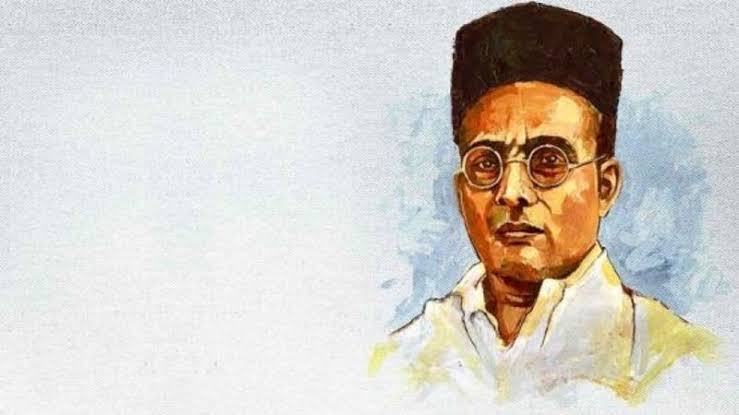
Savarkar

Last year, a statue of freedom fighter and first education minister of independent India, Maulana Abul Kalam Azad, was destroyed by Hindutva mobs at Kankinara in North 24 Parganas district, West Bengal. At the time, there were communal flare-ups in many districts of the state in the aftermath of aggressive Ram Navami marches, the first of their kind in the country.

The episode was immediately forgotten. Few would have had the premonition that the incident was was merely a precursor to the larger game-plan of the Hindutva right, to erase not just the legendary freedom fighter’s statute, but his name from history.

Now, for some reason, the Indian Council for Historical Research (ICHR) has decided to organise a seminar on ‘Veer Damodar Savarkar: Life and Mission’ on 11 November, the birth anniversary of Maulana Azad, perhaps gives an indication of their intent. This particular date also has no apparent connection with Savarkar, who was born on 28 May 1883 and died on 26 February 1966.

Besides, just over a decade ago, 11 November was declared as National Education Day, to commemorate Azad and recall his contribution to policies and institutions that streamlined the educational needs of newly-independent India. It was a day to reflect on and discuss the country’s education system and its future.

( Read the full article here : https://www.newsclick.in/exit-azad-enter-savarkar)

Politainment : Why Hindutva Brigade Spews Lies

Their fantasy is to control India’s fate by distorting historical events.

Nishank

History is witness that Buddhism, which originated in the Indian subcontinent, posed a challenge to brahmanical Hinduism. It is also recorded history that Buddhism was completely wiped out of this region centuries later, through means violent and non-violent. But the Hindutva supremacists, compelled by their desire and fantasy to re-shape national identity, want India’s past to match their views on religion. And for them, India is a nation only of and for Hindus.

That is why, through repeated false statements on the subcontinent’s “history”, they are challenging and demolishing India’s past. That is their way of attacking its multicultural present. With the goal to establish Hindu dominance in all fields, they are starting backwards, with untrue claims about “time immemorial”. The recent fabrication of Badris University by a Union minister is a step in that direction.

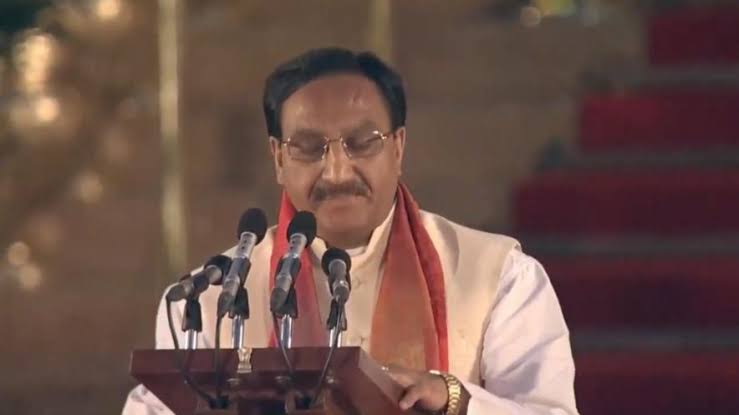
The Minister of Human Resource Development, Ramesh Pokhriyal Nishank, has said that the oldest university in the world was in Badrinath, a town in Chamoli district of Uttarakhand. The university was called “Badris”, the minister claimed in a lecture he delivered in Dehradun, a prominent city of Uttarakhand, last week. No such institution ever existed according to historical record, but Pokhriyal has insisted that will be “restored to its full glory”, presumably from funds taken from his ministry’s grants.

( Read the full article here : https://www.newsclick.in/politainment-why-hindutva-brigade-spews-lies)

‘ईश्वर नहीं है’ कहने का अधिकार

Image result for periyar
Periyar : Image – Courtesy velivada.com

क्या अभिव्यक्ति की स्वतंत्रता का अधिकार महज आस्थावानों के लिए ही लागू होता है ?

कभी कभी साधारण से प्रश्न का उत्तर पाने के लिए भी अदालती हस्तक्षेप की जरूरत पड़ती है।

मद्रास उच्च न्यायालय की – न्यायमूर्ति एस मनिकुमार और सुब्रहमण्यम प्रसाद की – द्विसदस्यीय डिवीजन बेंच को पिछले दिनो ंयह दोहराना पड़ा कि अभिव्यक्ति का अधिकार – जो भारत के संविधान के तहत मिले बुनियादी अधिकारों में शुमार है – सार्वभौमिक है और इसे समयविशेष के बहुमत के आंकड़ों के आधार पर तय नहीं किया जा सकता।

मालूम हो कि किन्ही दैवानायागम ने न्यायालय में यह जनहितयाचिका दाखिल की थी और कहा था कि तमिलनाडु के त्रिची में पेरियार की मूर्ति पर जो नास्तिकता के उद्वरण दिए गए हैं, वह ‘सार्विक ईश्वर’ को माननेवालों के लिए आपत्तिजनक हैं और उन्हें हटा दिया जाए। याद रहे रामस्वामी नायक / 17 सितम्बर 1879-24 दिसम्बर 1973/ जिन्हें ‘पेरियार’ नाम से जाना जाता है, वह आत्मसम्मान आन्दोलन के अग्रणी थे, द्रविड कझगम के संस्थापक पेरियार एक जुझारू किस्म के समाज सुधारक भी थे। याचिकाकर्ता ने मूर्ति पर लिखे उद्धरण के बारे में ‘‘कोई ईश्वर नहीं है, ईश्वर नहीं है और वाकई ईश्वर नहीं है..’ के पेरियार द्वारा कहे जाने पर भी सवाल खड़े किए थे। Continue reading ‘ईश्वर नहीं है’ कहने का अधिकार

Everyday Tips for Surviving Tyranny: Anonymous

Guest Post by ANONYMOUS

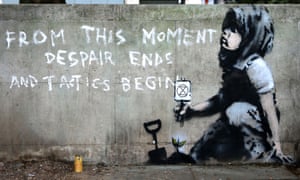
Suspected Banksy mural in London in support of environmentalist protest. 

As authoritarian right-wing populist leaders across the world unleash a reign of tyranny and hate, there is a need to think together about everyday strategies of survival. As an individual, it can get a bit overwhelming. Everything could look pointless. Many friends talk about how they find it impossible to write or work in an atmosphere of hate and violence. However, it is important to remember that what might look invincible today may not last for even half a decade. But while it lasts, how does one live under tyranny and what are the ways of building non-violent resistance? Continue reading Everyday Tips for Surviving Tyranny: Anonymous

Wishful visions, dishonest tales and bitter fruit

Review of ‘Malevolent Republic : A Short History of New India’ by K. S. Komireddi

Image result for malevolent republic

‘The idea of a peace-loving, nonviolent India exists, persists, as part of a selectively constructed and assiduously cultivated national self-image in the midst of a society pervaded by social and political violence…’ argued Prof Upinder Singh, in her well-researched voluminous book ‘ Political Violence in Ancient India’ which had appeared around two years back. She had also added that pioneers of independence struggle were instrumental in creating this ‘[m]yth of non-violence in ancient India which obscures a troubled, complex heritage.’

‘Malevolent Republic’ – A Short Hisotry of New India’ by K. S. Komireddi – a commentator, critic and journalist who has written for leading western publications, reminds one of this debate. The book tries to chronicle the trajectory of post-independence India from Nehru to Modi – and does not shy away from raising uncomfortable questions which demand broader contemplation as well as deep soul searching.

( Read the full story here : https://epaper.telegraphindia.com/calcutta/2019-09-06/71/Page-11.html)

Arvind Kejriwal, Article 370 and a Blind Alley

(Photo Courtesy : http://www.newslaundry.com)

He came, he saw and he concurred

– Caption of a RK Laxman cartoon in early 90 s


AAP’s stand on article 370 has confused and disheartened many.

For its workers the party has opened itself to attacks by its adversaries because of its support to stripping of statehood for Jammu and Kashmir and thus weakening its own plank for full statehood for Delhi which was its key slogan during the 2019 Lok Sabha campaign.

A section of its fellow-travelers who had high hopes of the experiment, activists/scholars – who were rather enthused with its ‘participatory’ approach – also feel betrayed or disheartened now.

It is a different matter that not many have made their displeasure known.

May be it is a sign of their increasing fatigue or possible cynicism with politics in general, they have preferred to share their frustrations at private levels only. Continue reading Arvind Kejriwal, Article 370 and a Blind Alley

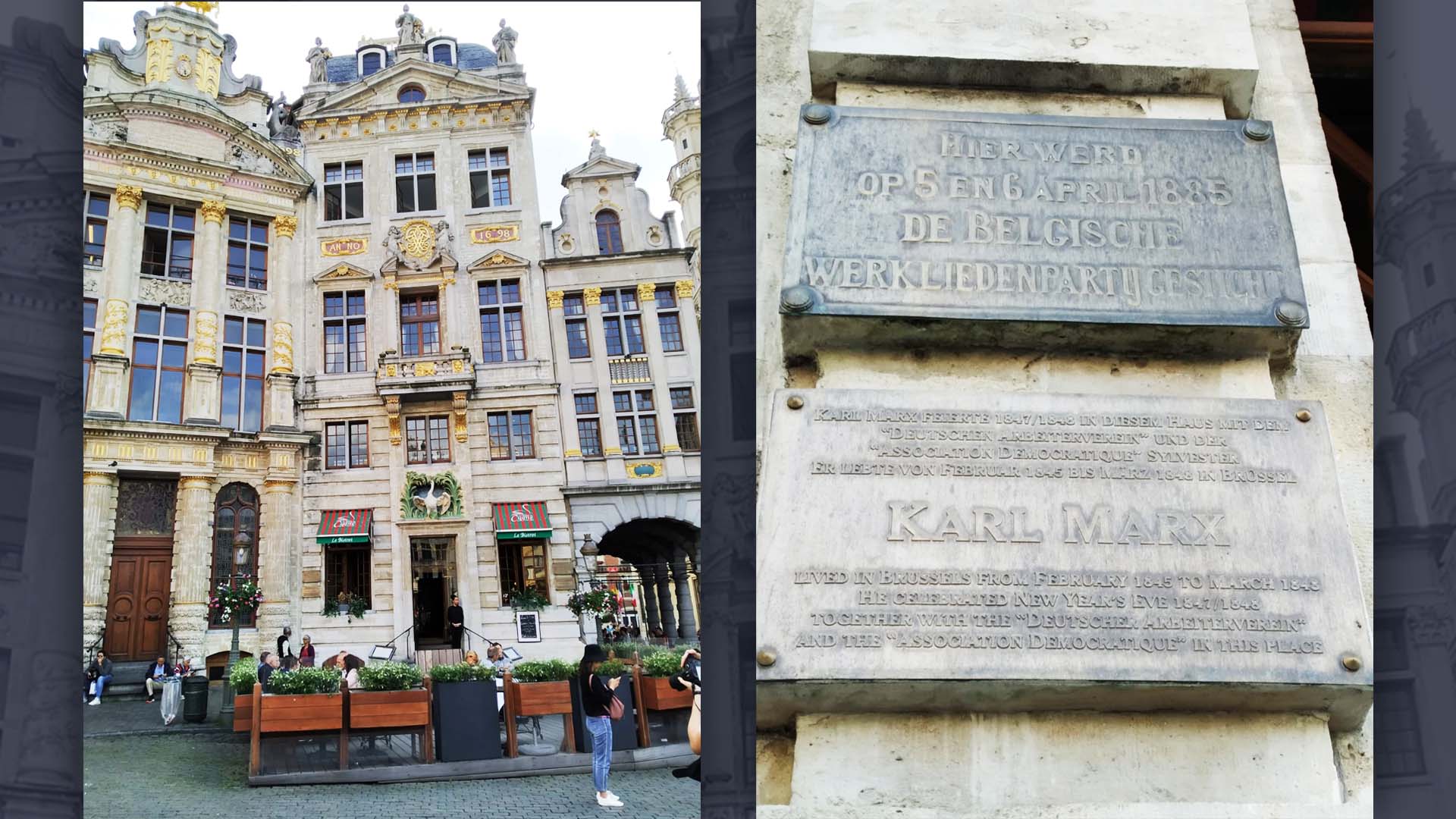
Marx in Brussels

The most remarkable development during his time in Brussels was the penning down of the Communist Manifesto, which firmly established Marx as well as Engels as the intellectual leaders of the working class movement.

Marx in Brussels

Karl Marx

Lived in Brussels from February 1845 to March 1848

He celebrated New Year’s Eve 1947/48 together with the “Deutscher Arbeiterverein” and the “Association Democratique” in this place

The plaque put on a building which housed a restaurant ‘Le Cygne, The Swan’ now is the only memory left of the days when history was ‘made’ here. According to legend, it is the same place ‘[w]here the First International had convened’  and Marx and his lifelong friend and comrade Engels ‘[h]ad written the Communist Manifesto’.

No doubt it was the same place when Marx, Engels, Mozes Hess – who was another early luminary of socialism and who supposedly had influenced Engels about communism – and other associates of the surging workers movement pondered over many of those ideas which have been memorialised in the opening sentences of the Manifesto, “A spectre is haunting Europe — the spectre of communism….”

May be the historic slogan ‘Workers of the World Unite, You have nothing to lose but your chains’ which later reverberated throughout the world – whose echoes are still heard – had its ‘humble’ beginning in one of those very rooms, where Marx and his close associates used to educate workers about their exploitation.

Scores of people sitting in this particular restaurant which was serving them sumptuous food and choicest drinks were completely oblivious of all those details. Few of them rather looked at us with a sense of disbelief and dismay, when they witnessed us taking photos of the nondescript wall which had the plaque put on it. Perhaps they looked more satisfied that they are enjoying food at a place which is situated on the Grand Place or Grote Markt, which is the central square of Brussels and is considered one of the most beautiful squares in Europe and is also part of UN Heritage.

( Read the full article here : https://www.newsclick.in/karl-marx-in-brussels)

Gujarat Today Could be What ‘Hindu Rashtra’ Will Look Like for Dalits

The recent spate of attacks on dalits in the state is an indicator of the fact that the unfolding project of RSS’s Hindu Rashtra has entered a new phase where the community is being construed as the ‘new other’.

Hindu Rashtra

When I was born, I was not a child

I was a dream, a dream of revolt

that my mother, oppressed for thousands of years,

dreamt.

Still it is untouched in my eyes

Covered with wrinkles of thousand years, her face

her eyes, two lakes overflowing with tears

have watered my body….

– Sahil Parmar (Noted Gujarati Poet)


‘You are Welcome to Enter … Village of Hindu Rashtra’!

It was around two decades ago that headlines in a few national newspapers reported the ‘arrival’ of Hindu Rashtra in parts of Gujarat. A few inquisitive journalists had even displayed photographs detailing the nascent phenomenon then.

The shock generated by the news died down in a short while.

Hardly anybody then could have a premonition that it won’t take much time for the idea of Hindu Rashtra to gain wider acceptability across India with a commonsense gaining ground rather getting consolidated where religious minorities were increasingly understood as ‘the other’.

Could it be said that the recent spate of attacks on dalits — leading to at least three deaths in the past one month in the same state, coupled with growing instances of life of insecurity of many concerning their lives or their continued deprivation by the dominant castes, is an indicator of the fact that the unfolding project of Hindu Rashtra has entered a new phase where dalits are being construed as the ‘new other’, one who could wreck the project of ‘Hindu Unity’ from within.

Perhaps it is too early to draw any such conclusion, but portents are there for everyone to see.

( Read the full article here : https://www.newsclick.in/Hindu-Rashtra-Gujarat-BJP-RSS-Dalits)

Caste and other demons

Can Dalits rightfully claim that they have a ‘homeland’?

Dr Babasaheb Ambedkar

( Review of The Doctor and the Saint: The Ambedkar-Gandhi Debate — Caste, Race, and Annihilation of Caste; By Arundhati Roy, Penguin, Rs 299)

“Gandhiji, I have no homeland.” The first meeting between Gandhi and B.R. Ambedkar, who later became chairman of the drafting committee of independent India’s Constitution and its first law minister, is memorialized in this sentence. It expresses the centuries-old plight of those most oppressed in the varna hierarchy under the “institutionalised social injustice at the heart of the country”.

Has there been a qualitative change in the situation of the ‘ex-untouchables’ since this meeting some 90 years back? Can Dalits rightfully claim that they have a ‘homeland’? Figures collated by National Crime Records Bureau show that “a crime is committed against a Dalit by a non-Dalit every sixteen minutes”, including four rapes a day and murders of 13 Dalits every week. And these figures do not include “the stripping and parading naked, the forced shit eating, the seizing of land and the social boycotts…” This is the backdrop of the book, The Doctor and The Saint: The Ambedkar-Gandhi Debate — Caste, Race, and Annihilation of Caste by Arundhati Roy. It earlier formed part of an introduction to an annotated 2014 edition of Annihilation of Caste — the historic pamphlet Ambedkar wrote when invited by the ‘Jat Paat Todak Mandal’ in Lahore. The invitation was withdrawn after the hosts read the lecture draft. Continue reading Caste and other demons

Rainbow Social Coalition – To What End ?

Image may contain: 3 people, people smiling, people sitting and outdoor


USS passe rani hai, iss passe Gandhi!
(“On that side is the Queen, on this is Gandhi)
(https://indianexpress.com/elections/patiala-dharamvira-gandhi-aap-elections-2019-bjp-congress-5726029/)

Nawan Punjab Party’s candidate ex MP Dr Dharamvira Gandhi’s election campaign and the way he projected his appeal as ‘battle against the royals’ had rightly evoked interest in a section of the media as well as pro-people circles.(https://www.newsclick.in/electoral-mobilisation-vehicle-rainbow-social-coalition)

It is of interest to know that in this era of money and muscle power politics the campaign was largely run on support generated by people. What is also notable (-do-) that the campaign was successful in building a social coalition – cutting across various fissures in our society – and could challenge “populist fascism of the Bharatiya Janata Party, patronage-based populism of the Congress, and a fractious identity politics of SAD which cannot see beyond its narrow aims. “. Continue reading Rainbow Social Coalition – To What End ?

Democracy as Majoritarianism

Extract from the Preface of  ‘Hindutva’s Second Coming’

Preface

Democracy as Majoritarianism

We can never forget that everything that Hitler did in Germany was ‘legal,’ and everything the Hungarian freedom fighters did was ‘illegal.’ It was ‘illegal’ to aid and comfort a Jew in Hitler’s Germany, but I am sure that if I lived in Germany during that time I would have comforted my Jewish brothers even though it was illegal… we who engage in nonviolent direct action are not creators of tension. We merely bring to the surface the hidden tension that is already alive.
— Martin Luther King, Jr

What is the signature of democracy?

It is the understanding that minority voices will be allowed to flourish and they will not be bulldozed.
At the apparent level majoritarianism – rule by majority – sounds very similar to democracy but it essentially stands democracy on its head. For real democracy to thrive, it is essential that ideas and principles of secularism are at its core. The idea that there will be a clear separation between state and religion and there won’t be any discrimination on the basis of religion has to be its guiding principle.
Majoritarianism clearly defeats democracy in idea as well as practice.
While democracy’s metamorphosis into majoritarianism is a real danger, under rule of capital – especially its present phase of neoliberalism – another lurking danger is its evolution into what can be called as plutocracy – government by the rich.
As India enters the race for elections to the 17 th Lok Sabha, these are the two broad questions which are staring in everyone’s mind, whether the same dynamic – which has made the last five years as unique in Independent India’s history – will continue or we will witness a rupture.
It is a disturbing scenario when the biggest democracy in the world seems to have taken a ‘[Q]uantum Jump In Wrong Direction Since 2014’ (Amartya Sen) – prompting even the normally reticient community of scientists to ask people to reject the politics which ‘.[d]ivides us, creates fears, and marginalises a large fraction of our society’ and remind them that “[D]iversity is our democracy’s greatest strength; discrimination and non-inclusivity strike at its very foundation.’
Whether there would be further normalisation of majoritianism or ordinary people’s desire to live a more inclusive, egalitarian life and in a less toxic world would ultimately triumph the designs of the hatemongers and secondly, whether free run being given to the crony capitalists and moneybags would be over and ideas of redistribution would make a comeback with vengeance.
What has added a new dimension to this dynamic is the existence of a ‘self proclaimed cultural organisation’ called RSS – whose principles, ideology and activities contravene the very basis of Constitution – which is de facto ruling the country. It is an organisation whose principles “[d]epicting Indian nationalism in terms of the faith of the religious majority – have serious negative social and political implications for sections of the citizen-body and are in violation of the Constitution.” ( http://caravandaily.com/rss-principles-are-in-violation-of-constitution-detrimental-to-india-hamid-ansari/)
It was exactly 42 years back that Indian people defeated the attempts to throttle the democratic experiment by their united struggle, whether they would be we able to have an encore when more secretive, sinister and communal forces are on ascent who are also popular among a significant section of people.
0 0
The central concern of the collection of essays (some of them published earlier and revised for this collection) presented here is this normalisation of majoritarianism which is taking place here. A situation where representation of the biggest religious minority in the outgoing Parliament had been at its lowest since independence and where it is being slowly invisiblised even from public discourse.
Section I tries to situate these developments in India in South Asian context and search for any commonality in the experiences of people and also looks at the societal roots for this fascination of hate filled ideologies and leaders.
Section II deals with the ‘pioneers of the Hindutva Supremacist movement and the new icons they want to present for a ‘New India’ which is supposedly taking shape under their wings. Section III tries to offer tentative suggestions to fight the menace which is trying to overwhelm the Indian republic.
….0 0
The book is dedicated to the memory of the legendary Indonesian author Pramoedya Ananta Tur (February 20, 1925 – April 30, 2006) who survived persecution, imprisonment and censorship, whose writings have inspired generations of Indonesian People,
What was remarkable that Pramoedya, a leftist, was jailed not only during the anti-colonial struggle but had to undergo a long phase of detention which started in mid-sixties when Indonesia witnessed a CIA sponsored military coup – which witnessed killings of lakhs of people. He was released from imprisonment in 1979, but remained under house arrest in Jakarta until 1992.
His tetralogy of novels – for which he is best known – ‘Buru Quartet’ was written during the tormenting period of detention only. “Is it possible,” Pramoedya asked later, “to take from a man his right to speak to himself?”


Glory to his memory !

—————————————————————

—————————————————————-

Contents

Dedication
Preface
Section I
1. India: The Road Less Travelled by
2. Time to Militarise Hindus, Hinduise the Nation
3. South Asia: Forward March of Majoritarianism
4. Dear Hitler
Section II
5. Veer of a different Kind
6. Can the Real Shyamaprasad Mukherjee Ever Stand Up?
7. Godse: In Love with the Assasin
8. Deendayal Upadhyay: BJP’s “Gandhi”
9. Many Silences of Mr Mohan Bhagwat
Section III
10. Hindutva’s Second Coming
Appendix IV
Nehru, Ambedkar and Challenge of Majoritarianism

Index
—–
About the author
Subhash Gatade ( born 1957) is a left activist, writer and translator.
He has done M Tech ( Mech Engg 1981) from BHU-IT, Varanasi.
He has authored few books including  Modinama : On Caste, Cows and the Manusmriti ( Leftword, in press), Charvak ke Vaaris ( Authors Pride, Hindi, 2018), Ambedkar ani Rashtriya Swayamsevak Sangh ( Sugava, Marathi, 2016), Beesavi Sadi Mein Ambedkar ka Sawal ( Dakhal, Hindi, 2014), Godse ki Aulad ( Pharos, Urdu, 2013) , Godse’s Children – Hindutva Terror in India (Pharos,  2011), The Saffron Condition ( Three Essays, 2011)
He also occasionally writes for children. Pahad Se Uncha Aadmi ( NCERT, Hindi, 2010)


In Imagination, in Resistance, in Solidarity and Rage – People’s Literary Festival in Kolkata: Tamoghna Halder

Guest post by TAMOGHNA HALDER

“It was the unlikeliest setting for a ‘literature festival’. A run-down auditorium with rickety chairs secured with rope. Noisy ceiling and pedestal fans. Battle scarred tables covered with threadbare cloth. But the first edition of the People’s Lit Fest, held in Kolkata, was designed to be just that – a radically different interpretation of literature and its role in modern India”

These were the opening lines of a report by Scroll.in, on the 1st edition of People’s Literary Festival, 2018. In less than a couple of weeks, the 2nd edition of People’s Literary Festival (henceforth, PLF) will commence, once again at that run-down auditorium with rickety chairs, namely ‘Sukanta Mancha’ in Kolkata. The present article hopes to shed some light on the reasons why those rickety chairs or the noisy fans are related to PLF, but before that, as a member of Bastar Solidarity Network (Kolkata Chapter), I feel compelled to explain why we even organize PLF in the first place.

Continue reading In Imagination, in Resistance, in Solidarity and Rage – People’s Literary Festival in Kolkata: Tamoghna Halder

Gandhi’s Assassination – Much More Than Just a Murder

Mahatma Gandhi’s assassination was a culmination of a vicious campaign launched by Hindu communal groups in post-independent India

Gandhi’s_Assassination_Much_More_Murder

File Photo : Modi – India’s New Mahatma

It is far too early to dismiss the possibility of a future Hindu State in India. However, the possibility does not appear a strong one. The secular state has far more than an even chance of survival in India”

(India as Secular State, 1963).

It was the early sixties when American political scientist Donald Eugene Smith commented about the “possibility of a Hindu state in India”.

Today, even to a layperson, the secular state in India seems to be standing on very weak foundations, and the possibility of a Hindu State is far stronger than it was more than half a century ago, in 1963.

Perhaps, a pertinent expression of this transformation of India is the metamorphosis we witness in the image of Nathuram Godse – the assassin of Mahatma Gandhi — and the growing trivialisation of his most despicable act for which he and his accomplice Narayan Apte were sent to gallows. (November 15, 1949)

No doubt the act itself was the first terrorist act in independent India but was it just that or much, much more.

( Read the full article here : https://www.newsclick.in/gandhis-assassination-was-much-more-just-murder)

Statement on the People’s Resistance against the Citizenship Amendment Bill : New Socialist Initiative

This is a guest post by New Socialist Initiative

New Socialist Initiative stands in solidarity with the people of Assam, Tripura and the other North Eastern states in their heroic struggle against the communally motivated Citizenship Amendment Bill (CAB). It was only because of the resistance of the people that the government couldn’t table the Bill for voting in the Rajya Sabha after surreptitiously passing it in the Lok Sabha. This is in fact a victory for all the progressive and democratic forces of the country,who have been fighting to save and expand the secular character of the nation. While the danger still looms large and there is a strong possibility that the government may try to bring back the bill in the upcoming budget session, the mass resistance of the people has demonstrated very clearly that the evil designs of the fascists in power will not go unanswered and that the people will fight back with all their might. Continue reading Statement on the People’s Resistance against the Citizenship Amendment Bill : New Socialist Initiative

हिंदी समाज में हीरा डोम की तलाश – स्मृतिलोप  से हट कर यथार्थ की ओर

( अकार, 51 – हिंदी समाज पर केंद्रित अंक में जल्द ही प्रकाशित)

‘देवताओं, मंदिरों और ऋषियों का यह देश ! इसलिए क्या यहां सबकुछ अमर है ? वर्ण अमर, जाति अमर, अस्पृश्यता अमर ! ..युग के बाद युग आए ! बड़े बड़े चक्रवर्ती आये ! ..दार्शनिक आए ! फिर भी   अस्पृश्यता  , विषमता अमर है ! ..यह सब कैसे हो गया ? किसी भी महाकवि, पंडित, दार्शनिक, सत्ताधारी सन्त की आंखों में यह अमानुषिक व्यवस्था चुभी क्यों नहीं ? ..बुद्धिजीवियों, संतों और सामर्थ्यवानों का यह अंधापन, यह संवेदनशून्यता दुनिया भर में खोजने पर भी नहीं मिलेगी ! इससे एक ही अर्थ निकलता है कि यह व्यवस्था बुद्धिजीवियों, सन्तों और राज करनेवालों को मंजूर थी ! यानी इस व्यवस्था को बनाने और उसे बनाये रखने में बुद्धिजीवियों और शासकों का हाथ है।

– बाबुराव बागुल /17 जनवरी 1930 –  26 मार्च 2008/

जानेमाने मराठी लेखक

1.

वर्ष 2014 में हिन्दी की प्रथम दलित कविता कही जानेवालीे एक कविता ‘अछूत की शिकायत’ 1 के सौ साल पूरे हुए। महावीर प्रसाद द्विवेदी द्वारा सम्पादित ‘सरस्वती’ पत्रिका के सितम्बर माह में प्रकाशित अंक में यह कविता छपी थी।

हीरा डोम द्वारा रचित इस कविता पर बहुत कुछ लिखा गया है, किस तरह यह कविता साहित्य में नयी जमीन तोड़ती है, धर्म, पूंजीवाद, सामाजिक गैरबराबरियों को वैधता प्रदान करती मौजूदा व्यवस्था को प्रश्नांकित करती है, ढेर सारी बातें लिखी गयी हैं। फिलवक्त़ न मैं इसकी तरफ आप का ध्यान दिलाना चाहता हूं, न इस बहस की तरफ कि क्या उसे प्रथम दलित कविता कहा जा सकता है या नहीं ! साहित्य के सुधी पाठक एवं प्रबुद्ध आलोचक इसके बारे में मुकम्मल राय दे सकते हैं। /इतनाही याद रखना जरूरी है कि पत्रिका में छपनेवाली रचनाओं के बारे में संपादक के तौर पर महावीर प्रसाद द्विवेदी काफी सख्त माने जाते थे। उनकी इस सख्ती का अन्दाज़ा इस बात से लगता है कि निराला – जो बाद में महाकवि के तौर पर सम्बोधित किए गए – उनकी चन्द कविताएं भी शुरूआत में उन्होंने लौटा दी थीं। लाजिम है कि हीरा डोम की इस कविता को प्रकाशित करने में भी उन्होंने अपने पैमानों को निश्चित ही ढीला नहीं किया होगा।/

कल्पना की जाए कि सरस्वती के अंक में अगर उपरोक्त कविता छपी नहीं होती तो हीरा डोम नामक वह शख्स ताउम्र लगभग गुमनामी में ही रहते। कोई नहीं जान पाता कि उत्पीड़ित समुदाय में एक ऐसे कवि ने जन्म लिया है, जिसकी रचनाओं में जमाने का दर्द टपकता है। Continue reading हिंदी समाज में हीरा डोम की तलाश – स्मृतिलोप  से हट कर यथार्थ की ओर

50 Years Later, Shadow of Keezhvenmani Continues to Hover Over our Republic

December 25, 1968, termed as ‘Black Thursday’, saw the first mass crime against Dalits in independent India, who were fighting for respectable wages under the leadership of the Communist Party.

50 Years Later, the Shadow Keezhvenmani Continues to Hover Over our Republic

Image for representational use only; Image Courtesy : Socialist India

P Srinivasan, a veteran village functionary who cremates the dead had, in an interview done few years ago, described the darkening early morning on December 26, 1968, when the bodies began arriving from Keezhvenmani, a non-descript village in Thanjavur district of Tamil Nadu.

The village functionary, called Vettiyan, who is nearing 60 now, still remembered the number: “There were 42 corpses in all, horribly burnt and mangled. The stench was awful,” Pointing towards the plot of land where they were cremated, he said “All of them were Dalits, burnt to death in a caste clash. I cremated them on these very grounds.”

Srinivasan, then 23-year-old, shared vivid details of that ‘Black Thursday’ in 1968, a day that has remained etched in his mind.

December 25, 2018, completes 50 years of that ‘Black Thursday in 1968’, which is remembered as the first massacre of Dalits in independent India. The Dalits were martyred while fighting for respectable wages under the leadership of the Communist Party. All of these landless peasants had started to organise themselves into a campaign for higher wages following the increase in agricultural production in the area.

(https://www.newsclick.in/50-years-later-shadow-keezhvenmani-continues-hover-over-our-republic)

Scrap the Citizenship (Amendment) Bill, 2016, It is Unconstitutional, Illegal and Immoral : 70 People’s Organizations of Assam

Guest Post by 70 People’s Organizations of Assam 

Image result for citizenship (amendment) bill 2016

( Photo Courtesy : AISA)

Protestors from various democratic organisations in Assam have began an indefinite dharna in Jantar Mantar from today 9 Dec. This includes KMSS and peasant leader Akhil Gogoi, AJYCP, Tai Ahom Satra Sontha, Asom Moran Sabha, All Asam Motok Sonmilon, All Asam Minority Students Union, and 70 other organizations of indigenous population of Assam, who are part of an umbrella platform against the Citizenship (Amendment) Bill 2016. This Bill seeks to change the very definition of a Citizen of the country and include a religious dimension to it as part of the RSS’s ideological project. The effects of this Bill can be seen in starkly in Assam – which has been to fuel ethnic and religious anxieties and conflict. Protests against it has also taken unprecedented forms in recent months with participation of millions of indigenous people, including Assam bandhs, and so on.
Find below the text of the Leaflet issued by them. Please forward and Join in the Solidarity.
The Citizenship (Amendment) Bill, 2016 which was introduced in the Lok Sabha on 15thJuly, 2016 [Bill No. 172 of 2016] has already caused deep anguish in the minds of the democratic India. A Joint Parliamentary Committee has also been constituted to examine this Bill. Despite wide-spread protests in Assam against the Bill, the BJP aggressively aims to pass the Bill in the coming Winter Session of the Parliament which will help to make their dream of the Hindurashtra a reality. 
 
*Why the Citizenship (Amendment) Bill, 2016 is unconstitutional, illegal, unethical and immoral?*
 
The Citizenship (Amendment) Bill, 2016 seeks to make fundamental alterations in the citizenship and immigration norms of India on the basis of religion. The Bill proposes to exclude ‘minority communities, namely, Hindus, Sikhs, Buddhists, Jains, Parsis and Christians from Afghanistan, Bangladesh and Pakistan’ – from the scope of the definition of being ‘illegal migrant’. The Bill further reduces the requirement of 11 years to acquire “citizenship by naturalization” to only six years of ordinary residence for such immigrants. The ‘Statement of objects and reasons’ of the Citizenship (Amendment) Bill, 2016 also makes it clear that the Bill intends to declare ‘illegal migrants’ as Indian citizens. Several Indian government notifications and orders have already enabled persons of these communities who had entered India till 31st December, 2014 to get shelter without valid documents. 
 
The Bill will change the philosophical premise on which Indian citizenship is granted. The principle on which Indian citizenship is granted is jus soli where citizenship of a person is determined by the place where a person is born. However,if the Bill passes, it will make a shift from jus soli to jus sanguinis, where a person acquires citizenship on the principle of blood, which our Constitution-makers consciously avoided. India’s Constitutional experts have opined that the Bill is unprecedented as never before has religion been specifically identified in the citizenship law as the ground for distinguishing between citizens and non-citizens. The ideas spelt out in the proposed Bill are against the ethos and spirit of the Indian Constitution. It will violate the spirit of the Preamble of the Indian Constitution and is also against the Articles 14, 15, 25 and 26 of the Indian Constitution. 
 
An extra-ordinary and widespread peoples’ movement has now swept across Assam and the entire North-East India against the Bill. We, the people of Assam feel that the Bill will change Assam’s political, economic and social fabric forever. The Bill will violate the clause 6 (A) of the Citizenship Act, 1955, a special provision for Assam, which is a non-obstante clause. If the Bill passes, it will make the Assam Accord null and void. It will be a violation of the national promise. The people of Assam are afraid that the Bill will open ways to creating further insecurity and pressures in a region already over-burdened with large-scale demographic changes due to illegal migration. It will create religious basis for it, and fuel fresh rounds of ethnic and religious conflict.
 
*We, an umbrella platform of 70 ‘Jatiya’ (national) organizations of Assam, are on a hunger strike for an indefinite period in Delhi from 9th December, 2018 demanding the immediate scrapping of the Citizenship (Amendment) Bill, 2016 for the sake of the Indian Constitution, and its moral, legal and ethical values, and to protect Assam and her inhabitants from another long spell of social and political strife.*
 
*The Government of India plans to pass the Bill in this Winter Session of the Parliament. We appeal all political parties, organizations and individuals of India to be united to oppose this unconstitutional Bill. We sincerely believe that you will extend your support to us, and oppose the Bill to save our Constitution and democracy.*
 
contact: secretarykmss@gmail.com, 8638084494, 8826219749


The Kisan Charter – ‘Farmers are not just a residue from our past but integral to the future of India and the world’

Kisan Mukti March in Delhi, image courtesy New Indian Express
Till just the other day, they were committing suicide, while some of them were demonstrating in Jantar Mantar, Delhi, humiliating themselves by disrobing and eating rats, trying in vain to draw the attention of the political establishment to their plight.  And to pour salt on their wounds, BJP leaders were saying that committing suicide had become a fashion among farmers! Today they are out on the streets, demanding, among other things, that their own debts be written off, not of the powerful and predatory capitalists. (See the Charter of the All India Kisan Sangharsh Coordination Committee below). This is, in all probability, the sign of a decisive shift, for today the charter relseased by the Coordination Committee declares loud and clear that
Farmers are not just a residue from our past; farmers, agriculture and village India are integral to the future of India and the world.

Continue reading The Kisan Charter – ‘Farmers are not just a residue from our past but integral to the future of India and the world’