Category Archives: Debates

A War For Scientists to Join

Scientists have barely offered resistance to pseudoscience. This must change—IIT students show how.

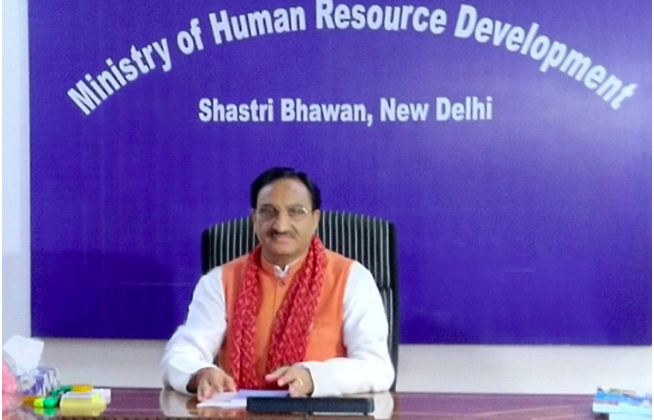
Ramesh Pokhriyal

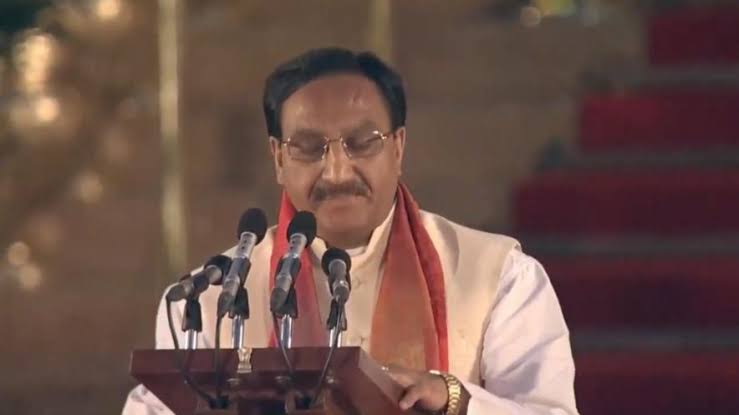
Surely India’s scientific community must be waking up to the realisation that their silence is detrimental to scientific development and allows many varieties of mischief to breed. In a rare show of gumption, students of the elite engineering institute, IIT Bombay, have slammed the recent decision to invite the Human Resources Development (HRD) Minister Ramesh Pokhriyal ‘Nishank’ to chair their graduation ceremony.

For too long India’s scientists have remained silent—even the credulous claims by Prime Minister Narendra Modi in a speech at the Ambani hospital in November 2014 was not challenged by them for a long time. A key role has to be played by the scientific community in the ongoing battle of ideas. Perhaps students of IIT Bombay show the way.

They have said in their in-house publicationInsight IIT Bombay, that a guest who “recognised, embodied and endorsed the scientific and moral values” of their institute should have been invited instead of the minister. Their problem is with Pokhriyal’s speech, pervaded by unscientific claims and “twisted facts”. They are under no illusion the speech tried to stoke “patriotic feelings”. To the IIT students, the speech was a “mild form of scientific blasphemy”.

( Read the full article here : https://www.newsclick.in/war-scientists-join)

Who Needs Romila Thapar’s CV?

Thapar questioned imperialist versions of Indian history, which the Hindutva Brigade still goes by.

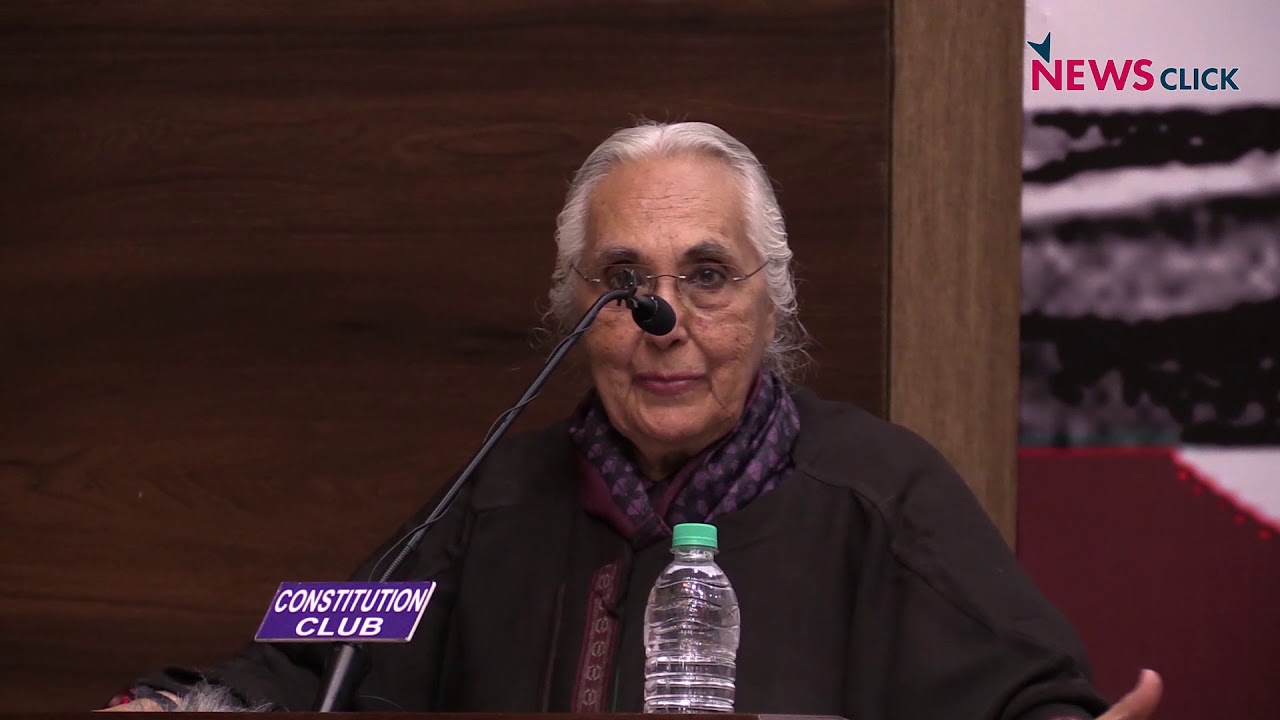
Romila Thapar

..an historian who is indefatigable in the pursuit of knowledge and prolific in its publication, and who is above all a devoted partisan of the truth. … The early history of the country has been illuminated by Professor Thapar, whom I now present, more than by almost any other scholar. An historian of that period who seriously wishes to refute accepted fictions and dispel the general darkness will need several high qualities. (From a citation presented by Oxford University to Romila Thapar while conferring on her an honorary Doctorate of Letters in 2002.)

It was 1960, when Romila Thapar, a young historian at the time, wrote a 400 plus-page monograph on Asoka and the Decline of the Mauryas. According to Oxford University Press, which published it in 2017, it tried to “trace virtually the entire span of Indian history.” The monograph is considered a classic today.

Thapar’s scholarly journey continues unabated at the age of 88. She is among the world’s foremost intellectuals, known for path-breaking work on Indian ancient history, as this interview acknowledges. Undoubtedly, her work has informed and inspired at least three generations of history students.

It hardly needs mention that Thapar has prestigious prizes to her credit for the scores of books and academic papers she has published. Twice, she declined the Padma Bhushan, the third highest civilian award granted by the government.

Now Thapar is in the news because of a strange query from the Jawaharlal Nehru University (JNU) administration, where she has held teaching and administrative positions for roughly three decades.

( Read the full article here : https://www.newsclick.in/Romila-Thapar-CV-JNU-Historian-Hindutva-Brigade-Indian-History)


Books About Wars in Your Country

A brief history of books, resistance, the police and politicians.

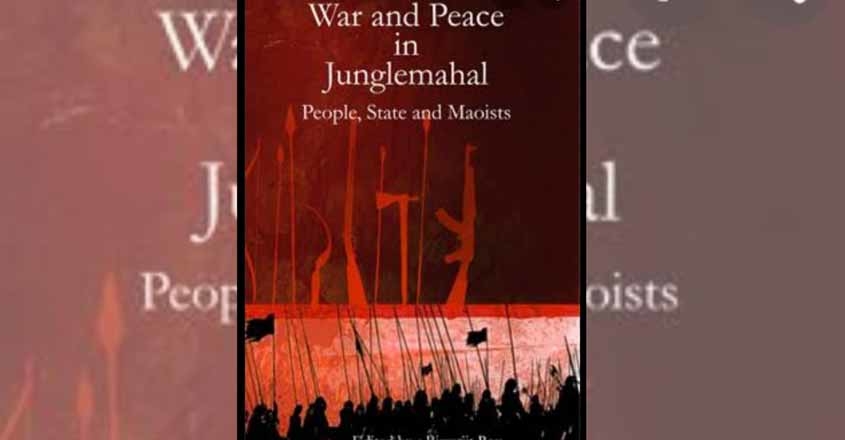
War and Peace

It is humanly impossible for even the most learned judge to have read every book referred to in their court. For a brief while this week, the judge conducting the trial of activist Vernon Gonsalves, an accused in the Bhima Koregaon incident of 2018, became an example of this. That was until the judge clarified that he is, in fact, aware of the Russian writer Leo Tolstoy and his epical novel War and Peace.

His response when the Bhima Koregaon charge sheet was placed before his court proves he knew of the provenance and contents of War and Peace. The confusion, it now appears, arose because the charge sheet had mentioned another book with a similar title. That is how the judge had ended up asking Gonsalves’ lawyers why their client possessed a book about wars in “other countries.”

It is not the judge’s knowledge of great literature but his belief that books about wars in other countries should not be owned (or read) by Indians that is a bigger surprise. Of course, since that remark, many commentators have pointed out that Tolstoy’s writings supported peace and not war. Accordingly, Mahatma Gandhi’s long correspondence with the literary legend is being highlighted afresh.

That said, this is not the first time that judges have expressed a curious indifference to the value of the written word, whether fictional or literary. The question arises, how can we tell if this incident is an aberration or the tip of an iceberg of flimsy excuses to keep people behind bars.

( Read the full article here : https://www.newsclick.in/books-about-wars-your-country)

Two Reports and Many Strategic Agents: Post-Disaster Thinking in Kerala

Two massive calamities, tremendous losses, continuing signs of serious ecological destruction impending — yet all we Malayalis seem to have produced in response: two reports, and even more frenzied strategic calculation. There is little doubt that the disasters happened in the first place at least partially because of the latter, but there seems to be no rethinking. Instead, we have strategic agents refurbishing their strategies to the new circumstances.

What else explains the Kerala government’s  Rebuilding Kerala Development Programme Report (RKDPR)? It popped up all of a sudden around the end of last year, after the UN-led Post-Disaster Needs Assessment Report (PDNAR), and even members of the Chief Minister’s Advisory Council were caught unawares.  The economist K P Kannan, whose life’s work has been focused on Kerala’s economy, a member of the Council, remarked in a recent interview in the Sastragathy that they did not know of it until the third meeting of the council. None knew who put it together, and there is no mention of this in the report itself. It draws heavily but selectively on the PDNAR, but also perhaps on the projects that were prepared for World Bank funding – and Kannan reaffirms this impression. The draft report was made available online for comments but there is no clear idea about these experts or the public consultations. Continue reading Two Reports and Many Strategic Agents: Post-Disaster Thinking in Kerala

Against Aachaaram: Lalitambika Antharjanam

This is the second in a series titled Against Aachaaram: A Dossier from Malayalam on Kafila. The note on Lalithambika Antharjanam is by J Devika. The excerpt from her story Vidhibalam (The Power of Fate) is translated by GEORVIN JOSEPH.

Lalitambika Antharjanam (1909-1987) was the first Malayali woman to achieve prominence in the field of modern Malayalam literature, and also among the first thinkers to reflect critically on modern gender as a framework for social existence in Malayali society. Born in the notoriously-aachaaram-bound Malayala brahmin community, she grew up to become one of its strongest and most vocal opponents. Her powerful short stories exposed the horrors that women suffered in conservative Malayala brahmin households. They indicted aachaaram again and again of dehumanising women, through heartbreaking accounts of their emotional and physical suffering, all sanctioned by the cold and ruthless workings of aachaaram.

Continue reading Against Aachaaram: Lalitambika Antharjanam

Arvind Kejriwal, Article 370 and a Blind Alley

(Photo Courtesy : http://www.newslaundry.com)

He came, he saw and he concurred

– Caption of a RK Laxman cartoon in early 90 s


AAP’s stand on article 370 has confused and disheartened many.

For its workers the party has opened itself to attacks by its adversaries because of its support to stripping of statehood for Jammu and Kashmir and thus weakening its own plank for full statehood for Delhi which was its key slogan during the 2019 Lok Sabha campaign.

A section of its fellow-travelers who had high hopes of the experiment, activists/scholars – who were rather enthused with its ‘participatory’ approach – also feel betrayed or disheartened now.

It is a different matter that not many have made their displeasure known.

May be it is a sign of their increasing fatigue or possible cynicism with politics in general, they have preferred to share their frustrations at private levels only. Continue reading Arvind Kejriwal, Article 370 and a Blind Alley

In Kashmir Health Professionals Speak Truth to Power

It’s an outrage to dismiss valid concerns that doctors and medical journals are raising.

Kashmir Article 370

Representational image. | Image Courtesy: Indian Express

These are strange times. A state can just get ‘obliterated’ from the map of the nation. Constitutional propriety is set aside to deprive millions of citizens of their basic human rights while a significant section of the rest of the country ‘rejoices’ over it all.

A large section of the media has abandoned its role as watchdog of democracy but health professionals are coming forward to speak truth to power.

Reports have appeared that eighteen doctors from across India, including Dr Ramani Atkuri, a public health professional, have written to the BMJ, a prominent medical journal, urging the central government to “ease restrictions on communication and travel at the earliest [in Kashmir] and undertake any other measures that are required to allow patients to access health care without hindrance.”

This group of doctors has thrown crucial light on the humanitarian crisis unfolding in the Valley. One consequence of the crisis is “violation of the right to life and to health care.”

( Read the full article here : https://www.newsclick.in/Kashmir%27s-Future-Mental-Health-Article-370-Lancet-Journal)

Nationalism and Politics – An Open Letter to Arvind Kejriwal

I write this open letter to you as a well wisher, and someone who has been seriously supportive of the Aam Aadmi Party (AAP) through all the ups and downs in the years since its formation.  Perhaps like many others, I too have high expectations of the experiment that AAP is and the new ground it has tried to break in terms of providing a government that has steadfastly kept the interests of the common person in mind while taking decisions.

But I also write this letter because I, like many others, have been perturbed by some developments which do not augur well for the future either of your party or of the country. The latter in any case, is set on a disastrous course, thanks to the current dispensation at the Centre. Let me also make it clear right away that I am not one of those who criticize AAP for ‘lacking a clear ideology’ and I in fact value the fact that on many critical issues, AAP has been able to resist the pressure to step into well trodden, familiar responses to specific situations and issues – especially well trodden among Leftists. But I do think that AAP needs to think a bit more seriously  about politics – which is not the same thing as ideology.

Continue reading Nationalism and Politics – An Open Letter to Arvind Kejriwal

Healing Kerala: Thoughts after the Second Warning


Everywhere the talk is still about rebuilding Kerala: I say, we need to talk about healing Kerala. The change in phrasing is not trivial. When we admit that we need to heal, rather than rebuild, we are admitting much that we did not care to own up till now. That is, we would be agreeing that the problem at hand is a human one and not just one that can be resolved through technical intervention; that, as a complex process, it will take its time and quick-fixes will not suffice.  Thankfully, there is a widespread discussion on the recommendations of the Gadgil Committee Report and the Post-disaster needs assessment report of last year; quarrying has been stopped all over the state. Maybe we will heal, indeed. What do we need to do to heal, and not just rebuild? Continue reading Healing Kerala: Thoughts after the Second Warning

A Crime of ‘Pure’Indifference

The ethic that dehumanises dalits continues 72 years after the country’s Independence.

A Crime of ‘Pure’

What, to the American slave, is your Fourth of July? I answer: a day that reveals to him, more than all other days in the year, the gross injustice and cruelty to which he is the constant victim. To him, your celebration is a sham; your boasted liberty, an unholy license; your national greatness, swelling vanity; your sounds of rejoicing are empty and heartless… There is not a nation on the earth guilty of practices more shocking and bloody than are the people of the United States, at this very hour.

These fiery lines from a speech delivered on July 4, 1852 in New York by Frederick Douglass, a former slave who had become a national leader of the abolitionists, rattled a predominantly White audience. The speech was delivered 10 years before slavery in the Southern states was abolished.

More than 80 years later, on August 14, 1931, Dr Bhimrao Ambedkar, a Columbia University and London School of Economics graduate, who was then leading a movement of the oppressed and exploited in India, met Mahatma Gandhi for the first time. “Gandhiji, I have no homeland,” Ambedkar told Gandhi, according to a transcript of that meeting. “No untouchable worth the name will be proud of this land.” As expected, the Varna (caste) mindset that dominated India then did not take kindly to Ambedkar’s charge.

( Read the full article here : https://www.newsclick.in/A-Crime-Pure-Indifference-Dehumanises-Dalits)

Shyama Prasad Mukherjee’s Role: Official Myths on J&K Busted

Dear Prime Minister, nothing about Jammu & Kashmir is as your party sees it

Syama Prasad

Economist and activist Jean Dreze, who has co-authored books with Nobel laureates, such as Amartya Sen and Angus Deaton, was in the headlines for a placard he carried to a protest rally in Delhi earlier this week. His placard challenged the government’s most critical justification for its controversial move to scrap Article 35A and read down Article 370 in Jammu and Kashmir (J&K). The placard displayed statistics that compare J&K with Gujarat, which is Prime Minister Narendra Modi and Home Minister Amit Shah’s home state. Dreze clearly showed how Gujarat lags behind J&K on a raft of development indices.

Although Dreze’s data beautifully punctures the government’s claim that J&K’s special status was a hindrance to its progress, Modi in his address to the nation on Wednesday night repeated the same argument, based on dubious claims. For instance, his claim that J&K lags behind other Indian states in matters of health services, education and so on, is patently incorrect.

Figures recorded in the National Family Health Survey (NFHS) has extended the debate further and shown that J&K already excels many other Indian states on several human development counts. Once again, this underlines that all talk about how “development” will reach J&K after Article 370 is made redundant is sheer humbug.

The propagation of false information brings home the fact that the government has gone very far to generate legitimacy for its decisions in J&K. In his address to the nation, Modi also said that his government had “fulfilled the dreams of [BR] Ambedkar as well as [the then Home Minister Vallabhbahi] Patel”.

( Read the full article here : https://www.newsclick.in/index.php/shyama-prasad-mukherjees-role-official-myths-jk-busted)

Towards a ‘Suitable’ Ambedkar

Is tweaking of Babasaheb’s iconic slogan — Educate, Organise, Agitate — by the Gujarat government part of a pan-India phenomenon in the saffron camp?

Towards a ‘Suitable’ Ambedkar

Does anyone still remember the ‘re-editing’ of Collected Works of Mahatma Gandhi during National Democratic Alliance (NDA)-I period when demands were raised that it should to be scrapped and the original collected works should to be reinstated so that readers/scholars are made available the ‘most authentic version of writings and utterances of Gandhi’. Noted Gandhians had underlined then how the revised Collected Works and adjoining CDs (compact discs) issued during 2001 had ‘five hundred entries missing’ from the original one.

Thanks to the exit of the Bharatiya Janata Party-led NDA government in 2004, the original Collected Works could be restored and even published online so that henceforth no government — deliberately or inadvertently — is able to make any changes in the works.

Well, while the project to ‘re-edit’ Gandhi was undertaken in a big way, which could be exposed in time, what one observes that surreptitiously or not so surreptitiously, the project to edit other icons of the anti-colonial or social emancipation movement is on in very many ways. It has been quite a long time since both Gandhi as well as Ambedkar — who were once anathema to the Hindutva project — have been included as ‘Pratahsmaraniya‘ (worth remembering in the morning) in the RSS shakhas. The emphasis seems to be on to present a more sanitised image of them which is more acceptable to the ruling dispensation.

A recent example of this has come from Gujarat.

(Read the full article here : https://www.newsclick.in/index.php/Towards-Suitable-Ambedkar)

Militarising Minds, Hindutvaising the Nation

A military school under RSS is worrisome because of earlier experiences, such as the Malegaon and Nanded blasts, that were concretised with the intervention and involvement of Hindutva activists.

RSS military school

Representational image. | Image Courtesy: Money Control

Rare are the occasions when the Rashtriya Swayamsewak Sangh (RSS) — which could be said to be the biggest organisation of Hindu men — moves beyond its founder member Dr Hedgewar to build memorials.

Whatever might be the consideration behind it, but it came as a little surprise that the RSS has decided to start a school in the memory of its first non-brahmin and non-Maharashtrian supremo Rajendra Singh alias Rajju Bhaiya (1922-2003), who was its chief from 1994-2000. This proposed ‘Rajju Bhaiya Sainik Vidya Mandir’, will be set up in Shikarpur tehsil of Bulandshahr district, where the former supremo was born and it will start functioning from next year.

Vidya Bharati, the education wing of the RSS, which already runs 20,000 schools across India, would be running this military school as well. It is being said that this Army School will follow the Central Board of Secondary Education (CBSE) curriculum and will have classes running from Class 6 to Class 12.

Normally, an idea to start a school is met with jubilation, but this news has caused an opposite effect. From educationists, to social activists to political leaders, one can hear voices of concern.

( Read the full article here : https://www.newsclick.in/RSS-Military-School-Uttar-Pradesh-Hindutva)

Return of Hindutva: A Challenge for Secularism

Guest Post by Gargi Chakravartty

BOOK REVIEW

Hindutva’s Second Coming by Subhash Gatade; published by Media House, Delhi; 2019; pages: 272; Rs 395 (US $ 18).

The return of Modi to power with a huge margin in this 2019 election is a clear verdict for the Hindutva plank. Why and how it happened leave us, the secular billions, to ponder about the reality and its aftermath. And at that juncture Subhas Gatade’s 272-page analysis titled ‘Hindutva’s Second Coming’ gives us something concrete to think over once again. This in-depth study with rich academic perception is a commendable work, bereft of jargons and convoluted expressions, often found in books written from a high pedestal which goes beyond the mental reach of lay readers. Precisely for this reason the author needs to be specially acclaimed for bringing out facts at one place based on notes and references which are so far scattered in divergent historical materials. It serves as a Reader for millions who are combating communalism and distortion of history at the grassroot level.

( Read the full text here : http://www.mainstreamweekly.net/article8847.html)

मोदीनामा : हिंदुत्व का उन्माद


मई 2019 में नरेंद्र मोदी के नेतृत्व में हिंदुत्ववादी दक्षिणपंथी भारतीय जनता पार्टी ने शानदार चुनावी जीत हासिल की।

यह जीत सामान्य समझ को धता बताती है – जीवन और आजीविका जैसी आधारभूत बातें इस चुनाव का मुद्दा क्यों नहीं बन पाईं? ऐसा क्यों है कि सामान्य और सभ्य लोगों के लिए भी

हिंदुत्व के ठेकेदारों की गुंडागर्दी बेमानी हो गई? क्यों एक आक्रामक और मर्दवादी कट्टरवाद हमारे समाज के लिए सामान्य सी बात हो गई है? ऐसा क्यों है कि बेहद जरूरी मुद्दे आज गैरजरूरी हो गए हैं?

ये सवाल चुनावी समीकरणों और जोड़-तोड़ से कहीं आगे और गहरे हैं। असल में मोदी और भाजपा ने सिर्फ चुनावी नक्शों को ही नहीं बदला है बल्कि सामाजिकं मानदंडों के तोड़-फोड़ की भी शुरूआत कर दी है।

यह किताब प्रधानमंत्री के तौर पर मोदी के पिछले पांच वर्षों की यात्रा को देखते हुए आने वाले पांच वर्षों के लिए एक चेतावनी है।

978-81-940778-5-5

LeftWord Books, New Delhi, 2019

Language: Hindi, 131 pages, 5.5″ x 8.5″

Price INR 195.00 Book Club Price INR 137

(https://mayday.leftword.com/catalog/product/view/id/21471)

SUBHASH GATADE
Subhash Gatade is a left activist and author. He is the author of Charvak ke Vaaris (Hindi, 2018), Ambedkar ani Rashtriya Swayamsevak Sangh (Marathi, 2016), Godse’s Children: Hindutva Terror in India (2011) and The Saffron Condition (2011). His writings for children include Pahad Se Uncha Aadmi (2010).

Against Aachaaram: Srinarayana Guru

The excerpt below is translated by DARSHAN SUBRAMANIAM. The note that follows is by J Devika.

Continue reading Against Aachaaram: Srinarayana Guru

Against Aachaaram: A Dossier from Malayalam – Announcement

This is to announce a new series of postings I will be doing, relating to aachaaram in Kerala.

Aachaaram is loosely translated as ‘customary practices’ or ‘customary rituals’, but in 19th century Malayali society, it referred to a massive, inter-connected, all-pervading web of practices, rituals, and ideas which bolstered the domination of the upper-castes — in Kerala’s context, this meant the Brahmin-sudra nexus — over the lower castes. It touched the most intimate and personal aspects of a person’s life; through it,  the allegiances and the labour of lower caste communities were extracted to benefit the upper castes. The lower-caste assertions of the late 19th and early 20th centuries here, through which modern democracy became a possibility at all, were directed against this web. Aachaaram, however, survived this phase through shrinking its spatial presence to savarna homes and temples; later, after the re-consolidation of brahmin-sudra power, towards the end of the 20th century, the rise of spiritual capitalism had led to aacharam’s resurrection as the vehicle of gendered savarna power — and as the provider of opening gambits for the Hindu fundamentalists — in Kerala .

In this series, I will post translations of selections/excerpts from the writings of the critics of aachaaram from early 20th century Kerala, with short reflections on each for the present. The many different readings of Hinduism that arose in that period when the Brahmin-sudra nexus was thrown into confusion, as well as the many different dreams of social liberation from different parts of the world that entered Malayali society then — from C Krishnan’s Buddhism to Marxism — produced powerful critical exposures that revealed aachaaram to be nothing but a vehicle and instrument of the power of certain groups over others. The effort made by these voices to point to the danger that it posed to a dream of a just society was largely ignored by the mainstream, especially the mainstream left.

The first of these is an excerpt from a conversation between the well-known social revolutionary, the avarna-born seer, spiritual leader, and philosopher, Srinarayana Guru and his disciples in which the annual pilgrimage to Sivagiri was planned, which I will post separately.


Will India Remember Dadri’s Akhlaq, as Germany Recalls Victims of Nazi Barbarism?

The German acceptance for stolpersteine plaques helps them honour victims of Nazism. One wonders if it will ever be possible to take up similar projects in this part of South Asia.

Germany Recalls Victims of Nazi Barbarism

Hier Wohnte Bernhard Marx

JB 1897

Deportiert 20.07.1942

Minsk

Ermordet 24.07.1942

‘Here lived Bernhard Marx

Year of Birth 1897

Deported 20.07.1942

Minsk

Assassinated 24.07.1942’

It was while walking past a desolate street in Bonn that we stumbled upon some brass plates on which the names of the members of a family were engraved. The name Bernhard, supposedly the head of this family, was engraved on the first plate, followed by three to his right: Erna Marx Geb Hartman, (born 1899), Helena (1929) and Julie (1938).

This was an ill-fated Jewish family from Bonn, deported to the dreaded Minsk concentration—rather extermination—camp that was brutally murdered just four days after they got there. The youngest, Julie was barely four when she died.

Estimates of how many died in this camp over a period of two years vary but at least 65000, mainly Jews, perished there until it was liberated by the Soviet forces.

The young researcher who was our host and guide to the city said that the brass plaques, raised on stone, are called stolpersteine. Stolper means to stumble in German and steine means stone. The idea behind erecting stolpersteine is to raise awareness about events that took place in the late thirties and early forties in this region, when millions of innocent people—Jews, Romas, Jehovah’s Witnesses, homosexuals and political dissidents—were sent to the gas chambers or brutally killed by the Nazi regime.

( Read the full article here : https://www.newsclick.in/India-Remember-Dadri-Akhlaq-Germany-Victims-Nazi-Barbarism)

Marx in Brussels

The most remarkable development during his time in Brussels was the penning down of the Communist Manifesto, which firmly established Marx as well as Engels as the intellectual leaders of the working class movement.

Marx in Brussels

Karl Marx

Lived in Brussels from February 1845 to March 1848

He celebrated New Year’s Eve 1947/48 together with the “Deutscher Arbeiterverein” and the “Association Democratique” in this place

The plaque put on a building which housed a restaurant ‘Le Cygne, The Swan’ now is the only memory left of the days when history was ‘made’ here. According to legend, it is the same place ‘[w]here the First International had convened’  and Marx and his lifelong friend and comrade Engels ‘[h]ad written the Communist Manifesto’.

No doubt it was the same place when Marx, Engels, Mozes Hess – who was another early luminary of socialism and who supposedly had influenced Engels about communism – and other associates of the surging workers movement pondered over many of those ideas which have been memorialised in the opening sentences of the Manifesto, “A spectre is haunting Europe — the spectre of communism….”

May be the historic slogan ‘Workers of the World Unite, You have nothing to lose but your chains’ which later reverberated throughout the world – whose echoes are still heard – had its ‘humble’ beginning in one of those very rooms, where Marx and his close associates used to educate workers about their exploitation.

Scores of people sitting in this particular restaurant which was serving them sumptuous food and choicest drinks were completely oblivious of all those details. Few of them rather looked at us with a sense of disbelief and dismay, when they witnessed us taking photos of the nondescript wall which had the plaque put on it. Perhaps they looked more satisfied that they are enjoying food at a place which is situated on the Grand Place or Grote Markt, which is the central square of Brussels and is considered one of the most beautiful squares in Europe and is also part of UN Heritage.

( Read the full article here : https://www.newsclick.in/karl-marx-in-brussels)

Modinama : Issues That Did Not Matter

In May 2019, the party of the Hindu Right, Bharatiya Janata Party, under Narendra Modi, won a spectacular electoral victory.

The victory seemed to defy common sense – why did conversations of life and livelihood not dominate the election? Why did the thuggery of the Hindutva vigilantes seem inconsequential to vast numbers of ordinary, decent people? Why is an aggressive, masculine fundamentalism so normalized in our society today?

In other words, why didn’t the issues that matter, seem to matter? The question goes deeper than electoral arithmetic. It asks if Modi and the BJP have not only changed the electoral map, but also begun to corrode social norms.

This book, based on Modi’s first five years as prime minister, is a warning for the next five.

SUBHASH GATADE

Subhash Gatade is a left activist and author. He is the author of Charvak ke Vaaris (Hindi, 2018), Ambedkar ani Rashtriya Swayamsevak Sangh (Marathi, 2016), Godse’s Children: Hindutva Terror in India (2011) and The Saffron Condition (2011). His writings for children include Pahad Se Uncha Aadmi (2010).

978-81-934666-9-8

LeftWord Books, New Delhi, 2019

Language: English

128 pages, 5.5″ x 8.5″

Price INR 195.00 Book Club Price INR 137.00

(https://mayday.leftword.com/catalog/product/view/id/21450)


Gujarat Today Could be What ‘Hindu Rashtra’ Will Look Like for Dalits

The recent spate of attacks on dalits in the state is an indicator of the fact that the unfolding project of RSS’s Hindu Rashtra has entered a new phase where the community is being construed as the ‘new other’.

Hindu Rashtra

When I was born, I was not a child

I was a dream, a dream of revolt

that my mother, oppressed for thousands of years,

dreamt.

Still it is untouched in my eyes

Covered with wrinkles of thousand years, her face

her eyes, two lakes overflowing with tears

have watered my body….

– Sahil Parmar (Noted Gujarati Poet)


‘You are Welcome to Enter … Village of Hindu Rashtra’!

It was around two decades ago that headlines in a few national newspapers reported the ‘arrival’ of Hindu Rashtra in parts of Gujarat. A few inquisitive journalists had even displayed photographs detailing the nascent phenomenon then.

The shock generated by the news died down in a short while.

Hardly anybody then could have a premonition that it won’t take much time for the idea of Hindu Rashtra to gain wider acceptability across India with a commonsense gaining ground rather getting consolidated where religious minorities were increasingly understood as ‘the other’.

Could it be said that the recent spate of attacks on dalits — leading to at least three deaths in the past one month in the same state, coupled with growing instances of life of insecurity of many concerning their lives or their continued deprivation by the dominant castes, is an indicator of the fact that the unfolding project of Hindu Rashtra has entered a new phase where dalits are being construed as the ‘new other’, one who could wreck the project of ‘Hindu Unity’ from within.

Perhaps it is too early to draw any such conclusion, but portents are there for everyone to see.

( Read the full article here : https://www.newsclick.in/Hindu-Rashtra-Gujarat-BJP-RSS-Dalits)